Excavation is one of the first major expenses in projects involving foundations, basements, pools, drainage systems, utility trenches, and site preparation. Understanding the excavation cost per cubic yard makes it easier to estimate your budget before hiring a contractor.
In 2026, excavation can cost anywhere from $40 to $250+ per cubic yard, depending on soil conditions, project size, excavation depth, equipment, site accessibility, labor, hauling, and disposal requirements.
What Is the Average Excavation Cost Per Cubic Yard?
The typical excavation cost per cubic yard is about $40 to $250, although the actual price can fall outside this range for unusual site conditions.
| Excavation Condition | Cost Per Cubic Yard |
|---|---|
| Sandy soil | $40–$85 |
| Topsoil/loam | $50–$100 |
| Clay soil | $65–$150 |
| Rocky soil | $100–$250+ |
| Hauling and disposal | $15–$50 additional |
| Large commercial excavation | $6–$25 |
Residential excavation projects commonly cost around $1,500 to $10,000 total, while larger foundation, basement, and commercial projects can cost considerably more.
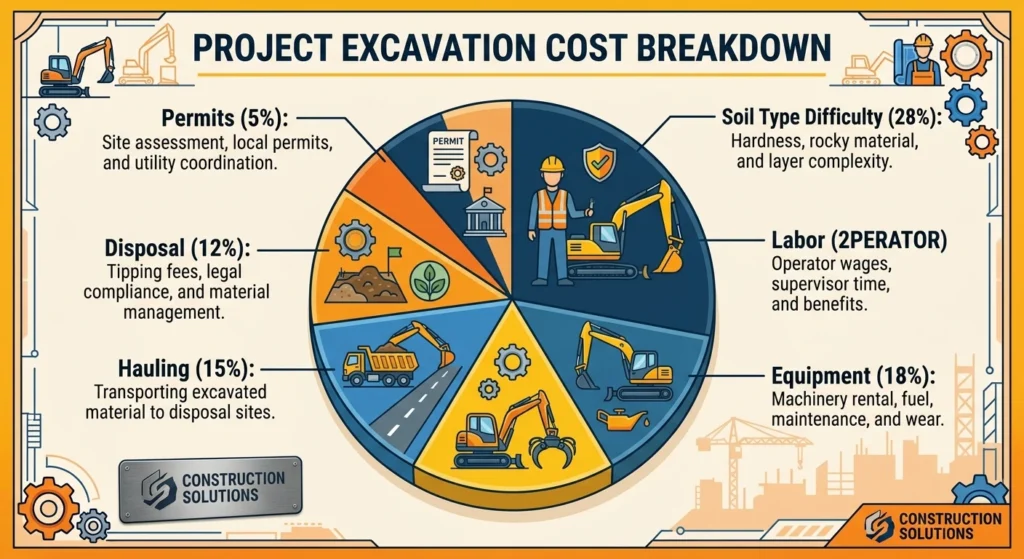
The most important factors are soil type, excavation volume, depth, equipment requirements, labor rates, site access, location, and whether excavated material must be hauled away.
Excavation Cost Per Cubic Yard by Soil Type
Soil conditions can have a major impact on excavation productivity. Easy-to-dig soil allows equipment to work quickly, while dense clay, rock, or buried obstacles can substantially increase labor and equipment time.
Sandy Soil: $40–$85 Per Cubic Yard
Sandy soil is generally among the easiest materials to excavate. An excavator can usually dig it quickly without specialized attachments.
However, loose soil can collapse into a trench, so proper sloping, shoring, or other protective measures may be necessary.
A typical swell factor is approximately 1.15x, meaning 100 bank cubic yards can become about 115 cubic yards after excavation.
Topsoil or Loam: $50–$100 Per Cubic Yard
Topsoil and loam are common on residential properties and are generally straightforward to excavate.
Costs increase when the site contains roots, buried debris, rocks, or compacted layers. A typical swell factor is approximately 1.15x to 1.25x.
Clay Soil: $65–$150 Per Cubic Yard
Clay is heavier and more difficult to work with than loose soil. Wet clay can stick to buckets and tracks, while dry clay can become extremely hard.
As a result, excavation may cost 50% to 75% more than standard topsoil conditions. A swell factor of roughly 1.30x to 1.40x may be used for estimating hauled volume.
Rocky Soil: $100–$250+ Per Cubic Yard
Rock excavation is usually the most expensive because standard digging equipment may not be sufficient.
Depending on the rock, contractors may need a hydraulic breaker, rock saw, ripping equipment, or other specialized methods. Large or difficult rock excavation can cost two to three times more than ordinary soil excavation.
A swell factor around 1.50x may be appropriate for some heavily fragmented material.
Hauling and Disposal: $15–$50 Per Cubic Yard
Excavation pricing does not always include removing the material from the property.
If dirt, clay, rock, or other material must be transported to an approved disposal or fill site, expect approximately $15 to $50 per cubic yard in additional hauling and disposal costs.
Remember that excavated soil expands after being removed from the ground, so the volume loaded into trucks can be significantly greater than the original in-place volume.
How to Calculate Excavation Cost Per Cubic Yard?
Accurately calculating the excavation volume is the foundation of a good cost estimate.
Basic Cubic Yard Formula
Use this formula when measurements are in feet:
Cubic Yards = (Length × Width × Depth) ÷ 27
There are 27 cubic feet in one cubic yard.
Example Calculation
Suppose you need to excavate an area that is:
- Length: 30 feet
- Width: 20 feet
- Depth: 4 feet
First calculate the cubic feet:
30 × 20 × 4 = 2,400 cubic feet
Then convert to cubic yards:
2,400 ÷ 27 = 88.9 cubic yards
Your excavation volume is approximately 88.9 cubic yards before accounting for swell.
Excavation Cost Formula
Once you know the volume, use:
Total Excavation Cost = Cubic Yards × Cost Per Cubic Yard
For example, at an excavation rate of $80 per cubic yard:
88.9 × $80 = $7,112
This represents the excavation portion only.
If hauling costs another $25 per cubic yard:
88.9 × $25 = $2,222
Estimated combined cost:
$7,112 + $2,222 = $9,334
The actual contractor quote may differ because mobilization, minimum charges, site conditions, permits, and disposal requirements can affect the final price.
Accounting for the Swell Factor
Excavated material takes up more space after it is removed from the ground. This is known as soil swell.
For example, 100 cubic yards of in-place soil with a 1.25 swell factor becomes approximately:
100 × 1.25 = 125 loose cubic yards
Use the expanded volume when estimating truckloads, hauling, and disposal requirements.
Factors Affecting Excavation Cost Per Cubic Yard
Depth and Excavation Volume
Deeper excavation generally requires more time, larger equipment, additional safety measures, and potentially shoring.
Basement excavations can therefore cost much more than shallow grading or trenching.
Site Accessibility
Access can make a major difference in excavation productivity.
A wide, open construction site allows contractors to use larger excavators efficiently. A backyard with a narrow gate, overhead wires, landscaping, or nearby structures may require a mini excavator or even manual excavation.
Gate width, overhead clearance, ground conditions, and distance from the excavation area to the truck all matter.
Equipment Requirements
The equipment needed depends on project size, depth, soil conditions, and access.
Typical equipment rental ranges include:
- Mini excavator, 3–6 tons: $200–$500 per day
- Standard excavator, 10–20 tons: $500–$1,200 per day
Labor Costs
Excavator operator rates commonly fall around $50–$110 per hour, depending on location, experience, equipment, and project requirements.
Labor may represent approximately $2–$12 per cubic yard on larger, efficient projects.
Geographic Location
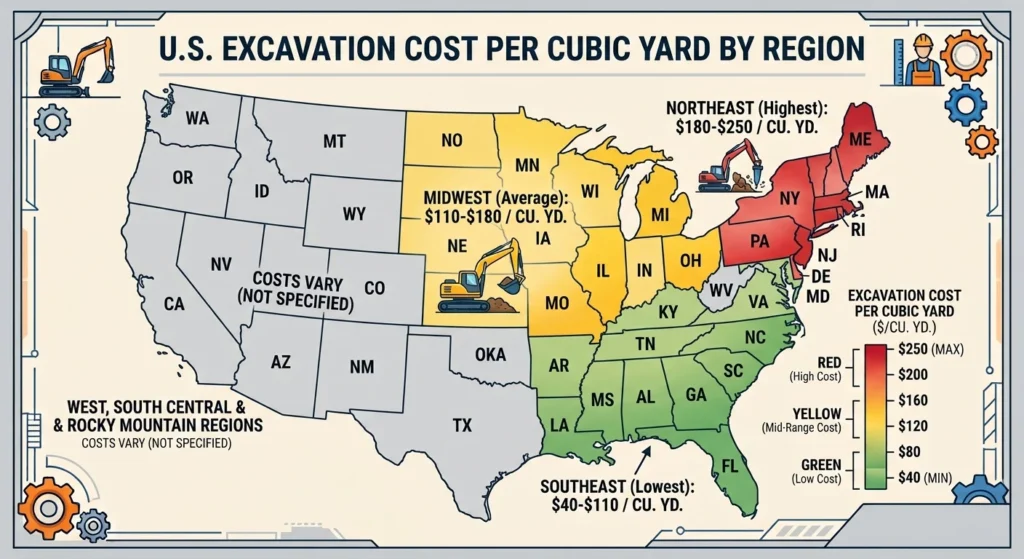
Excavation prices vary considerably across the United States.
If your project requires moving excess soil or fill offsite, be sure to account for dirt hauling costs in addition to base digging rates.
Excavation Cost Per Cubic Yard by Project Type
Different excavation projects have different productivity rates and site requirements.
French Drain Trench
A 60-foot-long trench measuring 1.5 feet wide and 2 feet deep contains:
60 × 1.5 × 2 ÷ 27 = 6.7 cubic yards
A project of this size may cost approximately $520–$800, depending on access, soil, and whether the excavation is part of a larger drainage installation.
In-Ground Pool Excavation
For a 16 × 32-foot pool with an average excavation depth of 6 feet:
16 × 32 × 6 ÷ 27 = 113.8 cubic yards
Excavation can cost approximately $6,400–$10,200, depending on soil, access, rock, hauling, and site conditions.
Basement Foundation Excavation
A 40 × 30-foot excavation at 8 feet deep contains:
40 × 30 × 8 ÷ 27 = 355.6 cubic yards
A basement excavation of this size may cost approximately $37,000–$55,000 includes hauling, difficult access, shoring, related work, etc.,
Commercial Trenching
Large shallow commercial trenching projects can have substantially lower unit costs.
For approximately 200 cubic yards, pricing may fall around $7–$15 per cubic yard, particularly when the site has good access and efficient equipment utilization.
Additional Excavation Costs to Consider
The excavation rate is only one part of the total project budget.
Preparation Costs
Potential pre-excavation expenses include:
- Soil testing: $500–$2,000
- Land survey: $400–$550
- Tree removal: $200–$2,000
- Boulder removal: $50–$250
Not every project requires all of these services.
Permits and Fees
Depending on the location and project type, permits and related fees can range from approximately $300 to $5,000.
Before digging, utility locations should be identified. In the United States, homeowners and contractors can generally contact 811 for utility locating services.
How to Save Money on Excavation Costs?
You can often reduce excavation expenses by improving planning and minimizing unnecessary material handling.
- Get at Least Three Quotes
- Keep Usable Soil On-Site
- Schedule During the Off-Season
- Clear the Site Before Excavation
- Ask About Package Pricing
- Use a Cut-and-Fill Plan
Frequently Asked Questions
How Much Does Excavation Cost Per Cubic Yard in 2026?
Excavation typically costs around $40–$250 per cubic yard in 2026, depending on soil conditions, depth, equipment, location, access, and project size. Sandy soil may cost $40–$85 per cubic yard, while difficult rocky excavation can exceed $250.
How Do I Calculate Cubic Yards for Excavation?
Multiply the length × width × depth in feet and divide the result by 27.
Cubic Yards = (L × W × D) ÷ 27
For irregular areas, calculate each section separately and add the volumes together.
What Is the Cheapest Soil Type to Excavate?
Sandy soil is generally one of the least expensive materials to excavate, with typical costs around $40–$85 per cubic yard. However, loose soil can require appropriate trench protection.
How Much Does It Cost to Haul Away Excavated Dirt?
Hauling and disposal commonly add around $15–$50 per cubic yard, although the actual cost depends on trucking distance, material type, disposal site fees, and the expanded volume after excavation.
Does Excavation Cost Include Equipment?
Often, yes. Contractors commonly bundle the excavator, attachments, operator, fuel, and related operating costs into their excavation rate. If equipment is rented separately, a mini excavator may cost around $200–$500 per day, while a larger excavator can cost $500–$1,200 per day.
Final Thoughts on Excavation Cost Per Cubic Yard
The excavation cost per cubic yard is a useful starting point, but it should not be treated as the only number in your project budget. Soil type, excavation depth, site accessibility, equipment, labor, hauling, disposal, permits, and geographic location can all change the final price.
For a quick estimate, calculate your excavation volume using length × width × depth ÷ 27, multiply the result by your expected excavation rate, and then add hauling or disposal costs based on the expanded soil volume.
For the most accurate 2026 estimate, get several local quotes and ask contractors to clearly separate excavation, equipment, labor, hauling, disposal, and additional site costs.
If your project involves running electrical conduits or plumbing lines, explore our detailed analysis of utility trenching costs.

Ahmed Ijaz runs this construction rental directory with over 5 years of experience in SEO, content, and web optimization. Every page is built using real research, hands-on expertise, and carefully reviewed information to meet strong EEAT standards.