Utility trenching typically costs $5 to $100+ per linear foot, depending on the utility, trench depth, soil conditions, equipment access, and surface restoration required. Simple open trenching in clear soil is usually much less expensive than deep sewer excavation, rock removal, or commercial work requiring shoring and traffic control.
This guide explains typical utility trenching costs, the factors that affect pricing, and when trenching alternatives such as directional boring may make sense.
Average Utility Trenching Costs
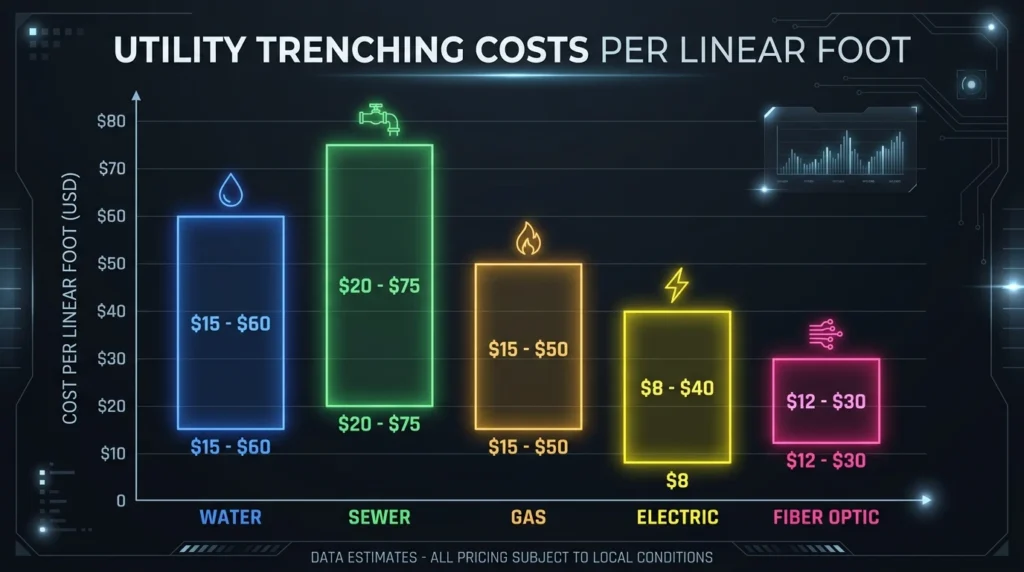
Utility trenching prices vary by project. Typical ranges include:
| Utility Type | Typical Cost per Linear Foot |
|---|---|
| Electrical | $8–$40 |
| Fiber optic/telecom | $12–$30 |
| Water line | $15–$60 |
| Gas line | $15–$50 |
| Storm drain | $20–$55 |
| Sewer line | $20–$75+ |
| Commercial utility trenching | $35–$100+ |
These figures generally refer to excavation-related work. Pipe, conduit, utility connections, engineering, and some restoration costs may be additional.
Water Line Trenching Cost
Water line trenching commonly costs $15–$60 per linear foot. Costs increase when the line must be installed below the local frost depth or when excavation requires extensive bedding, backfill, testing, and inspection.
Sewer Line Trenching Cost
Sewer trenching generally costs $20–$75+ per linear foot. Gravity sewer lines can be particularly expensive because they need a consistent slope and may become significantly deeper near the connection point.
Gas Line Trenching Cost
Gas line trenching typically costs $15–$50 per linear foot. Gas installations involve safety requirements, qualified installers, testing, and inspections, which can increase the total project cost.
Electrical and Fiber Optic Trenching Cost
Electrical trenching often costs $8–$40 per linear foot, while fiber optic or telecommunications trenching commonly falls around $12–$30 per linear foot.
These utilities are often installed at shallower depths than water or sewer lines, although local codes and site conditions determine the actual requirements.
Storm Drain Trenching Cost
Storm drain trenching can cost approximately $20–$55 per linear foot. The pipe diameter, required slope, trench depth, soil conditions, and drainage design all affect the final price.
Residential vs. Commercial Utility Trenching
Residential Utility Trenching
Residential projects often fall around $20–$50 per linear foot, although simple electrical or shallow trenching can cost less. Smaller equipment, shorter runs, and easier access can reduce labor and mobilization costs.
Commercial Utility Trenching
Commercial trenching can cost $35–$100+ per linear foot because projects may require deeper excavation, larger crews, engineered plans, trench protection, traffic control, inspections, and more extensive restoration.
7 Factors That Affect Utility Trenching Cost
1. Soil Type and Ground Conditions
Soil is one of the biggest variables in excavation pricing.
- Sand and loose soil: Usually easier to excavate.
- Clay: Can slow excavation and create drainage and compaction challenges.
- Gravel and cobbles: May require additional handling.
- Rock: Can dramatically increase excavation time and equipment requirements.
Rock excavation can cost several times more than normal soil excavation, particularly when breaking, hammering, or specialized equipment is required.
2. Trench Depth and Width
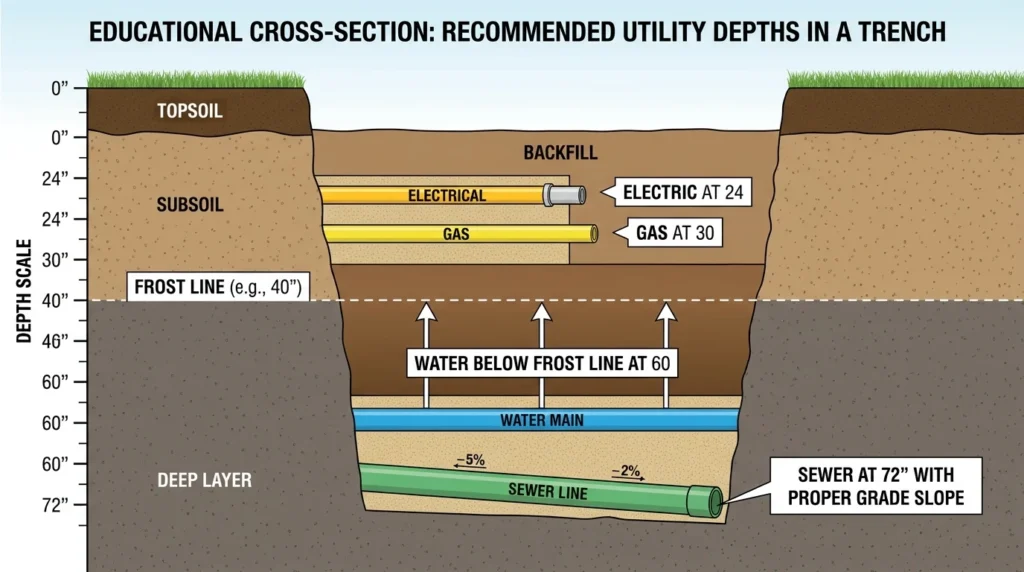
Deeper trenches require more excavation, spoil handling, backfill, and potentially shoring or other protective systems.
Water lines may need to extend below the local frost depth, while sewer lines can become deeper because of required slope. Wider trenches also increase the amount of material that must be removed and replaced.
3. Utility Type
Each utility has different installation requirements.
Water and sewer lines may require bedding and testing, gas work involves additional safety requirements, and electrical or fiber installations may use conduit or protective systems.
Installing several utilities in a properly designed common trench can reduce excavation and mobilization costs compared with digging separate trenches.
4. Equipment Access
Open, accessible sites allow contractors to use larger excavation equipment efficiently.
Backyards, narrow side yards, existing buildings, landscaping, fences, and other obstacles may require smaller equipment or additional manual labor, increasing the cost per foot.
5. Surface Restoration
Excavation is only part of the project.
Cutting through concrete, asphalt, driveways, sidewalks, or landscaped areas can substantially increase the final cost because these surfaces must be removed and restored.
6. Permits and Inspections
Utility work may require permits, inspections, engineering documents, right-of-way approvals, erosion controls, or traffic management.
Fees vary by municipality, so they should be confirmed before comparing contractor estimates.
7. Existing Underground Utilities
Unknown or incorrectly mapped utilities can cause delays, redesigns, repairs, and safety problems.
Always contact 811 before digging in the United States and have underground utilities located before excavation begins. For congested sites, contractors may also use vacuum excavation or potholing to expose utilities safely.
Utility Trenching Methods
Open Trenching
Open trenching is usually the most straightforward method when the route is accessible.
Typical excavation-only pricing can range from roughly $5–$24 per linear foot under favorable conditions. However, the complete project can cost substantially more once bedding, backfill, utility installation, permits, and restoration are included.
Its main disadvantage is surface disruption.
Directional Boring
Horizontal directional drilling (HDD) installs utilities underground with considerably less surface disturbance.
Typical costs can range from $20–$60 per linear foot, depending on the ground, diameter, depth, length, and access.
Although boring may cost more than basic excavation, it can reduce restoration expenses when utilities must cross roads, driveways, or finished landscapes.
Hydro Excavation
Hydro excavation uses pressurized water and vacuum equipment to remove soil.
When planning your perimeter security and property access, explore the different types of driveway gates to choose the best entry solution for your acreage.
It is useful around existing underground utilities because it provides controlled excavation and reduces the risk of damaging buried infrastructure. Its specialized equipment and slower production can make it more expensive than conventional digging.
Trenchless Technology
Pipe pulling, pipe bursting, and other trenchless techniques can reduce surface disturbance and restoration work. They are most useful when conventional excavation would require extensive damage to roads, landscaping, or other finished surfaces.
Backfill and Material Handling Costs
Backfill can have a major effect on the total trenching price.
A project may require:
- Bedding aggregate
- Pipe or conduit embedment
- Native-soil backfill
- Imported fill
- Compaction
- Spoil hauling and disposal
- Surface restoration
If suitable excavated soil can be reused on-site, hauling and replacement-material costs may be reduced. Unsuitable, wet, contaminated, or rocky material may instead require disposal and imported fill.
The contractor should clearly identify whether excavated material disposal, imported backfill, bedding, and compaction are included in the estimate.
How to Get an Accurate Utility Trenching Quote?
Before accepting a quote, ask the contractor to specify:
- Cost per linear foot or total project price
- Trench depth and width
- Soil and rock assumptions
- Excavation and equipment costs
- Bedding and backfill
- Spoil hauling and disposal
- Compaction
- Permits and inspections
- Utility installation
- Surface restoration
- Shoring or trench protection
- What happens if unexpected rock or utilities are encountered
Comparing itemized quotes is more useful than comparing only the final price because two contractors may include very different scopes of work.
How to Reduce Utility Trenching Costs?
Several strategies can lower excavation expenses:
- Combine utilities where permitted. A properly planned common trench can reduce repeated excavation and mobilization.
- Reuse suitable native soil. Keeping usable material on-site can reduce hauling and imported-fill costs.
- Plan the route carefully. Avoid unnecessary bends, obstacles, and difficult access areas.
- Compare trenching with directional boring. A higher excavation price may be offset by lower surface restoration costs.
- Get permits and utility locates early. Delays and utility conflicts can quickly increase labor costs.
- Get multiple itemized quotes. This makes differences in scope easier to identify.
Common Utility Trenching Mistakes
Avoid these costly mistakes:
- Digging without required utility locates
- Ignoring local frost-depth requirements
- Failing to account for rock or difficult soil
- Using inadequate pipe bedding
- Poor backfill compaction
- Forgetting restoration costs
- Comparing quotes with different scopes
- Assuming the lowest per-foot price represents the lowest total project cost
Frequently Asked Questions
What does utility trenching cost per foot?
Basic open trench excavation can cost approximately $5–$24 per linear foot, while complete utility trenching commonly costs more depending on the utility, depth, soil, labor, materials, permits, and restoration.
How deep should a utility trench be?
Depth depends on the utility and local requirements. Electrical and communications lines are often shallower than water and sewer lines. Water lines may need to be below the local frost depth, while sewer depth depends heavily on required grade and connection elevations.
Is trenching cheaper than directional boring?
Open trenching is generally cheaper for accessible areas with suitable soil. Directional boring can become more economical when digging would require expensive restoration of roads, driveways, sidewalks, or landscaping.
Why does sewer trenching cost more?
Sewer excavation can require greater depth and precise grade control. Deeper trenches also increase excavation, spoil handling, backfill, and potential trench-protection requirements.
How much more does rock excavation cost?
Rock can increase trenching costs substantially. The actual increase depends on rock hardness, quantity, equipment, access, and disposal requirements. A contractor should identify how rock excavation will be priced before work begins.
Final Takeaway
Utility trenching costs about $5–$100+ per linear foot, but the actual price depends on the utility, trench dimensions, soil, access, local requirements, and restoration.
For an accurate budget, price the entire scope—not excavation alone. Include bedding, utility materials, backfill, compaction, disposal, permits, inspections, protection systems, and surface restoration.
Before excavation, arrange the required utility locating service and obtain itemized quotes from qualified contractors. For projects crossing finished surfaces, compare open trenching with directional boring to determine which method produces the best overall cost.
When installing rural or suburban waste systems, understanding septic excavation costs is essential for accurate trench and tank budgeting.
For a comprehensive breakdown of conduit, water, and power line burial expenses, review our detailed guide on utility trenching costs.

Ahmed Ijaz runs this construction rental directory with over 5 years of experience in SEO, content, and web optimization. Every page is built using real research, hands-on expertise, and carefully reviewed information to meet strong EEAT standards.