
Septic excavation can become a significant expense when a buried tank, drain field, or underground pipe needs to be accessed, repaired, or replaced. Understanding how much septic excavation costs is essential for budgeting this critical home maintenance project.
The total price depends on excavation depth, soil conditions, equipment, labor, site accessibility, permits, disposal, and whether the septic system needs repair or complete replacement.
What Is Septic Excavation?
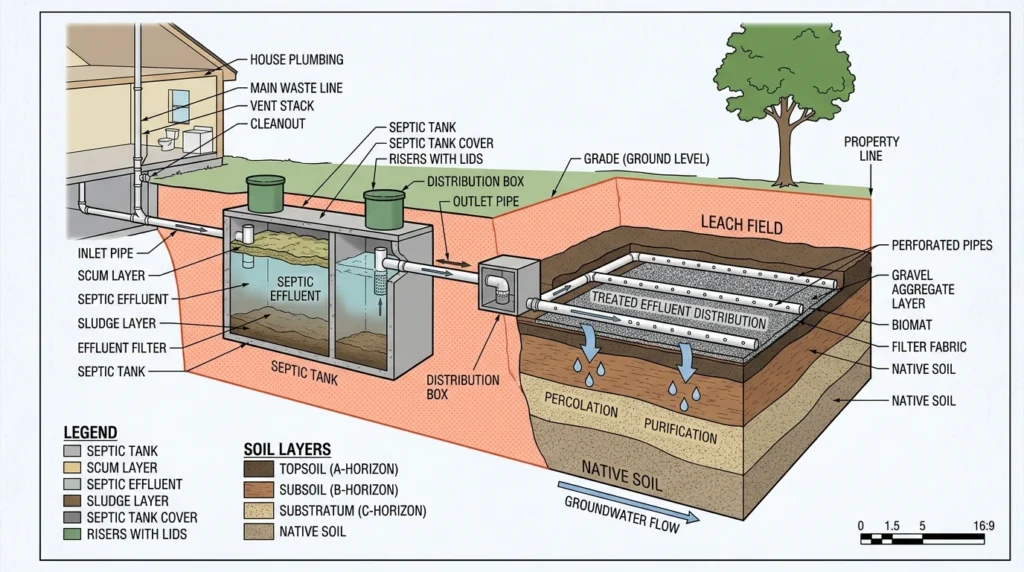
Septic excavation is the process of digging into the ground to expose, repair, remove, or replace components of a septic system. Depending on the problem, a contractor may excavate only around the tank or dig a larger area to access the drain field and underground pipes.
Common reasons for septic excavation include:
- Septic tank replacement
- Tank repairs or damage
- Tree root intrusion
- Collapsed or damaged tanks
- Broken underground pipes
- Failed drain fields
- Accessing buried septic components for inspection
Excavation is different from septic pumping, which removes accumulated solids and wastewater from the tank without digging up the system. A pumping service may solve a maintenance issue, while excavation is generally required when underground components need physical access.
How Much Does Septic Excavation Cost?
Basic septic excavation typically costs about $500 to $1,500 when the contractor only needs to expose or access a buried tank.
More extensive excavation associated with tank replacement or system work can cost $3,000 to $15,000 or more. A complete septic system replacement, including excavation, a new tank, drain field, installation, and related work, can reach $8,000 to $20,000+ depending on site conditions.
| Septic Excavation Service | Estimated Cost |
|---|---|
| Basic tank excavation | $500–$1,500 |
| Leach field excavation for repairs | $1,000–$3,000 |
| Tank replacement with excavation | $3,000–$10,000 |
| Full septic system replacement | $8,000–$20,000+ |
| Commercial excavation | $15,000–$30,000+ |
These are general estimates. Local labor rates, permits, soil conditions, equipment requirements, and the extent of the work can substantially change the final price.
Factors That Affect Septic Excavation Cost
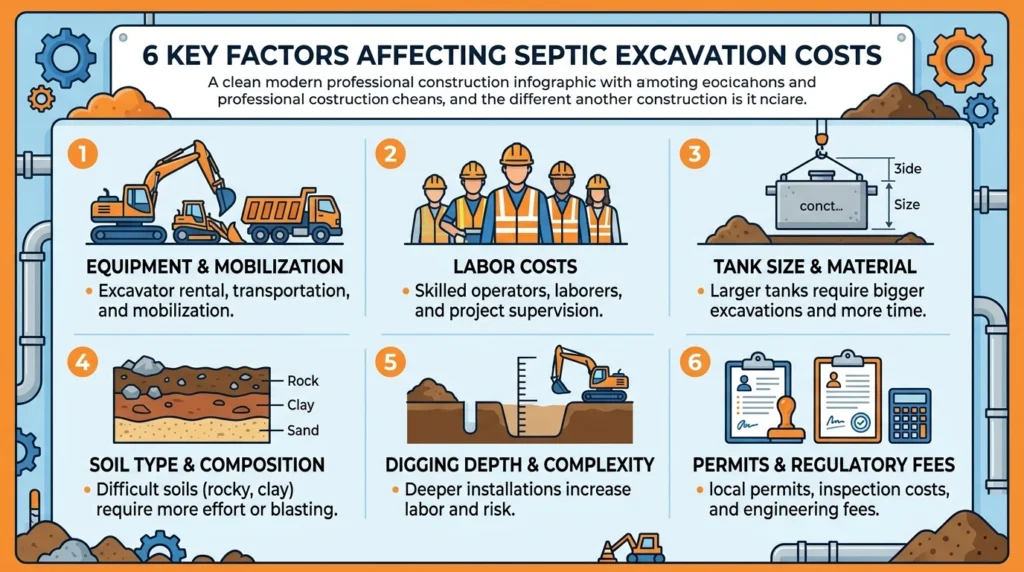
1. Equipment
Excavation contractors commonly use excavators, backhoes, or mini excavators to reach buried septic components. Equipment may be charged hourly or included in the project price.
Typical equipment rates can range from $75 to $150 per hour, depending on machine size, location, rental terms, and whether an operator is included.
A mini excavator may be more suitable when access is limited, while larger equipment can reduce excavation time on open properties.
2. Labor
Labor is another major part of the excavation cost. Skilled excavation or septic workers may charge approximately $75 to $200 per hour per worker.
A typical project may require a two- or three-person crew. Simple tank access may take only part of a day, while complicated repairs or full system replacement can take several days.
3. Tank Size and Material
Larger septic tanks generally require more excavation and handling.
A 500- to 1,000-gallon tank may be easier and less expensive to access than a 1,500- to 2,500-gallon tank. Tank material also matters because concrete tanks are substantially heavier than plastic or fiberglass tanks and may require additional equipment for removal.
4. Excavation Depth and Accessibility
Most septic tanks are buried roughly 1.5 to 3 feet below the surface, although actual burial depth varies by property and installation.
Deep tanks can increase labor and equipment time. Access becomes more difficult when the septic system is located behind structures, near retaining walls, on steep terrain, or far from an equipment access point.
5. Soil Conditions
Soil can significantly affect excavation time.
- Sandy soil: Usually easier to excavate
- Clay soil: Can require more digging effort
- Rocky soil: May require specialized equipment
- Wet soil: May require dewatering
- Hardpan or bedrock: Can substantially increase excavation costs
Unexpected underground conditions are one reason contractors may recommend a contingency allowance.
6. Permits and Inspections
Depending on local regulations, septic excavation and replacement may require permits, health department approval, inspections, or environmental compliance.
Permit and inspection expenses may range from approximately $100 to $500, although local requirements can result in higher costs.
Septic Excavation Cost by Service
Excavation Only
If the septic tank is functioning but needs to be exposed for inspection or repair, excavation may cost approximately $500 to $1,500.
Excavating a larger drain field area for repairs can cost around $1,000 to $3,000, depending on its size and accessibility.
Excavation and Tank Replacement
When a damaged tank must be removed and replaced, the project includes excavation, tank removal, site preparation, installation, backfilling, and compaction.
A tank replacement project with excavation may cost approximately $3,000 to $10,000.
Full Septic System Replacement
A failed septic system may require excavation of both the tank and drain field. The old components are removed and a new system is installed.
A complete replacement can cost approximately $8,000 to $20,000 or more, particularly when the property requires extensive excavation, drainage work, or difficult site preparation.
Additional Septic Excavation Costs
The excavation price is not always the complete project cost. Several additional expenses can appear on the final invoice.
Septic Tank Pumping
The tank may need to be pumped before excavation begins. Pumping commonly costs around $200 to $500, depending on tank size, location, and local rates.
Additional pumping may be necessary during more complicated excavation work.
Disposal and Hauling
Removing an old septic tank, contaminated soil, construction debris, or other materials can add disposal and hauling charges. These costs may range from $200 to $800 or more depending on the amount and type of material.
Heavy equipment transportation can also add to the project cost.
Landscape Restoration
Excavation can damage lawns, gardens, driveways, walkways, or other landscaping.
Basic lawn restoration may cost approximately $200 to $800, while repairing paved surfaces or replacing established landscaping can cost considerably more.
Unexpected Repairs
Once the ground is opened, contractors may discover broken pipes, damaged connections, unstable soil, buried debris, or other problems.
Pipe repairs may add roughly $500 to $2,000, depending on the location and extent of the damage.
Setting aside a 10% to 15% contingency budget can help cover unexpected expenses.
Septic Excavation vs. Other Solutions
Excavation is not always the first or least expensive solution. The appropriate service depends on the actual problem.
| Solution | Typical Cost |
|---|---|
| Septic pumping | $190–$500 |
| Pipe jetting or replacement | $1,000–$3,000 |
| Tank excavation | $500–$1,500 |
| Full septic replacement | $8,000–$20,000+ |
If the issue is simply an overdue pumping service, excavation would be unnecessary. However, a collapsed tank, failed drain field, or damaged underground pipe may require excavation.
A professional septic inspection can help determine whether excavation is actually necessary.
How to Get an Accurate Septic Excavation Quote?
Because site conditions vary considerably, getting multiple estimates is one of the best ways to establish your actual project cost.
Request at least three quotes from licensed septic or excavation contractors. Each quote should clearly identify:
- Labor costs
- Equipment charges
- Excavation scope
- Septic pumping
- Disposal and hauling
- Permit and inspection fees
- Backfilling and compaction
- Landscape restoration
- Estimated project timeline
- Warranty information
Ask contractors whether the estimate includes unexpected soil conditions, additional excavation, and disposal of the existing tank.
Be cautious of unusually low bids that leave out equipment, permits, disposal, or restoration costs.
Ways to Save Money on Septic Excavation
Regular septic maintenance can help identify problems before they become major excavation projects. Pumping according to your system’s maintenance requirements and addressing drainage or plumbing problems early can reduce the risk of expensive failures.
You can also potentially reduce costs by:
- Comparing multiple contractor estimates
- Scheduling non-emergency work when contractors are less busy
- Combining excavation with necessary septic repairs
- Confirming all fees before work begins
- Choosing equipment appropriate for site access
- Maintaining the septic system properly
DIY septic excavation is generally not recommended. Underground utilities, unstable soil, wastewater exposure, heavy tanks, and excavation equipment create serious safety risks. Professional contractors also understand local septic regulations and installation requirements.
Real-World Septic Excavation Cost Examples
A small residential project involving access to a buried tank might cost approximately $1,200 to $2,500 once labor, equipment, and related services are included.
A complete septic system replacement may average around $12,000, although actual costs vary substantially based on the tank, drain field, soil, permits, and property conditions.
Commercial septic excavation can range from approximately $15,000 to $30,000 or more because commercial systems are generally larger and require more extensive excavation and equipment.
Emergency or weekend excavation can also carry a 50% to 100% premium when contractors charge emergency rates.
Frequently Asked Questions
How much does it cost to excavate a septic tank?
Basic excavation to expose or access a septic tank typically costs about $500 to $1,500. Deeper excavation, difficult access, rocky soil, and additional repairs can increase the price.
How much does septic tank replacement cost with excavation?
A septic tank replacement involving excavation can cost approximately $3,000 to $10,000, depending on tank size, material, labor, equipment, permits, removal, and site restoration.
Is septic excavation included in septic tank replacement?
It depends on the contractor’s quote. Some contractors provide an all-inclusive replacement price, while others list excavation, equipment, disposal, and installation separately. Always confirm what the estimate includes.
How long does septic excavation take?
Simple tank access may take part of a day, while repairs or complete system replacement can take one to five days or longer depending on excavation depth, soil, weather, equipment access, and project scope.
Can I avoid septic excavation?
Sometimes. Pumping, pipe cleaning, or localized repairs may resolve certain problems without extensive digging. However, physical damage to a buried tank, failed drain field, or underground pipe may require excavation.
Final Thoughts
So, how much does septic excavation cost? Basic excavation can start around $500 to $1,500, while excavation connected to tank replacement or a complete septic system replacement can reach $3,000 to $20,000+.
The biggest cost factors are equipment, labor, tank size, excavation depth, soil conditions, accessibility, permits, disposal, and the amount of septic work required.
Before approving excavation, have a qualified septic professional assess the problem and provide a detailed written estimate. Comparing several quotes can help you understand the actual scope of work and avoid unexpected charges.
Now that you know how much septic excavation costs, the next step is to contact local professionals for accurate, site-specific quotes.

Ahmed Ijaz runs this construction rental directory with over 5 years of experience in SEO, content, and web optimization. Every page is built using real research, hands-on expertise, and carefully reviewed information to meet strong EEAT standards.