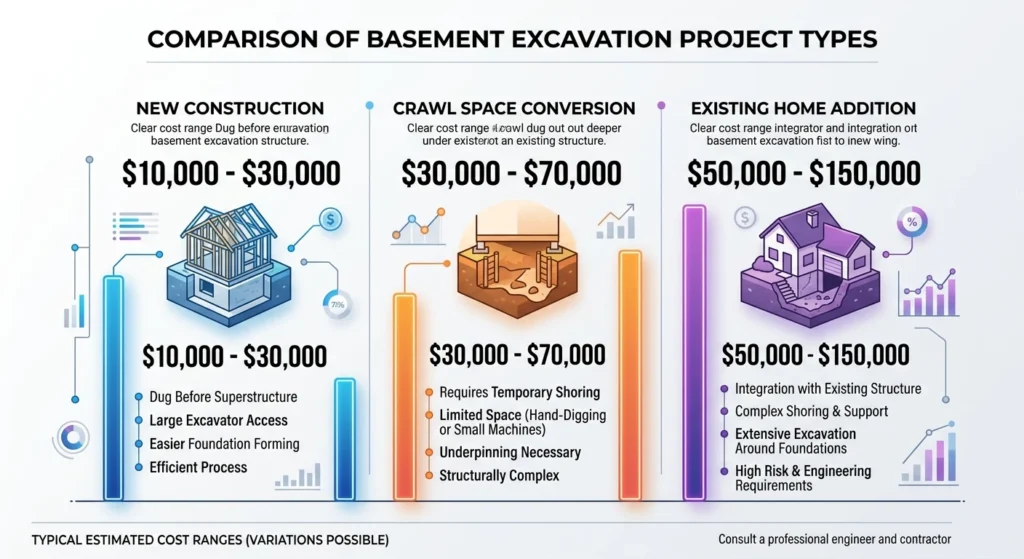
Basement excavation cost typically ranges from $10,000 to $30,000 for new construction, while excavating beneath an existing home can cost $50,000 to $150,000 or more. Converting a crawl space into a basement may cost roughly $30,000 to $70,000, depending on the home’s structure, soil, depth, and access.
Average Basement Excavation Cost
| Project Type | Typical Cost |
|---|---|
| New construction basement excavation | $10,000–$30,000+ |
| Crawl space to basement conversion | $30,000–$70,000+ |
| Basement under existing home | $50,000–$150,000+ |
| Basement deepening/underpinning | $25,000–$90,000 |
| New construction per sq. ft. | $30–$100 |
| Existing-home excavation per sq. ft. | $100–$250+ |
Basement Excavation Cost Per Square Foot
For new construction, excavation may cost about $30–$100 per square foot. Converting a crawl space can range from $30–$75 per square foot, while excavating beneath an existing home can exceed $100–$250 per square foot because of structural work and restricted access.
What Affects the Cost to Dig Out a Basement?
1. Project Type
A basement excavated during new home construction is generally the least expensive because the site is open and there is no existing structure to support.
Excavating beneath an existing home is much more complicated. Contractors may need temporary shoring, underpinning, specialized equipment, and careful excavation procedures.
2. Basement Size and Depth
A larger or deeper basement requires more excavation, labor, equipment time, and soil disposal.
A standard basement is often around 8–9 feet deep. Increasing the excavation depth can substantially increase costs because additional soil must be removed and the existing foundation may require reinforcement.
3. Site Access
Equipment needs adequate space to enter and operate. Narrow lots, nearby buildings, landscaping, utility lines, and limited driveway access can increase labor costs.
Restricted access may require smaller equipment or additional manual work.
4. Structural Support and Underpinning
Excavating under an existing house requires the structure to remain stable throughout the project.
Temporary shoring and bracing can cost approximately $5,000–$20,000. Underpinning may cost around $1,000–$3,000 per pier, depending on the foundation and engineering requirements.
Because structural failure can be dangerous and extremely expensive, this work should be designed and supervised by qualified professionals.
Additional Basement Excavation Costs
Excavation is only one part of a basement project. Budget for these additional expenses:
| Cost Item | Typical Range |
|---|---|
| Building permits | $500–$3,000+ |
| Structural engineer | $1,500–$5,000 |
| Waterproofing | $2,300–$7,600 |
| Drainage system | $2,000–$6,000 |
| Plumbing rough-in | $1,000–$3,000 |
| Soil hauling | $300–$600 per truckload |
| Foundation work | $20,000–$40,000+ |
| Basement finishing | $20–$70+ per sq. ft. |
Your contractor should clearly identify which items are included in the excavation quote and which are separate.
Waterproofing and Drainage
Basement waterproofing is easier to install while the foundation is exposed. Exterior waterproofing may cost roughly $2,300–$7,600, while drainage systems can add another $2,000–$6,000.
If the water table is high, dewatering may also be necessary during excavation. This can increase both project costs and the construction timeline.
Basement Excavation Timeline
The excavation stage can take approximately:
- New construction: 2–6 weeks
- Under an existing home: 3–8 weeks or longer
- Crawl space conversion: Often shorter, depending on access and structural requirements
Rock, groundwater, difficult soil, utility conflicts, and limited access can extend the schedule.
How to Reduce Basement Excavation Costs?
You can control some costs by:
- Planning the basement during initial home construction.
- Getting at least three detailed contractor quotes.
- Keeping the basement layout simple.
- Comparing soil hauling and disposal costs.
- Limiting expensive finishes until later.
- Confirming whether shoring, underpinning, dewatering, hauling, and backfilling are included.
The cheapest quote is not always the best option. A detailed quote from an experienced contractor can help prevent expensive change orders.
How to Hire a Basement Excavation Contractor?
Choose a contractor with experience in basement excavation, underpinning, foundation work, and excavation beneath existing structures.
Before signing a contract, verify licensing and insurance and ask for references from similar projects.
Basement digging is closely tied to standard foundation excavation costs, as both require precise depth grading and structural soil stability.
A complete estimate should specify:
- Basement footprint and excavation depth
- Soil assumptions
- Equipment and labor
- Soil hauling and disposal
- Shoring or underpinning
- Dewatering
- Foundation work
- Waterproofing and drainage
- Backfilling and grading
- Procedures for unexpected rock or groundwater
You should also have the project evaluated by a qualified structural engineer when excavation affects an existing foundation.
Is Basement Excavation Worth the Cost?
Excavating under an existing house can cost substantially more than building a basement during new construction.
Before starting, compare the basement excavation cost with alternatives such as a home addition, attic conversion, or finishing an existing basement.
Frequently Asked Questions
What is the most expensive part of basement construction?
Excavation and foundation work are often among the largest expenses. Structural reinforcement, rock removal, groundwater, and difficult access can increase costs considerably.
Can I dig out a basement myself?
Basement excavation—especially beneath an existing home—is not a suitable DIY project. It can affect the home’s structural stability and requires specialized equipment, engineering, and safety procedures.
How long does basement excavation take?
Most projects take approximately 2–8 weeks, although difficult soil, rock, groundwater, structural work, and restricted access can extend the timeline.
Is it cheaper to build up or down?
Building an addition above ground is often cheaper per square foot than excavating beneath an existing house. However, the best option depends on property restrictions, local construction costs, and the value of additional space.
What happens if rock is found during excavation?
Contractors may use breakers, drilling, or other specialized methods to remove rock. Significant rock excavation can add $5,000–$20,000 or more to the project.
Final Thoughts
The cost to dig out a basement depends primarily on whether you are excavating during new construction or beneath an existing home. New basement excavation may cost around $10,000–$30,000, while complex existing-home projects can reach $50,000–$150,000+.

Ahmed Ijaz runs this construction rental directory with over 5 years of experience in SEO, content, and web optimization. Every page is built using real research, hands-on expertise, and carefully reviewed information to meet strong EEAT standards.