Foundation excavation is one of the first major steps in building a home, garage, basement, or other structure. But how much does foundation excavation cost? The answer depends on several factors, including the amount of soil being removed, soil type, excavation depth, equipment, labor, site access, and disposal requirements.
Typical foundation excavation costs range from about $50 to $200 per cubic yard for excavation work, while many residential foundation projects cost approximately $1,500 to $15,000 or more depending on site conditions and project size.
Understanding how excavation contractors calculate their prices can help you estimate your project cost and compare quotes more accurately.
How Much Does Foundation Excavation Cost?
The cost of foundation excavation varies significantly from one property to another. A small foundation on flat, accessible land with soft soil may cost only a few thousand dollars, while a large basement excavation involving rock, groundwater, or difficult access can exceed $15,000 or even $30,000.
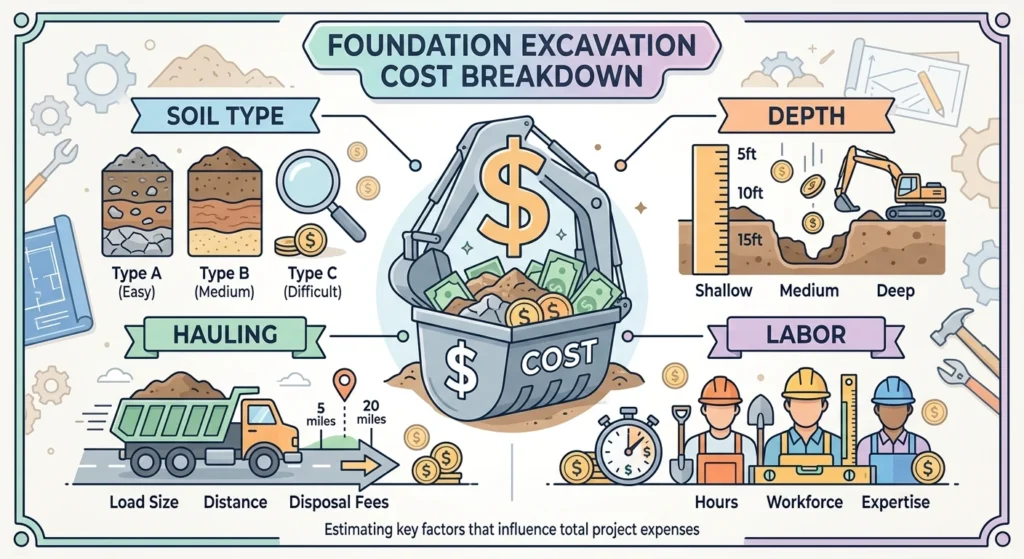
The main factors affecting the price include:
- Excavation volume
- Soil and ground conditions
- Foundation depth
- Equipment and labor
- Site accessibility
- Hauling and disposal
- Permits and site preparation
The soil type is one of the most important cost variables because hard clay, rock, and other difficult materials take longer to excavate and may require specialized equipment.
How Foundation Excavation Costs Are Calculated?
Most excavation estimates start with the amount of material that needs to be removed. Excavation volume is commonly measured in cubic yards.
Use this basic formula:
Length × Width × Depth ÷ 27 = Cubic Yards
For example, a 30-foot × 40-foot excavation that is 4 feet deep would contain:
30 × 40 × 4 ÷ 27 = approximately 178 cubic yards
At an excavation rate of $100 per cubic yard, the digging portion would be approximately $17,800.
However, this is only a simplified calculation. Actual contractor pricing may also include mobilization, labor, equipment, hauling, disposal, grading, and other site-specific costs.
Allow for Working Room
Foundation excavation generally needs additional space beyond the exact dimensions of the foundation. Contractors may need working room around the footing for:
- Concrete forms
- Waterproofing
- Drainage systems
- Foundation walls
- Equipment access
Depending on the design and site conditions, additional space may be required around the excavation.
Excavated Soil Can Expand
Soil takes up more space after it is removed and loosened. This is known as the soil swell factor.
Depending on the material, excavated soil may expand by roughly 10% to 40%. This matters when calculating the number of dump truck loads and the cost of off-site disposal.
Foundation Excavation Cost Factors
1. Soil Type
Soil type can have a major impact on foundation excavation costs.
Soft topsoil and sandy ground are generally easier to dig, while dense clay and rocky soil require more time, equipment, and labor.
Typical excavation ranges by material may include:
| Soil Type | Approximate Cost |
|---|---|
| Sandy soil/topsoil | $40–$100 per cubic yard |
| Clay | $75–$150 per cubic yard |
| Rocky ground | $100–$250 per cubic yard |
These are broad estimates rather than fixed contractor rates. Local labor costs, equipment requirements, project size, and site conditions can change the final price.
Sandy Soil and Topsoil
Loose soil is generally easier for excavators to remove. Contractors can often work faster with standard excavation equipment, keeping labor and equipment time lower.
Clay
Clay is denser and can become particularly difficult when wet. It may stick to buckets, slow production, and increase equipment wear.
Rock
Rock excavation can dramatically increase the cost of a foundation project. Contractors may need hydraulic breakers, rock excavation attachments, or other specialized methods.
Before construction, a geotechnical soil investigation can help identify conditions such as bedrock, groundwater, expansive soil, or other problems. A geotechnical report may cost approximately $500 to $2,200, depending on the property and scope of testing.
2. Excavation Depth and Foundation Design
The deeper the excavation, the more material must be removed and the more complex the work can become.
Shallow Foundation Excavation
Excavations for standard footings are generally simpler than deep basement excavations. Equipment can often access the site more easily, and there may be fewer requirements for shoring or groundwater control.
Basement Excavation
Basement excavation typically requires a much deeper cut, often around 8 to 10 feet or more. This can increase:
- Excavation volume
- Trucking requirements
- Grading work
- Shoring requirements
- Groundwater management
- Safety requirements
Because of these additional requirements, basement excavation costs commonly range from $10,000 to $30,000 or more.
Hillside Sites
Building on sloped land can be substantially more expensive than excavating on a level site. Contractors may need extensive grading, retaining structures, drainage improvements, and specialized excavation techniques.
In challenging hillside projects, foundation-related earthwork can cost several times more than comparable work on flat ground.
3. Equipment and Labor Costs
Excavation equipment is another major part of the project budget.
Common equipment costs include:
- Mini excavator: approximately $200–$500 per day
- Standard excavator: approximately $500–$1,200 per day
- Dump truck: approximately $400–$800 per day
These figures generally represent equipment or rental costs and may not include an operator, fuel, delivery, attachments, or other fees.
Mini Excavators
Mini excavators are useful when working in confined residential areas, narrow driveways, or locations where larger machines cannot easily maneuver.
Their smaller buckets can make excavation slower on large projects, however.
Standard Excavators
Larger excavators can remove significantly more material per cycle and are generally more efficient for larger foundation excavations.
Labor
Excavation contractors may charge approximately $40 to $180 per hour for labor depending on location, expertise, equipment involved, and project complexity.
For larger projects, contractors often provide a project-based estimate rather than simply multiplying an hourly rate by the expected work time.
4. Site Access and Location
The physical location of the excavation can affect both productivity and contractor pricing.
A property with a wide driveway and open construction area allows larger equipment and dump trucks to move efficiently. A property with narrow access may require smaller equipment and additional hauling time.
Difficult access can increase costs because:
- Smaller equipment may be required
- Excavation takes longer
- Truck loading becomes less efficient
- Equipment may require additional mobilization
- Soil may need to be moved multiple times
Local labor and disposal rates also vary considerably by region, so national cost averages should only be used as a starting point.
Permits and Surveys
Depending on the project and local regulations, you may also need excavation permits, site surveys, or other approvals.
Typical additional costs can include approximately:
- Permits: $50–$400
- Land survey: $400–$550
Requirements vary by location and project type.
5. Soil Removal, Hauling, and Backfill
Digging the foundation is only part of the earthwork. Once soil is removed, someone must determine whether it can remain on the property or needs to be transported elsewhere.
Soil Disposal
Off-site soil removal can cost approximately $8 to $50 per cubic yard, depending on the material, disposal facility, hauling distance, and local regulations.
A large excavation can produce hundreds of cubic yards of material, so disposal can become one of the largest expenses.
Backfilling
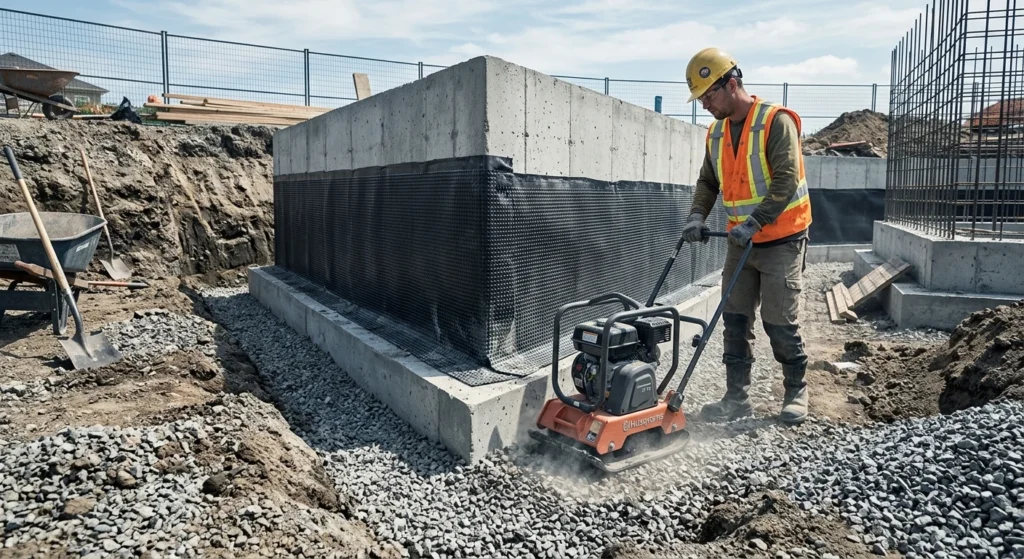
After the foundation walls are completed and waterproofing and drainage work are installed, portions of the excavation may need to be backfilled.
Depending on the design, approximately 20% to 40% of the excavated area may eventually require backfill.
Contractors may use suitable compacted gravel, select fill, or approved soil rather than unsuitable native material, particularly where drainage and structural performance are important.
Foundation Excavation Cost by Project Type
| Project Type | Typical Cost Range | Main Cost Considerations |
|---|---|---|
| Residential foundation | $5,000–$15,000+ | Excavation depth, working room, soil |
| Basement excavation | $10,000–$30,000+ | Deep excavation, shoring, hauling, groundwater |
| Utility trenching | $500–$5,000+ | Trench length, depth, soil type |
| Septic system excavation | $3,000–$10,000+ | Tank excavation and leach field |
| Land clearing and grading | $1,500–$5,000+ | Vegetation, debris, grading and erosion control |
These ranges are general planning figures. A contractor’s quote can be higher or lower depending on local conditions and the exact scope of work.
Additional Foundation Excavation Costs to Consider
Some expenses do not become obvious until the site is evaluated. Including them in your initial budget can help prevent unexpected costs.
Dewatering
If groundwater enters the excavation, contractors may need pumps, drainage systems, or other groundwater-control measures.
Dewatering can add approximately $500 to $2,000 or more depending on the amount of water and duration of the work.
Erosion Control
Sloped or disturbed sites may require erosion-control measures such as drainage channels, barriers, or other protective systems.
Trees, Stumps, and Debris
Trees, large roots, construction debris, concrete, or an existing foundation can slow excavation and require additional equipment or disposal.
Rock Removal
Unexpected rock or buried obstructions can increase excavation time significantly because standard digging equipment may not be sufficient.
Shoring
Deep excavations may require temporary support systems to protect workers and stabilize excavation walls. Shoring requirements depend on excavation depth, soil conditions, nearby structures, and applicable safety requirements.
How to Reduce Foundation Excavation Costs?
You can reduce unnecessary expenses without cutting corners on safety or foundation preparation.
Get at Least Three Excavation Quotes
Compare at least three contractors and make sure each quote covers the same scope of work.
Ask whether the estimate includes:
- Excavation
- Equipment
- Operator
- Hauling
- Disposal
- Grading
- Backfill
- Mobilization
A lower initial quote may not actually be cheaper if important services are excluded.
Schedule During Favorable Weather
Wet conditions can make clay and other soils more difficult to excavate. Mud can also slow equipment and truck movement.
When possible, schedule excavation during a period with favorable ground conditions.
Clear the Site Before Excavation
Removing brush, loose debris, and unnecessary obstacles before the excavation crew arrives can reduce preparation time.
Combine Earthwork Services
If you also need land clearing, grading, trenching, or other earthwork, bundling services with one contractor may reduce equipment mobilization and setup costs.
Calculate Excavation Volume in Advance
Estimating the approximate cubic-yard volume before requesting quotes gives you a useful way to understand the contractor’s pricing.
It also helps identify unusually high or low estimates that deserve further explanation.
Foundation Excavation Cost vs. Total Foundation Cost
It is important to distinguish foundation excavation cost from the total cost of constructing a foundation.
Excavation generally covers removing and moving soil. A complete foundation project may additionally include:
- Concrete footings
- Foundation walls
- Reinforcement
- Waterproofing
- Drainage systems
- Gravel
- Backfill
- Inspections
- Site grading
Therefore, an excavation estimate should not be treated as the total price of building the foundation itself.
Frequently Asked Questions
What is the average cost of foundation excavation?
Foundation excavation commonly costs around $1,500 to $15,000 or more for residential projects, although larger or more difficult excavations can exceed this range. Soil conditions, excavation volume, depth, access, and disposal have a major effect on the final price.
How much does it cost to excavate for a basement?
Basement excavation commonly costs approximately $10,000 to $30,000 or more. The deeper excavation, additional soil removal, possible shoring, groundwater control, and increased hauling requirements make basement projects more expensive than many shallow foundation excavations.
How is excavation priced?
Excavation may be priced by cubic yard, hourly equipment and labor rates, or as a fixed project price. Contractors typically consider excavation volume, soil conditions, equipment requirements, access, hauling, disposal, and site preparation when developing a quote.
Does rock make foundation excavation more expensive?
Yes. Rock can substantially increase excavation costs because standard excavator buckets may not be sufficient. Hydraulic breakers or other specialized equipment may be necessary, increasing both equipment time and labor.
Is soil disposal included in excavation costs?
Not always. Some contractors include hauling and disposal in their excavation quote, while others charge these services separately. Always confirm exactly how many cubic yards of soil removal are included before signing a contract.
How much extra should I budget for excavation?
A 10% to 15% contingency is a reasonable starting point for unexpected site conditions, although projects with uncertain soil or groundwater conditions may require a larger reserve.
Foundation Excavation Cost Checklist
Before excavation begins, confirm the following:
- Check underground utility locations and follow local utility-marking requirements.
- Verify soil and ground conditions.
- Complete required surveys and soil testing.
- Obtain necessary permits.
- Confirm excavation dimensions and working room.
- Ask whether hauling and disposal are included.
- Determine whether backfill is included.
- Confirm equipment and operator costs.
- Discuss groundwater and dewatering requirements.
- Include a contingency for unexpected site conditions.
Final Thoughts on Foundation Excavation Costs
So, how much does foundation excavation cost? For many residential projects, a reasonable planning range is $1,500 to $15,000+, while larger basement excavations and difficult sites can cost $30,000 or more.
The biggest variables are the amount of material being excavated, soil type, excavation depth, equipment, labor, site access, and soil disposal. Soft, accessible sites are generally less expensive, while rocky ground, deep excavations, groundwater, and hillside construction can quickly increase the budget.
Before hiring an excavation contractor, calculate the approximate excavation volume, compare multiple detailed quotes, and make sure hauling, disposal, backfill, and other additional services are clearly identified in the contract.

Ahmed Ijaz runs this construction rental directory with over 5 years of experience in SEO, content, and web optimization. Every page is built using real research, hands-on expertise, and carefully reviewed information to meet strong EEAT standards.