Hiring an excavation contractor is an important step for projects ranging from residential grading and driveway preparation to basement excavation, utility trenching, pool installation, and large commercial earthmoving. The biggest challenge is knowing whether a contractor’s quote is reasonable because excavation pricing can vary significantly from one project to another.
Most homeowners spend about $1,081 to $3,799 on excavation projects, with a residential average of around $3,972. Minor excavation work can cost as little as $438, while complex projects can reach $9,919 or more. Larger projects, such as basement excavation and commercial site preparation, can cost substantially more.
The final price depends on several factors, including soil conditions, equipment size, project type, site accessibility, excavation volume, location, labor, and material disposal.
Average Excavation Contractor Cost
Excavation contractors generally charge using one of four pricing methods:
- Hourly rates
- Daily rates
- Per-cubic-yard pricing
- Flat project rates
For smaller residential projects, hourly or flat-rate pricing is common. Larger excavation projects often use per-cubic-yard or project-based pricing.
Excavation Cost Per Hour
Typical equipment and labor rates include:
| Equipment / Service | Hourly Rate | Common Use |
|---|---|---|
| Mini excavator, 1–6 tons | $70–$110 | Residential grading, trenching, small projects |
| Medium excavator, 13–30 tons | $120–$250 | Driveways, footers, moderate construction |
| Large excavator, 50+ tons | $200–$300+ | Foundations, roads, heavy excavation |
| Skid steer loader | $75–$110 | Grading and backfilling |
| Labor/hand digging | $50–$75 | Cleanup and digging around utilities |
Excavation Cost Per Cubic Yard
Some contractors price excavation according to the amount of material removed or moved.
| Type of Excavation or Material | Cost Per Cubic Yard |
|---|---|
| Basic cut or fill | $2–$6 |
| General earth excavation | $4–$12 |
| Offsite hauling | $6–$15+ |
| Clay or hard soil | $10–$18 |
| Rocky soil | $15–$25 |
| Rock or confined-area excavation | $15–$50+ |
| Gravel installation | $25–$40 |
| Concrete removal | $50–$80 |
| Haul-away fees | $10–$20 |
Normal soil is generally much easier to excavate than rock, hard clay, concrete, or debris.
Average Excavation Project Costs
Project-based excavation costs vary considerably depending on the scope.
| Project Type | Typical Cost |
|---|---|
| Small residential excavation | $400–$800 |
| New construction excavation | $1,500–$15,000 |
| Driveway grading | $2,500–$5,000 |
| Residential pool excavation | $6,500–$12,000 |
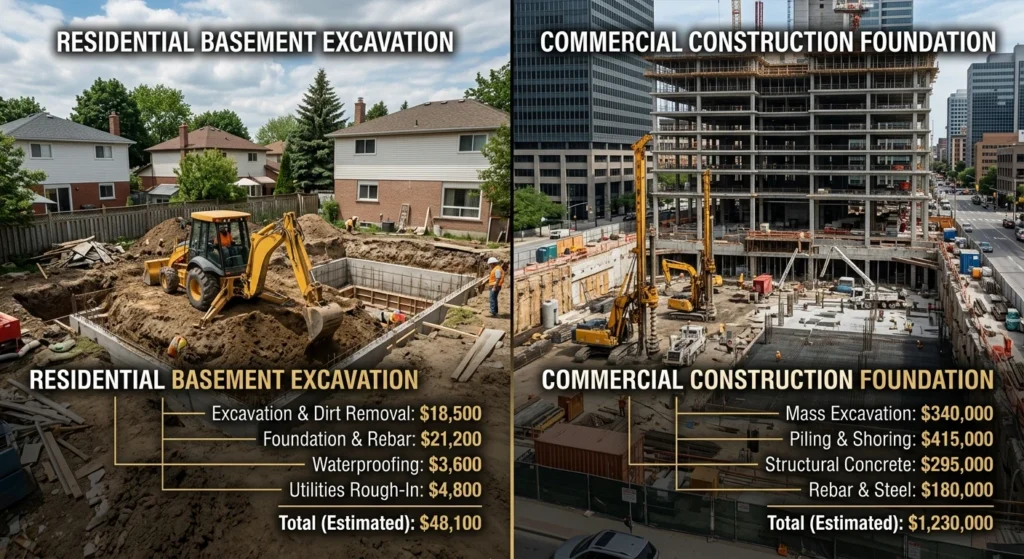
| Basement excavation for new home | $10,000–$50,000 average |
| Basement excavation under existing home | $50,000–$150,000+ |
| Commercial parking lot preparation | $25,000–$60,000 |
| Basement underpinning | $25,000–$90,000 |
The exact quote depends on soil, depth, excavation volume, equipment, access, labor, and whether excavated material must be hauled away.
What Determines the Cost to Hire an Excavation Contractor?
Excavation is not a one-size-fits-all service. Two properties with similar dimensions can receive very different quotes because the ground conditions and job requirements are different.
1. Soil Type and Ground Conditions
Standard soil is relatively easy to dig, while clay, rock, concrete, buried debris, and other hard materials require more time and specialized equipment.
General earth excavation may cost about $4–$12 per cubic yard, while rocky soil can reach $15–$25 per cubic yard. Rock excavation or work in confined areas can reach $15–$50 or more per cubic yard.
2. Excavation Type
Simple grading is usually less complicated than foundation excavation. Basement excavation, underpinning, utility trenching, and other technically demanding work may require specialized equipment, attachments, experienced operators, and additional planning.
3. Equipment Size and Type
Equipment is another major component of excavation pricing.
The right machine depends on:
- Excavation depth
- Soil conditions
- Project size
- Available working space
- Required digging force
- Hauling requirements
- Site accessibility
4. Site Access and Location
Tight urban lots, narrow driveways, fences, landscaping, overhead obstacles, and nearby structures may require smaller equipment and additional labor.
Equipment delivery can add approximately $100–$300, while remote locations can increase transportation and operating costs. Regional price differences can also be significant.
5. Excavation Volume
Large projects may receive lower per-unit pricing because contractors can operate equipment continuously and spread mobilization costs over a larger volume.
However, small jobs can still have substantial costs because contractors may apply minimum charges. Typical daily minimums are approximately $600–$1,200.
6. Material Removal and Disposal
Hauling dirt and debris can cost approximately $8–$25 per cubic yard, while dump truck removal can cost around $300–$600 per load.
If suitable excavated soil can be reused for backfill, landscaping, or grading, you may be able to reduce disposal expenses.
7. Permits and Regulatory Fees
The cost can vary by municipality and surface type. Example fees in the provided cost framework include approximately $0.20 per square foot for hard-surface disturbance and $0.10 per square foot for gravel road disturbance, with minimum fees of approximately $20–$90. New asphalt cutting can add around $150.
Always ask the contractor whether permits are included in the quoted price.
Excavation Contractor Pricing Models
Understanding how an excavation contractor charges is just as important as knowing the hourly rate.
| Pricing Method | Typical Rate | Best For |
|---|---|---|
| Hourly | $75–$300+ | Small/uncertain jobs |
| Daily | $600–$1,200 | Longer projects |
| Per cubic yard | $2–$50+ | Large earthmoving |
| Flat rate | Varies | Clearly defined projects |
Excavation Cost by Project Type
Basement Excavation Cost
Typical costs include:
- New construction basement excavation: $1,500–$15,000
- Converting a crawl space into a basement: $30,000–$70,000
- Adding a basement beneath an existing home: $50,000–$150,000+
- Basement underpinning: $25,000–$90,000
- Basement conversion: approximately $30–$70 per square foot
Pool Excavation Cost
Residential pool excavation typically costs approximately $6,500–$12,000.
Driveway Grading Cost
Driveway grading typically costs approximately $2,500–$5,000.
Land clearing and grading can range from approximately $1,659 to $6,708 on average.
The final cost depends on the existing slope, soil, amount of material to move, drainage requirements, and accessibility.
Utility Trenching
A 300-foot trench for a water line may cost approximately $4,200, although actual pricing depends on depth, soil, access, utility location, and restoration requirements.
How to Get an Accurate Excavation Contractor Quote?
Getting several quotes is useful, but comparing the numbers alone is not enough. The lowest quote isn’t always the best value; compare equipment, experience, insurance, scope and exclusions.
1. Choose a Contractor Familiar With Local Soil
A contractor experienced with clay may approach the project differently from one who primarily works in sandy soil. Ask for examples of similar excavation projects they have completed.
2. Confirm the Equipment
Ask what equipment the contractor plans to use.
The machine should be appropriate for:
Depending on your jobsite conditions, your contractor estimate will also factor in hauling logistics and dirt removal costs for excavated soil.
- Soil type
- Excavation depth
- Job size
- Site access
- Required production rate
3. Verify Licensing and Insurance
Before hiring, confirm that the contractor has appropriate licensing and insurance for the work.
Depending on the project and jurisdiction, this may include liability insurance and workers’ compensation coverage.
4. Check References and Reviews
Ask for photographs of previous projects and references from past customers.
A contractor with relevant experience and a strong reputation may be worth choosing even if their quote is not the lowest.
Questions to Ask an Excavation Contractor
Before signing a contract, ask:
- What is included in the quoted price?
- Are permits included?
- Is equipment delivery included?
- Is an operator included?
- What happens if rock or unexpected debris is discovered?
- Who handles utility marking and location?
- Is soil hauling included?
These questions can help prevent unexpected charges later in the project.
Excavation Contractor Red Flags
Be cautious when a contractor:
- Provides a vague estimate without a detailed scope
- Refuses to inspect the site before quoting
- Offers a price dramatically lower than every other contractor
- Does not put the scope of work in writing
- Cannot explain how unexpected soil conditions will affect pricing
- Does not clearly identify who is responsible for permits or utility locating
A very low bid is not automatically the best deal. It may indicate that important services or potential costs have been excluded from the estimate.
How to Save Money on Excavation Costs?
- Improve site access
- Reuse suitable soil
- Get three quotes
- Schedule during favorable weather
- Bundle related work
Frequently Asked Questions
How much does excavation cost per hour?
Excavation generally costs $70–$300+ per hour, depending on equipment size. Mini excavators typically cost $70–$110 per hour, medium excavators $120–$250, and large excavators $200–$300+ per hour.
What factors affect excavation costs the most?
The major factors include soil conditions, excavation type, equipment, site access, excavation volume, material removal, disposal, permits, and location. The provided cost model identifies soil conditions as the largest factor, followed by excavation type and volume.
How much does basement excavation cost?
New-construction basement excavation can cost approximately $1,500–$15,000. Converting a crawl space can cost around $30,000–$70,000, while adding a basement beneath an existing home can cost $50,000–$150,000+.
Do excavation contractors charge a minimum fee?
Yes. Many contractors have daily minimums of approximately $600–$1,200. Small residential projects may cost around $400–$800 depending on the scope and contractor.
Is it cheaper to hire an excavator by the hour or by the project?
It depends on the job. Hourly pricing can work well when the scope or ground conditions are uncertain. A flat project price can provide greater budget certainty when the scope is clearly defined. Per-cubic-yard pricing may be useful for large projects with predictable excavation volumes.
Should I choose the cheapest excavation contractor?
Not necessarily. A low quote may exclude hauling, disposal, permits, equipment delivery, or other necessary work. Compare the complete scope, experience, insurance, equipment, reputation, and exclusions before making a decision.
How can I lower my excavation costs?
You can potentially save money by getting multiple quotes, improving site access, scheduling during favorable weather, reusing suitable excavated soil, bundling related services, and clearly defining the scope before work begins.
Conclusion
Excavation contractor costs depend on soil conditions, equipment, project size, site access, labor, and disposal. Before hiring, compare at least three detailed quotes and understand what each includes.
Planning trenching or waste removal? Check trenching cost per foot and what size dumpster you need to estimate your total project expenses more accurately.

Ahmed Ijaz runs this construction rental directory with over 5 years of experience in SEO, content, and web optimization. Every page is built using real research, hands-on expertise, and carefully reviewed information to meet strong EEAT standards.