
For most residential excavation projects, homeowners can expect to spend roughly $1,500 to $7,000, with an overall average of around $3,972. However, larger projects such as basement excavation, major grading, or excavation beneath an existing home can cost considerably more.
This guide explains residential excavation costs by project type, the factors that affect pricing, common contractor pricing models, and how to get an accurate estimate.
Average Residential Excavation Costs by Project Type
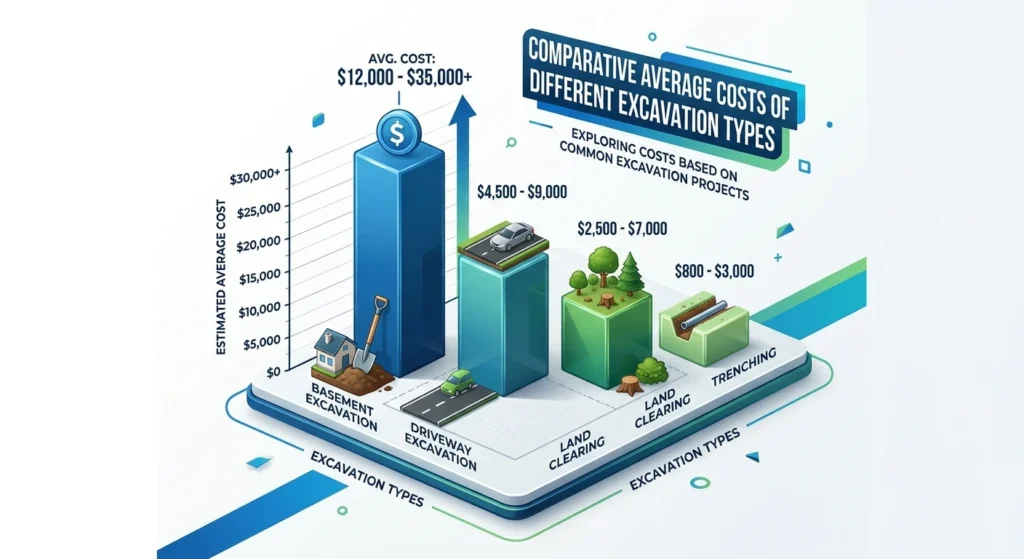
The easiest way to estimate your budget is to start with the type of excavation you need.
| Project Type | Typical Cost |
|---|---|
| New construction excavation | $1,500–$15,000 |
| Basement excavation for a new home | $1,500–$15,000 |
| Digging out an existing crawl space | $30,000–$70,000 |
| Basement under an existing home | $50,000–$150,000+ |
| Utility trenching | $8–$25 per linear foot |
| Driveway excavation | $5–$15 per sq. ft. |
| Septic excavation and installation | $3,000–$10,000+ |
| Land clearing | $1,400–$5,800 |
| Land grading | $1,000–$4,000 |
These figures are general estimates. Local labor rates, equipment availability, soil conditions, and disposal requirements can significantly change the final price.
New Construction Excavation
Excavating for a new home generally costs $1,500 to $15,000.
The work may include clearing the building site, removing topsoil, digging foundation trenches, preparing the building pad, grading, and hauling away excess soil.
A relatively flat lot with easy access may be close to the lower end of the range, while a sloped property, rocky site, or large home footprint can push costs toward the higher end.
Basement Excavation
Basement excavation can have one of the widest residential price ranges.
For a new home, basement excavation may cost approximately $1,500 to $15,000. The excavation is normally performed before the foundation is constructed.
Excavating beneath an existing home is much more expensive:
- Digging out an existing crawl space: $30,000–$70,000
- Adding a basement beneath an existing home: $50,000–$150,000+
- Typical basement excavation cost: approximately $30–$70 per square foot
Utility Trenching
Residential utility trenching typically costs $8 to $25 per linear foot.
Trenching may be required for:
- Water lines
- Sewer lines
- Gas lines
- Electrical cables
- Internet and fiber-optic lines
- Drainage systems
The trench depth, soil type, utility requirements, and distance from the equipment to the work area all influence the price.
Driveway Excavation
Driveway excavation generally costs around $5 to $15 per square foot.
The price may include removing existing soil or material, clearing vegetation, preparing the subgrade, and grading the area before installing gravel, asphalt, concrete, or another driveway surface.
Septic System Excavation
Excavation associated with a residential septic system can cost approximately $3,000 to $10,000 or more, depending on the project.
The total may include excavation for the septic tank, drain field, connecting trenches, installation, backfilling, and grading.
Land Clearing and Grading
If your residential project begins with an undeveloped or uneven lot, you may need both clearing and grading.
Land clearing: approximately $1,400–$5,800
Land grading: approximately $1,000–$4,000
Factors That Affect Residential Excavation Costs
Two properties requiring the same amount of excavation can have very different prices. The following factors are usually responsible for the difference.
Project Scope and Size
The amount of soil that must be removed is one of the most important cost factors.
Contractors may calculate excavation based on the volume of material, usually measured in cubic yards.
A small utility trench requires far less excavation than a full foundation or basement. Deeper and wider excavations also require more equipment time, labor, and potentially additional safety measures.
Site Accessibility
Equipment needs room to enter, maneuver, and remove excavated material.
A large excavator may work efficiently on an open lot, while a backyard with a narrow gate or limited access may require a mini excavator or other compact equipment.
Restricted access can increase labor hours and project duration because smaller machines may need more passes to complete the same excavation.
Soil Type and Terrain
Soil conditions can dramatically affect excavation productivity.
Loose, relatively obstacle-free soil is generally the easiest and least expensive to excavate. Heavy clay, compacted soil, rocky terrain, and large buried rocks can require additional time and specialized attachments.
Depending on the site, difficult soil can add $200 to $1,200 or more to a project
Labor and Equipment Costs
Residential excavation typically involves both heavy equipment and a qualified operator.
A general combined labor and equipment rate may fall around $70 to $150 per hour, while equipment with an operator can commonly cost approximately $100 to $250 per hour, depending on machine size and local market conditions.
Contractors may also charge minimum daily or mobilization fees, particularly for smaller jobs.
Dirt Removal and Disposal
Excavating soil is only part of the job. If there is no suitable location on the property for the excavated material, it must be transported elsewhere.
Soil hauling and disposal can cost approximately $8 to $25 per cubic yard, although actual prices depend on hauling distance, truck availability, local disposal fees, and the type of material.
For large excavation projects, dirt disposal can become a significant portion of the total budget.
Permits and Regulations
Some residential excavation projects require local permits, inspections, utility locating, engineering, or other approvals.
Major excavation projects may also require structural engineering and additional permits, potentially adding $2,000 to $8,000 or more.
Before excavation begins, check local requirements to avoid delays and unexpected expenses.
Geographic Location
Excavation prices vary significantly by location.
Areas with higher labor costs, expensive fuel, limited contractor availability, or higher disposal fees generally have higher excavation rates.
The Northeast and Pacific Coast, for example, can sometimes run 20% to 30% above national averages.
Seasonality
In some areas, off-season work from November through March can be approximately 15% to 25% cheaper. However, winter excavation has its own challenges.
Hidden Obstacles and Unexpected Costs
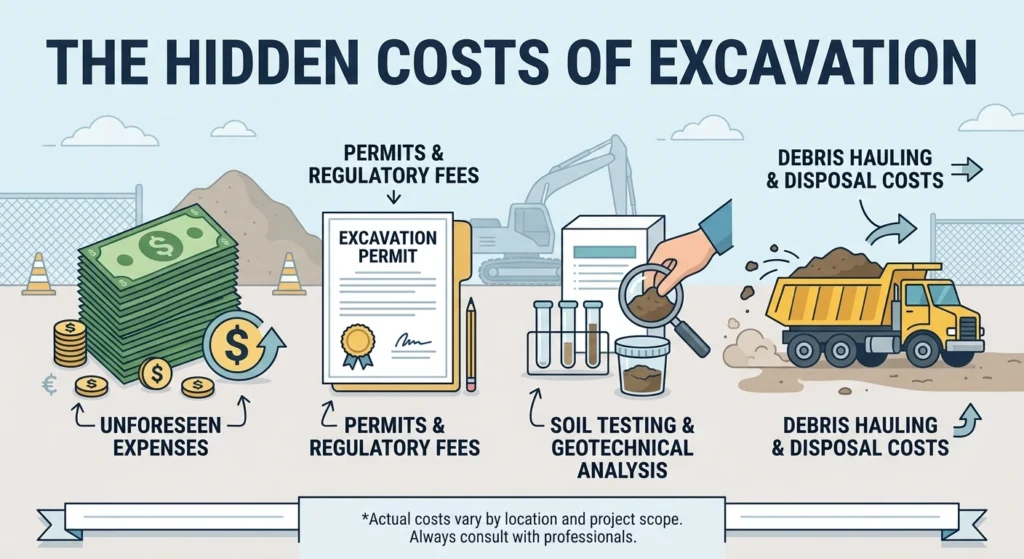
Unexpected site conditions are one of the biggest reasons an excavation estimate can increase.
Potential problems include:
- Underground utility lines
- Buried concrete or debris
- Large rocks
- Unstable soil
- Groundwater
- Contaminated soil
- Unexpected drainage problems
Soil testing or contamination cleanup can cost approximately $700 to $2,200.
How Excavation Contractors Charge?
Residential excavation contractors generally use one of three pricing methods.
Flat-Rate Pricing
A contractor might quote $2,000 to grade a residential lot. Flat-rate pricing is convenient because you know the expected project cost before work begins
Hourly Rates
Hourly excavation rates commonly range from approximately $70 to $150 per hour for labor and equipment, although actual equipment-with-operator rates can be higher.
Cost Per Cubic Yard
Typical excavation costs can range from approximately $10 to $50 per cubic yard.
Residential Excavation Cost Per Square Foot
Residential excavation isn’t normally priced purely by square foot because depth, soil, excavation volume, equipment and access have a major impact.For Example:
- Driveway excavation: $5–$15/sq. ft.
- Basement excavation: approximately $30–$70/sq. ft.
How to Get an Accurate Residential Excavation Estimate?
A little preparation can help you avoid unexpected costs.
1. Calculate the Excavation Volume
Start by estimating how much material needs to be removed.
For a simple rectangular excavation:
Length × Width × Depth = Cubic Feet
Then divide the result by 27 to convert cubic feet into cubic yards:
Cubic Yards = Length × Width × Depth ÷ 27
For example, a 20-foot-long, 10-foot-wide excavation that is 3 feet deep would contain:
20 × 10 × 3 = 600 cubic feet
600 ÷ 27 = approximately 22.2 cubic yards
Remember that actual excavation quantities can differ because of irregular terrain, sloping, over-excavation, and soil expansion after digging.
2. Get Multiple Quotes
Try to obtain estimates from at least three to four licensed excavation contractors.
Don’t automatically choose the lowest quote. Compare:
- Labor
- Equipment
- Mobilization
- Dirt removal
- Disposal
- Grading
- Cleanup
- Permits
- Potential additional charges
A slightly higher quote may provide substantially more complete service.
3. Prepare the Site
Removing unnecessary debris and ensuring equipment can reach the excavation area may reduce labor and equipment time.
Before the contractor arrives, identify property boundaries and discuss access restrictions.
Never assume an area is safe to dig simply because there are no visible utility lines.
4. Ask What the Quote Includes
Before signing a contract, ask:
- Is dirt removal included?
- Are disposal fees included?
- Is final grading included?
- Are equipment delivery and mobilization included?
- What happens if rock is discovered?
- Are permits included?
- Are there additional charges for difficult soil?
- Is cleanup included?
- Does the contractor carry the required insurance and licenses?
How to Reduce Residential Excavation Costs?
There are several ways homeowners can potentially keep excavation costs under control.
Improve equipment access: Clear unnecessary obstacles and provide the widest practical access route.
Plan excavation and hauling together: Coordinating excavation with dump-truck availability can reduce equipment downtime.
Reuse suitable soil: If the excavated material is appropriate for backfilling or grading, keeping it on-site may reduce disposal costs.
Get quotes before scheduling: Comparing several contractors helps establish a realistic local price.
Handle permits early: Delays caused by missing permits or inspections can increase labor and equipment costs.
Avoid changing the project midway: Design changes after excavation begins can lead to additional digging, hauling, grading, and labor.
Frequently Asked Questions
How much does it cost to excavate per cubic yard?
Residential excavation commonly costs around $10 to $50 per cubic yard. The actual rate depends on soil conditions, excavation depth, equipment, labor, hauling, and whether the soil needs to be removed from the property.
Why is residential excavation so expensive?
Excavation requires expensive machinery, skilled operators, fuel, transportation, labor, and sometimes soil disposal. Difficult soil, restricted access, underground obstacles, and deep excavation can further increase costs.
Is it cheaper to excavate in winter?
In some regions, excavation contractors may offer 15% to 25% lower off-season rates during winter. However, frozen ground, snow, rain, and weather delays can make excavation more difficult and potentially increase labor costs.
Can I excavate my own land?
Small excavation projects can sometimes be completed with rented equipment, but professional excavation is generally safer for foundation, basement, utility, and deep excavation work.
Before digging, underground utilities should be properly located. Incorrect excavation can damage utilities, neighboring structures, drainage systems, or the property itself.
How much does it cost to excavate a basement?
A new-home basement excavation may cost around $1,500 to $15,000, while excavating beneath an existing home can cost $50,000 to $150,000 or more because of structural support, access limitations, waterproofing, and other specialized work.
What is the cheapest type of residential excavation?
Simple, shallow excavation on a flat site with loose soil and easy equipment access is generally the least expensive. Small utility trenches and basic grading projects can cost considerably less than foundation or basement excavation.
Conclusion
The biggest cost factors are project size, excavation depth, soil type, site accessibility, equipment, labor, dirt disposal, permits, and unexpected underground obstacles.
For an accurate budget, calculate the approximate excavation volume, determine whether soil must be hauled away, and get at least three professional quotes. Most importantly, ask contractors to clearly identify what is included in their estimates and how unexpected conditions will be billed.

Ahmed Ijaz runs this construction rental directory with over 5 years of experience in SEO, content, and web optimization. Every page is built using real research, hands-on expertise, and carefully reviewed information to meet strong EEAT standards.