One cubic yard of dirt typically weighs 2,000 to 3,000 pounds (1 to 1.5 tons), depending on the soil type, moisture content, and compaction level. Dry, loose topsoil generally weighs less than wet clay or dense fill dirt.
Knowing how much a cubic yard of dirt weighs helps you estimate delivery loads, choose the right truck, calculate material requirements, and avoid overloading equipment. The exact weight depends on the material you are buying or excavating.
How Much Does a Cubic Yard of Different Types of Dirt Weigh?
Different types of soil have different densities. Use these approximate ranges to estimate the weight of one cubic yard.
| Type of dirt | Approximate weight per cubic yard |
|---|---|
| Dry topsoil | 2,000–2,400 lbs |
| Moist topsoil | 2,400–2,700 lbs |
| Dry fill dirt | 2,000–2,700 lbs |
| Moist or compacted fill dirt | 2,700–3,000+ lbs |
| Sandy soil | 2,400–2,700 lbs |
| Wet clay | 2,700–3,200+ lbs |
| Soil mixed with gravel | 2,800–3,000+ lbs |
These are general estimating ranges, not fixed specifications. Actual weight varies with mineral composition, water content, and how the material is measured.
How Much Does One Cubic Yard of Topsoil Weigh?
One cubic yard of topsoil typically weighs 2,000 to 2,700 pounds, depending on moisture and organic matter content. Dry, loose topsoil usually weighs less than moist or densely packed topsoil.
Topsoil is the upper layer of soil used for gardening, landscaping, lawns, and planting beds. It contains minerals, organic matter, and nutrients that support plant growth.
- Dry topsoil: Generally weighs around 2,000–2,400 pounds per cubic yard.
- Moist topsoil: Can weigh approximately 2,400–2,700 pounds per cubic yard.
- Compost-enriched topsoil: Weight varies with the proportion of compost and its moisture content.
When ordering topsoil, ask the supplier for the estimated weight and whether the material is screened or mixed with compost.
How Much Does One Cubic Yard of Fill Dirt Weigh?
One cubic yard of fill dirt generally weighs 2,000 to 3,000 pounds or more. Its weight depends on the amount of sand, clay, gravel, moisture, and other materials it contains.
Fill dirt is commonly used for:
- Filling holes and low areas
- Raising ground levels
- Backfilling foundations and trenches
- Preparing sites for construction
- Supporting grading and landscaping projects
Clean, relatively dry fill dirt may weigh less than wet clay-rich material. Fill dirt containing rocks or dense gravel can weigh considerably more.
For construction projects, confirm whether the required quantity refers to loose fill dirt delivered by a supplier or compacted material specified in the project plans.
What Factors Affect the Weight of a Cubic Yard of Dirt?
Three main factors determine how much a cubic yard of dirt weighs: moisture content, soil composition, and compaction.
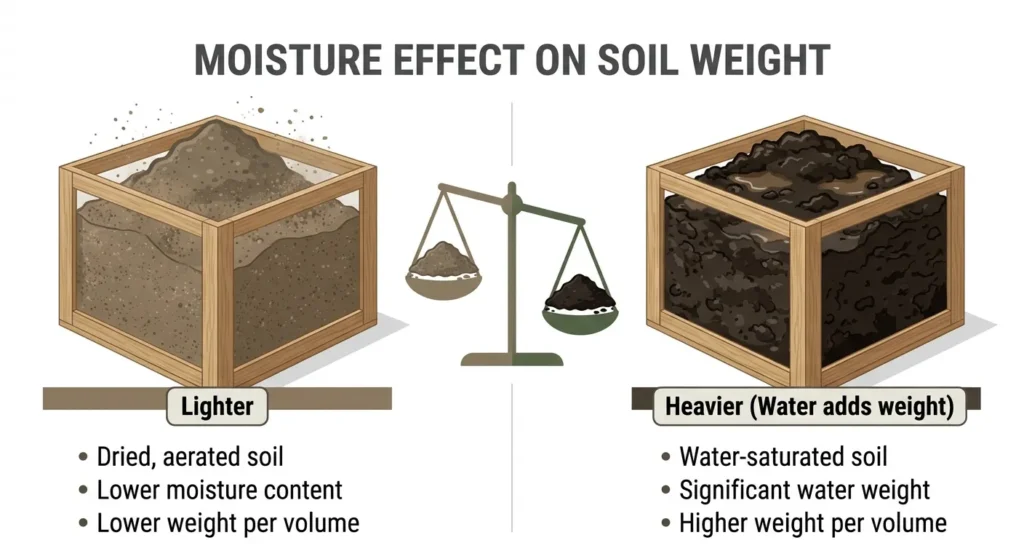
1. Moisture Content
Water adds weight to soil without significantly increasing its volume. As a result, wet dirt can weigh substantially more than dry dirt of the same type.
For example, one cubic yard of dry soil might weigh 2,000 pounds, while the same volume of wet soil could weigh 2,500 pounds or more.
Saturated clay and muddy excavation material can be especially heavy. When estimating hauling requirements, account for recent rainfall, groundwater, and the condition of the excavated soil.
2. Soil Composition
The minerals and organic matter in soil affect its density.
- Sand: Often relatively dense, especially when moist or compacted.
- Clay: Can retain considerable water and become very heavy when wet.
- Organic topsoil: May be lighter because it contains organic matter.
- Gravelly soil: Can weigh more because of its dense mineral content.
Two cubic yards of dirt can have different weights even when they appear similar in a pile. The soil composition and moisture level determine the actual weight.
3. Compaction and Loose Volume
Compaction changes how much soil fits into a given volume. When soil particles are pressed closer together, the same cubic yard of compacted soil can weigh more than a cubic yard of loose soil.
Construction projects commonly distinguish between three volume measurements:
- Bank cubic yard (BCY): Soil measured in its undisturbed, natural state.
- Loose cubic yard (LCY): Soil measured after excavation, when it has expanded.
- Compacted cubic yard (CCY): Soil measured after it has been placed and compacted.
Excavated soil generally occupies more space after loosening. Therefore, a cubic yard of loose dirt and a cubic yard of compacted dirt do not necessarily contain the same mass.
When ordering material, check whether the supplier sells it by loose volume, weight, or another specified measurement.
How Many Tons Does One Cubic Yard of Dirt Weigh?
One cubic yard of dirt typically weighs 1 to 1.5 tons, using the common US short ton of 2,000 pounds. Heavier wet clay or gravel-rich soil may exceed 1.5 tons per cubic yard.
Use this formula to convert pounds into tons:
Weight in tons = Weight in pounds ÷ 2,000
Examples:
| Weight in pounds | Weight in US short tons |
|---|---|
| 2,000 lbs | 1 ton |
| 2,400 lbs | 1.2 tons |
| 2,600 lbs | 1.3 tons |
| 2,800 lbs | 1.4 tons |
| 3,000 lbs | 1.5 tons |
For a quick construction estimate, 1.5 tons per cubic yard is a useful starting point when the dirt’s actual weight is unknown. It is not a guaranteed upper limit, particularly for saturated soil or material containing dense rocks.
How Much Dirt Can a Pickup Truck Carry?
A pickup truck’s safe dirt-carrying capacity depends on its rated payload, the weight of its occupants and cargo, and the density of the soil.
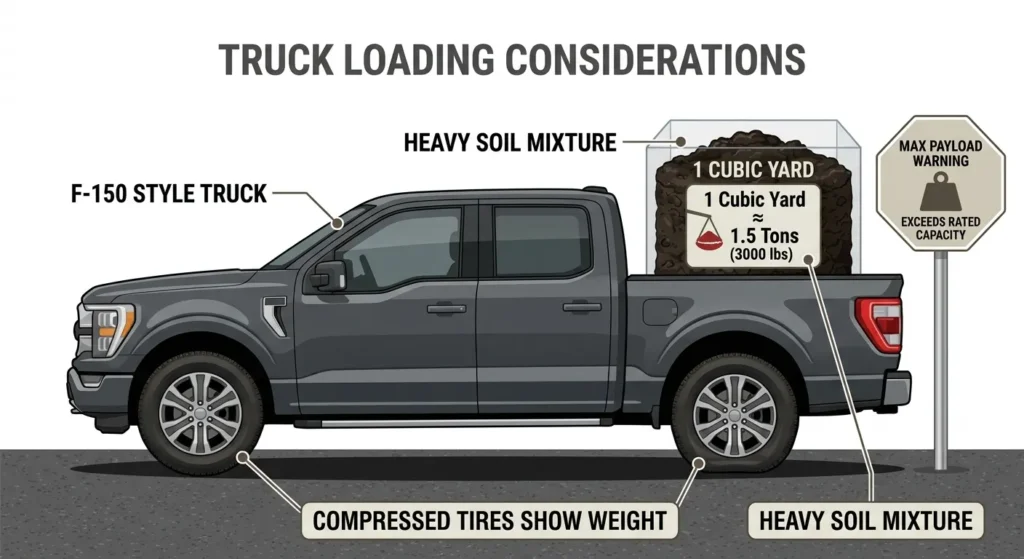
A half-ton pickup may carry approximately half a cubic yard to one cubic yard of dirt in some situations, but this is only a rough estimate. The truck’s actual payload rating may require a smaller load.
For example, if dirt weighs 2,500 pounds per cubic yard:
- Half a cubic yard weighs approximately 1,250 pounds.
- Three-quarters of a cubic yard weighs approximately 1,875 pounds.
- One cubic yard weighs approximately 2,500 pounds.
These figures cover the dirt alone. Passengers, tools, accessories, and other cargo also count toward the vehicle’s payload.
Always check the truck’s door-jamb payload information and applicable axle and vehicle weight limits before loading. Do not rely on the truck bed’s physical capacity alone.
Is It Cheaper to Buy Dirt by the Bag or by the Cubic Yard?
Bagged soil is convenient for small gardening projects, while bulk dirt is often more economical for large landscaping and construction jobs.
A typical bag of soil contains 40 pounds of material. If one cubic yard weighs 2,400 pounds, it contains the equivalent of approximately 60 bags by weight.
However, bagged soil and bulk dirt may have different compositions and moisture levels, so this comparison is only an estimate. Bagged products also vary in size and weight.
Choose bagged soil when:
- You need a small quantity.
- You are filling containers or raised beds.
- You need easy handling and storage.
Choose bulk dirt when:
- You need several cubic yards.
- You are filling a large area or preparing a construction site.
- Delivery is more practical than transporting individual bags.
Compare the total price, delivery charge, material quality, and quantity before choosing between the two options.
How to Calculate the Number of Cubic Yards of Dirt You Need?
To calculate the volume of dirt required for a rectangular area, multiply its length, width, and depth in feet, then divide the result by 27.
Formula:
Cubic yards = Length × Width × Depth ÷ 27
For example, suppose you need to fill an area that is 10 feet long, 8 feet wide, and 1 foot deep.
10 × 8 × 1 = 80 cubic feet
80 ÷ 27 = approximately 2.96 cubic yards
You need about 3 cubic yards of dirt before allowing for settlement, compaction, or uneven ground.
To estimate the weight, multiply the required volume by the estimated weight per cubic yard. If the dirt weighs 2,400 pounds per cubic yard, 3 cubic yards would weigh approximately 7,200 pounds.
For raised beds or structures with weight restrictions, confirm that the supporting surface can handle the total load. Lightweight growing mixes may be more suitable than ordinary fill dirt.
Frequently Asked Questions
How much does one cubic yard of dirt weigh in tons?
One cubic yard of dirt generally weighs about 1 to 1.5 US short tons, or 2,000 to 3,000 pounds. Wet clay and gravel-rich soil may weigh more.
What is the heaviest type of dirt?
Wet, dense clay and soil containing substantial gravel or rocks can be among the heaviest common soil materials. Their exact weight depends on water content, composition, and compaction.
How many wheelbarrows are in one cubic yard of dirt?
The number depends on the wheelbarrow’s capacity. A typical contractor wheelbarrow holding 4.5–6 cubic feet requires approximately 4.5–6 full loads to move one cubic yard. Smaller garden wheelbarrows may require 9–14 loads.
The weight per load depends on the soil. A full wheelbarrow can become difficult or unsafe to move when carrying wet, dense dirt.
Does wet dirt weigh more than dry dirt?
Yes. Wet dirt weighs more because it contains additional water. The difference depends on the soil’s initial moisture level and how much water it retains.
How many pounds are in half a cubic yard of dirt?
If one cubic yard weighs 2,000–3,000 pounds, half a cubic yard weighs approximately 1,000–1,500 pounds. Wet or unusually dense material may weigh more.
How much does 2 cubic yards of dirt weigh?
Two cubic yards of dirt typically weigh approximately 4,000–6,000 pounds, assuming a weight of 2,000–3,000 pounds per cubic yard.
Conclusion
One cubic yard of dirt typically weighs 2,000 to 3,000 pounds (1 to 1.5 US short tons). The actual weight depends on soil type, moisture content, and compaction.
For accurate estimates, identify whether you are working with topsoil, fill dirt, clay, or gravelly soil. Then calculate the required cubic yards and use a realistic weight range to plan delivery and hauling.
Before placing an order, ask the supplier about the material’s moisture condition, whether it is sold by weight or volume, and whether the quoted quantity refers to loose or compacted soil. For truck transport, always verify the vehicle’s rated payload rather than relying on a general estimate.

Ahmed Ijaz runs this construction rental directory with over 5 years of experience in SEO, content, and web optimization. Every page is built using real research, hands-on expertise, and carefully reviewed information to meet strong EEAT standards.