A mobilization fee is the pre-construction charge for getting excavation equipment, crew, permits, and temporary site infrastructure to a project before digging begins. It commonly falls around 5%–10% of the total contract value, although the actual amount depends on equipment, haul distance, site access, permits, and project size. Unlike excavation charges, mobilization pays for preparing the job so the contractor can begin work.
What Is an Excavation Mobilization Fee?
An excavation mobilization fee covers the costs of moving resources from the contractor’s yard to the jobsite and preparing the site for construction. It is usually shown as a separate line item in an excavation estimate or construction contract.
Mobilization occurs before excavation work begins. It can include equipment hauling, crew travel, permits, temporary facilities, utility coordination, and initial site setup. The actual excavation is then priced separately by the cubic yard, hour, linear foot, or as a lump-sum project price.
Keeping mobilization separate helps contractors recover substantial startup expenses before excavation generates production revenue. For example, moving a 20-ton excavator may require a specialized trailer, transportation permits, and an escort depending on the route and load dimensions.
What Does an Excavation Mobilization Fee Cover?
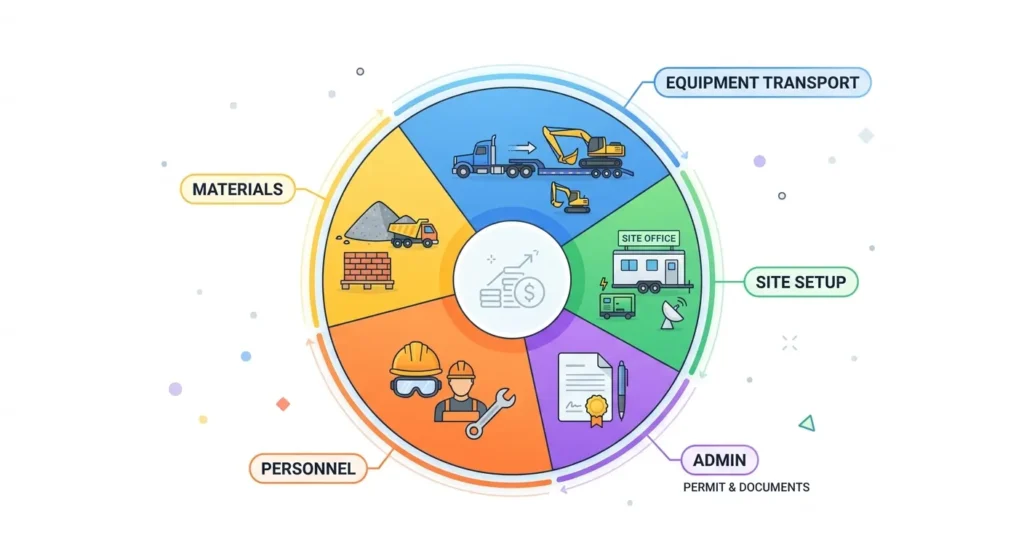
Equipment Transportation
Equipment hauling is usually the largest component of mobilization. Excavators, bulldozers, loaders, rollers, and other heavy machinery may require lowboy, step-deck, or other specialized trailers.
A single equipment move can cost roughly $500–$2,000, depending on the machine, distance, loading requirements, and local transportation market. Oversize or overweight equipment may also require permits and escort vehicles.
Mobilization can also account for demobilization, which is the cost of removing equipment from the project after the work is finished.
Site Setup
The fee may include temporary site facilities and improvements needed before excavation starts. Depending on the project, this can involve temporary power and water, portable toilets, fencing, signage, erosion controls, access roads, equipment pads, or other temporary infrastructure.
The more complicated the site setup, the greater the mobilization cost can become.
Permits and Administrative Work
Contractors may include the cost of excavation permits, right-of-way permits, road-occupancy approvals, insurance documentation, bonding, and utility coordination.
Utility locating can also be part of the startup process. This may include coordinating public utility marking through 811 and arranging private utility locating where necessary.
Crew Travel and Startup Labor
Mobilization isn’t limited to equipment. Contractors may also account for operator and foreman travel, lodging, per diem, and nonproductive hours required to get the crew established at the site.
Materials Purchased Before Work Begins
Some projects require materials to be purchased before excavation starts. Gravel, geotextiles, drainage materials, or similar supplies may be ordered in advance. If the project is cancelled, these materials may generate restocking charges or may not be refundable.
How Much Is an Excavation Mobilization Fee?
A common estimating range is approximately 5%–8% of the contract value for straightforward projects with good access and relatively short transportation distances. More complicated projects can reach 8%–12% or more, particularly when they involve remote locations, multiple work areas, long equipment hauls, or repeated mobilization.
Large projects may show a smaller percentage because the overall contract value is much higher, even though the actual mobilization expense can still be substantial.
The percentage alone, however, should not be used to estimate a mobilization fee. A more accurate estimate starts with the actual equipment and transportation requirements.
Factors That Affect Mobilization Cost
Haul distance is one of the biggest variables. A local equipment move may cost considerably less than transporting machinery across several states.
Equipment quantity and size also change the price. Mobilizing one excavator is very different from transporting an excavator, dozer, loader, roller, attachments, and support equipment.
Site accessibility can add major expenses. A restricted urban site or backyard project may require specialized lifting or additional handling. In some situations, crane access alone can add $2,500–$5,000.
Seasonal demand and local equipment availability can also affect transportation and rental costs.
Mobilization Payment: Lump Sum or Staged?
Mobilization may be paid as a lump sum or through staged payments. Some contracts release part of the mobilization payment when equipment arrives and the remaining amount after the site has been fully established.
The contract should clearly state when mobilization becomes payable and whether the payment is tied to equipment arrival, site setup, or another defined milestone.
Mobilization Fees and Contract Terms
Mobilization can appear as a separate contract pay item or be incorporated into a larger lump-sum price. A separate line item makes it easier to identify transportation and startup costs and can reduce confusion when project conditions change.
Cancellation terms are particularly important. If a client cancels before mobilization begins, the contractor may be able to retain part of a deposit to cover scheduling and preparation costs. Once equipment has been loaded or dispatched, transportation expenses may already be committed and therefore become non-refundable.
A mobilization deposit agreement should identify the amount, payment date, cancellation conditions, equipment-dispatch point, and circumstances under which the deposit is refundable or forfeited.
How Contractors Can Reduce Mobilization Costs?
The most reliable way to control mobilization costs is to create the transportation plan before setting the price.
Contractors should identify every machine, record its weight and dimensions, select the appropriate trailer, determine the transportation route, and obtain current hauling quotes. This is more accurate than applying the same percentage used on previous projects.
Combining attachments, buckets, mats, and other equipment with the primary machine can eliminate separate transportation trips. Contractors can also coordinate equipment leaving one project with equipment traveling to another project to create backhaul opportunities.
For smaller or infrequently used machines, local rental can sometimes cost less than transporting an owned machine over a long distance. The comparison should include round-trip freight, rental charges, downtime, and equipment availability.
Completing utility locating and other preconstruction requirements early can also reduce delays and prevent costly site disruptions.
Common Mobilization Fee Problems
One common problem occurs when contractors underestimate the distance or number of equipment moves required. A mobilization charge that does not reflect actual transportation requirements can consume the contractor’s expected profit before productive excavation begins.
Owners have a different concern: excessive front-loading. A reasonable mobilization charge should be supported by identifiable costs such as hauling, permits, setup, and startup labor. A disproportionately large mobilization payment can create cash-flow and change-order concerns.
A well-structured excavation bid should therefore distinguish between mobilization, excavation, trenching, rock excavation, and disposal or hauling. It should also identify the applicable measurement method and important assumptions.
For example, rather than providing only a “$12,500 site excavation” price, a detailed bid can show equipment mobilization, mass excavation pricing, trench excavation, rock excavation allowances, and disposal costs separately.
Frequently Asked Questions
Can Excavation Mobilization Fees Be Negotiated?
Yes. The fee may be negotiable, particularly when transportation arrangements can be changed. Possible areas include using locally available equipment, combining equipment moves, changing the mobilization schedule, or sharing transportation savings.
However, actual hauling, permits, and other committed costs provide less room for negotiation.
Do Small Excavation Jobs Have Mobilization Fees?
Yes. Small excavation projects can still have mobilization charges because equipment transportation and minimum crew costs exist regardless of project size. Because the excavation contract is smaller, mobilization can represent a larger percentage of the total price.
A single-machine move may cost approximately $500–$2,000, depending on the equipment and transportation requirements.
Is an Excavation Mobilization Fee Refundable?
It depends on the contract and when cancellation occurs. Before transportation or other commitments are made, some deposits may be partially refundable. Once equipment has been dispatched and transportation costs are committed, the corresponding amount may become non-refundable.
The contract should define the exact cancellation and refund conditions rather than relying on a general assumption.
Is Mobilization Included in a Per-Cubic-Yard Excavation Price?
It can be, but a detailed bid commonly identifies mobilization separately. Separating startup costs from excavation production makes the pricing structure easier to understand and helps clarify responsibility when project conditions or quantities change.
Conclusion
An excavation mobilization fee pays for getting the equipment, crew, permits, and site resources ready before digging begins. Transportation is often the largest component, while site setup, permits, crew travel, utility coordination, and advance materials can add to the total.
For accurate estimating, contractors should build the actual transportation and startup plan first rather than automatically applying a percentage. Owners should review what the fee includes, when it becomes payable, and how cancellation is handled. A clearly itemized mobilization charge makes the excavation contract easier to price, manage, and dispute-proof.

Ahmed Ijaz runs this construction rental directory with over 5 years of experience in SEO, content, and web optimization. Every page is built using real research, hands-on expertise, and carefully reviewed information to meet strong EEAT standards.