A cubic yard of dirt weighs approximately 1.0 to 1.7 tons, depending on the soil type, moisture content, and compaction. Dry topsoil and loose fill dirt typically weigh around 1.0 to 1.3 tons per cubic yard, while wet soil and dense clay can weigh 1.5 to 1.7 tons or more.
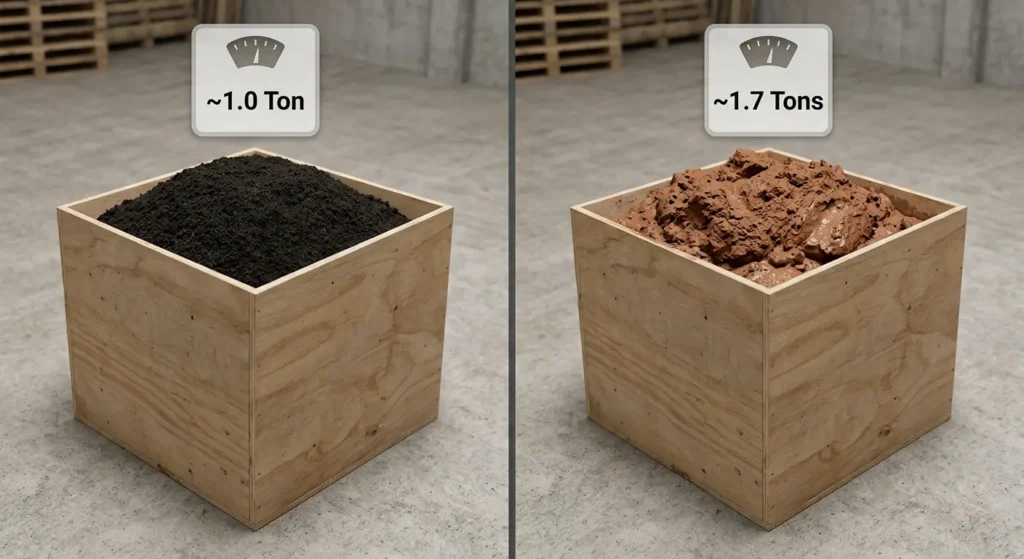
For excavation, landscaping, and construction projects, knowing the weight of dirt helps you estimate material costs, calculate hauling requirements, and avoid overloading trucks.
Why Does Dirt Weight Vary Per Cubic Yard?
A cubic yard measures volume, while a ton measures weight. The weight of one cubic yard of dirt depends on how much soil material and water fit into that volume.
Three main factors affect dirt weight:
- Soil type: Clay is generally denser than loose topsoil because of its composition and structure.
- Moisture content: Wet dirt weighs more than dry dirt because water adds weight.
- Compaction: Compacted soil contains less air space than loose soil, increasing its dry weight per unit of volume.
These differences matter when estimating how much dirt an excavator will remove or how many truckloads a construction site will need.
How to Calculate Tons of Dirt per Cubic Yard
To calculate dirt weight, multiply the cubic yards by the material’s weight per cubic yard, then divide by 2,000 to convert pounds into US short tons.
Formula:
Tons = (Cubic Yards × Weight per Cubic Yard in Pounds) ÷ 2,000
Example: Suppose fill dirt weighs 2,200 pounds per cubic yard.
- Volume: 2 cubic yards
- Weight per cubic yard: 2,200 pounds
- Total weight: 2 × 2,200 = 4,400 pounds
- Weight in tons: 4,400 ÷ 2,000 = 2.2 tons
This calculation helps contractors estimate hauling loads and determine the approximate weight of excavated material.
How to Convert Tons of Dirt into Cubic Yards
If you know the weight of the dirt but need to calculate its volume, use the reverse formula:
Cubic Yards = (Tons × 2,000) ÷ Weight per Cubic Yard in Pounds
For example, if you have 5 tons of dirt weighing 2,200 pounds per cubic yard:
(5 × 2,000) ÷ 2,200 = 4.55 cubic yards
The result is an estimate. Actual volume depends on the dirt’s density and moisture content.
Tons per Cubic Yard by Dirt Type
The following figures are approximate planning estimates. Actual weights vary with soil composition, moisture, and the condition in which the material is measured.
| Dirt Type | Approximate Weight per Cubic Yard |
|---|---|
| Dry topsoil | 1.0–1.1 tons |
| Dry fill dirt | 1.0–1.1 tons |
| Wet fill dirt | 1.1–1.4 tons |
| Loam | 1.0–1.2 tons |
| Dense clay | 1.4–1.7 tons |
For preliminary estimates, 1.1 tons per cubic yard is a useful starting point for ordinary dry topsoil. Use a supplier’s actual density or weight data when accurate ordering or hauling calculations are necessary.
How Moisture Changes Dirt Weight?
Water can significantly increase the weight of dirt without changing the volume of the load. Rainwater fills spaces between soil particles, making wet soil heavier than dry soil.
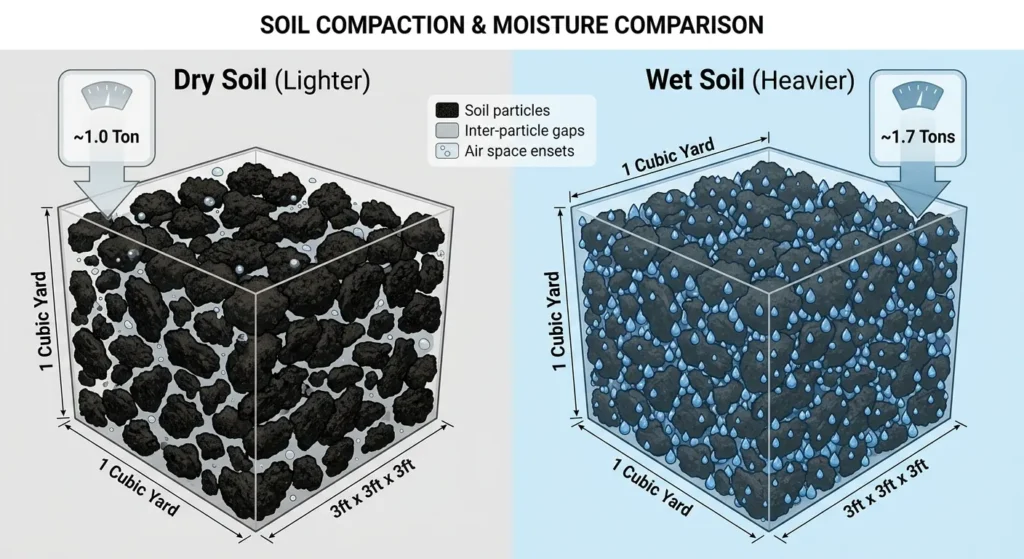
Depending on the soil type and how much water it absorbs, a cubic yard of dirt may gain hundreds of pounds after rainfall.
This matters when buying dirt by weight. A ton of wet soil may provide less actual soil volume than a ton of dry soil because some of the weight comes from water.
How to Estimate Dirt Weight for Construction Projects?
1. Buying Topsoil by the Truckload
If you order 10 cubic yards of dry topsoil weighing approximately 2,000–2,200 pounds per cubic yard, the total load will weigh about 20,000–22,000 pounds, or 10–11 US tons.
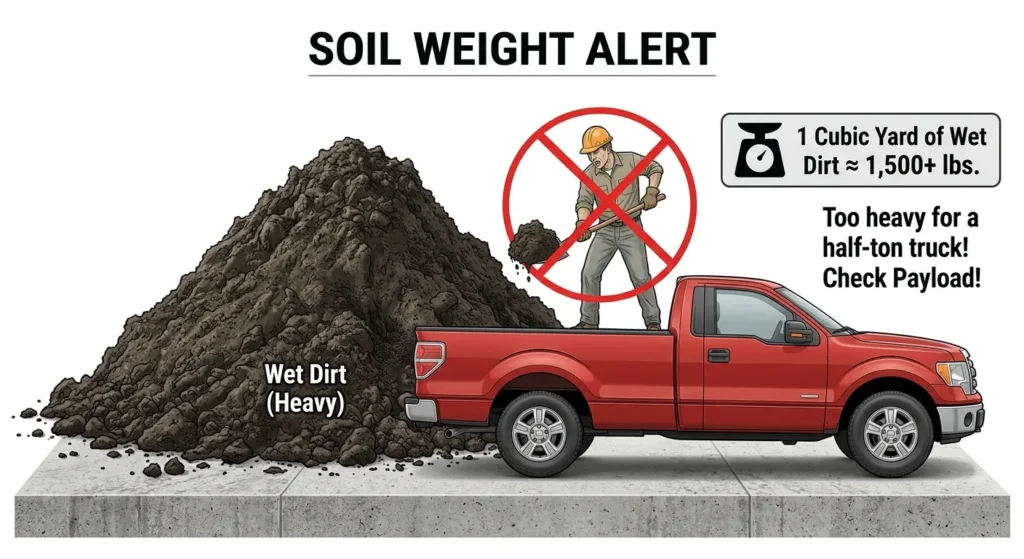
Wet topsoil may weigh considerably more. Confirm the supplier’s estimated weight and the truck’s legal payload before arranging delivery.
2. Calculating Dirt for a Raised Garden Bed
First, calculate the volume of the bed in cubic yards.
Formula:
Cubic Yards = (Length × Width × Depth in Feet) ÷ 27
For a bed measuring 6 feet long, 4 feet wide, and 1 foot deep:
(6 × 4 × 1) ÷ 27 = 0.89 cubic yards
At an estimated 1.1 tons per cubic yard, the soil would weigh approximately:
0.89 × 1.1 = 0.98 tons
This estimate helps you determine how much soil to order and whether you need delivery.
3. Hauling Dirt in a Pickup Truck
Dirt can be much heavier than it looks. One cubic yard of soil may weigh 2,000–3,400 pounds, depending on its condition.
A pickup truck’s safe payload depends on its specific rating, passengers, equipment, and other cargo. Even a small amount of wet dirt can exceed the available payload on some pickups.
Check the vehicle’s payload rating and weigh the load when necessary. Do not assume a truck can carry a full cubic yard simply because the material fits in the bed.
Frequently Asked Questions
Is a cubic yard of dirt heavier than a cubic yard of gravel?
Not necessarily. Dry topsoil commonly weighs around 1.0–1.3 tons per cubic yard, while gravel often weighs around 1.4–1.7 tons. However, dense or wet clay can overlap with or exceed the weight of some gravel.
How many cubic yards are in a ton of dirt?
One US ton of dirt is approximately 0.6–1.0 cubic yards, depending on density. Dry, lightweight topsoil provides more volume per ton than dense, wet clay.
Does compaction change the weight of dirt?
Compaction increases the dry weight of soil per unit of volume by reducing air spaces between particles. However, the total mass of soil does not increase merely because it is compacted. The volume decreases as the soil becomes denser.
How much does a cubic yard of wet dirt weigh?
A cubic yard of wet dirt can weigh approximately 1.1–1.7 tons or more, depending on the soil and its moisture content. Dense, waterlogged soil may fall outside this range, so supplier data is preferable for precise estimates.
Final Checklist Before Ordering Dirt
Before purchasing or hauling dirt, confirm these three details:
- Soil density: Ask the supplier how much one cubic yard weighs.
- Moisture content: Allow for additional weight when the soil is wet.
- Truck capacity: Verify the vehicle’s payload rating and applicable road weight limits.
For excavation and construction work, using the correct dirt weight estimate helps prevent overloaded trucks, inaccurate material orders, and unexpected hauling costs.

Ahmed Ijaz runs this construction rental directory with over 5 years of experience in SEO, content, and web optimization. Every page is built using real research, hands-on expertise, and carefully reviewed information to meet strong EEAT standards.