Utility trenching is one of the most important steps in installing underground infrastructure such as water lines, gas pipes, electrical conduits, sewer systems, and fiber optic cables. Whether you’re a contractor, project manager, or homeowner, understanding trenching costs helps you create realistic budgets and avoid unexpected expenses.
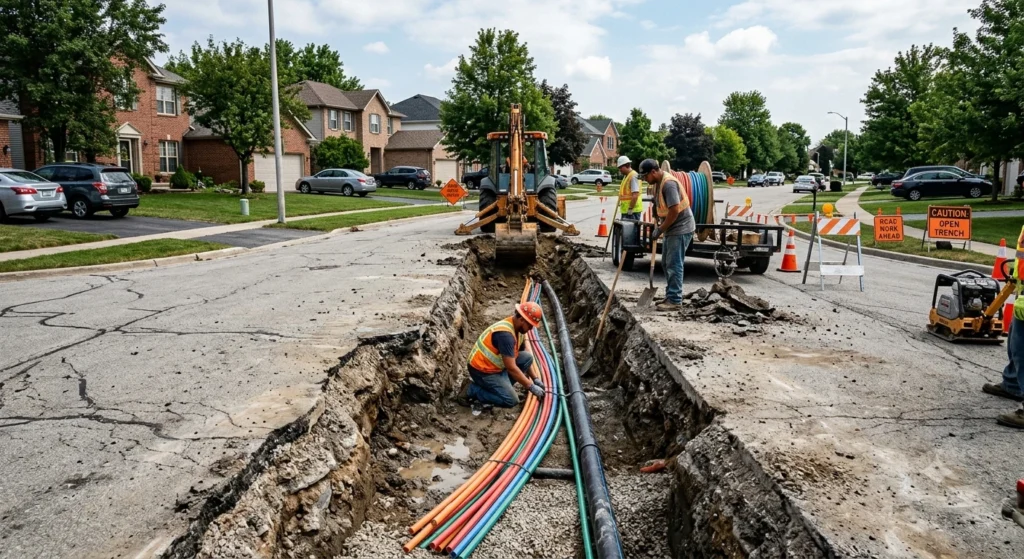
A Utility Trenching Cost Calculator estimates excavation expenses based on trench dimensions, soil conditions, surface materials, labor, equipment, backfill, restoration, and permit costs. On average, utility trenching costs range from $5 to $12 per linear foot for standard soil conditions, but prices can increase significantly for asphalt, concrete, rocky terrain, or deep excavations.
This guide explains every factor that affects trenching costs, provides industry-standard formulas, and helps you estimate your project with confidence.
What Is a Utility Trenching Cost Calculator?
A Utility Trenching Cost Calculator is an estimating tool that calculates the total cost of excavating trenches for underground utilities. It considers multiple variables including:
- Trench length
- Trench width
- Trench depth
- Surface material
- Soil conditions
- Equipment requirements
- Labor costs
- Backfill materials
- Surface restoration
- Permit fees
Instead of relying on rough estimates, a calculator generates more accurate project costs using measurable inputs.
Average Utility Trenching Costs
The following table shows typical trenching costs by surface type.
| Surface Type | Average Cost Per Linear Foot |
|---|---|
| Dirt or Soil | $5–$12 |
| Gravel | $8–$15 |
| Asphalt | $12–$24 |
| Concrete | $15–$30 |
| Rocky Ground | $20–$50+ |
These estimates typically include excavation only. Complete utility installation projects usually include bedding, backfill, hauling, restoration, and inspection costs.
Utility Trenching Cost Formula
A basic trenching estimate can be calculated using:
Total Cost = Linear Feet × Cost Per Foot
However, professional estimators also calculate excavation volume.
Excavation Volume Formula
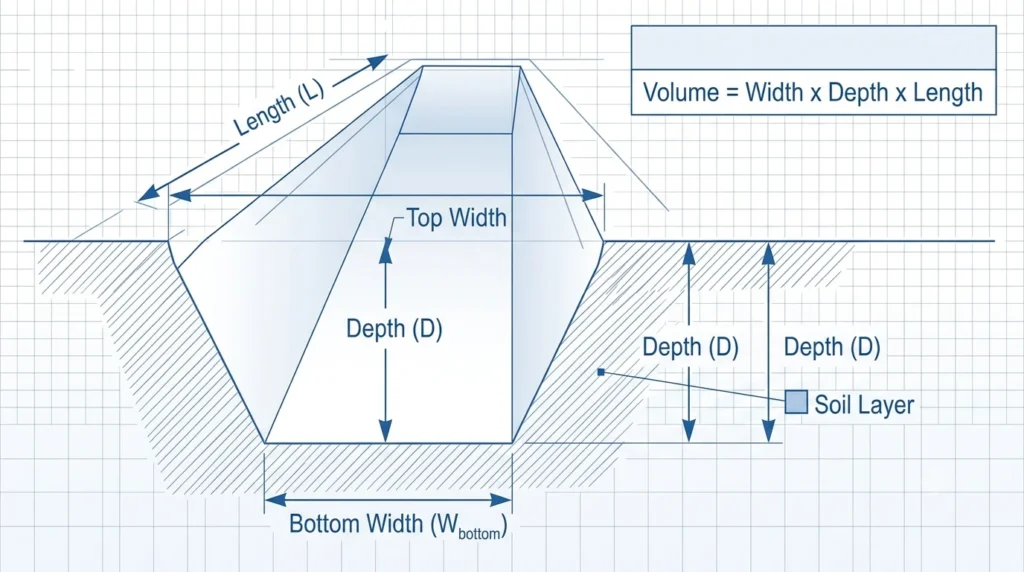
Excavation Volume (Cubic Yards) = (Width × Depth × Length) ÷ 27
Where:
- Width = feet
- Depth = feet
- Length = feet
- 27 converts cubic feet into cubic yards
Example
Suppose your trench measures:
- Width = 2 feet
- Depth = 4 feet
- Length = 100 feet
Volume:
(2 × 4 × 100) ÷ 27 = 29.63 cubic yards
If excavation costs $18 per cubic yard:
29.63 × $18 = $533.34
Additional costs such as backfill and restoration must then be added.
Factors That Affect Utility Trenching Costs
No two trenching projects cost exactly the same. Several variables determine the final estimate.
1. Surface Type
Surface material significantly impacts excavation costs.
Dirt and Soil
Natural soil is the easiest and least expensive material to excavate.
Typical cost:
- $5–$12 per linear foot
Asphalt
Cutting asphalt requires specialized saws before excavation begins.
Average cost:
- $12–$24 per foot
Additional expenses include asphalt replacement after utility installation.
Concrete
Concrete is the most labor-intensive surface.
Costs increase due to:
- Saw cutting
- Reinforcement (rebar) removal
- Concrete disposal
- Surface replacement
Average cost:
- $15–$30 per linear foot
2. Trench Width
Wider trenches require:
- More excavation
- More bedding
- More backfill
- More restoration
Even increasing trench width by six inches can significantly affect total material quantities.
3. Trench Depth
Depth is one of the largest cost drivers.
Deeper trenches require:
- More excavation
- Additional safety precautions
- Shoring systems
- Sloped trench walls
- Increased labor
Many contractors price excavation differently based on depth zones.
Typical pricing structure:
- 0–5 feet
- 5–10 feet
- 10+ feet
Each additional depth zone generally increases production costs.
4. Soil Conditions
Sandy Soil
Advantages:
- Easier digging
- Faster excavation
Disadvantages:
- May require stabilization
- Potential cave-ins
Clay Soil
Clay is heavier and harder to excavate.
Challenges include:
- Poor drainage
- Difficult compaction
- Increased labor
Rocky Terrain
Rock excavation is substantially more expensive.
Additional equipment may include:
- Hydraulic breakers
- Rock saws
- Rippers
- Blasting (where permitted)
Costs may exceed $50 per linear foot depending on rock hardness.
Utility Trenching Cost Breakdown Structure (CBS)
Professional estimates include much more than excavation.
Excavation Costs
Excavation includes:
- Equipment rental
- Fuel
- Operator wages
- Labor
- Site preparation
Heavy equipment commonly used:
- Mini excavators
- Backhoes
- Track excavators
- Trenchers
Bedding Material
Utility pipes require protective bedding beneath and around the pipe.
Common materials include:
- Sand
- #57 stone
- Crushed aggregate
Typically, bedding occupies about 25% of total trench volume.
Example:
If excavation volume equals 40 cubic yards:
Bedding volume:
40 × 25% = 10 cubic yards
Purchased aggregate can become a major project expense.
Backfill Options
Native Soil Backfill
The least expensive option.
Advantages:
- Lower material costs
- Minimal hauling
Disadvantages:
- Screening may be required
- Debris removal
- Additional compaction
Imported Fill
Imported fill provides better consistency.
Benefits include:
- Improved compaction
- Better structural support
- Reduced settlement
Slurry Backfill (Flowable Fill)
Flowable fill eliminates mechanical compaction.
Advantages:
- Faster installation
- Excellent structural support
- Reduces labor
Disadvantages:
- Higher material costs
- Longer curing time
Spoils Removal
Excavated material often cannot be reused.
Common hauling costs range from:
$14–$18 per ton
Factors include:
- Dump site distance
- Fuel costs
- Truck availability
- Disposal fees
Surface Restoration
After utilities are installed, surfaces must be restored.
Restoration may include:
- Asphalt paving
- Concrete replacement
- Sod installation
- Landscaping
- Sidewalk repair
Ignoring restoration costs often leads to underestimated project budgets.
Advanced Utility Trenching Calculations
Professional estimators use advanced methods for large infrastructure projects.
OSHA Trench Sloping Requirements
Safety regulations often require trench walls to be sloped instead of vertical.
Sloping depends on:
- Type A soil
- Type B soil
- Type C soil
Sloped trenches require significantly more excavation volume than vertical trenches.
This increases:
- Labor
- Equipment time
- Bedding
- Backfill
- Restoration
Trapezoidal Trench Calculations
Most deep trenches are trapezoidal rather than rectangular.
The wider top increases excavation volume.
Ignoring trench slope often underestimates project costs.
Cross-Section Method
Professional estimators calculate excavation using:
Average Area × Length
Formula:
(Area 1 + Area 2) ÷ 2 × Length
This method provides highly accurate volume estimates when trench dimensions vary.
Grid Method
For projects with changing elevations, estimators use the Grid Method.
This approach divides the project into smaller sections and calculates each separately before totaling excavation volume.
It is commonly used for:
- Utility corridors
- Borrow pits
- Large commercial developments
Specialized Utility Trenching Scenarios
Different utility systems require different trench dimensions and installation methods.
Electrical Conduit Trenches
Electrical trenches are generally narrower than water or sewer trenches.
Typical dimensions:
- 10 inches × 36 inches
- 12 inches × 36 inches
Because of the reduced excavation volume, electrical conduit installations are often less expensive.
Fiber Optic Trenching
Fiber optic projects frequently use:
- Micro trenching
- Narrow trench excavation
- Directional boring
Micro trenching significantly reduces restoration costs in urban environments.
Water Line Trenches
Water lines generally require:
- Greater depth for frost protection
- Sand bedding
- Pressure testing
- Disinfection
These additional requirements increase project costs.
Common Trenching
Common trenching places multiple utilities inside one trench.
Examples include:
- Electric
- Fiber
- Water
- Telecommunications
Benefits include:
- Lower excavation costs
- Reduced restoration expenses
- Fewer permits
- Faster installation
Installing three utilities in one trench is often substantially less expensive than excavating three separate trenches.
Additional Costs to Consider
Many projects include expenses beyond excavation.
Typical additional costs include:
- Utility permits: $500–$2,000
- Utility locating services
- Engineering plans
- Traffic control
- Environmental inspections
- Surveying
- Erosion control
- Dewatering
- Project management
These costs can significantly affect the total project budget.
Tips to Reduce Utility Trenching Costs
To keep excavation expenses under control:
- Plan utility routes carefully.
- Combine utilities into a common trench where feasible.
- Reuse native backfill when suitable.
- Minimize surface restoration by reducing pavement cuts.
- Schedule work during favorable weather conditions.
- Obtain multiple contractor estimates.
- Verify underground utilities before excavation begins.
Proper planning often saves thousands of dollars on medium and large projects.
Frequently Asked Questions
How much does utility trenching cost per foot?
Standard trenching in soil generally costs between $5 and $12 per linear foot, while asphalt and concrete surfaces increase costs significantly.
What is the formula for trench excavation volume?
Use:
Excavation Volume (CY) = (Width × Depth × Length) ÷ 27
This calculates excavation volume in cubic yards.
Why does trench depth increase costs?
Deeper trenches require more excavation, additional safety measures, greater material quantities, and slower production rates.
Is common trenching cheaper?
Yes. Installing multiple utilities in a single trench often reduces excavation, restoration, labor, and permit costs.
Does backfill affect project costs?
Absolutely. Bedding material, imported fill, slurry backfill, and compaction requirements can represent a substantial portion of the overall project budget.
Conclusion
A Utility Trenching Cost Calculator provides a reliable starting point for estimating excavation costs by considering trench dimensions, surface materials, soil conditions, labor, equipment, backfill, and restoration. While standard soil trenching may cost $5–$12 per linear foot, deeper excavations, rocky terrain, concrete removal, and specialized installations can significantly increase expenses.
Keep in mind that permits, site accessibility, local labor rates, and regulatory requirements can all influence the final price. For the most accurate estimate, use a detailed trenching cost calculator alongside a professional site assessment and contractor quote. This approach ensures better budgeting, fewer surprises, and a smoother utility installation project.

Ahmed Ijaz runs this construction rental directory with over 5 years of experience in SEO, content, and web optimization. Every page is built using real research, hands-on expertise, and carefully reviewed information to meet strong EEAT standards.