When selecting a skid steer, understanding the five primary configurations and their corresponding technical specifications is crucial for operational efficiency and return on investment. This guide breaks down each type of wheeled, tracked, mini, stand-on, and all-wheel steer alongside critical factors like operating capacity, weight, frame size, and lift type to help you make an informed decision.
1. Wheeled Skid Steers
Wheeled skid steers operate on four pneumatic or solid rubber tires, using a skid-steer mechanism for turning. They are characterized by their speed and agility on hard surfaces.
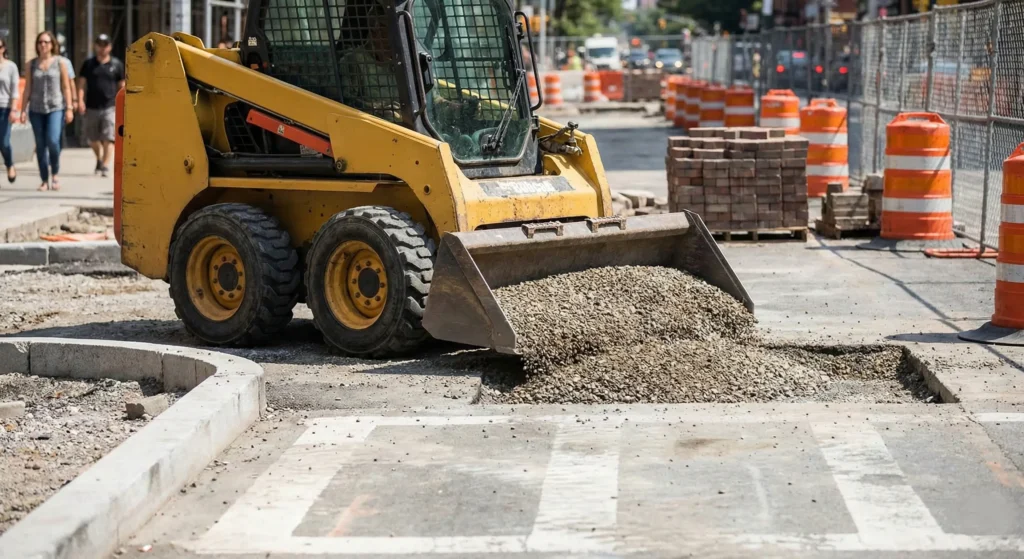
- Key Characteristics: Best suited for pavement, concrete, and compacted surfaces. They offer faster travel speeds (up to 12 mph), tighter turning radii, and generally have lower maintenance costs associated with tire replacement versus track systems.
- Primary Limitation: Higher ground pressure leads to poor performance on soft, wet, or uneven terrain like mud, sand, or fresh sod, where they can easily become stuck or cause significant ground disturbance.
2. Tracked Skid Steers (Compact Track Loaders – CTLs)
Tracked skid steers, or Compact Track Loaders (CTLs), use two rubber tracks to distribute the machine’s weight over a larger surface area.
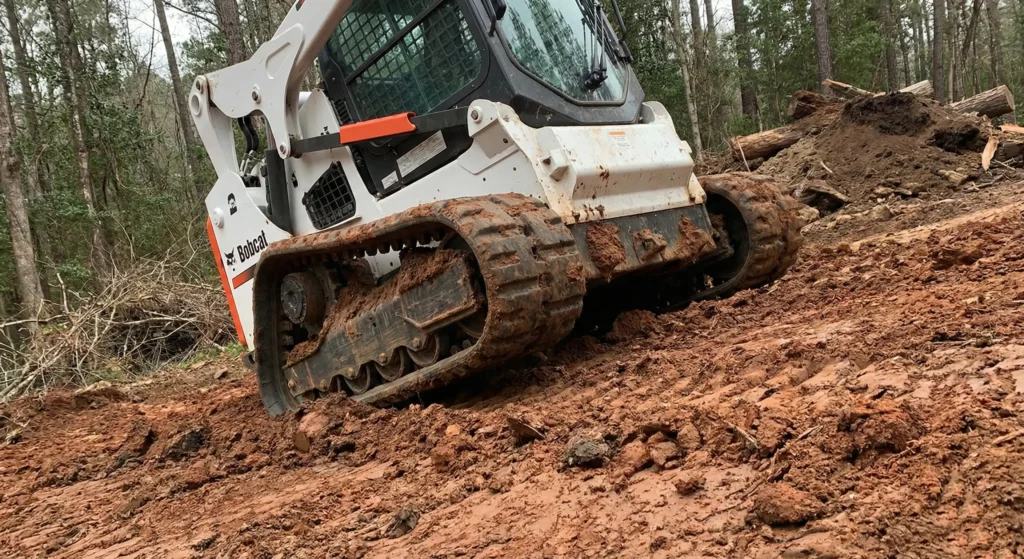
- Key Advantage: Superior traction and flotation on soft, muddy, sloped, or unstable ground. Their low ground pressure minimizes ruts and turf damage, making them ideal for landscaping, forestry, and wet site work.
- Trade-offs: They have a higher initial purchase price (often 20-30% more) and higher long-term undercarriage maintenance costs. They also travel slower (6-8 mph) and can be more challenging to transport due to increased weight.
3. Mini Skid Steers
Mini skid steers are compact, lightweight versions designed for access to confined spaces where traditional skid steers cannot go, such as backyards, inside buildings, or through standard gates.
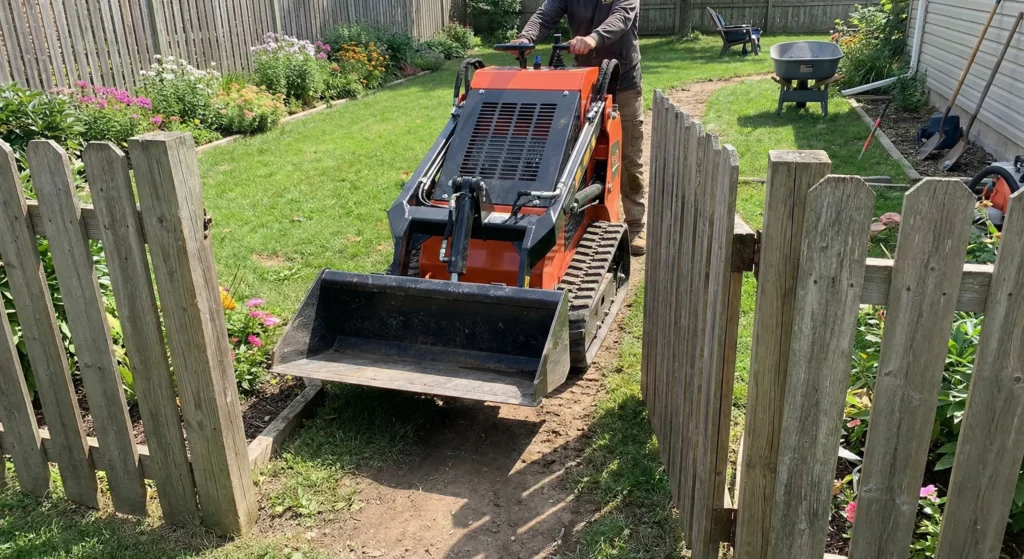
- Defining Feature: Compact size (often under 36 inches wide) and lower operating capacity (typically 500 to 1,500 lbs). They can be wheeled or tracked and are highly maneuverable.
- Ideal Use Cases: Residential landscaping, fence installation, interior demolition, and small property maintenance. They offer similar versatility with attachments but on a smaller scale.
4. Stand-On/Walk-Behind Skid Steers
This category represents the most compact and affordable entry point into skid-steer functionality. The operator stands on a platform at the rear or walks behind the machine.
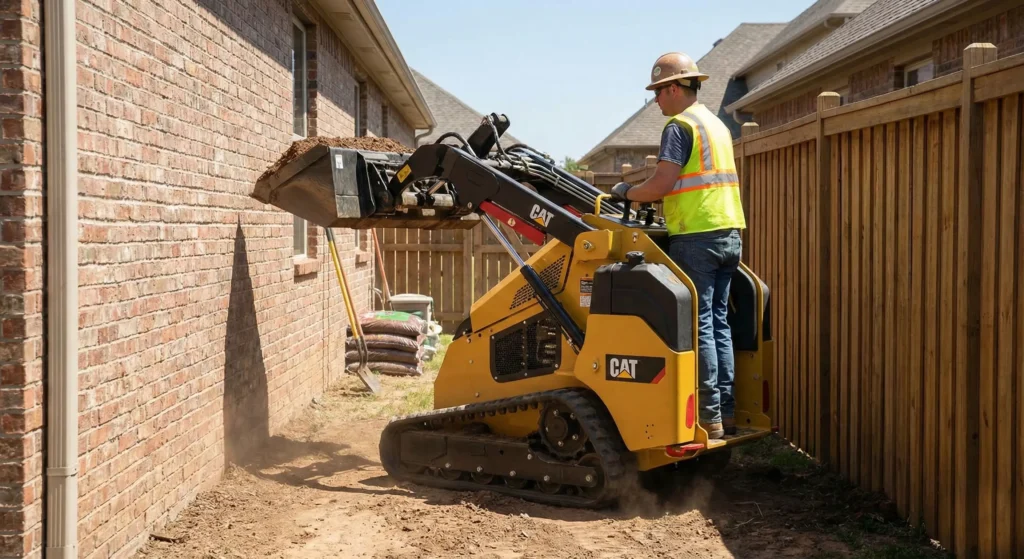
- Key Characteristics: Extreme maneuverability and a very small footprint. They are typically powered by small gasoline or electric motors and have limited lift capacity and reach compared to ride-on models.
- Best Applications: Tight-space tasks like small gardening projects, cleaning animal stalls, or light material handling in confined urban or residential settings.
5. All-Wheel Steer Skid Steers
A less common but specialized variant, all-wheel steer machines allow the front and rear axles to turn independently. This combines traditional skid-steer functionality with a smoother, wheel-turning mode.
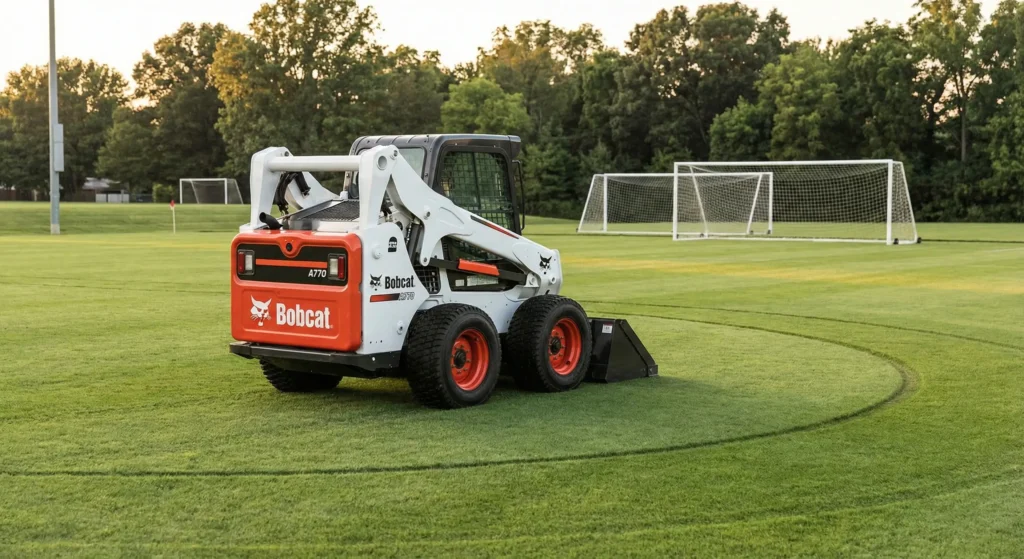
- Key Benefit: Significantly reduced ground damage during turns. In wheel-steer mode, the machine turns like a car, preventing the surface tearing caused by skidding. This is valuable for finished surfaces like sports fields, golf courses, or polished floors.
- Consideration: These machines are more mechanically complex and are a specialty solution for operators who frequently work on delicate surfaces but still require skid-steer power and attachment versatility.
Operating Capacity and Frame Size
Operating capacity, or rated operating capacity (ROC) is the maximum safe weight a skid steer can lift and carry. It is intrinsically linked to the machine’s frame size, which categorizes its overall power and dimensions.
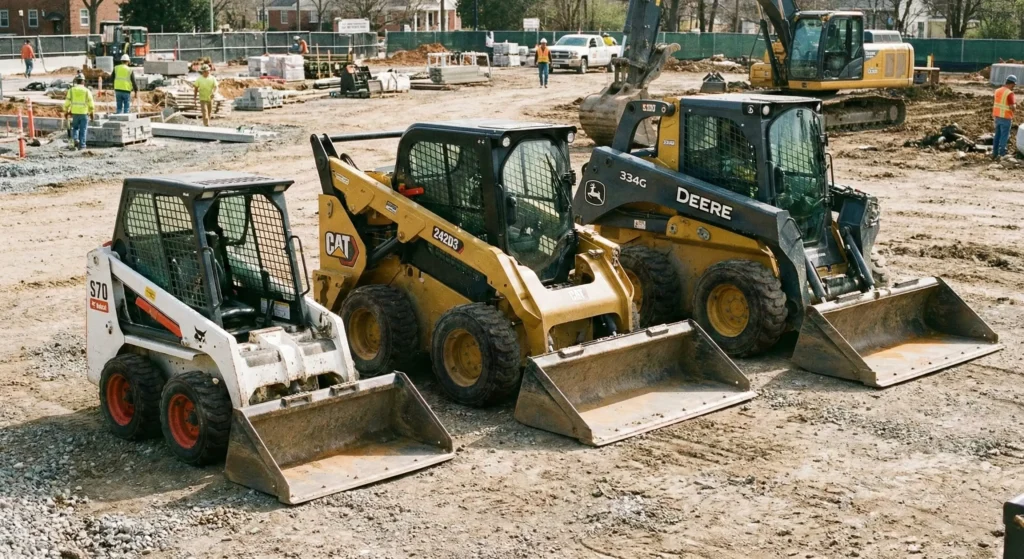
- Small-Frame Options: Machines with an ROC under 1,500 lbs. They are nimble, fuel-efficient, and easier to transport. Ideal for light material handling, landscaping, and rental yards.
- Medium-Frame Options: The most common and versatile segment, with an ROC between 1,500 and 2,200 lbs. They balance power, size, and attachment compatibility, suitable for construction, agriculture, and general contracting.
- Large-Frame Options: High-power machines with an ROC exceeding 2,200 lbs, often reaching 3,500+ lbs. Built for demanding tasks like heavy excavation, mining, and handling large-volume material (e.g., rock, ore).
Attachment Options and Versatility of Skid Steers
The true power of any skid steer type lies in its attachment compatibility. The universal skid-steer quick-attach system allows a single machine to perform dozens of functions.
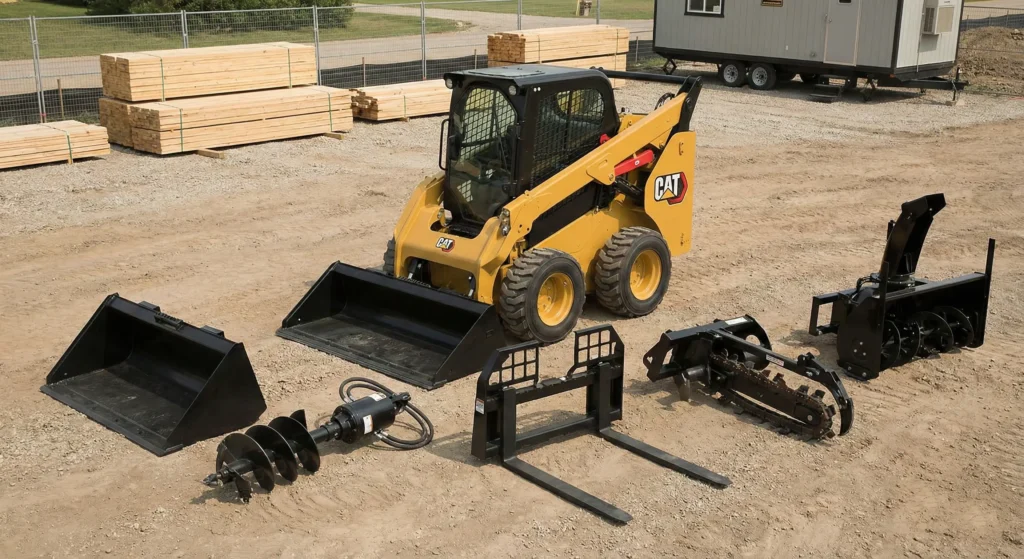
- Common Attachments: Buckets (general purpose, grading, skeleton), hydraulic breakers, augers, pallet forks, sweepers, trenchers, and snow blowers.
- Specialized Attachments: Forestry mulchers, cold planers, stump grinders, and soil conditioners.
Note: High-flow hydraulic systems (often an option) are required to power the most demanding attachments, common on medium- and large-frame CTLs.
Skid Steer Lift Type: Radial vs. Vertical
The lift arm’s path is a critical functional choice, primarily between radial (arc) lift and vertical lift path designs.
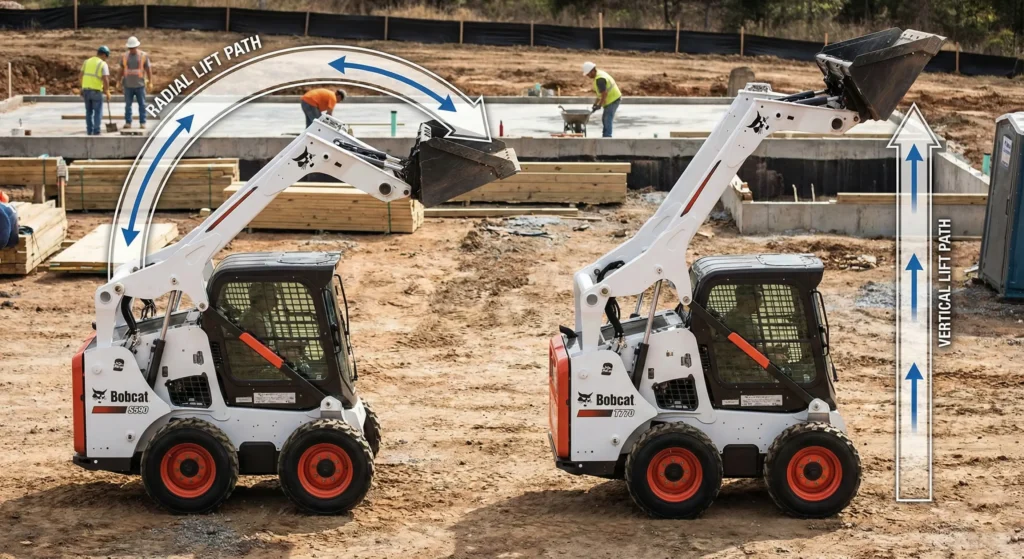
- Radial Lift Path: The boom pivots from a single point, creating an arc. It provides excellent forward reach and dump height at mid-range, making it superb for loading trucks and general digging. It typically has a simpler design.
- Vertical Lift Path: The boom mechanics allow the attachment to rise in a near-vertical path, maintaining a consistent distance from the machine. It offers superior maximum lift height and forward reach at full height, ideal for placing pallets onto high shelves or loading into tall containers.
Routine Applications and Lift Type
The choice between radial and vertical lift should be driven by the machine’s primary daily tasks:
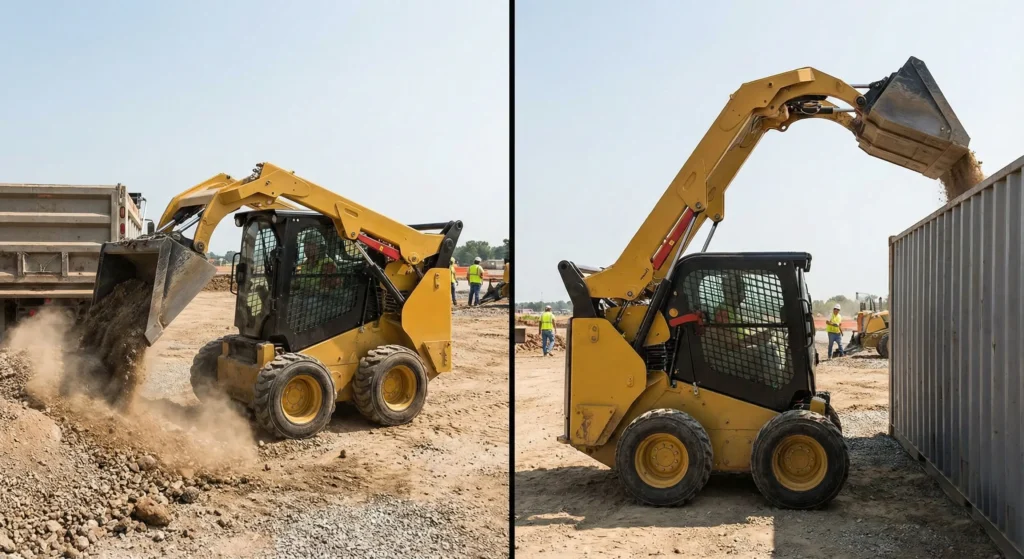
- Choose a Radial Lift machine if your core work involves truck loading, trenching, or ground-level to mid-height material handling.
- Choose a Vertical Lift machine if your work frequently requires loading into high-sided containers, placing material on elevated surfaces, or requiring maximum dump clearance.
Skid Steers Versus Compact Track Loaders: The Final Comparison
This is the industry’s most common comparison. The decision ultimately hinges on terrain and job site conditions.
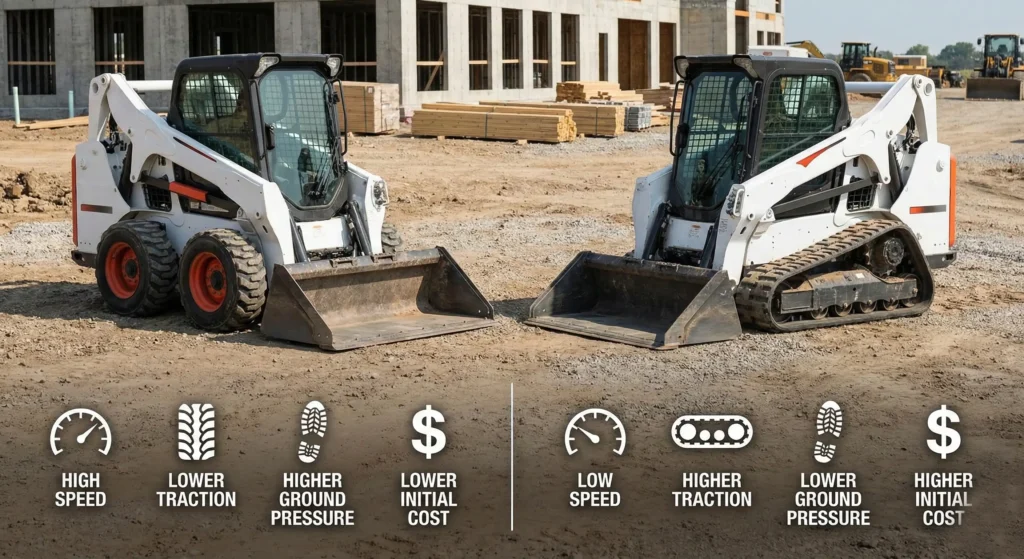
| Factor | Wheeled Skid Steer | Tracked Skid Steer (CTL) |
|---|---|---|
| Optimal Terrain | Hard, flat surfaces (pavement, concrete) | Soft, wet, uneven, or sloped ground |
| Ground Pressure | High (causes rutting on soft ground) | Low (minimizes ground disturbance) |
| Travel Speed | Faster (10-12 mph) | Slower (6-8 mph) |
| Stability & Traction | Lower, can lose traction on slopes | Superior, especially for lifting on grades |
| Cost (Acquisition) | Lower ($40,000 – $80,000) | Higher ($60,000 – $100,000+) |
| Cost (Lifetime Maintenance) | Lower (tire replacement) | Higher (track & roller replacement) |
Decision Rule: If over 70% of your work is on pavement, hard pack, or indoors, a wheeled skid steer offers better speed and value. If your work routinely involves mud, sand, slopes, or turf protection, a Compact Track Loader (CTL) is a necessary investment for productivity and site preservation.
The most effective way to finalize your choice is through a hands-on demonstration. Contact your local dealer to test different models wheeled, tracked, and various frame sizes with the attachments you use most, on terrain that mirrors your typical job site.

Usman Zahid runs this construction rental directory with over 5 years of experience in SEO, content, and web optimization. Every page is built using real research, hands-on expertise, and carefully reviewed information to meet strong EEAT standards.