Skid steers are the Swiss Army knives of construction and landscaping. For projects ranging from backyard landscaping to commercial site development, renting this versatile machine can provide the power you need without the long-term commitment of ownership. This comprehensive guide will walk you through everything you need to know from current rental costs and money-saving strategies to making the smart choice between renting and buying.
How Much Does It Cost to Rent a Skid Steer in the US?
Understanding the baseline cost is the first step in planning your project budget. Rental prices vary significantly based on machine type and rental duration.
- Wheeled Skid Steers: These are typically the most affordable and common option for general use on firm, dry ground. Average rental rates in the US are $200-$450 per day, $750-$2,000 per week, and $2,500-$4,000 per month.
- Compact Track Loaders (CTLs): Identified by their rubber tracks, these machines offer superior traction and lower ground pressure, making them ideal for muddy, soft, or delicate terrain. This advanced capability comes at a higher price, with averages ranging from $250-$700 daily, $1,000-$2,000 weekly, and $3,000-$5,000 monthly.
Table 1: Average Skid Steer Rental Costs in the US
| Machine Type | Average Daily Rate | Average Weekly Rate | Average Monthly Rate |
|---|---|---|---|
| Wheeled Skid Steer | $200 – $450 | $750 – $2,000 | $2,500 – $4,000 |
| Compact Track Loader | $250 – $700 | $1,000 – $2,000 | $3,000 – $5,000 |
6 Key Factors That Influence Your Skid Steer Rental Cost
The averages above are just a starting point. Your final quote will be shaped by several specific factors.
1. Size and Lift Capacity
Skid steers are categorized by their rated operating capacity (ROC), which directly correlates to size and power.
- Small-Frame (ROC under 1,500 lbs): Best for light-duty tasks like landscaping, mulch spreading, and small demolition jobs. They are the most economical to rent and excel in tight spaces.
- Medium-Frame (ROC 1,500-2,200 lbs): The most versatile and commonly rented size. Handles tasks like loading trucks with gravel, digging, and using a wider array of attachments.
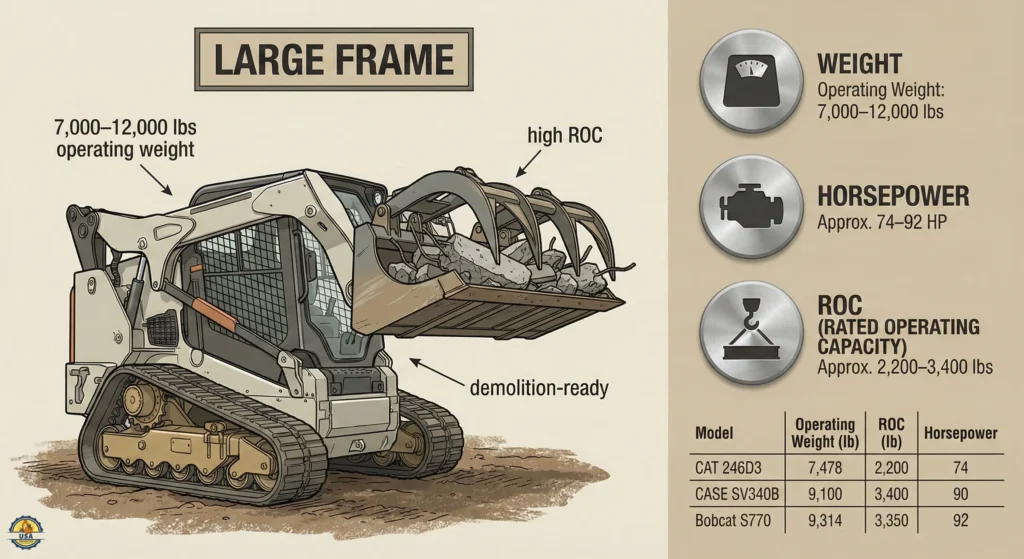
- Large-Frame (ROC over 2,200 lbs): Used for heavy-duty industrial work, large-scale material handling, and demanding excavation. Their specialized nature often means higher rental costs and lower availability.
2. Rental Duration
The golden rule of equipment rental is that the longer the rental period, the lower the effective daily rate. Renting for a week almost always offers a significant discount over the daily rate multiplied by seven. Planning your project timeline accurately is the single best way to avoid paying for unused days or costly last-minute extensions.
3. Make, Model, and Machine Type
- Brand: Premium brands like Bobcat, Caterpillar, and John Deere often command higher rental rates due to their reputation for reliability, dealer support, and resale value. Lesser-known brands may offer cost savings for equivalent specs.
- Tracked vs. Wheeled: Beyond terrain suitability, track loaders generally cost 15-25% more to rent than comparable wheeled models. This is due to their higher purchase price, greater maintenance requirements for the undercarriage, and increased transport costs.
4. Geographic Location and Delivery
Your job site’s location is a major price driver. Rental rates in major metropolitan areas or regions with booming construction (e.g., the Sun Belt) are often higher due to increased demand. Furthermore, delivery fees are rarely included in the base rate. These fees are calculated based on the distance from the rental yard to your site and can add a substantial line item to your total cost.
5. Current Market Conditions
The law of supply and demand applies directly to equipment rental. Prices can spike during peak construction seasons (spring and summer) or in regions experiencing a surge in building activity. Conversely, you may find better deals during slower winter months in northern climates. Major weather events can also cause localized spikes in demand for machines used in cleanup.
6. Additional & Hidden Costs to Budget For
The base rental rate is only part of the total cost. Failing to account for these additional expenses can derail your budget:
- Attachments: The bucket is standard, but specialized attachments like augers, grapple buckets, trenchers, or brush cutters almost always incur an extra daily or weekly fee.
- Fuel: You are responsible for fueling the machine for the duration of the rental.
- Insurance: Rental companies require proof of insurance, typically a contractor’s equipment insurance policy that covers liability and physical damage. If you don’t have your own, you will need to purchase coverage from the rental company.
- Environmental/Damage Waiver Fees: Some companies add fees that supposedly limit your repair liability. Always ask for a full breakdown of all charges.
- Operator Costs: If you or your crew are not certified to operate the machine, you must factor in the cost of hiring a trained operator.
How to Save on Skid Steer Rental Costs
- Plan and Book Early: Securing your rental weeks or even months in advance locks in rates and ensures availability, especially for peak seasons.
- Be Accurate with Your Timeline: Carefully estimate your project duration to take full advantage of weekly and monthly discounts. Renting for 5 days when a 7-day weekly rate is available is a common and costly mistake.
- Choose the Right-Sized Machine: Don’t over-rent. A skilled operator with a mid-sized machine can often complete the job just as efficiently as a larger, more expensive model. Consult with rental specialists to match the machine to your specific tasks.
- Compare Quotes from Multiple Sources: Don’t just call the first company in the phone book. Use online marketplaces (like DOZR or BigRentz), national chains, and local independent yards to get competing quotes.
- Ask About Package Deals: If you need other equipment (e.g., a mini-excavator, roller, or light tower), bundling them with the skid steer from the same supplier can lead to discounted package rates.
- Opt for Self-Pickup and Return: If you have the proper vehicle and trailer, transporting the machine yourself can eliminate hefty delivery and pickup fees.
Renting vs. Buying a Skid Steer: A Financial Breakdown
This is a critical long-term decision for your business or property management.
Table 2: Renting vs. Buying a Skid Steer
When Renting is the Smarter Choice
Renting is the clear financial winner for short-term projects, trial use before a purchase, or when you need a specialized machine or attachment for a one-off task. It frees up capital, eliminates maintenance headaches, and provides maximum flexibility.
When Buying Makes More Sense
Purchasing becomes a viable investment if you use a skid steer frequently and consistently (e.g., several days per week, year-round). High utilization turns the machine from a rental expense into a productive asset. It also gives you immediate, unlimited access for urgent jobs and can be a source of pride and branding for your business.
Making Your Final Decision
Before you commit to a rental, take these final steps:
- Get a Detailed Quote in Writing: Ensure it includes all rates, fees, insurance requirements, and pickup/delivery costs.
- Inspect the Machine: Before it leaves the yard, do a walk-around inspection with a company representative. Note any existing damage (take photos) to avoid being charged later.
- Understand the Agreement: Know the policies on overtime charges, damage liability, and what constitutes “normal wear and tear.”
- Ensure Operator Competency: Verify that whoever will run the machine is trained, understands safe operation procedures, and is aware of the machine’s specific controls and limitations.
Renting a skid steer provides a powerful, cost-effective solution for countless projects. By understanding the full scope of costs, the factors that influence them, and the strategies to secure the best value, you can equip your project for success while keeping your budget firmly on track.

Usman Zahid runs this construction rental directory with over 5 years of experience in SEO, content, and web optimization. Every page is built using real research, hands-on expertise, and carefully reviewed information to meet strong EEAT standards.