Whether you’re painting a commercial building, installing electrical systems, replacing warehouse lighting, or performing routine maintenance, working safely at height requires the right equipment. One of the most popular aerial work platforms is the scissor lift, offering stable vertical access for contractors, facility managers, and construction professionals.
If your jobsite requires higher reach or horizontal articulation beyond vertical scissor lifts, compare options for Denver boom lift rentals.
However, one question comes up before every project:
How much does a scissor lift rental cost?
The answer isn’t as simple as a flat daily price. Rental costs vary depending on lift height, platform capacity, power source, rental duration, delivery location, and several additional fees that many first-time renters overlook.
This comprehensive pricing guide explains everything you need to know about scissor lift rental costs in 2026, including average rental rates, hidden charges, budgeting strategies, and practical tips that can reduce your equipment expenses.
What Is a Scissor Lift?
A scissor lift is a mobile elevated work platform (MEWP) designed to lift workers, tools, and materials vertically using a crisscrossing metal support mechanism known as a pantograph or scissor mechanism.
Unlike boom lifts, which extend outward and around obstacles, scissor lifts only move vertically, making them ideal for jobs requiring stable upward access.
The Core Mechanics
Hydraulic cylinders or electric actuators extend the crossover supports, raising the platform vertically while maintaining excellent stability.
Modern scissor lifts typically include:
- Extendable work platforms
- Safety guardrails
- Emergency lowering controls
- Tilt sensors
- Outriggers (on some models)
- Non-marking tires (electric models)
Primary Applications
Scissor lifts are commonly used for:
- Interior construction
- Warehouse maintenance
- HVAC installation
- Electrical work
- Commercial painting
- Ceiling installation
- Fire sprinkler installation
- Facility maintenance
- Retail remodeling
- Inventory management
Because they provide a large working platform, multiple workers can safely operate together.
Scissor Lift vs Boom Lift
| Feature | Scissor Lift | Boom Lift |
|---|---|---|
| Vertical Reach | Excellent | Excellent |
| Horizontal Reach | None | Excellent |
| Indoor Use | Excellent | Good |
| Outdoor Terrain | Rough-terrain models available | Excellent |
| Rental Cost | Lower | Higher |
| Platform Size | Larger | Smaller |
Choose a scissor lift when you only need straight vertical access.
Choose a boom lift when obstacles prevent direct access.
Scissor Lift Rental Cost: The Complete Pricing Breakdown
The biggest factor influencing rental pricing is equipment size.
Below are the average rental costs across North America for 2026.
Average Daily Rental Cost
| Lift Type | Height | Daily Cost |
|---|---|---|
| Electric Scissor Lift | 19 ft | $80–$150 |
| Electric Scissor Lift | 26 ft | $110–$180 |
| Electric Scissor Lift | 32 ft | $140–$220 |
| Rough Terrain Scissor Lift | 33 ft | $220–$350 |
| Rough Terrain Scissor Lift | 40 ft | $250–$400 |
| Heavy Duty 50+ ft | Outdoor | $350–$600+ |
Weekly Rental Rates
Weekly rentals offer substantial savings compared to paying daily.
| Lift Height | Weekly Cost |
|---|---|
| 19 ft | $350–$600 |
| 26 ft | $450–$750 |
| 32 ft | $600–$900 |
| 40 ft Rough Terrain | $900–$1,500 |
Monthly Rental Rates
For long-term construction projects, monthly rentals provide the best value.
Typical monthly costs include:
- 19 ft Electric: $1,200–$1,800
- 26 ft Electric: $1,500–$2,100
- 32 ft Electric: $1,800–$2,600
- 40 ft Rough Terrain: $2,800–$4,000
- 50+ ft Heavy Duty: $4,000–$6,000+
Many rental companies offer discounts of 30–50% compared to equivalent daily rates.
What Affects Scissor Lift Rental Cost?
Several variables determine the final rental price.
1. Lift Height
Higher platforms require larger equipment.
Typical pricing progression:
- 19 ft → Lowest cost
- 26 ft → Moderate increase
- 32 ft → Higher daily rates
- 40 ft+ → Premium pricing
Always select the smallest lift that safely reaches your work area.
2. Power Source
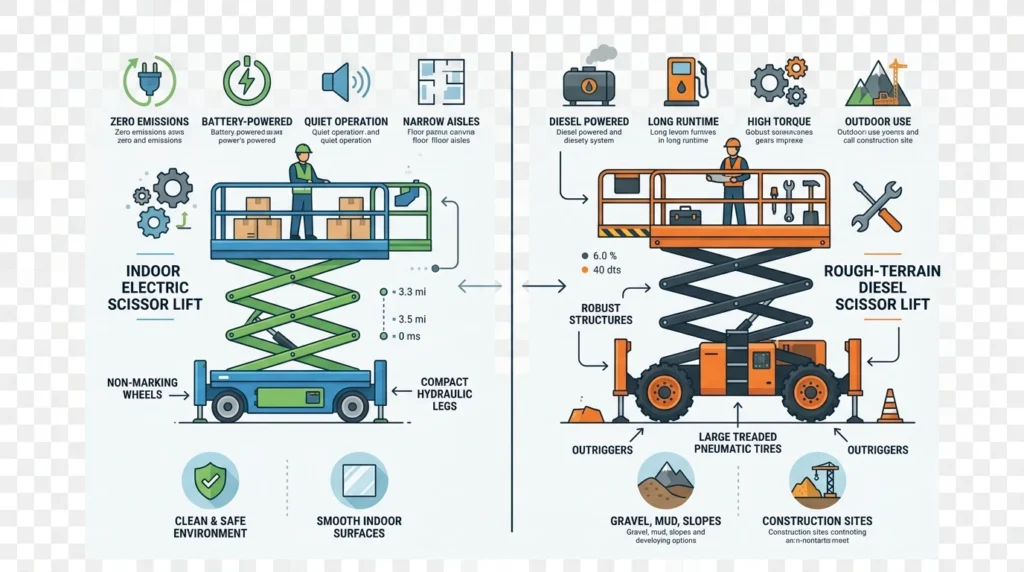
Electric Scissor Lifts
Best for:
- Warehouses
- Shopping centers
- Hospitals
- Offices
- Schools
Advantages:
- Quiet
- Zero emissions
- Lower rental cost
- Lower operating costs
Diesel Rough Terrain Lifts
Best for:
- Construction sites
- Gravel
- Dirt
- Uneven terrain
Advantages:
- Four-wheel drive
- Greater lifting capacity
- Higher platform heights
Expect diesel units to cost 20–50% more than electric models.
3. Platform Capacity
Standard lifts support between 500 and 1,000 pounds.
Heavy-duty models can carry:
- Multiple workers
- Drywall
- Steel framing
- HVAC equipment
- Construction materials
Greater capacity typically increases rental costs.
4. Rental Duration
Rental companies reward longer commitments.
Example:
- 10 daily rentals: approximately $1,500
- Two-week rental: approximately $900
Long-term rentals usually provide better value.
5. Location
Rental costs vary significantly depending on:
- Local demand
- City size
- Transportation distance
- Equipment availability
Urban areas may offer more inventory but can also have higher logistics fees.
Hidden Costs of Renting a Scissor Lift
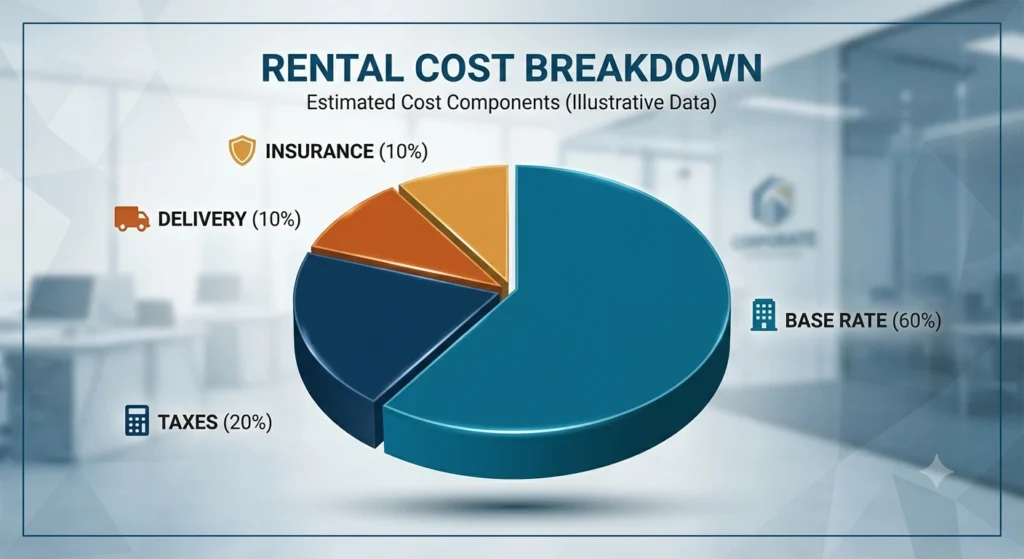
The advertised rental price rarely reflects the total project cost.
Delivery and Pickup Fees
Expect transportation charges ranging from:
- $75–$300 locally
- $300–$800 for remote sites
Heavy equipment requires specialized trailers.
Fuel Charges
Diesel equipment may incur:
- Fuel refill charges
- DEF fluid costs
- Cleaning fees
Electric lifts generally avoid these expenses.
Environmental Fees
Many companies charge:
- Equipment recovery fees
- Environmental compliance fees
- Shop supply fees
These often range from 2–10% of the rental invoice.
Insurance or Damage Waiver
Most rental providers offer:
- Optional damage waiver
- Equipment protection plan
- Liability coverage
Typical cost:
10–20% of the rental price.
Without protection, renters may be responsible for significant repair costs.
Late Return Fees
Returning equipment late can result in:
- Additional daily rental charges
- Weekend fees
- After-hours processing fees
- Overtime transportation costs
Plan equipment returns carefully to avoid unexpected expenses.
How to Calculate Your Total Scissor Lift Rental Cost?
A structured approach helps create an accurate budget.
Step 1: Determine Required Platform Height
Remember:
Platform height differs from working height.
Working height equals:
Platform Height + Approximately 6 Feet
For example:
- 19 ft platform = roughly 25 ft working height
- 26 ft platform = roughly 32 ft working height
- 32 ft platform = roughly 38 ft working height
Step 2: Evaluate the Terrain
Ask yourself:
- Indoors?
- Concrete floor?
- Warehouse?
- Asphalt parking lot?
- Mud?
- Gravel?
Smooth indoor floors usually require electric lifts.
Uneven outdoor surfaces require rough-terrain models.
Step 3: Estimate Rental Duration
Include:
- Equipment setup
- Weather delays
- Material delivery
- Inspection time
Underestimating project duration often leads to expensive rental extensions.
Step 4: Consider Utilization Rate
Many contractors overestimate equipment usage.
If the lift is only actively used for four hours per day, sharing one rental between multiple crews may reduce costs.
Higher utilization means better rental value.
Cost-Saving Strategies for Scissor Lift Rentals
Reducing rental costs doesn’t mean compromising safety.
Choose Weekly or Monthly Rentals
Daily rentals carry the highest cost per day.
Whenever possible:
- Weekly rentals save money.
- Monthly rentals offer the best overall value.
Compare Local Companies
Independent equipment rental businesses often provide:
- Lower delivery fees
- Flexible pricing
- Personalized service
- Negotiable contracts
National chains may offer broader inventory and newer fleets.
Compare quotes before booking.
Book During Slower Seasons
Demand often peaks during spring and summer construction seasons.
Scheduling projects during slower periods may result in:
- Lower rental rates
- Better equipment availability
- Promotional discounts
Avoid Damage Charges
Operator mistakes are one of the largest avoidable expenses.
Before operating:
- Inspect the machine.
- Follow safety guidelines.
- Avoid overloading the platform.
- Never drive on unsuitable terrain.
- Report issues immediately.
Proper training protects both workers and budgets.
Frequently Asked Questions
Is a scissor lift cheaper than a boom lift?
Yes. In most cases, scissor lifts cost significantly less because they only provide vertical movement. Boom lifts have greater reach and more complex articulation, resulting in higher rental rates.
Do I need a license to rent a scissor lift?
Rental requirements vary by company and location. While many rental providers do not require a license to rent the equipment, operators may need appropriate safety training and certification before using a mobile elevated work platform on a job site.
What happens if I return the lift late?
Most rental companies charge an additional daily rental fee for late returns. Extra transportation or after-hours charges may also apply.
Are inspections included?
Most reputable rental providers inspect equipment before delivery. However, renters should still perform a pre-operation inspection before each use to identify visible damage or safety concerns.
Is delivery included in the rental price?
Not always. Delivery and pickup are frequently billed separately, especially for larger rough-terrain lifts.
Can I rent a scissor lift for one day?
Yes. Most rental companies offer daily rentals, although the daily rate has the highest cost per day compared to weekly or monthly options.
Conclusion
Scissor lift rental costs in 2026 typically range from $80 to $150 per day for compact electric models, $350 to $900 per week for mid-sized equipment, and $1,200 to more than $4,000 per month for long-term rentals, depending on lift size and application.
Your final rental price depends on several key factors:
- Required platform height
- Indoor or outdoor operation
- Electric or diesel power
- Weight capacity
- Rental duration
- Delivery distance
- Insurance and protection plans
- Local market conditions
Before booking, carefully evaluate the maximum working height, job site conditions, and expected project timeline. Comparing multiple rental quotes, selecting the appropriate machine size, and planning for hidden fees can help you avoid unnecessary expenses while ensuring your project stays on schedule and within budget.
By understanding the full cost structure—not just the advertised daily rate—you can make informed decisions that maximize safety, productivity, and overall value.

Ahmed Ijaz runs this construction rental directory with over 5 years of experience in SEO, content, and web optimization. Every page is built using real research, hands-on expertise, and carefully reviewed information to meet strong EEAT standards.