A scissor lift typically weighs between 1,500 and 18,000 pounds (680–8,160 kg) depending on platform height, power source, lift capacity, and whether it’s designed for indoor or rough-terrain applications.

Compact electric scissor lifts can weigh as little as 1,500 lbs, while large rough-terrain diesel models may exceed 15,000 lbs. Knowing a scissor lift’s exact operating weight is critical for transportation planning, floor loading calculations, elevator access, and regulatory compliance.
Other Links
Quick Scissor Lift Weight Chart
| Type | Typical Weight |
|---|---|
| Compact Electric (10–15 ft) | 1,500–3,000 lbs |
| Medium Electric (19–26 ft) | 3,500–5,500 lbs |
| Large Electric (32–40 ft) | 6,500–9,000 lbs |
| Rough Terrain Diesel (26–32 ft) | 6,000–8,500 lbs |
| Heavy-Duty Rough Terrain (40–52 ft) | 12,000–18,000 lbs |
Operating weight generally includes the standard platform, batteries or fluids, and factory-installed equipment but excludes personnel, tools, and optional accessories.
Why Scissor Lift Weight Matters ?
Imagine renting a scissor lift for a warehouse project only to discover that the freight elevator cannot support its weight. Or loading a lift onto a trailer and exceeding legal road transport limits.
These situations occur because many operators focus on platform height and lifting capacity while overlooking machine weight.
Knowing a scissor lift’s exact weight prevents:
- Structural floor damage
- Elevator overloads
- Transportation violations
- Trailer overloading
- Project delays
- Safety risks
Facility managers, rental coordinators, transport planners, and safety officers should always verify operating weight before moving or using a lift.
What Determines a Scissor Lift’s Weight?
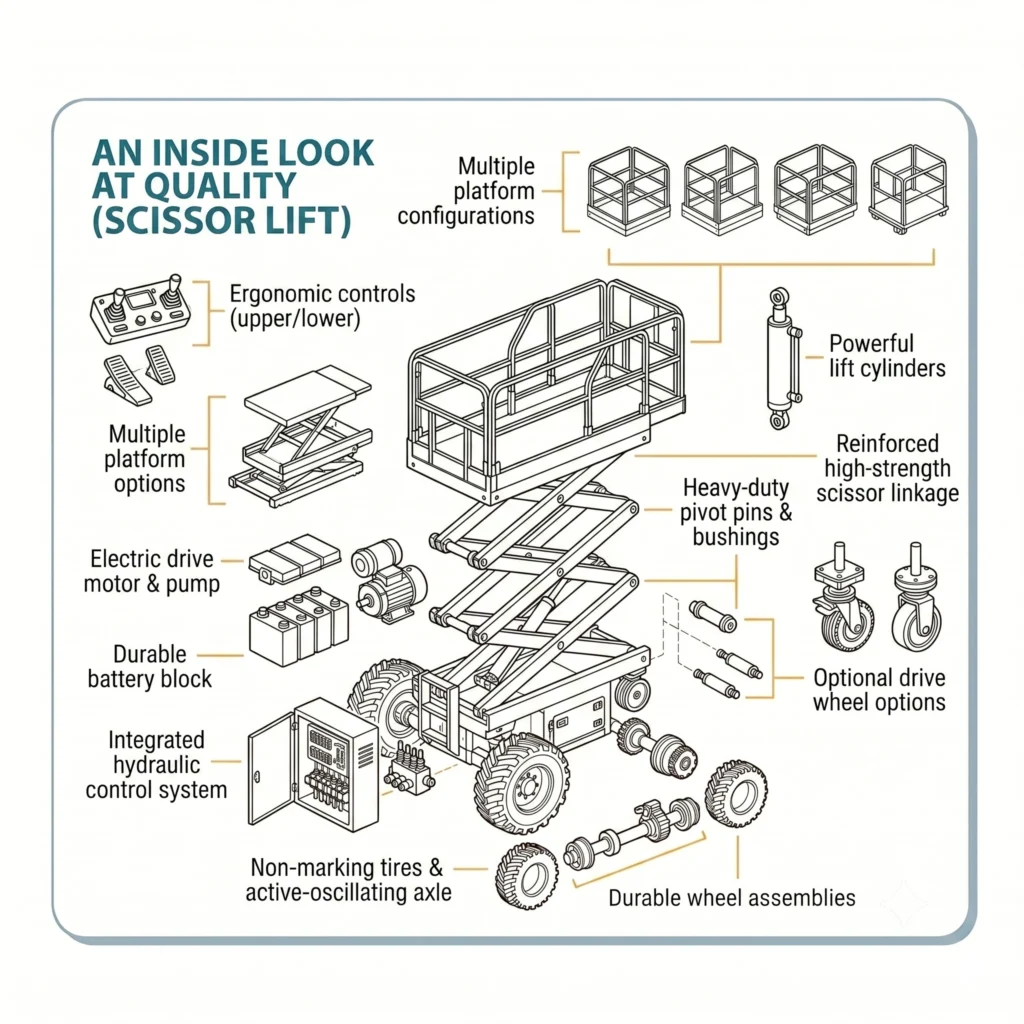
Several components contribute to total operating weight.
1. Scissor Stack Construction
The scissor mechanism itself is one of the heaviest components.
- Steel stacks are durable and ideal for outdoor use but can weigh two to three times more than aluminum designs.
- Aluminum stacks reduce overall weight and floor pressure, making them popular for indoor applications.
2. Power System
The power source significantly impacts machine weight.
| Component | Weight Impact |
|---|---|
| Lead-Acid Battery Pack | 600–1,200 lbs |
| Lithium-Ion Batteries | Up to 400 lbs lighter |
| Diesel Engine & Fuel | 800–1,500 lbs |
Modern lithium-powered aerial work platforms (AWPs) are becoming increasingly popular because they reduce machine weight while improving efficiency.
3. Platform Size and Extensions
Every additional foot of platform length typically adds 100–200 lbs.
Extension decks, pipe racks, and material trays further increase operating weight.
4. Tires and Chassis
Pneumatic rough-terrain tires generally weigh more than solid non-marking indoor tires. Depending on the design, tire differences can add 40–80 lbs per wheel.
5. Outriggers and Stabilizers
Optional stabilizers can add anywhere from 300 to 1,000 lbs depending on the model.
Scissor Lift Weight by Popular Brand and Model
The following table compares common electric and rough-terrain scissor lifts.
| Brand | Model | Platform Height | Operating Weight | Lift Capacity | Type |
|---|---|---|---|---|---|
| Genie | GS-1430m | 14 ft | 1,545 lbs | 500 lbs | Electric Compact |
| JLG | R1932 | 19 ft | 3,150 lbs | 650 lbs | Electric Indoor |
| Skyjack | SJ3219 | 19 ft | 3,050 lbs | 650 lbs | Electric |
| JLG | 2646E | 26 ft | 4,600 lbs | 1,000 lbs | Electric |
| Haulotte | Compact 12 | 26 ft | 4,960 lbs | 1,100 lbs | Rough Terrain |
| MEC | 4052SE | 40 ft | 8,740 lbs | 850 lbs | Electric Large |
| Genie | GS-5390 RT | 53 ft | 15,500 lbs | 1,000 lbs | Rough Terrain |
| JLG | E314L (2025) | 19 ft | 3,200 lbs | 680 lbs | Electric |
| Skyjack | SJ3215 Micro (2025) | 15 ft | 2,150 lbs | 500 lbs | Electric Micro |
Note: Older scissor lift models can be 10–20% heavier due to less efficient batteries and structural designs.
Scissor Lift vs. Other Aerial Equipment
Understanding equipment weight comparisons helps determine the right machine for the job.
| Equipment Type | Typical Weight |
|---|---|
| Mast Lift | 800–2,000 lbs |
| Vertical Mast Lift | 1,500–3,000 lbs |
| Scissor Lift | 1,500–18,000 lbs |
| Towable Boom Lift | 3,000 lbs |
| Self-Propelled Boom Lift | 12,000–38,000 lbs |
A 26-foot scissor lift weighs approximately 4,500 lbs, while a comparable 26-foot articulated boom lift often exceeds 11,000 lbs.
When You Need to Know the Exact Weight ?
Freight Elevators
A freight elevator rated for 4,000 lbs cannot safely carry a 4,600-lb scissor lift. Always verify elevator ratings before delivery.
Trailer and Truck Transport
A half-ton pickup truck may not legally transport:
- 3,500-lb scissor lift
- Trailer
- Fuel
- Operator
- Additional equipment
Combined weight often exceeds payload limits.
Floor Loading Calculations
Floor pressure is calculated using:
Weight ÷ Contact Area
For example:
- Lift weight = 8,000 lbs
- Four tires
- 12 square inches contact patch each
Total contact area = 48 sq in
Result = approximately 166 PSI
This pressure can exceed mezzanine or suspended slab ratings.
DOT and Road Transport Regulations
Many jurisdictions impose transportation requirements once the combined vehicle and trailer weight exceeds regulatory thresholds. Always verify local DOT and CDL requirements before transport.
How to Find Your Scissor Lift’s Exact Weight ?
Follow these steps:
Step 1
Locate the manufacturer serial plate.
Common locations include:
- Platform controls
- Chassis frame
- Battery compartment area
Step 2
Find the specification labeled Operating Weight.
Do not confuse this with:
- GVWR
- Shipping Weight
- Rated Capacity
Step 3
Add the weight of any accessories or attachments.
Step 4
Consider battery type and age when estimating actual operating weight.
Common Myths About Scissor Lift Weight
Myth: Smaller Platform Height Means Lower Weight
Fact: Battery size, chassis design, and lift capacity can make shorter lifts heavier than taller models.
Myth: Rough-Terrain Lifts Are Always Heavier
Fact: Some large electric scissor lifts outweigh smaller rough-terrain units.
Myth: GVWR and Operating Weight Are the Same
Fact: GVWR includes the maximum allowable loaded weight and should not be used for transport planning.
Frequently Asked Questions
How much does a 19-foot scissor lift weigh?
Most 19-foot scissor lifts weigh between 3,000 and 4,500 lbs. For example, the JLG R1932 weighs approximately 3,150 lbs.
How much does a scissor lift weigh in kilograms?
Multiply pounds by 0.4536. A 3,150-lb scissor lift weighs approximately 1,430 kg.
How much does a Genie scissor lift weigh?
Genie scissor lift weights vary significantly. The Genie GS-1430m weighs 1,545 lbs, while the Genie GS-5390 RT weighs approximately 15,500 lbs.
How much does a scissor lift weigh compared to a boom lift?
A 26-ft scissor lift typically weighs around 4,500 lbs. A similar boom lift often weighs approximately 11,000 lbs.
How much does a scissor lift battery weigh?
Lead-acid battery packs generally weigh between 600 and 1,200 lbs. Lithium-ion systems can reduce weight by roughly 400 lbs.
What is the lightest scissor lift available?
Mini scissor lifts such as the Genie GS-1430m (1,545 lbs) and certain MEC M-Series models (around 1,380 lbs) are among the lightest available.
How much does a 20-ft scissor lift weigh?
Most 20-ft models weigh between 3,000 and 4,500 lbs depending on power source and configuration.
How much does a scissor lift weigh in tons?
Scissor lifts typically weigh between 0.75 and 9 tons, with most indoor electric models falling between 1.5 and 3 tons.
Final Checklist Before Transporting or Using a Scissor Lift
Before moving or operating any aerial work platform:
✅ Confirm operating weight from the manufacturer nameplate
✅ Verify elevator, crane, floor, and trailer capacities
✅ Calculate floor pressure for mezzanines and suspended slabs
✅ Add weight for optional decks and accessories
✅ Check transportation regulations for loads exceeding 10,000 lbs
✅ Verify battery configuration and condition
✅ Review OEM specifications before transport
Knowing how much a scissor lift weighs is essential for safe operation, legal transportation, and proper job-site planning. Whether you’re renting a compact indoor model or purchasing a heavy-duty rough-terrain machine, always verify the operating weight before use.

Ahmed Ijaz runs this construction rental directory with over 5 years of experience in SEO, content, and web optimization. Every page is built using real research, hands-on expertise, and carefully reviewed information to meet strong EEAT standards.