
Before digging post holes or ordering materials, it’s essential to understand the laws that regulate residential fencing in Colorado.
Many homeowners assume fence regulations are the same statewide, but that’s not the case. While Colorado establishes a legal framework for issues such as boundary fences, livestock fencing, and neighbor responsibilities, individual cities and counties adopt their own zoning codes governing fence height, permits, placement, approved materials, and visibility requirements.
Failing to comply with local regulations can lead to permit violations, costly modifications, fines, neighbor disputes, or even removal of the fence after construction.
This guide explains Colorado’s state fence laws before breaking down fencing regulations in several of the state’s largest cities, including Denver, Colorado Springs, Aurora, Fort Collins, Lakewood, Thornton, Pueblo, Boulder, and Greeley.
Colorado State Fence Law: The Foundation
Colorado’s statewide fence regulations are primarily found in Colorado Revised Statutes (C.R.S.) Title 35, Article 46, commonly known as the Colorado Fence Law. Unlike municipal zoning ordinances, these statutes focus largely on agricultural fencing, boundary responsibilities, and disputes between neighboring landowners.
Although most suburban homeowners are governed primarily by city zoning ordinances, understanding these state laws provides important legal context.
What Is a Lawful Fence?
Colorado law defines a “lawful fence” as one that is sufficiently constructed to contain ordinary livestock.
Traditionally, this includes:
- Three strands of barbed wire
- Durable fence posts spaced approximately 20 feet apart
- Construction strong enough to turn ordinary horses and cattle
This definition exists primarily for agricultural and rural properties rather than urban residential neighborhoods.
Partition Fences
One of Colorado’s most important fence statutes concerns partition fences, which separate adjoining properties.
Under C.R.S. § 35-46-112, adjoining landowners generally share responsibility for constructing and maintaining a boundary fence when both properties benefit from it.
If repairs become necessary, one owner typically cannot force the other to pay immediately. Instead, Colorado law generally requires reasonable notice—commonly interpreted as a 30-day written notice—before seeking reimbursement for shared maintenance costs.
Colorado’s Fence-Out Rule
Colorado is historically a fence-out state, meaning livestock owners are not automatically responsible when animals wander onto unfenced land.
Instead, landowners who wish to keep livestock off their property are generally expected to maintain lawful fencing. This rule remains especially relevant in agricultural areas.
Boundary by Acquiescence
Colorado also recognizes the legal doctrine of boundary by acquiescence.
If neighboring property owners mutually treat an existing fence as the true property boundary for at least 20 years, that fence may eventually become the legally recognized boundary—even if a later survey indicates otherwise.
Because boundary disputes can become expensive, homeowners should always obtain a professional survey before installing a fence near property lines.
Denver Fencing Regulations
Denver has some of the state’s most detailed residential fence regulations. Requirements vary depending on fence height, location, zoning district, and whether the property lies within a historic district.
Permit Requirements
Generally:
- Fences 4 feet or lower typically do not require a zoning permit.
- Fences between 4 and 6 feet generally require zoning approval.
- Fences exceeding 6 feet usually require a special over-height approval or variance.
Homeowners should always verify current requirements before beginning construction.
Maximum Fence Heights
Denver distinguishes between front-yard and rear-yard fences.
Front Yard
Front-yard fences are generally limited to:
- Maximum height of 4 feet
- At least 50% open construction to preserve neighborhood visibility
Common acceptable materials include ornamental iron, decorative aluminum, and open picket fencing.
Side and Rear Yards
Rear and side-yard fences may generally reach:
- 6 feet maximum
- Solid privacy fencing is typically permitted
Wood, composite, masonry, and vinyl fencing are common choices where permitted.
Sidewalk Setbacks
Denver generally requires fences to remain at least 6 inches behind public sidewalks, preventing encroachment into public rights-of-way.
Historic Districts
Properties located within designated historic districts often face stricter design requirements.
Certain materials—including vinyl/PVC and chain-link fencing—may be prohibited or require additional review to preserve historic character.
Corner Lots
Corner properties must preserve driver visibility.
Additional sight triangle restrictions may limit fence height near street intersections and driveways.
Permit Applications
When permits are required, homeowners typically submit:
- Site plan
- Property survey (if requested)
- Fence design
- Material specifications
- Applicable permit fees
Colorado Springs Fencing Regulations
Colorado Springs follows zoning standards while coordinating certain permits through the Pikes Peak Regional Building Department.
Permit Requirements
Most residential fences 7 feet or shorter do not require a building permit provided they comply with city standards.
Fences exceeding 7 feet are treated as accessory structures and require building permits.
Height Limits
Typical residential standards include:
- Front yard: maximum 4 feet
- Side and rear yards: generally 6 feet
Measuring Fence Height
Colorado Springs uses a specific measurement method.
Fence height is measured from the finished grade to the highest point of the fence, including decorative post caps and finials.
If ground elevations differ on each side, the taller measurement governs.
Prohibited Materials
The city restricts several fence types, including:
- Chain-link without privacy inserts where prohibited
- Electric shock fencing
- Barbed wire
- Razor wire
- Temporary fencing made from tarps or plastic sheeting
Sight Visibility
Objects taller than 3 feet generally cannot be placed within 5 feet of a driveway edge, helping drivers safely enter public streets.
Hillside Overlay Areas
Certain preservation or hillside overlay districts prohibit or severely restrict fencing to protect natural landscapes.
Pool Fencing
Residential pools generally require protective barriers that include:
- Minimum height of 4 feet
- Maximum opening of 4 inches
- Self-closing, self-latching gates
Aurora Fencing Regulations
Aurora’s fence regulations combine zoning standards with special requirements for floodplains, historic districts, and corner lots.
Permit Requirements
Generally:
- Fences 6 feet or shorter do not require building permits if they meet zoning requirements.
- Fences taller than 6 feet usually require permits.
Height Limits
Typical residential limits include:
Front Yard
Maximum height:
- 4 feet
Taller fences generally must be located behind the front building line.
Side and Rear Yard
Most residential lots permit fences up to:
- 6 feet
Corner Lot Restrictions
To maintain visibility, fences within approximately 15 feet of intersecting property lines are commonly limited to 3 feet.
Special Permit Situations
Additional approvals may be required when fences involve:
- Floodplain properties
- Historic districts
- Retaining walls
- Electric fencing
Shared Property Lines
Aurora generally allows fences directly on property lines if neighboring owners provide written consent.
Although not always legally required, obtaining written agreements helps prevent future disputes.
HOA Requirements
Many Aurora neighborhoods are governed by homeowners associations that regulate:
- Fence colors
- Approved materials
- Styles
- Heights
HOA approval does not replace city approval, and vice versa.
Fort Collins Fencing Regulations
Fort Collins generally exempts standard residential fences from building permits while enforcing zoning regulations.
Typical residential standards include:
- Front yard: 4-foot maximum
- Rear and side yard: 6-foot maximum
Permits are generally triggered for fences exceeding 7 feet.
Many neighborhoods also require prior HOA approval, especially regarding fence appearance, colors, and materials.
Lakewood Fencing Regulations
Lakewood has several unique permit requirements.
Building permits are commonly required when:
- Fences exceed 6 feet
- Front-yard fences exceed 4 feet
- Repairs or replacements involve more than 8 linear feet
- Fences are located near sidewalks or corner lots
The city generally charges a flat permit fee of approximately $80, although fees may change over time.
Very small repairs or fences shorter than 8 feet typically do not require permits.
Thornton Fencing Regulations
Thornton has one of the state’s stricter permitting thresholds.
Generally:
- Fences taller than 30 inches require building permits.
Typical zoning limits include:
- Front yard: 4 feet
- Side yard: 6 feet
- Rear yard: 6 feet
Additional review is often required for fences over 7 feet or those located within traffic sight triangles.
Pueblo Fencing Regulations
Pueblo generally exempts residential fences 7 feet or shorter from building permit requirements.
However, zoning regulations still apply, particularly when fences extend beyond the front building line or affect visibility near intersections.
As in most Colorado municipalities, fences exceeding 6 feet often require additional review.
Boulder Fencing Regulations
Boulder exempts many residential fences 7 feet or lower from building permits.
However, additional approvals may be necessary for properties located within:
- Historic districts
- Landmark properties
- Wetlands
- Floodplains
Front-yard fences are typically limited to approximately 4 feet, while side and rear yards generally allow fences up to 6 feet.
Greeley Fencing Regulations
Greeley generally allows residential fences 6 feet or shorter without building permits.
Important local requirements include:
- Front setback fences generally limited to 42 inches
- Electric fences require permits
- Floodway properties may require separate floodplain development permits
Homeowners should also verify utility easements before construction.
Colorado Fence Regulation Comparison
| City | Permit Threshold | Front Yard Maximum | Rear Yard Maximum | Special Considerations |
|---|---|---|---|---|
| Denver | Over 4 ft (zoning) | 4 ft | 6 ft | Historic district material restrictions |
| Colorado Springs | Over 7 ft | 4 ft | 6 ft | Pool barrier standards, hillside overlays |
| Aurora | Over 6 ft | 4 ft | 6 ft | Corner lot visibility, floodplains |
| Fort Collins | Over 7 ft | 4 ft | 6 ft | HOA approval often required |
| Lakewood | Over 6 ft or major repairs | 4 ft | 6 ft | Permit fee and replacement rules |
| Thornton | Over 30 inches | 4 ft | 6 ft | Low permit threshold |
| Pueblo | Over 7 ft | Varies | Varies | Front setback zoning rules |
| Boulder | Over 7 ft | 4 ft | 6 ft | Historic and environmental review |
| Greeley | Over 6 ft | 42 inches | 6 ft | Electric fence permits |
Best Practices Before Building Any Fence
Regardless of where you live in Colorado, following a few best practices can help you avoid costly mistakes.
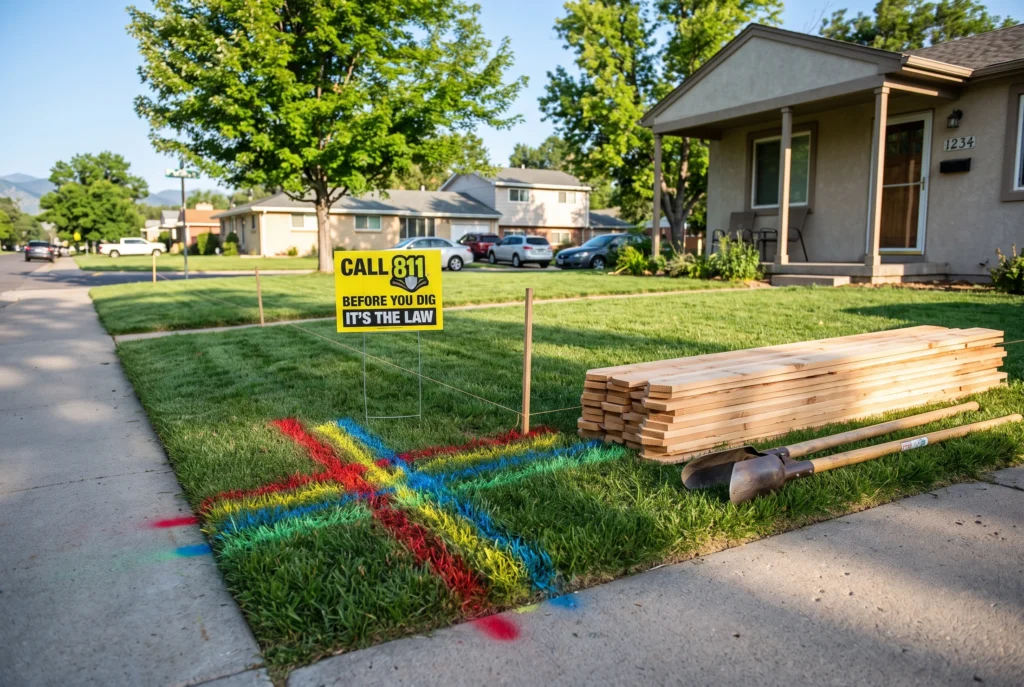
First, contact Colorado 811 before digging. Underground gas, electric, water, sewer, and telecommunications lines must be located before excavation begins.
Second, obtain a professional property survey if you’re unsure where your property line is located. Never assume an existing fence accurately marks the legal boundary.
Third, review your HOA’s governing documents. Homeowners associations frequently regulate fence height, materials, color, placement, and maintenance, sometimes imposing stricter standards than the city itself.
Fourth, communicate with your neighbors before construction begins. If the fence will sit on a shared property line, discuss materials, maintenance responsibilities, and costs in advance. Putting any agreement in writing can prevent misunderstandings later.
Finally, consider hiring a licensed fencing contractor familiar with local building codes. Experienced contractors often handle permit applications, schedule inspections when required, and ensure the finished fence complies with municipal regulations.
Verdict: What to Look For and Where to Look For Correct Information?
Colorado’s fence laws combine statewide legal principles with city-specific zoning requirements. While state statutes establish rules for lawful fences, partition fences, livestock responsibilities, and boundary disputes, local governments determine the regulations most homeowners encounter, including permit requirements, height limits, setback rules, approved materials, and visibility standards.
Because regulations differ significantly between Denver, Colorado Springs, Aurora, Boulder, Lakewood, Thornton, Fort Collins, Pueblo, Greeley, and other municipalities, homeowners should always verify the latest requirements with their local planning or building department before beginning construction.
Taking the time to obtain the proper permits, confirm property boundaries, comply with HOA requirements, and communicate with neighbors can help you avoid legal disputes, protect your investment, and ensure your new fence remains an asset to your property for years to come.
Resources
- Colorado Revised Statutes, Title 35, Article 46 (Colorado Fence Law)
- City and County of Denver Building and Zoning Department
- City of Colorado Springs Planning Department
- Pikes Peak Regional Building Department
- City of Aurora Building Division
- City of Fort Collins Development Review Services
- City of Lakewood Community Development Department
- City of Thornton Building Inspection Division
- City of Pueblo Planning and Community Development
- City of Boulder Planning and Development Services
- City of Greeley Community Development Department
- Colorado 811 Utility Locate Service

Ahmed Ijaz runs this construction rental directory with over 5 years of experience in SEO, content, and web optimization. Every page is built using real research, hands-on expertise, and carefully reviewed information to meet strong EEAT standards.