1 cubic yard equals 27 cubic feet. To convert cubic yards to cubic feet, multiply the number of cubic yards by 27. For example, 3 cubic yards of dirt equal 81 cubic feet, while 5 cubic yards of mulch equal 135 cubic feet.
This conversion is useful for construction projects, excavation, landscaping, concrete placement, and material delivery. Although suppliers often sell materials by the cubic yard, measurements for slabs, trenches, and other work areas are commonly calculated in feet.
The Direct Answer: Cubic Yard to Cubic Feet
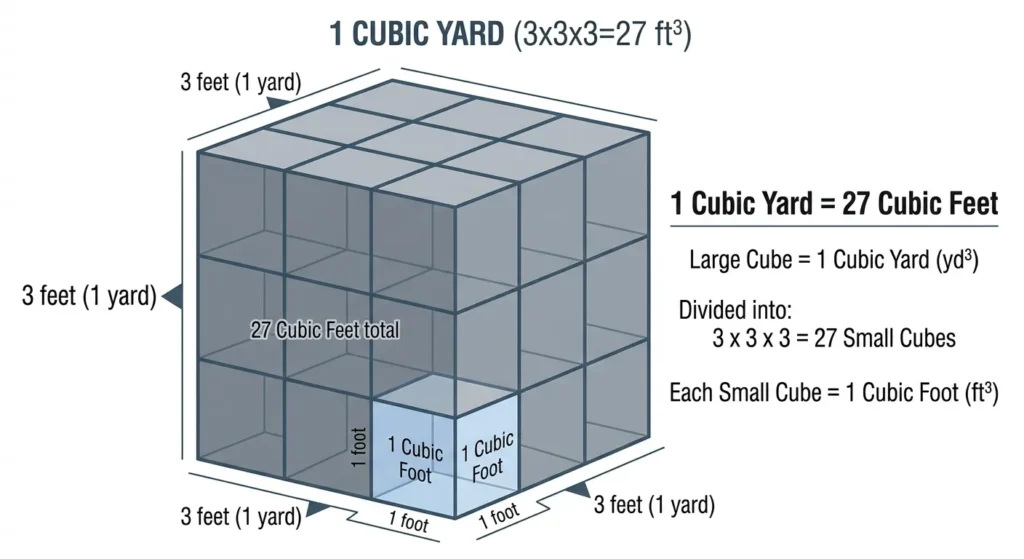
One cubic yard contains exactly 27 cubic feet because one yard equals 3 feet. A cubic yard measures volume, so you multiply the length, width, and height of a 3-foot cube.
The conversion is:
1 cubic yard = 3 ft × 3 ft × 3 ft = 27 cubic feet
What Is the Formula for Converting Cubic Yards to Cubic Feet?
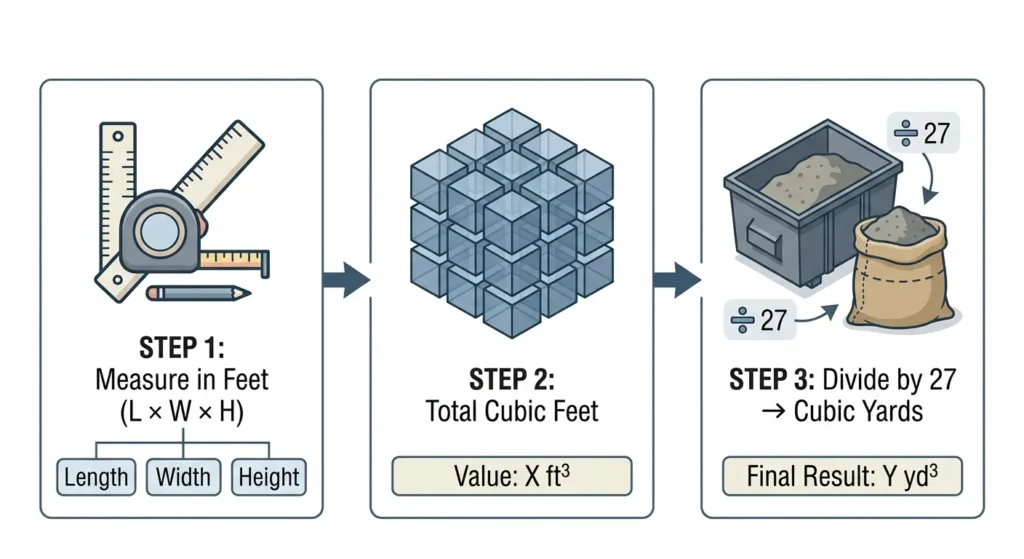
Use this formula to convert any volume measured in cubic yards into cubic feet:
Cubic feet = Cubic yards × 27
For example, if you need 4 cubic yards of soil:
4 × 27 = 108 cubic feet.
To convert cubic feet back into cubic yards, divide by 27:
Cubic yards = Cubic feet ÷ 27
For example, 135 cubic feet of gravel equals 5 cubic yards because 135 ÷ 27 = 5.
Why Does One Cubic Yard Equal 27 Cubic Feet?
A linear yard measures 3 feet in length. However, a cubic yard measures volume in three dimensions: length, width, and height.
Imagine a cube that is 3 feet long, 3 feet wide, and 3 feet high. Its volume is:
3 × 3 × 3 = 27 cubic feet.
This is why a cubic yard equals 27 cubic feet rather than 3 or 9 cubic feet. The conversion accounts for all three dimensions.
What Does One Cubic Yard Look Like?
A cubic yard is the amount of space occupied by a cube measuring 3 feet on each side. Each side is also 36 inches long.
For construction and landscaping, this measurement helps estimate how much material a project requires. For example, one cubic yard of loose soil occupies 27 cubic feet of space, although its weight depends on the soil type and moisture content.
A cubic yard is a volume measurement, not a fixed weight. One cubic yard of dry mulch weighs considerably less than one cubic yard of wet soil or gravel.
Other Equivalent Measurements
One cubic yard can also be expressed in other volume units:
- 27 cubic feet
- 46,656 cubic inches
- Approximately 764.6 liters
- Approximately 0.765 cubic meters
These equivalents are useful when comparing material specifications, measuring containers, or working with suppliers who use different units.
When Do You Need to Convert Cubic Yards to Cubic Feet?
Construction and landscaping projects often use both units. Suppliers typically quote bulk materials in cubic yards, while contractors calculate dimensions using feet.
1. Soil, Dirt, and Mulch
Soil, topsoil, fill dirt, compost, and mulch are commonly sold by the cubic yard. Converting cubic feet to cubic yards helps you determine how much material to order.
For example, suppose a landscaping project requires 81 cubic feet of topsoil.
81 ÷ 27 = 3 cubic yards.
You would need 3 cubic yards of topsoil to cover the calculated volume. For real projects, allow for uneven ground, settling, and material loss where appropriate.
If you are estimating excavation quantities, calculate the length, width, and depth of the area before converting the result into cubic yards.
2. Concrete and Construction Projects
Concrete is commonly ordered by the cubic yard, but slab dimensions are often measured in feet.
Suppose you are pouring a concrete slab measuring 9 feet long, 9 feet wide, and 1 foot thick.
First, calculate the volume:
9 × 9 × 1 = 81 cubic feet.
Then convert the volume to cubic yards:
81 ÷ 27 = 3 cubic yards.
The slab requires 3 cubic yards of concrete before allowing for waste or variations in the actual dimensions. For a real concrete order, account for the slab’s exact thickness, uneven subgrade, and the supplier’s ordering recommendations.
3. Dumpsters and Waste Removal
Dumpster sizes are often advertised in cubic yards. Knowing the cubic-foot equivalent helps you understand how much space the container provides.
For example:
- A 10-cubic-yard dumpster holds 270 cubic feet.
- A 15-cubic-yard dumpster holds 405 cubic feet.
- A 20-cubic-yard dumpster holds 540 cubic feet.
- A 30-cubic-yard dumpster holds 810 cubic feet.
These figures describe nominal container volume. The amount of construction debris you can dispose of may also be limited by weight restrictions, fill lines, and the type of waste.
4. Excavation and Trenching
Excavation contractors calculate the volume of soil to remove or move using the dimensions of the excavation area. The result is often converted to cubic yards for estimating equipment requirements, hauling, and disposal.
For example, a trench measuring 30 feet long, 2 feet wide, and 1.5 feet deep has a calculated volume of:
30 × 2 × 1.5 = 90 cubic feet.
Convert the volume:
90 ÷ 27 = 3.33 cubic yards.
The trench has a geometric volume of approximately 3.33 cubic yards. The amount of soil actually hauled away may differ because excavated soil can expand when loosened, and the trench dimensions may vary.
Common Mistakes When Converting Cubic Yards to Cubic Feet
Confusing a Yard With a Cubic Yard
A yard is a unit of length equal to 3 feet. A cubic yard is a unit of volume equal to 27 cubic feet.
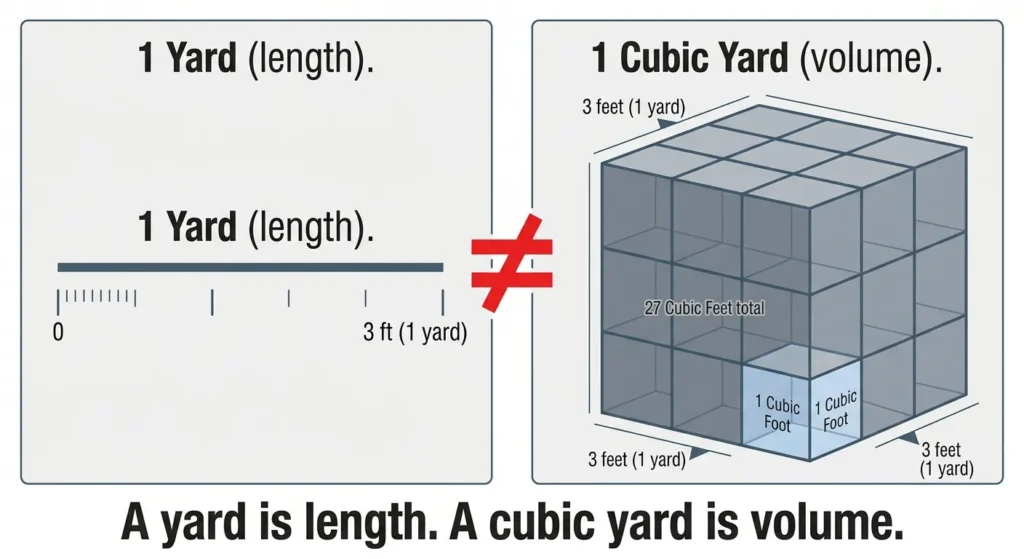
When a supplier says you are buying a yard of dirt or mulch, the supplier generally means one cubic yard of material.
Confusing Square Feet With Cubic Feet
Square feet measure area, while cubic feet measure volume.
You cannot convert square feet directly into cubic yards without knowing the material’s depth. Multiply the area in square feet by the depth in feet to calculate cubic feet, then divide by 27.
For example, a 100-square-foot area covered with 6 inches of mulch has a depth of 0.5 feet.
100 × 0.5 = 50 cubic feet.
50 ÷ 27 = approximately 1.85 cubic yards.
Therefore, the area requires about 1.85 cubic yards of mulch before allowing for settling or additional material.
Assuming Volume Determines Material Weight
Cubic yards and cubic feet measure volume, not weight. Two materials occupying the same volume can have very different weights.
For example, a cubic yard of mulch is generally much lighter than a cubic yard of wet soil or gravel. When loading a dump truck or arranging material delivery, consider both the required volume and the material’s weight.
Cubic Yard to Cubic Feet Conversion Table
Use this reference table to convert common cubic-yard quantities into cubic feet.
| Cubic Yards (yd³) | Cubic Feet (ft³) |
|---|---|
| 1 | 27 |
| 2 | 54 |
| 3 | 81 |
| 4 | 108 |
| 5 | 135 |
| 6 | 162 |
| 8 | 216 |
| 10 | 270 |
| 15 | 405 |
| 20 | 540 |
To convert any cubic-yard value into cubic feet, multiply by 27.
Frequently Asked Questions
How many cubic feet are in a cubic yard of concrete?
One cubic yard of concrete equals 27 cubic feet. The conversion is the same for concrete, soil, gravel, mulch, and other materials because it measures volume rather than material type.
How many cubic feet are in a yard of mulch?
A yard of mulch generally means one cubic yard, which equals 27 cubic feet. The weight depends on the mulch material, moisture content, and composition.
Is 1 cubic yard the same as 3 cubic feet?
No. One cubic yard equals 27 cubic feet. Three feet describes a linear measurement, whereas cubic feet measure volume in three dimensions.
How do I convert square feet to cubic yards?
Multiply the area in square feet by the depth in feet to get cubic feet, then divide by 27. For example, 100 square feet covered to a depth of 6 inches requires approximately 1.85 cubic yards of material.
How many cubic feet are in 5 cubic yards?
Five cubic yards equal 135 cubic feet because 5 × 27 = 135.
How many cubic feet are in 10 cubic yards?
Ten cubic yards equal 270 cubic feet because 10 × 27 = 270.
Does a cubic yard always contain 27 cubic feet, regardless of the material?
Yes. The conversion is always 27 cubic feet per cubic yard, regardless of whether the material is concrete, dirt, sand, gravel, or mulch. Material density changes the weight, not the volume conversion.
Conclusion
One cubic yard contains 27 cubic feet, and the conversion is simple: multiply cubic yards by 27 or divide cubic feet by 27 to convert in the opposite direction.
For construction, excavation, concrete, and landscaping projects, this calculation helps estimate material quantities and compare supplier measurements. Always calculate the project’s actual length, width, and depth, and consider material waste, soil expansion, and weight limits when planning deliveries or hauling.

Ahmed Ijaz runs this construction rental directory with over 5 years of experience in SEO, content, and web optimization. Every page is built using real research, hands-on expertise, and carefully reviewed information to meet strong EEAT standards.