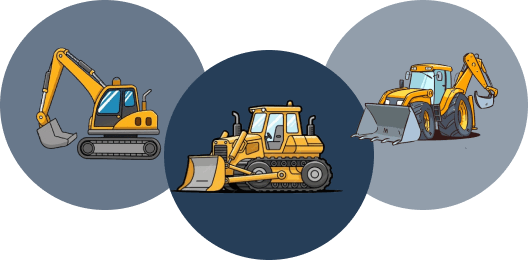
A typical dump truck holds about 10 to 14 cubic yards of material, although actual capacity depends on the truck’s body size, configuration, and the material being hauled. A common 12-yard dump truck is widely used for dirt, gravel, landscaping materials, and construction debris. The truck may have enough physical space for a full load, but heavy materials can reach the legal payload limit before the bed is full.
How Many Cubic Yards Does a Dump Truck Hold?
A standard dump truck typically carries 10 to 14 cubic yards of material. Many municipal and construction applications use trucks around the 12-cubic-yard range.
However, there is no single capacity for every dump truck. Manufacturers and fleets use different body sizes, and the amount you can legally haul also depends on the material’s weight.
The two important capacity limits are:
- Volume capacity: How much space the dump body can physically hold.
- Payload capacity: How much weight the truck can legally carry.
For example, a truck may have a 12-cubic-yard body, but it may need to carry less than 12 cubic yards of gravel because gravel is much heavier than mulch.
Dump Truck Capacity by Type
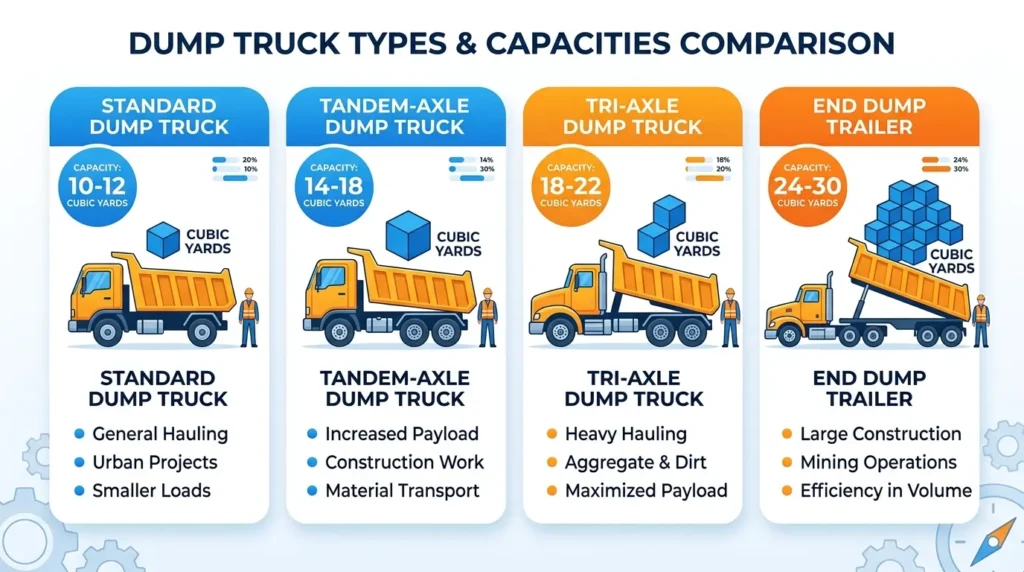
| Dump Truck Type | Typical Capacity | Common Uses |
|---|---|---|
| Standard dump truck | About 10–14 yd³ | Dirt, landscaping, light construction debris |
| Tandem-axle dump truck | Commonly around 12–16 yd³ | Gravel, dirt, construction work |
| Tri-axle dump truck | Often larger than standard trucks | Heavy construction and excavation |
| End-dump trailer | Often 20+ yd³ | Large-volume aggregate and material hauling |
| Articulated dump truck | Model-dependent; commonly 20+ yd³ | Large earthmoving and off-road work |
These are typical ranges, not fixed industry standards. The manufacturer’s specifications and the truck’s legal weight rating determine the actual capacity.
Off-road articulated trucks can carry substantially more than highway dump trucks. For example, Caterpillar’s 730 articulated truck has a 23-cubic-yard heaped body capacity and a 31-ton rated payload.
Why the Material Matters?
A dump truck’s bed has a fixed volume, but different materials have very different densities.
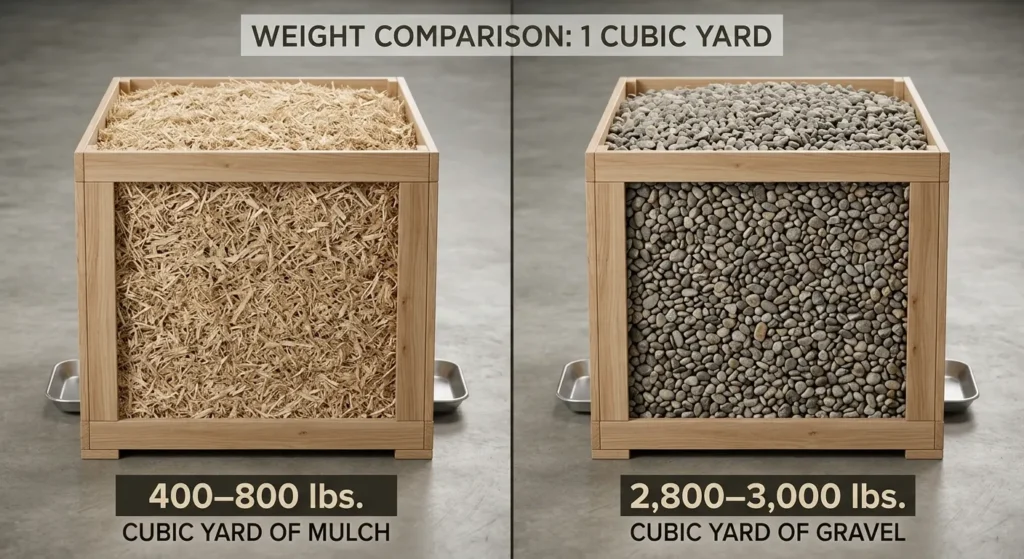
That means a truck can sometimes hold its full volume of a lightweight material but must carry less volume of a heavy material to stay within its payload limit.
For example:
- Mulch is relatively lightweight, so volume is often the main limitation.
- Topsoil is heavier and can approach the truck’s payload limit.
- Sand and gravel are much heavier and may limit the number of cubic yards you can legally haul.
- Concrete and demolition debris can be particularly weight-intensive.
Caterpillar specifically notes that dump-truck capacity depends on both volume and material weight, and recommends checking the truck’s official volume and weight specifications before loading.
Example: Why a 12-Yard Truck May Not Carry 12 Yards of Gravel?
Suppose a truck has enough physical space for 12 cubic yards but its legal payload is limited by weight.
If the material is heavy enough, loading all 12 cubic yards could exceed the truck’s allowable payload.
So the practical calculation is:
Maximum cubic yards by weight = Payload capacity ÷ Material weight per cubic yard
The result may be lower than the truck’s advertised bed volume.
Struck vs. Heaped Capacity
Dump-truck capacity can also be described as struck or heaped.
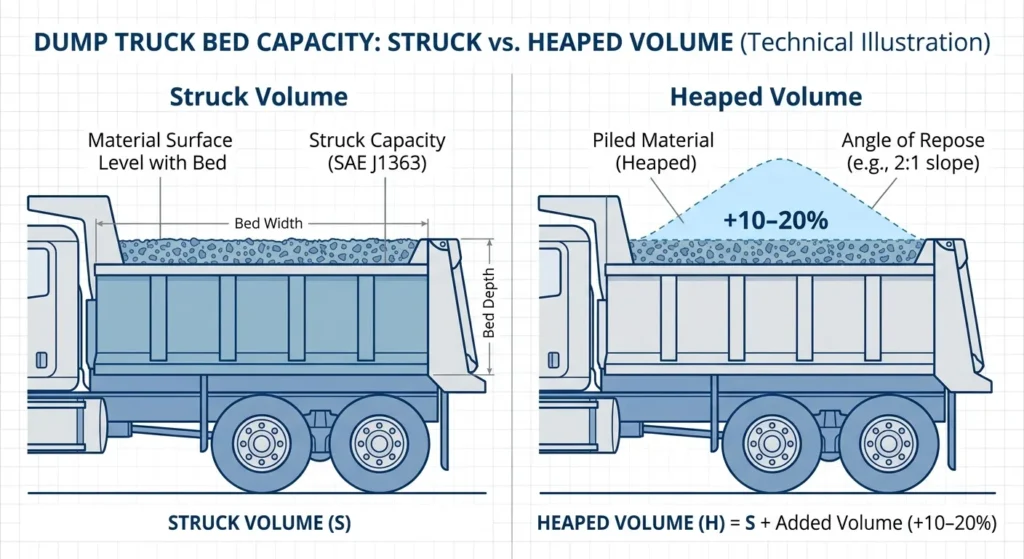
Struck capacity means the material is level with the top of the truck body.
Heaped capacity means the material is piled above the sides of the body according to the applicable loading standard.
Do not assume that a truck advertised with a particular cubic-yard capacity can always carry that amount of every material. The load still has to remain within the truck’s weight and operating limits.
How to Calculate How Many Cubic Yards You Need?
For a rectangular area, use this formula:
Cubic yards = (Length × Width × Depth) ÷ 27
Measurements must be in feet.
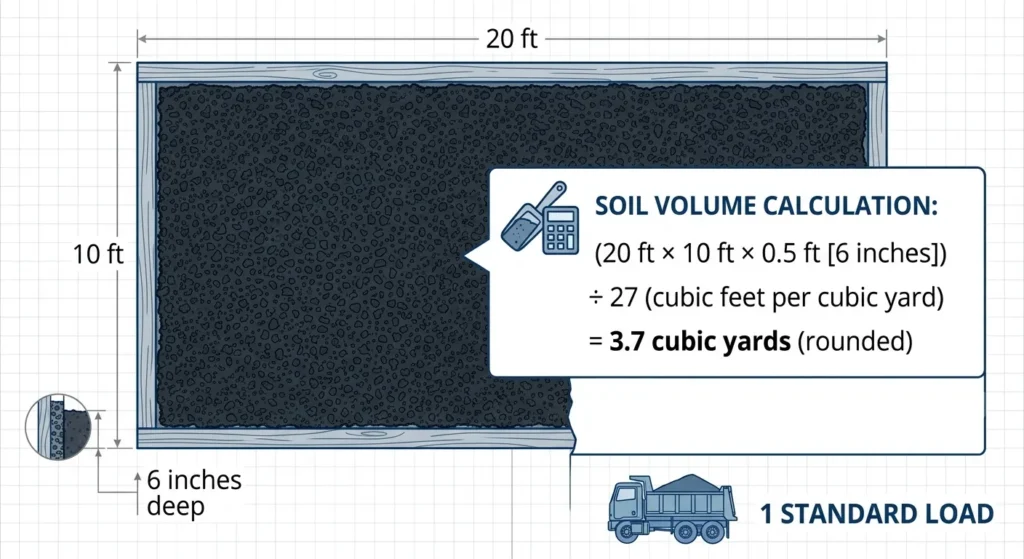
Example
Suppose you need to fill an area that is:
- 20 feet long
- 10 feet wide
- 6 inches deep
First convert 6 inches to feet:
6 ÷ 12 = 0.5 feet
Then calculate:
20 × 10 × 0.5 = 100 cubic feet
Convert cubic feet to cubic yards:
100 ÷ 27 = 3.7 cubic yards
You would need approximately 4 cubic yards of material.
How Many Dump Truck Loads Do You Need?
Once you know the total cubic yards, divide the project volume by the truck’s usable capacity.
Truckloads = Total cubic yards ÷ Cubic yards per load
For example, if a project requires 100 cubic yards and the truck can carry 12 cubic yards:
100 ÷ 12 = 8.33 loads
You would need about 9 truckloads, assuming the material can actually be hauled at 12 cubic yards per load without exceeding the truck’s weight limit.
For heavy materials such as gravel, the usable volume may be lower.
Dump Truck Capacity for Common Projects
| Project | Approximate Material Needed |
|---|---|
| Small garden bed, 10 × 10 × 6 in. | 1.5 yd³ |
| 40 × 10 ft driveway at 4 in. depth | About 5 yd³ |
| 50 × 20 ft landscaping area at 6 in. depth | About 18.5 yd³ |
| Large excavation | Can require dozens or hundreds of yd³ |
These figures are volume estimates. Actual orders may need to account for compaction, material type, moisture, grading requirements, and waste.
Payload and GVWR: The Important Difference
GVWR (Gross Vehicle Weight Rating) is the maximum allowable total weight of the truck, including the vehicle itself and its load.
Payload is the amount of cargo the truck can carry after accounting for the truck’s own weight and applicable limits.
This is why cubic-yard capacity alone is not enough when ordering or hauling material.
For a specific truck, check its manufacturer’s specifications, weight rating, and applicable road restrictions.
On U.S. Interstate highways, federal rules generally establish an 80,000-pound gross vehicle weight limit, with additional axle and bridge-formula restrictions. State and local requirements can also affect legal operating weight.
How Do You Know How Many Cubic Yards Your Dump Truck Can Carry?
Check the truck’s:
- Dump-body volume
- Manufacturer specifications
- GVWR
- Empty or curb weight
- Rated payload
- Applicable axle and road weight limits
Then compare the truck’s payload with the density of the material you intend to haul.
A truck’s advertised body volume should not automatically be treated as its legal payload for every material.
Frequently Asked Questions
What is the average cubic-yard capacity of a dump truck?
A common standard dump truck carries about 10 to 14 cubic yards, with 12 cubic yards being a common reference point. Actual capacity varies by truck and body configuration.
How many cubic yards are in a 12-yard dump truck?
A 12-yard dump truck has a nominal body capacity of 12 cubic yards. Its actual usable load may be lower for heavy materials if the payload limit is reached first.
How many cubic yards does a tandem dump truck hold?
Tandem dump trucks commonly have bodies in the 12- to 16-cubic-yard range, but the exact capacity depends on the truck and dump body.
Does a dump truck hold more mulch or gravel?
In practical hauling, mulch can usually be loaded closer to the truck’s full volume capacity because it is much lighter than gravel. Gravel may reach the truck’s payload limit before the body is full.
How many cubic yards are in one dump truck load of dirt?
A typical standard dump truck load is often around 10 to 14 cubic yards of dirt, but the actual amount depends on the truck’s body and the weight of the dirt.
What is the largest dump truck capacity?
There is no single maximum because dump trucks range from highway trucks to large off-road articulated and mining trucks. Some articulated trucks carry more than 20 cubic yards, while large mining trucks can carry substantially more. For example, Caterpillar lists articulated models with capacities ranging from roughly 23 to nearly 30 cubic yards and rated payloads from about 31 to 40 tons.
What is the difference between cubic yards and tons?
Cubic yards measure volume, while tons measure weight.
One cubic yard of mulch does not weigh the same as one cubic yard of gravel. Therefore, converting cubic yards to tons requires knowing the material’s density.
Key Takeaways
- A typical dump truck holds about 10–14 cubic yards.
- 12 cubic yards is a useful reference for a common dump truck.
- Larger truck configurations can carry more.
- Material density affects the usable cubic-yard capacity.
- Heavy materials such as gravel can reach the payload limit before the truck bed is full.
- Calculate project volume with (L × W × D) ÷ 27.
- Always check the truck’s manufacturer specifications and legal weight limits before loading.

Ahmed Ijaz runs this construction rental directory with over 5 years of experience in SEO, content, and web optimization. Every page is built using real research, hands-on expertise, and carefully reviewed information to meet strong EEAT standards.