The global forklift rental market is growing rapidly as businesses shift away from expensive equipment ownership toward flexible rental solutions. Instead of investing large amounts of capital into purchasing forklifts, companies now prefer renting to reduce upfront costs, improve cash flow, and gain access to modern equipment without maintenance responsibilities.
This trend is especially strong in logistics, warehousing, construction, manufacturing, retail, and distribution industries. In many markets, the forklift rental industry has experienced double-digit annual growth, while innovative smart sharing and pay-per-use rental models are making forklifts even more affordable.
However, understanding forklift rental cost isn’t as simple as checking a daily price. Rental rates vary based on several factors, including:
- Forklift type
- Load capacity
- Rental duration
- Operating environment
- Delivery charges
- Fuel or battery costs
- Insurance
- Operator requirements
- Geographic location
- Market demand
This comprehensive guide explains every factor that influences forklift rental pricing, highlights hidden costs, compares rental models, and provides practical strategies to reduce your total rental expenses.
Understanding the Forklift Rental Cost Formula
Forklift rental cost is determined by multiple variables rather than a fixed price.
Forklift Rental Cost = Equipment Type + Rental Duration + Operating Environment + Service Package + Geographic Location + Market Conditions
Each of these components directly affects your final invoice.
Equipment Type: The Biggest Pricing Factor
The type of forklift you rent has the largest influence on overall rental cost.
Electric Forklifts
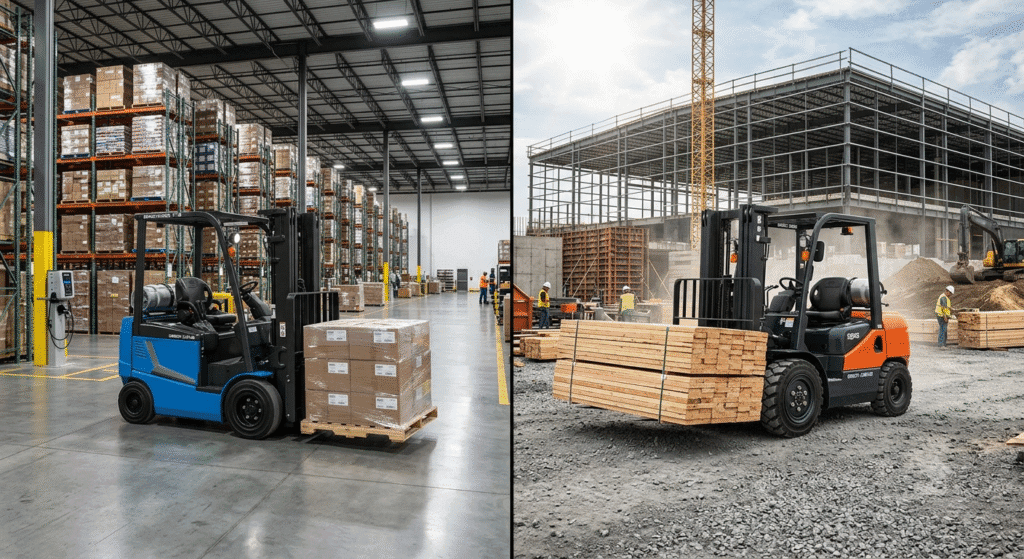
Electric forklifts have become the preferred option for indoor operations because they produce zero emissions and operate quietly.
Typical applications include:
- Warehouses
- Distribution centers
- Food processing
- Pharmaceutical facilities
- Retail storage
Advantages
- Low operating costs
- Quiet operation
- No exhaust emissions
- Reduced maintenance
- Ideal for enclosed spaces
Although electric forklifts often have slightly higher rental rates than diesel models, their lower operating costs usually offset the difference over longer rental periods.
Diesel Forklifts
Diesel forklifts remain the preferred choice for outdoor environments.
Common applications include:
- Construction sites
- Lumber yards
- Ports
- Heavy manufacturing
- Mining operations
Benefits
- Excellent power
- Longer operating hours
- Fast refueling
- Better performance on uneven terrain
- High lifting capacity
The downside is higher fuel consumption and exhaust emissions, making diesel forklifts unsuitable for indoor use.
LPG Forklifts
Liquefied Petroleum Gas (LPG) forklifts provide a balance between electric and diesel machines.
They offer:
- Faster refueling
- Lower emissions than diesel
- Indoor and outdoor flexibility
- Good performance during long shifts
Many warehouses use LPG forklifts when electric charging infrastructure is unavailable.
Lithium-Ion Forklifts
Lithium-ion technology is transforming forklift rental.
Compared with traditional lead-acid batteries, lithium-ion forklifts provide:
- Charging in less than 2 hours
- Opportunity charging during breaks
- No battery maintenance
- Longer battery life
- Higher productivity
- Lower lifetime operating costs
Although rental prices are usually higher, businesses often recover these costs through increased efficiency and reduced downtime.
Load Capacity and Lift Height
Rental prices increase with lifting capacity.
Typical examples include:
| Forklift Capacity | Typical Rental Cost |
|---|---|
| 2 Ton Electric | Moderate |
| 3 Ton Diesel | ¥3,000–¥4,500/month |
| 5 Ton Forklift | Higher monthly rate |
| 10+ Ton Heavy Duty | ¥1,200–¥2,200/day |
Higher-capacity forklifts require:
- Larger engines
- Reinforced frames
- Bigger tires
- Advanced hydraulic systems
These factors naturally increase rental costs.
Lift height also matters. A forklift capable of lifting materials to 8 meters will generally cost more than one with a standard 3-meter mast.
Specialized Attachments Increase Rental Costs
Optional attachments improve productivity but also increase rental pricing.
Popular forklift attachments include:
- Side shifters
- Paper roll clamps
- Bale clamps
- Drum handlers
- Fork positioners
- Rotators
- Carpet poles
While attachments add to rental expenses, they often reduce labor costs and improve operational efficiency.
Rental Duration and Pricing
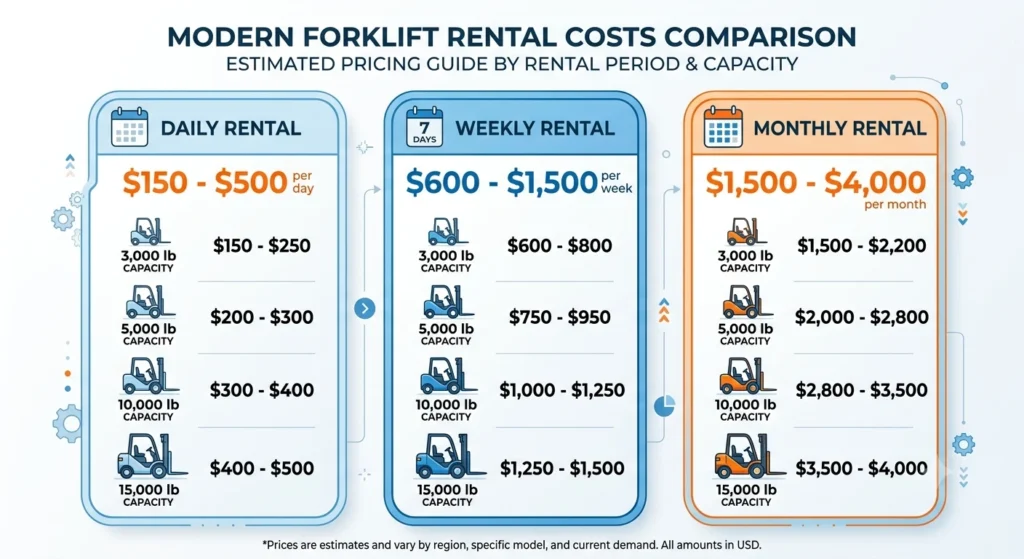
Rental companies offer different pricing structures depending on how long equipment is needed.
Hourly Rental
Ideal for:
- Equipment installation
- Exhibition setup
- Emergency lifting
- Short maintenance jobs
Typical pricing:
$55–$125 per hour
Many providers require a minimum two-hour rental.
Daily Rental
Suitable for:
- Construction projects
- One-time deliveries
- Temporary warehouse overflow
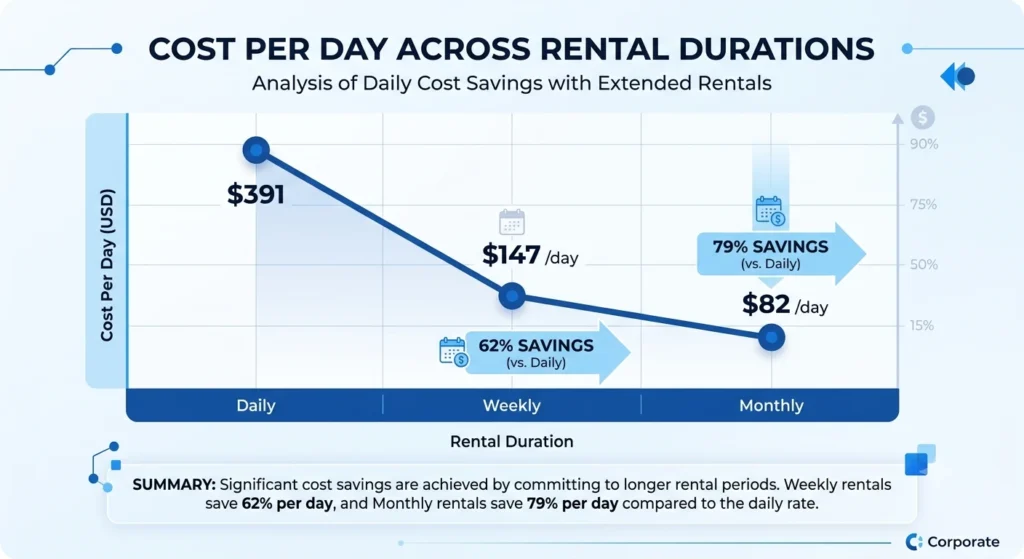
Daily rates are generally much lower than hourly rates when compared over the same working period.
Weekly Rental
Weekly rentals provide noticeable discounts compared with daily pricing.
This option works well for:
- Seasonal inventory
- Warehouse expansion
- Short-term contracts
Monthly Rental
Monthly rentals provide the lowest average daily cost.
Businesses with ongoing material handling needs typically save significantly through monthly agreements.
Example:
A standard 3-ton forklift commonly rents for ¥3,000–¥4,500 per month, depending on equipment type and region.
Operating Environment Matters
The work environment affects both equipment selection and overall rental costs.
Indoor Operations
Indoor facilities usually require:
- Electric forklifts
- Non-marking tires
- Low-noise operation
- Zero emissions
These requirements can influence rental pricing.
Outdoor Operations
Outdoor environments often require:
- Diesel forklifts
- Pneumatic tires
- Weather-resistant equipment
- Higher lifting capacity
Fuel costs become a larger portion of total operating expenses.
Narrow Aisles
Warehouses with limited space may require specialized equipment such as:
- Reach trucks
- Order pickers
- Narrow aisle forklifts
These machines are more specialized and often command premium rental rates.
Complete Breakdown of Forklift Rental Costs
The advertised rental price is rarely the final amount you pay.
Here are the most common cost components.
Base Rental Rate
This includes the equipment itself.
Pricing depends on:
- Capacity
- Brand
- Age
- Power source
- Rental period
Delivery and Pickup Fees
Transportation charges are frequently overlooked.
Rental companies may calculate delivery using:
- Flat rates
- Mileage
- Hourly transport charges
Long-distance deliveries naturally increase costs.
Fuel and Battery Charging
Diesel
Most rental agreements follow:
Full tank out, full tank back
You pay for consumed fuel.
Electric
Electric forklifts require charging infrastructure.
Electricity costs are generally lower than diesel fuel expenses, especially for long-term rentals.
Overtime Charges
Many rental contracts include standard operating hours.
Using equipment beyond agreed limits often results in overtime fees.
Always review:
- Daily hour limits
- Weekend rates
- Holiday pricing
before signing.
Damage Waiver and Insurance
Insurance policies differ widely.
Important questions include:
- Who pays for accidental damage?
- Is a damage waiver included?
- Does your business insurance cover rented equipment?
- What is the deductible?
Understanding these terms prevents expensive surprises.
Operator Costs
If you don’t have certified forklift operators, you’ll need to hire one.
Typical operator rates start around:
$25 per hour
Many rental companies offer equipment with trained operators, which may reduce total project costs compared with separate hiring and training.
Taxes and Local Fees
Taxes vary by country and region.
Possible charges include:
- VAT
- Sales tax
- Environmental fees
- Customs duties
- Local transportation taxes
Always request a complete quotation including taxes.
Smart Sharing: A New Way to Reduce Forklift Rental Costs
One of the newest developments in the rental industry is the smart shared forklift model.
Instead of leasing dedicated equipment, businesses pay only for actual usage.
Benefits include:
- Zero acquisition cost
- Pay-per-use billing
- Shared certified operators
- Centralized maintenance
- Reduced downtime
- IoT monitoring
- Fleet optimization
Some logistics parks report labor cost reductions exceeding 30% through shared fleet management.
Best Strategies to Save Money on Forklift Rentals
Choose the Right Rental Period
Avoid renting longer than necessary.
If projects extend beyond a few weeks, monthly pricing often provides substantial savings.
Select the Proper Capacity
Many businesses overestimate lifting requirements.
Choosing a larger forklift than necessary increases rental costs without improving productivity.
Evaluate:
- Maximum load weight
- Lift height
- Aisle width
- Ground conditions
before selecting equipment.
Bundle Services
Many providers offer package deals including:
- Forklift
- Operator
- Maintenance
- Insurance
- Delivery
Bundled pricing is often more economical than purchasing services separately.
Consider Rent-to-Own
Businesses with long-term forklift requirements may benefit from rent-to-own agreements.
Advantages include:
- Lower initial investment
- Predictable monthly expenses
- Ownership after contract completion
- Reduced maintenance burden
This model is especially attractive when upgrading to lithium-ion fleets.
Compare Multiple Quotes
Never accept the first quotation.
Compare providers based on:
- Equipment condition
- Fleet age
- Hidden fees
- Maintenance support
- Response time
- Insurance coverage
- Contract flexibility
The cheapest quote isn’t always the most cost-effective.
How to Choose the Right Forklift Rental Provider?
A reliable rental company should offer more than competitive pricing.
Evaluate providers based on:
Fleet Quality
Modern forklifts under three years old generally experience fewer breakdowns and higher productivity.
Maintenance Standards
Ask for:
- Inspection records
- Maintenance logs
- Safety certifications
Well-maintained equipment minimizes downtime.
Service Response
Fast support is critical.
Many leading providers offer:
- Urban response within two hours
- Suburban response within four hours
Rapid repairs reduce project delays.
Operator Certification
If operators are supplied, verify that they hold valid certifications and follow local safety regulations.
Transparent Contracts
Read all contract terms carefully.
Look for clarity regarding:
- Damage responsibility
- Fuel policies
- Delivery charges
- Renewal terms
- Cancellation fees
- Overtime billing
Transparent agreements help avoid unexpected expenses.
Forklift Rental Cost Scenarios
| Scenario | Equipment | Duration | Estimated Cost | Main Cost Drivers |
|---|---|---|---|---|
| Warehouse Material Handling | 3T Electric Forklift | Monthly | ¥3,000–¥4,500 | Battery charging, indoor use |
| Exhibition Setup | 2T Forklift | Hourly | $55–$125/hour | Short-term premium, delivery |
| Construction Project | 10T Diesel Forklift | Daily | ¥1,200–¥2,200 | Fuel, operator, heavy lifting |
| Logistics Park | Shared 2T Electric | Pay-per-use | Usage-based | No CAPEX, shared maintenance |
| Long-Term Fleet Upgrade | Lithium-Ion Fleet | Multi-year | Rent-to-own | Lower maintenance costs |
Future Trends Affecting Forklift Rental Costs
The forklift rental industry continues to evolve through technology and sustainability initiatives.
Digital Fleet Management
IoT-enabled forklifts now provide:
- GPS tracking
- Remote diagnostics
- Usage monitoring
- Predictive maintenance
- Safety alerts
These technologies reduce accidents, improve utilization, and support more accurate pricing.
Green Equipment
Demand for environmentally friendly forklifts continues to grow.
Lithium-ion batteries, hydrogen fuel cells, and energy-efficient electric forklifts are expected to become increasingly common despite slightly higher rental prices.
Expansion of Smart Sharing
Shared fleet platforms will likely become standard across logistics hubs, providing affordable, on-demand forklift access for businesses of all sizes.
Industry Consolidation
As larger rental companies expand, pricing may become more standardized, while smaller providers may continue competing through personalized service and flexible contracts.
Frequently Asked Questions
How much does it cost to rent a forklift?
Forklift rental costs vary depending on equipment type, capacity, rental duration, and location. Typical rates range from $55–$125 per hour, while monthly rentals for standard 3-ton forklifts commonly range from ¥3,000–¥4,500.
Is renting cheaper than buying?
For short-term, seasonal, or occasional use, renting is usually more economical because it eliminates maintenance, storage, depreciation, and repair costs. Businesses with continuous daily operations should compare long-term rental expenses against purchase costs.
What hidden costs should I watch for?
Common additional charges include delivery and pickup fees, fuel or electricity, overtime, operator wages, insurance, damage waivers, and applicable taxes.
Should I rent an electric or diesel forklift?
Electric forklifts are ideal for indoor environments due to their quiet, zero-emission operation and lower operating costs. Diesel forklifts are better suited for outdoor, heavy-duty applications where longer run times and higher lifting capacities are required.
Conclusion
Forklift rental cost depends on much more than the advertised daily or monthly rate. Equipment type, lifting capacity, rental duration, operating environment, service inclusions, and regional market conditions all contribute to the final price.
To create an accurate budget, look beyond the base rental fee and account for delivery, fuel or charging, operator costs, insurance, overtime, and taxes. Comparing providers, selecting equipment that matches your operational needs, and considering bundled services, rent-to-own options, or emerging smart sharing models can significantly reduce your total cost of ownership.
By carefully evaluating your project requirements and choosing the most suitable rental solution, you can maximize productivity, minimize unnecessary expenses, and ensure your material handling operations remain efficient and cost-effective.

Ahmed Ijaz runs this construction rental directory with over 5 years of experience in SEO, content, and web optimization. Every page is built using real research, hands-on expertise, and carefully reviewed information to meet strong EEAT standards.