Forklift weight is one of the most overlooked yet important specifications in material handling. Whether you’re transporting a forklift, checking warehouse floor load limits, or purchasing new equipment, knowing its weight is essential.
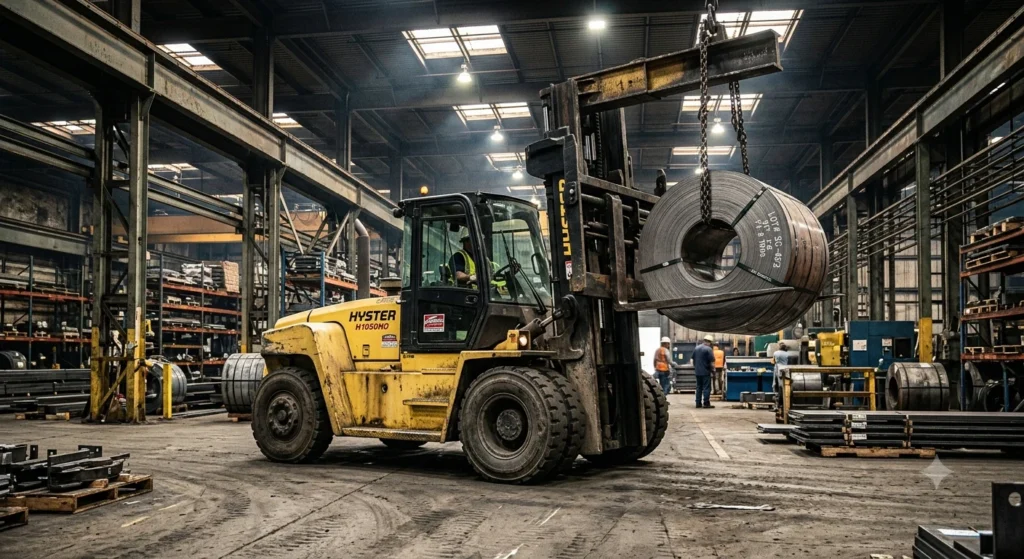
So, how much does a forklift weigh?
A forklift can weigh anywhere from 1,100 pounds (500 kg) for a compact electric pallet truck to more than 90,000 pounds (40,800 kg) for a heavy-duty container handler. Most standard warehouse forklifts weigh between 7,000 and 10,000 pounds (3,200–4,500 kg).
One important rule explains why forklifts are so heavy:
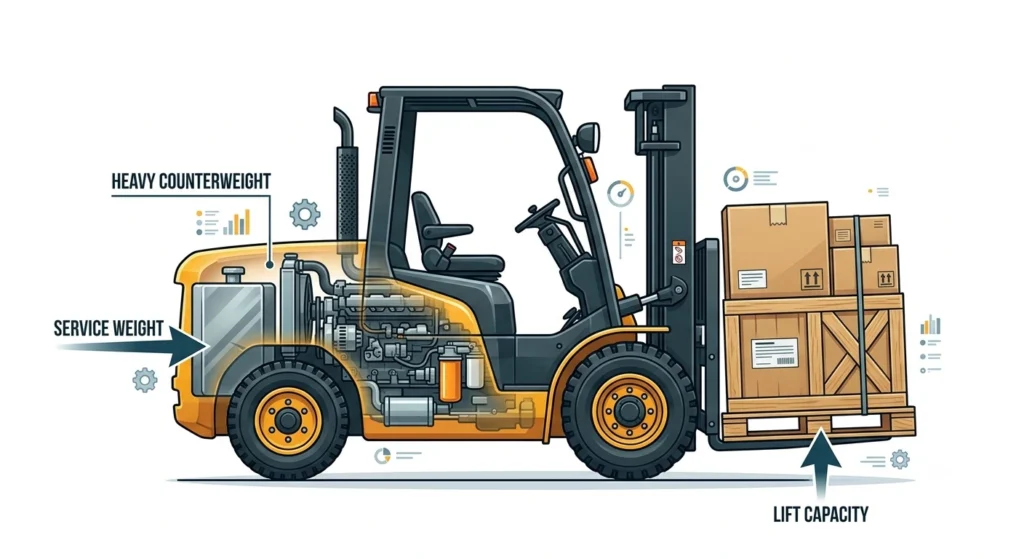
A forklift’s service weight is typically 1.5 to 2 times greater than its rated lifting capacity.
This extra weight acts as a counterbalance, preventing the forklift from tipping forward while lifting heavy loads.
In this guide, you’ll learn:
- Average forklift weights by type
- Forklift weight charts by lifting capacity
- Service weight vs. lift capacity
- Why forklift weight matters
- How to find your forklift’s exact weight
Service Weight vs. Lift Capacity
Before looking at the numbers, it’s important to understand two commonly confused terms.
What Is Lift Capacity?
Lift capacity refers to the maximum load a forklift can safely lift under normal operating conditions.
For example:
- A 5,000 lb forklift can safely lift a 5,000-pound load at its rated load center.
It does not mean the forklift weighs 5,000 pounds.
What Is Service Weight?
Service weight (also called operating weight or unladen weight) is the total weight of the forklift itself, including:
- Chassis
- Mast
- Counterweight
- Battery (electric forklifts)
- Fuel and fluids
- Standard attachments
This is the number used when calculating:
- Floor loading
- Transportation requirements
- Trailer selection
- Shipping costs
- Warehouse engineering
Why Is a Forklift Heavier Than It Can Lift?
Forklifts work using the principle of counterbalance.
When lifting a pallet, the weight of the load tries to tip the forklift forward.
To prevent this, manufacturers install a heavy counterweight at the rear.
That’s why:
| Lift Capacity | Typical Forklift Weight |
|---|---|
| 3,000 lbs | 4,800–6,000 lbs |
| 5,000 lbs | 7,500–10,000 lbs |
| 10,000 lbs | 15,000–18,000 lbs |
Example
A 5,000-pound diesel forklift usually weighs around 8,200 pounds.
Once carrying a full 5,000-pound load, the total operating weight exceeds 13,000 pounds.
This is why warehouse floor ratings are so important.
Average Forklift Weights by Type
Forklift weight varies significantly depending on:
- Power source
- Capacity
- Mast height
- Battery size
- Counterweight
- Attachments
Let’s break it down by forklift category.
1. Electric Forklifts (Indoor Warehouses)
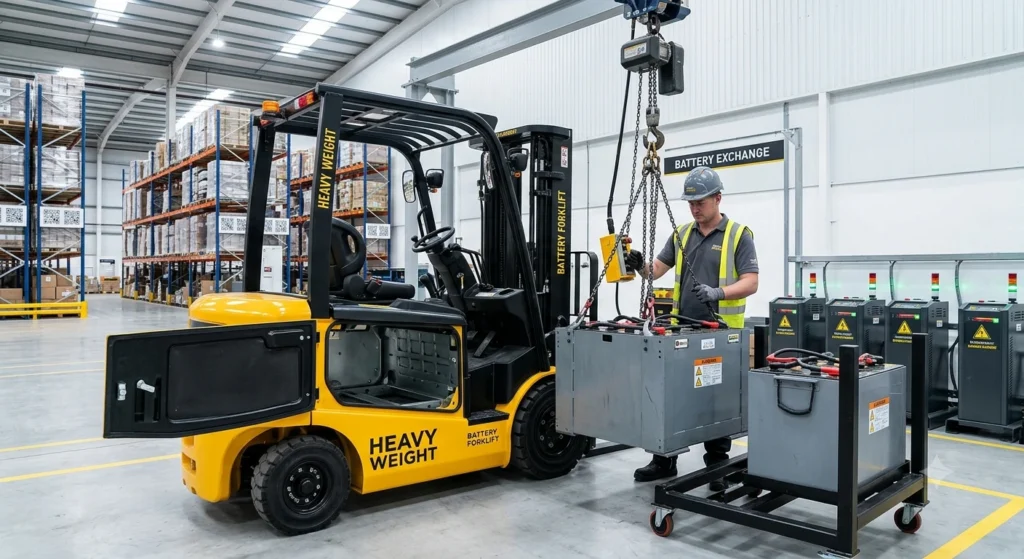
Electric forklifts are commonly used indoors because they produce zero emissions and operate quietly.
Unlike diesel models, their large battery contributes significantly to the overall weight.
Typical Electric Forklift Weights
| Lift Capacity | Average Service Weight | Kilograms |
|---|---|---|
| 3,000 lbs | 4,800–6,000 lbs | 2,170–2,700 kg |
| 4,000 lbs | 6,000–7,200 lbs | 2,720–3,270 kg |
| 5,000 lbs | 7,500–10,000 lbs | 3,400–4,500 kg |
| 6,000 lbs | 9,000–11,500 lbs | 4,100–5,200 kg |
Battery Weight
One of the biggest contributors to an electric forklift’s weight is its battery.
Typical battery weight:
- Lead-acid battery: 1,500–2,500 lbs
- Lithium-ion battery: 1,000–2,000 lbs
The battery actually functions as part of the forklift’s counterweight.
2. Diesel Forklifts
Diesel forklifts are widely used outdoors on construction sites, lumber yards, ports, and industrial facilities.
They rely on a massive cast-iron counterweight rather than a heavy battery.
Average Diesel Forklift Weight
| Lift Capacity | Average Weight |
|---|---|
| 5,000 lbs | 8,000–9,500 lbs |
| 6,000 lbs | 9,500–11,000 lbs |
| 8,000 lbs | 12,000–15,000 lbs |
| 10,000 lbs | 15,000–18,000 lbs |
Diesel forklifts generally offer:
- Higher lifting capacities
- Better outdoor performance
- Greater towing ability
- Longer operating hours
3. LPG (Propane) Forklifts
LPG forklifts are popular because they can be used indoors with proper ventilation and outdoors as well.
Since propane engines are smaller than diesel engines, LPG forklifts are often lighter.
Typical LPG Forklift Weight
| Lift Capacity | Average Weight |
|---|---|
| 3,000 lbs | 4,500–5,500 lbs |
| 5,000 lbs | 5,500–6,500 lbs |
| 6,000 lbs | 6,500–7,800 lbs |
They offer:
- Faster refueling
- Lower maintenance
- Reduced emissions compared to diesel
4. Heavy-Duty Industrial Forklifts
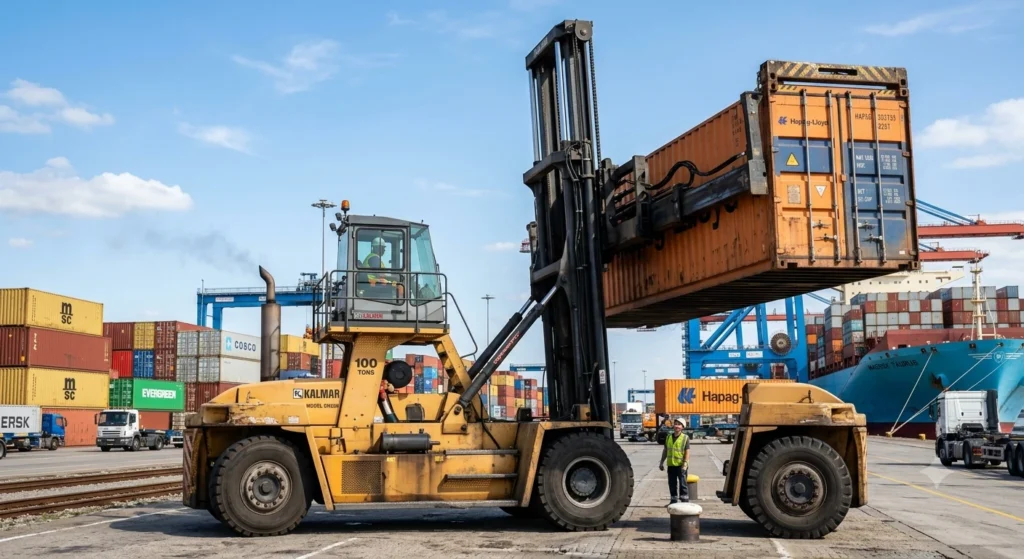
Heavy-capacity forklifts are used in:
- Shipping ports
- Steel mills
- Concrete plants
- Mining operations
- Wind turbine manufacturing
These machines can lift tens of thousands of pounds.
Heavy Forklift Weight Chart
| Lift Capacity | Average Service Weight |
|---|---|
| 15,000 lbs | 25,000–30,000 lbs |
| 20,000 lbs | 32,000–38,000 lbs |
| 35,000 lbs | Around 50,000 lbs |
| 50,000 lbs | 70,000–80,000 lbs |
| 70,000 lbs | 90,000+ lbs |
These forklifts are designed for moving:
- Shipping containers
- Steel coils
- Heavy machinery
- Large industrial equipment
5. Electric Pallet Trucks & Walkie Stackers
These are the lightest material handling machines.
Electric Pallet Jack
Typical specifications:
- Lift capacity: 4,500 lbs
- Weight: Approximately 1,100 lbs (500 kg)
Ideal for:
- Retail warehouses
- Distribution centers
- Grocery stores
Walkie Stacker
Typical specifications:
- Lift capacity: 3,000 lbs
- Weight: Around 2,500 lbs (1,130 kg)
Used for:
- Narrow aisles
- Small warehouses
- Light-duty storage
Complete Forklift Weight Chart
| Forklift Type | Capacity | Average Weight |
|---|---|---|
| Electric Pallet Jack | 4,500 lbs | 1,100 lbs |
| Walkie Stacker | 3,000 lbs | 2,500 lbs |
| Electric Forklift | 3,000 lbs | 4,800–6,000 lbs |
| Electric Forklift | 5,000 lbs | 7,500–10,000 lbs |
| LPG Forklift | 5,000 lbs | 5,500–6,500 lbs |
| Diesel Forklift | 5,000 lbs | 8,000–9,500 lbs |
| Diesel Forklift | 10,000 lbs | 15,000–18,000 lbs |
| Heavy Industrial | 15,000 lbs | 25,000–30,000 lbs |
| Heavy Industrial | 35,000 lbs | Around 50,000 lbs |
| Container Handler | 70,000 lbs | 90,000+ lbs |
Example Forklift Model Weights
Here are a few real-world examples.
| Forklift Model | Capacity | Service Weight |
|---|---|---|
| Noblelift FEP20-NP | 2,000 kg | 3,790 kg |
| LGMR CPD25 | 2,500 kg | 3,600 kg |
| Typical Toyota 8FGCU25 | 5,000 lbs | Approximately 8,000 lbs |
| Typical Hyster H50XT | 5,000 lbs | Approximately 8,200 lbs |
These figures may vary depending on mast height, attachments, tires, and optional equipment.
Why Forklift Weight Matters?
Many people focus only on lifting capacity, but the forklift’s own weight has significant operational implications.
1. Warehouse Floor Load Limits
Every warehouse floor has a maximum load rating.
A forklift carrying a heavy pallet can create enormous pressure through its tires.
For example:
- Forklift weight: 8,500 lbs
- Load weight: 5,000 lbs
- Total operating weight: 13,500 lbs
If the floor is not engineered for this load, cracks or structural damage can occur.
Always consult your facility’s floor load specifications before introducing heavier equipment.
2. Transportation and Shipping
Forklift weight determines:
- Trailer size
- Truck classification
- Shipping costs
- Fuel consumption
- Crane requirements
Larger forklifts may require:
- Lowboy trailers
- Oversized load permits
- Escort vehicles for transport
3. Equipment Selection
Two forklifts with identical lifting capacities may have very different weights.
For example:
Electric Forklift
- Heavier battery
- Better indoor stability
- Increased floor loading
LPG Forklift
- Lighter overall weight
- Better maneuverability
- Reduced floor wear
Understanding these differences helps businesses choose equipment that matches their operating environment.
How to Find Your Forklift’s Exact Weight?
If you need the precise service weight of your forklift, use one of these methods.
Check the Data Plate
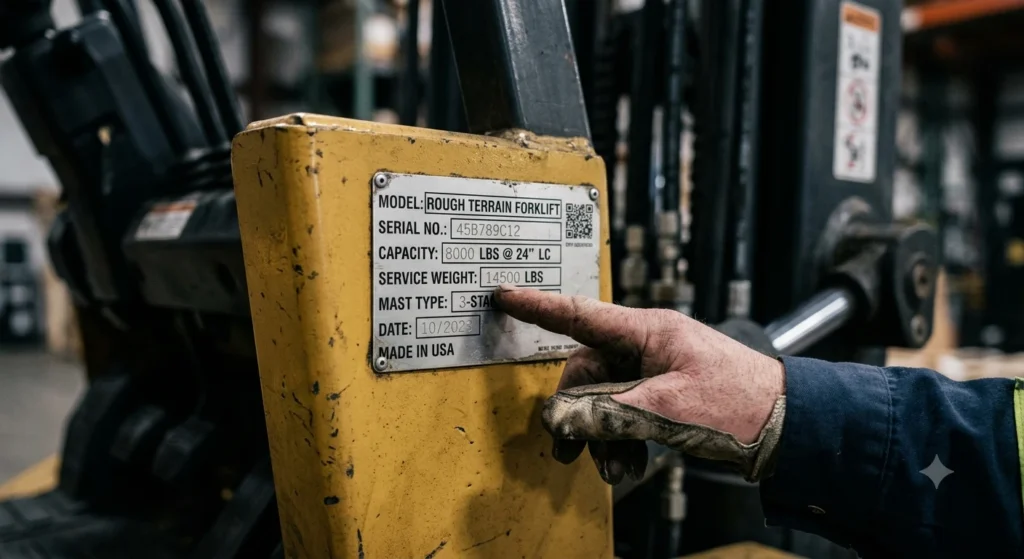
Every forklift includes a manufacturer data plate (also called the capacity plate).
You’ll usually find it:
- Near the operator’s seat
- On the dashboard
- Attached to the chassis
The plate lists:
- Model number
- Serial number
- Lift capacity
- Mast specifications
- Service (unladen) weight
Use Industrial Scales
If the data plate is damaged or missing, weigh the forklift using:
- Truck scales
- Portable wheel scales
- Industrial platform scales
This provides the most accurate measurement.
Frequently Asked Questions
How much does a standard forklift weigh?
Most standard warehouse forklifts weigh between 7,000 and 10,000 pounds, depending on their power source and lifting capacity.
How heavy is a 5,000 lb forklift?
A 5,000-pound capacity forklift typically weighs:
- Electric: 7,500–10,000 lbs
- Diesel: 8,000–9,500 lbs
- LPG: 5,500–6,500 lbs
Why are forklifts so heavy?
Forklifts require a heavy counterweight to prevent tipping when lifting loads. This counterbalance is why the machine itself usually weighs 1.5 to 2 times its rated lifting capacity.
Does the battery count toward forklift weight?
Yes. On electric forklifts, the battery is a major component of the service weight and often serves as part of the counterweight. Depending on the model, it can weigh 1,000 to 2,500 pounds.
Can a warehouse floor support a forklift?
It depends on the floor’s structural design and load rating. Always compare the forklift’s total operating weight (service weight plus load) with the floor’s allowable load limits before use.
Final Thoughts
Forklift weight is more than just a specification—it’s a critical factor in workplace safety, equipment transport, and operational efficiency. While a small electric pallet truck may weigh just 1,100 pounds, heavy-duty industrial forklifts can exceed 90,000 pounds. Most standard warehouse forklifts fall within the 7,000 to 10,000-pound range, and as a general rule, a forklift’s service weight is 1.5 to 2 times its rated lifting capacity.
Before purchasing, transporting, or operating any forklift, verify its service weight using the manufacturer’s data plate and ensure your floors, trailers, and infrastructure are rated to handle the load. Understanding these numbers helps reduce safety risks, prevent costly damage, and improve overall material handling performance.

Ahmed Ijaz runs this construction rental directory with over 5 years of experience in SEO, content, and web optimization. Every page is built using real research, hands-on expertise, and carefully reviewed information to meet strong EEAT standards.