If you’re planning a landscaping project, digging a foundation, installing utilities, or preparing a construction site, one of your first questions is likely:
How much does it cost to rent a mini excavator?
The answer isn’t as simple as the advertised daily rental rate. While many rental companies promote attractive prices, your final bill can include delivery charges, insurance, fuel, attachments, taxes, and other additional costs.
This comprehensive guide explains everything you need to know about mini excavator rental cost, including average rental prices, machine sizes, hidden fees, and expert tips to help you stay within budget.
What Is the Average Mini Excavator Rental Cost?
The average mini excavator rental cost depends on several factors, including machine size, rental duration, project requirements, and your location.
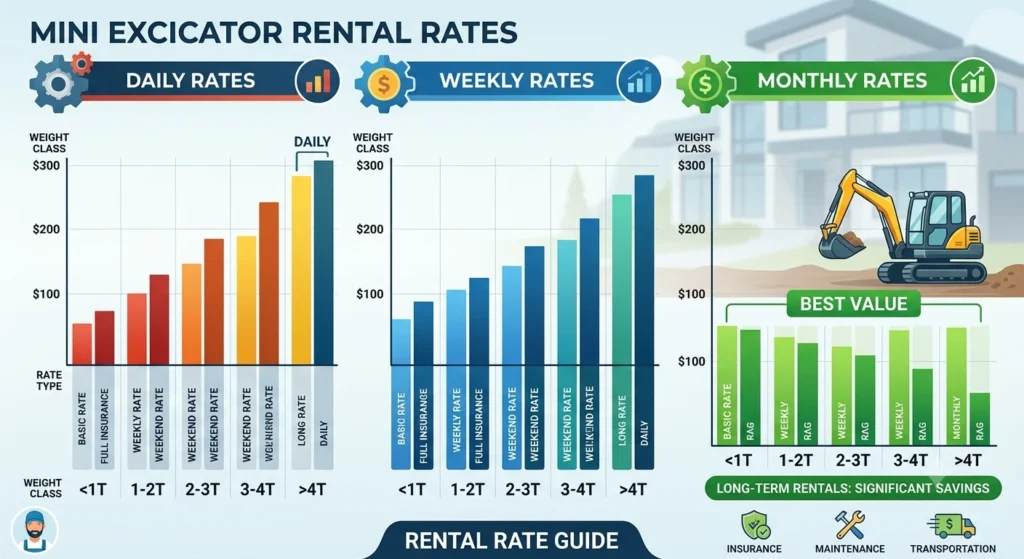
Generally, you can expect to pay:
| Rental Duration | Average Cost |
|---|---|
| Daily | $150–$550 |
| Weekly | $500–$1,700 |
| Monthly | $1,200–$4,500 |
One important advantage of longer rentals is the lower daily rate.
- Weekly rentals often cost about the same as 3–5 daily rentals.
- Monthly rentals may reduce your effective daily cost by 60–70%, making them the most economical option for longer projects.
If your project will take more than three or four days, always ask for both daily and weekly pricing before booking.
Average Mini Excavator Rental Cost by Machine Size
Machine size has one of the biggest impacts on rental pricing.
| Machine Weight | Daily Rate | Weekly Rate | Monthly Rate | Best For |
|---|---|---|---|---|
| Micro (0.8–1 ton) | $150–$250 | $500–$800 | $1,200–$1,900 | Landscaping, backyard work |
| 1.5–2 ton | $150–$350 | $450–$1,100 | $1,200–$2,800 | Trenching, utility installation |
| 3–4 ton | $250–$450 | $750–$1,400 | $1,800–$3,500 | Foundations, pool excavation |
| 5–6 ton | $325–$550 | $900–$1,700 | $2,400–$4,500 | Septic systems, larger residential projects |
Which Size Should You Rent?
Choose the smallest excavator capable of completing your project efficiently.
Larger machines cost more to rent, consume more fuel, and may require larger trailers or transport equipment.
5 Key Factors That Increase Mini Excavator Rental Cost
The base rental rate is only part of the total expense. Here are the biggest factors that affect your final rental price.
1. Delivery and Pickup Fees
Most equipment rental companies charge separately for transporting the excavator to your job site.
Typical transportation costs include:
- Local delivery: $75–$200 each way
- Remote job sites: Higher depending on distance
For many homeowners, delivery charges can equal an entire day’s rental.
Money-saving tip: If you own a suitable trailer and tow vehicle, consider transporting the machine yourself.
2. Fuel Costs and Refueling Charges
Mini excavators run on diesel fuel.
Most rental companies expect the machine to be returned with a full tank.
If it isn’t, they usually charge premium refueling rates.
Typical fuel costs include:
- Fuel consumption: 1–3 gallons per hour
- Average daily fuel expense: $20–$40
Keeping the tank full before returning the machine helps avoid expensive surcharges.
3. Insurance and Damage Waivers
Many rental companies require either:
- Proof of equipment insurance, or
- Purchase of their damage waiver.
Most damage protection plans cost around 10–15% of the rental price.
Before signing the agreement, carefully review what is covered.
Some plans exclude:
- Rubber track damage
- Undercarriage wear
- Operator negligence
- Theft
Understanding these exclusions can prevent unexpected repair bills.
4. Attachment Rental Costs
A standard digging bucket is usually included.
Specialized attachments cost extra.
Typical daily attachment prices include:
| Attachment | Average Daily Cost |
|---|---|
| Trenching Bucket | $15–$40 |
| Grading Bucket | $15–$40 |
| Hydraulic Thumb | $40–$80 |
| Auger Drive & Bit | $75–$150 |
| Hydraulic Breaker (Hammer) | $200–$400 |
Only rent specialty attachments when your project requires them.
5. Location and Seasonal Demand
Rental prices vary considerably depending on where you live.
Urban areas typically have:
- Higher demand
- Higher labor costs
- More expensive transportation
Construction season also affects pricing.
Spring and summer often see the highest rental rates due to increased demand.
Late fall and winter may offer discounts, especially for residential customers.
Real-World Mini Excavator Rental Cost Examples
Here are two realistic pricing scenarios.
Scenario 1: Homeowner Installing a Drainage System
Project: Digging a 100-foot drainage trench
Machine: 1.8-ton mini excavator
Cost Breakdown
- Daily rental: $275
- Delivery: $150
- Pickup: $150
- Insurance (12%): $33
- Fuel: $25
Estimated Total
Approximately $633
Money-saving tip: Picking up the excavator yourself could reduce the project cost by roughly $300.
Scenario 2: Contractor Preparing Foundation Footings
Project: Foundation excavation and light demolition
Machine: 3.5-ton mini excavator
Attachment: Hydraulic breaker
Cost Breakdown
- Weekly rental: $1,150
- Breaker attachment: $900
- Delivery: $250
- Pickup: $250
- Insurance (12%): $246
- Fuel (35 hours): $396
Estimated Total
Approximately $3,312
Money-saving tip: Rent the hydraulic breaker only for the days it’s needed instead of the full rental period.
Renting vs. Buying a Mini Excavator
Many contractors wonder whether renting or buying is the better investment.
Renting Is Better When:
- You have short-term projects.
- You don’t want maintenance responsibilities.
- You lack storage space.
- You want access to newer equipment.
- You need different machine sizes throughout the year.
Buying Is Better When:
- You use an excavator regularly.
- Your business operates year-round.
- You can justify the purchase price.
- You have maintenance facilities.
A new mini excavator typically costs $20,000 to over $100,000, depending on size, manufacturer, and features.
Pro Tips to Save Money on Mini Excavator Rentals
You don’t always need the cheapest rental—you need the best value.
1. Rent the Correct Machine Size
Avoid paying for power you don’t need.
2. Compare Multiple Rental Companies
Get quotes from at least three local equipment rental providers.
3. Ask About Weekly Pricing
Even a four-day project may qualify for a lower weekly rate.
4. Bundle Attachments
Reserve all necessary attachments upfront to avoid extra delivery charges.
5. Return the Equipment Clean
Cleaning fees can quickly add unnecessary costs.
6. Refuel Before Returning
Fuel purchased at a gas station is almost always cheaper than rental company refueling charges.
7. Book During the Off-Season
Rental companies often offer discounts during slower months.
Frequently Asked Questions
How much does it cost to rent a mini excavator for one day?
Daily rental rates generally range from $150 to $550, depending on machine size and location.
What size mini excavator do I need?
For most homeowners, a 1.5 to 2-ton mini excavator is ideal for landscaping, trenching, and utility projects.
Are attachments included in the rental price?
Usually, only the standard digging bucket is included. Specialty attachments are rented separately.
Is fuel included?
No. Most rental companies expect you to return the machine with a full diesel tank.
Is insurance required?
Most rental companies require either proof of insurance or the purchase of a damage waiver.
Conclusion
Understanding the true mini excavator rental cost means looking beyond the advertised daily rate. Your total expense depends on machine size, rental duration, delivery charges, fuel, insurance, attachments, and even the season in which you rent.
Planning ahead, selecting the right machine, and requesting a detailed, itemized quote can help you avoid unexpected expenses while keeping your project on budget.
Before making a reservation, compare quotes from several local rental companies and ask about weekly or monthly discounts. A little research can save hundreds of dollars on your next excavation project.
Renting compact excavation equipment is also common for driveway preparation, where driveway excavation costs depend on soil hardness and grade slope.

Ahmed Ijaz runs this construction rental directory with over 5 years of experience in SEO, content, and web optimization. Every page is built using real research, hands-on expertise, and carefully reviewed information to meet strong EEAT standards.