Choosing the wrong excavator size can turn a profitable project into an expensive mistake.
An oversized machine may have enough power, but it can damage driveways, landscaping, underground utilities, and finished surfaces. Imagine bringing a 30-ton excavator into a residential backyard only to crack the driveway and leave deep track marks across the lawn.
On the other hand, selecting a machine that is too small can be just as costly. A 1-ton mini excavator might fit perfectly into a tight space, but it could take weeks to complete excavation work that a larger machine could finish in a few days.
The right excavator balances productivity, site access, digging depth, lifting requirements, transportation costs, and attachment compatibility. This guide will help you determine exactly what size excavator you need based on your project requirements.
How Excavator Weight Class Defines Capability
When contractors discuss excavator size, they are typically referring to the machine’s operating weight.
Operating weight directly influences:
- Digging force
- Hydraulic horsepower
- Lift capacity
- Reach
- Stability
- Attachment compatibility
As a general rule, heavier excavators provide greater hydraulic power and stability. This allows them to run larger attachments, dig deeper, and move heavier materials.
Excavator Capability Formula
Operating Weight + Hydraulic Horsepower = Maximum Tool Capacity
For example, a 5-ton excavator may have enough hydraulic flow for light attachments, but it will struggle to efficiently operate a large hydraulic breaker designed for a much heavier machine.
Understanding this relationship is the foundation of selecting the correct excavator size.
Step 1: Define Your Project Requirements
Before looking at machine sizes, evaluate the actual demands of the project.
Material Type
The material being excavated significantly affects the size of excavator required.
| Material Type | Density | Recommended Adjustment |
|---|---|---|
| Topsoil | Low | +0 tons |
| Sand | Low | +0 tons |
| Loam | Low-Medium | +1 ton |
| Clay | Medium | +2 tons |
| Hard Clay | High | +3 tons |
| Caliche | Very High | +5 tons |
| Rock | Extreme | +5 tons or more |
Material Factor Rule
- Soft materials = No size adjustment
- Medium-density materials = Add 2–3 tons
- Hard materials and rock = Add 5+ tons
The harder the material, the more hydraulic force and machine weight you need.
Volume and Digging Depth
Excavation depth is one of the easiest ways to estimate machine size.
Small Projects
Examples:
- Utility trenches
- Irrigation lines
- Landscape drainage
Typical depth:
- 3–5 feet
Recommended excavator:
- 1–4 tons
Medium Projects
Examples:
- Residential foundations
- Septic systems
- Deep utility installation
Typical depth:
- 8–15 feet
Recommended excavator:
- 6–12 tons
Large Projects
Examples:
- Basements
- Retention ponds
- Commercial site preparation
Typical depth:
- 15–20+ feet
Recommended excavator:
- 12–30 tons
Lift Capacity
Many contractors focus on digging ability and forget about lifting requirements.
If your project involves:
- Septic tanks
- Concrete vaults
- Utility structures
- Large pipe sections
You must calculate lifting requirements.
Example
Need to lift:
- 1,000-pound septic tank
- 15-foot working radius
Recommended machine:
- Minimum 6-ton excavator
Always review the manufacturer’s lift chart before attempting any lift.
Step 2: Excavator Size Classification Matrix
The following chart provides a quick overview of common excavator classes.
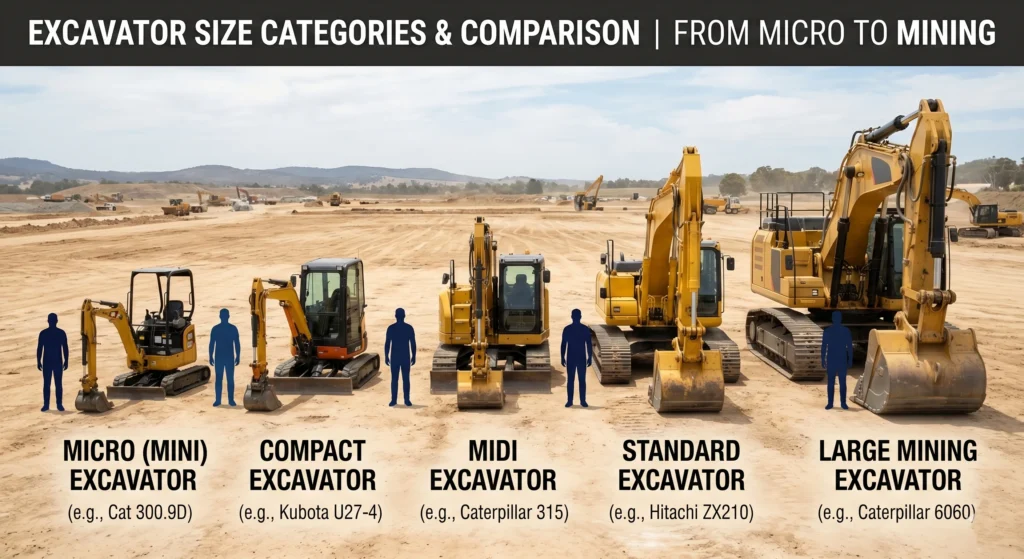
| Excavator Class | Weight Range | Bucket Width | Typical Dig Depth | Primary Applications |
|---|---|---|---|---|
| Micro | Under 1 ton | 6–12 in. | 3–4 ft | Indoor demolition, landscaping, pool repairs |
| Compact | 1–6 tons | 12–24 in. | 5–10 ft | Utility trenches, residential footings, tree removal |
| Midi | 6–12 tons | 24–36 in. | 10–15 ft | Small commercial projects, road work, deep foundations |
| Standard | 12–30 tons | 36–48 in. | 15–22 ft | Large excavation, basements, site development |
| Large | 30–90+ tons | 48+ in. | 22+ ft | Civil engineering, mining, quarry operations |
For most residential contractors, the sweet spot falls between 3 and 8 tons.
Step 3: Consider Job Site Constraints
The project itself doesn’t always determine excavator size. Sometimes the job site makes the decision for you.
Transportation Requirements
Larger excavators require:
- Heavier trailers
- Larger tow vehicles
- Additional permits
- Commercial driver licensing in some regions
A practical rule:
If transporting the machine without specialized trucking is important, many contractors stay below the 8-ton range.
Ground Pressure
Ground pressure measures how much force the machine places on the soil.
High ground pressure can damage:
- Lawns
- Pavers
- Asphalt
- Finished landscaping
For sensitive surfaces, choose:
- Excavators under 1.5 tons
- Rubber tracks
- Low Ground Pressure (LGP) track systems
Swing Radius
The machine’s tail swing becomes critical in confined areas.
Zero Tail Swing (ZTS)
Best for:
- Residential construction
- Urban work
- Tight access projects
- Work between structures
Most ZTS machines fall within the 3–8 ton range.
Conventional Swing
Best for:
- Open job sites
- Heavy excavation
- Maximum stability
Step 4: The Attachment Determines the Machine
Many contractors size the excavator first and choose attachments later.
The smarter approach is often the opposite.
Determine the attachment you need and then select the excavator capable of operating it efficiently.
Hydraulic Breakers
A common rule of thumb:
Carrier weight should be approximately 2.5 times the breaker weight.
A lightweight excavator paired with an oversized breaker will suffer reduced productivity and increased wear.
Augers
Augers require torque and hydraulic power.
If you’re drilling:
- 24-inch holes
- Rocky soil conditions
A minimum 5-ton excavator is usually recommended.
Grapples and Hydraulic Thumbs
Demolition grapples often require substantial hydraulic flow.
Typical compact excavator flow:
- 12–20 GPM
Heavy demolition grapples often require:
- 30+ GPM
Always verify attachment requirements before selecting the machine.
Rent or Buy? Making the Right Investment
When Renting Makes Sense
Rent when:
- Usage is under 200 hours annually
- Projects vary significantly
- Storage space is limited
- Capital preservation is important
When Buying Makes Sense
Buying becomes more economical when:
- Annual usage exceeds 1,000 hours
- Excavation is a core service
- Long-term ownership reduces rental costs
Storage Considerations
Excavators require stable storage surfaces.
If you lack:
- Concrete pads
- Compacted gravel yards
Machines over 6 tons may create storage challenges, especially during wet seasons.
Maintenance Costs
Larger excavators bring larger maintenance expenses.
Examples include:
- Track replacement
- Hydraulic repairs
- Undercarriage wear
- Transportation costs
Replacing undercarriage components on a mid-sized excavator can cost thousands of dollars.
Real-World Excavator Sizing Examples
Example 1: Residential Foundation
Project:
- Two-story home
- 8-foot foundation depth
- Narrow alley access
Recommended machine:
- 7–9 ton midi excavator
- Long-arm configuration
Reason:
Provides adequate depth while maintaining maneuverability.
Example 2: Farm Pond Excavation
Project:
- 500 cubic yards of excavation
- Open access
- Speed is important
Recommended machine:
- 20–25 ton standard excavator
Reason:
Higher production rate dramatically reduces project duration.
Example 3: French Drain Installation
Project:
- 12-inch trench
- Residential property
- Finished lawn
Recommended machine:
- 3–4 ton compact excavator
- Rubber tracks
Reason:
Minimal property damage while maintaining productivity.
Step 5: Calculate Your Ideal Excavator Size
Use this simple sizing formula as a starting point.
Excavator Size Equation
Excavator Size (tons) = (Depth × 0.5) + (Lift Weight ÷ 500) + Site Factor
Where:
- Site Factor = 0 for soft soil
- Site Factor = 2 for hard soil
- Site Factor = 5 for rocky conditions
Example
Required depth:
- 10 feet
Depth factor:
- 10 × 0.5 = 5 tons
Required lift:
- 3,000 pounds
Lift factor:
- 3,000 ÷ 500 = 6 tons
Rocky soil adjustment:
- +2 tons
Recommended size:
- 13 tons
Result:
A standard excavator class is likely the best fit.
Frequently Asked Questions
Can a 5-ton excavator break concrete?
Yes. A 5-ton excavator can typically break concrete slabs up to approximately 6 inches thick when equipped with the proper hydraulic breaker.
For reinforced concrete exceeding 12 inches thick, a 10-ton or larger excavator is generally more effective.
What is the most commonly rented excavator size?
The 5-ton excavator is often considered the industry’s sweet spot.
It provides:
- Strong digging performance
- Easy transportation
- Excellent attachment compatibility
- Access to most residential and light commercial sites
Is bigger always better?
No.
A larger excavator increases:
- Transportation costs
- Fuel consumption
- Ground disturbance
- Rental rates
The ideal machine is the smallest excavator capable of safely completing the work within your required timeframe.
Always Choose the Smallest Machine That Meets the Job Requirements
Selecting the right excavator starts with understanding the project, not the machine.
Evaluate:
- Material type
- Digging depth
- Lift requirements
- Site access
- Attachment needs
- Transportation constraints
Then choose the smallest excavator that can safely and efficiently perform the work.
Excavator Safety Checklist
✔ Never exceed 80% of rated lift capacity
✔ Verify bucket and attachment compatibility
✔ Check track width against loading ramps
✔ Confirm trailer and towing capacity
✔ Review underground utility locations
✔ Match attachment hydraulic requirements to machine specifications
The right excavator size improves productivity, reduces operating costs, and minimizes job site risk, making it one of the most important decisions in any excavation project.

Ahmed Ijaz runs this construction rental directory with over 5 years of experience in SEO, content, and web optimization. Every page is built using real research, hands-on expertise, and carefully reviewed information to meet strong EEAT standards.