A practical, illustrated trenching equipment guide for Homeowners / DIY and Contractors / Pros. Includes safety, inspection checklists, pricing ranges and tool selection guidance.
Understand Your Trenching Needs
Before picking a tool, define the job: purpose, trench dimensions, ground conditions and access. Below we separate practical advice for homeowners / DIY and for contractors / pros.
Homeowner / DIY Checklist
- Purpose: Is the trench for irrigation, landscape lighting, conduit, or drainage? Purpose determines width/depth.
- Length, Depth & Width: Typical yard trenches are 6–18 inches deep and 3–6 inches wide. Utility lines (water/sewer) are deeper and require pros.
- Ground type: Turf, loam, clay, or rocky soil impacts tool choice — soft soil favors walk-behind trenchers; rock favors wheel trenchers or excavators.
- Access: Gate widths and obstacles may limit machine size; measure before renting.
Contractor / Pro Checklist
- Production goals: Calculate linear feet per hour needed; choose machines that meet targets.
- Soil classification & groundwater: Determines shoring/trench box needs and machine efficiency.
- Permits and utility locates: Call 811 and secure permits before any excavation.
- Backfill & compaction specs: Some jobs require compaction testing or select backfill; plan equipment for that work too.
How to Find the Right Trenching Equipment?
Picking the right machine prevents broken equipment and wasted money. Use these four factors to decide what you need.
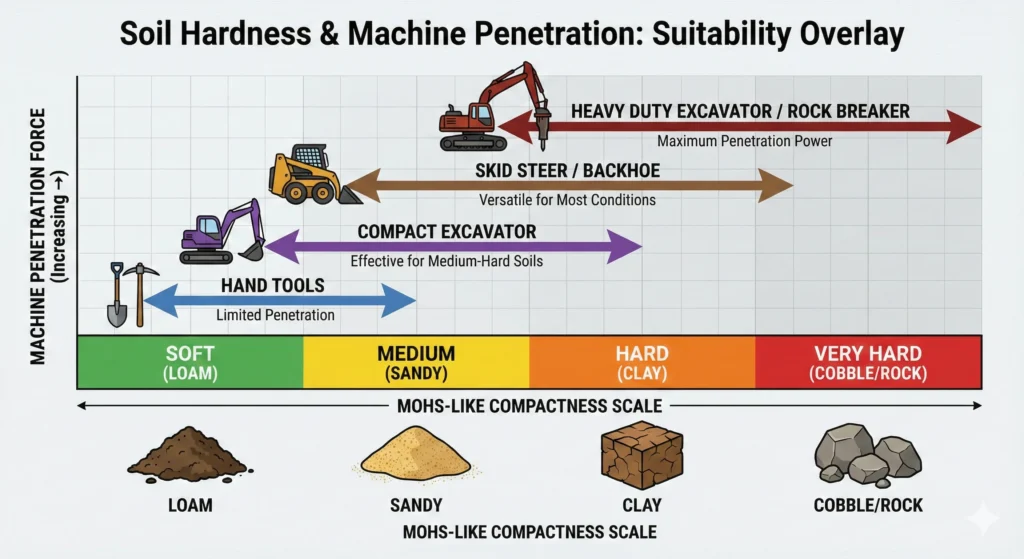
- Soil Conditions: Ground type dictates success. Soft dirt like loam offers little resistance, so most trenchers work well. Sand is tricky because walls collapse; a wheel trencher with a conveyor keeps the ditch clean. Clay slows down cutting chains, while rock breaks teeth. Use heavy-duty wheel trenchers or excavators for hard ground on rocky pool construction sites.
- Project Length: Speed matters on long runs. Trenchers dominate long, straight lines. They maintain constant depth and high speed. For short or winding paths, a mini excavator is faster and easier to maneuver.
- Precision: Some jobs require exact depth. Gravity-flow pipes need specific grades to drain correctly. If the depth tolerance is tight, use laser-guided machines to ensure accuracy.
- Access: The best machine is useless if it cannot enter the site. Measure your gate widths and check for steep slopes. Large units need wide entries and trailer parking. Walk-behind trenchers fit through standard backyard gates.
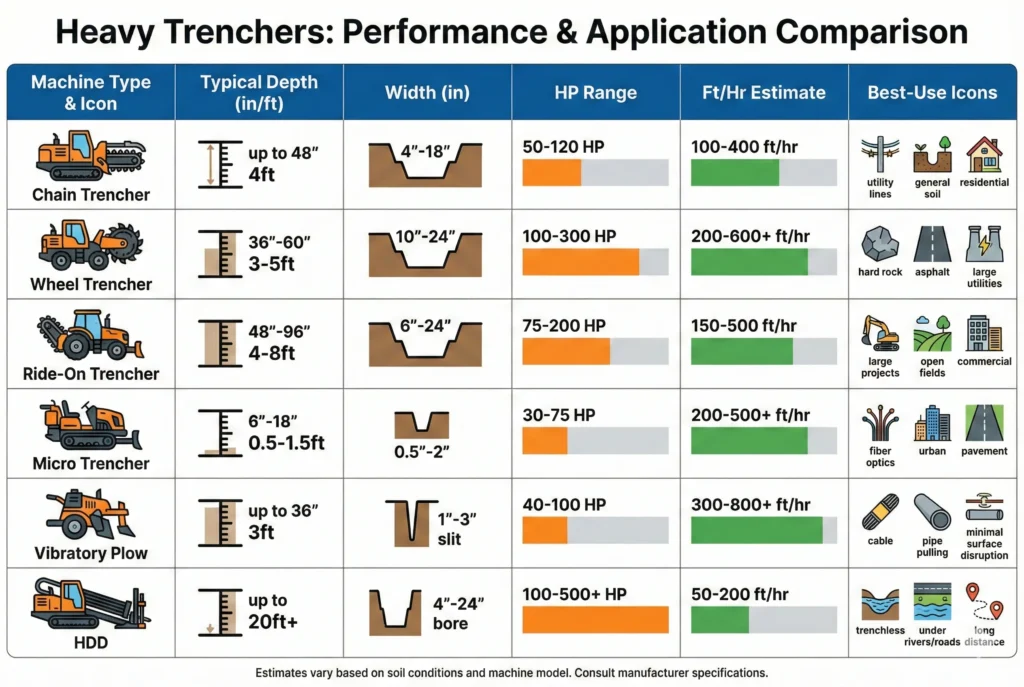
Types of Trenching Equipment
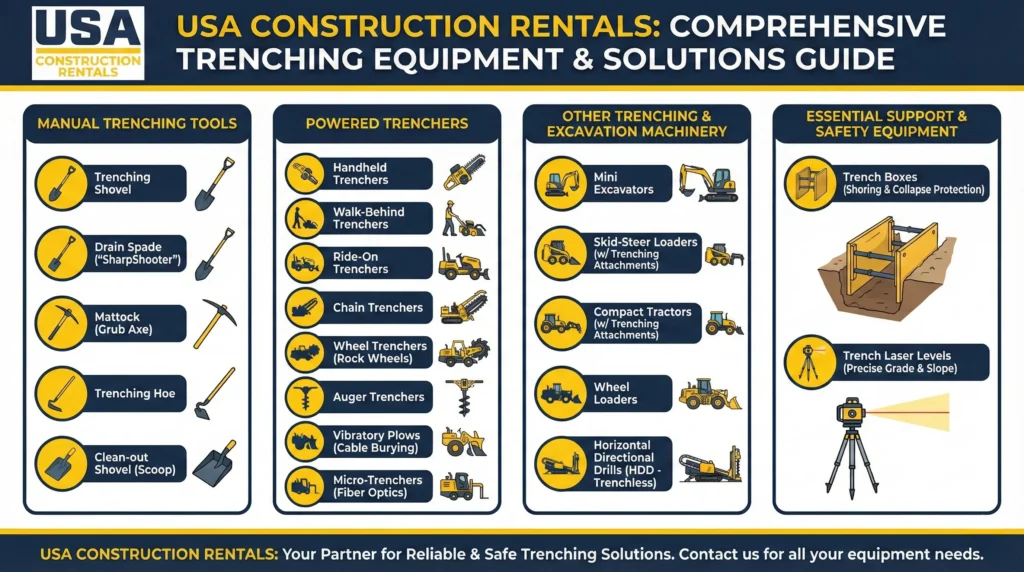
You can decide the dedicated tools according to your construction project. We have outlined every single type of trenching equipment available in United States.
Manual Trenching Tools (Homeowner-friendly)
These tools are cheap and precise. They work best for short distances or tight corners where motors cannot fit.
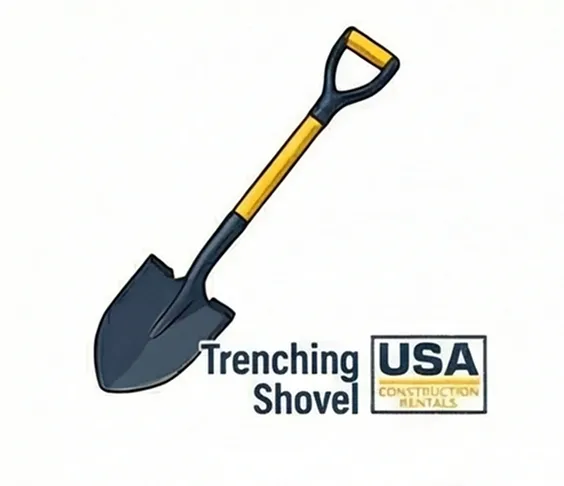
Trenching Shovel This tool features a narrow, sharp blade. It cuts clean, straight sides. Use it to define the trench shape and clear loose dirt from corners.
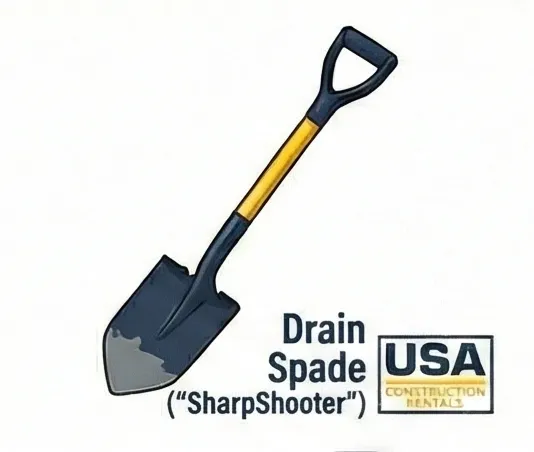
Drain Spade This spade uses a long, rounded blade. It fits perfectly into narrow channels. It works best for digging deep, thin lines for drain tiles or utility cables.
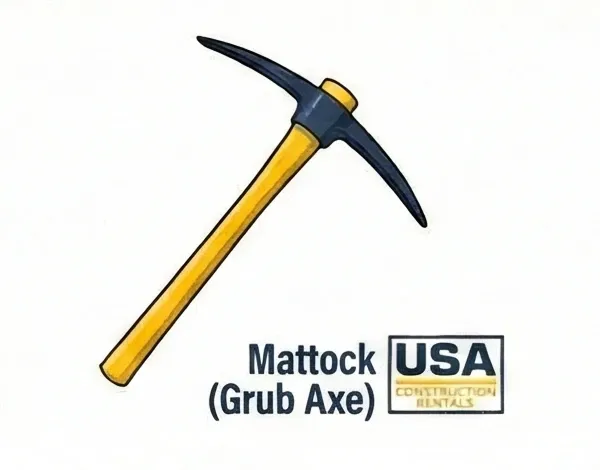
Mattock (Grub Axe) This is your primary breaking tool. One side cuts thick tree roots. The other side fractures hard, compacted clay. Use this to loosen the ground before shoveling.
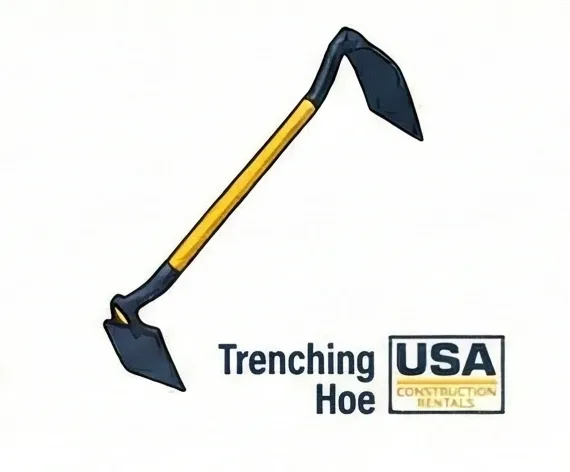
Trenching Hoe This tool pulls soil rather than lifting it. It works well to drag loose earth out of the trench. It also helps grade the ditch bottom quickly.
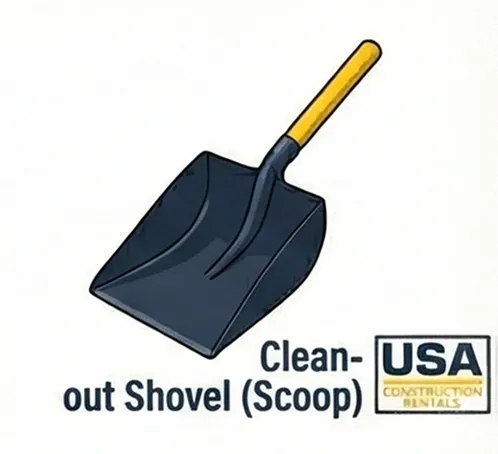
Clean-out Shovel This shovel has a boxy shape. It is designed to scoop, not dig. It grabs the crumbs left behind by other tools to leave a smooth, uniform base for pipes.
Powered Trenchers
Motors replace muscle for speed and depth. Choose the size based on the trench depth and soil hardness.
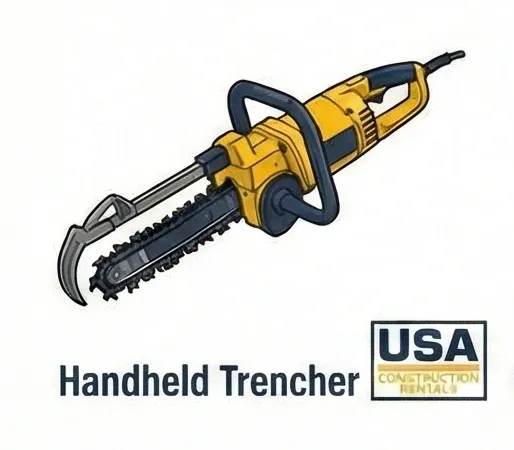
Handheld Trenchers These look like modified chainsaws. They cut shallow slots for landscape edging or low-voltage lighting. They are lightweight but struggle in rocky ground.
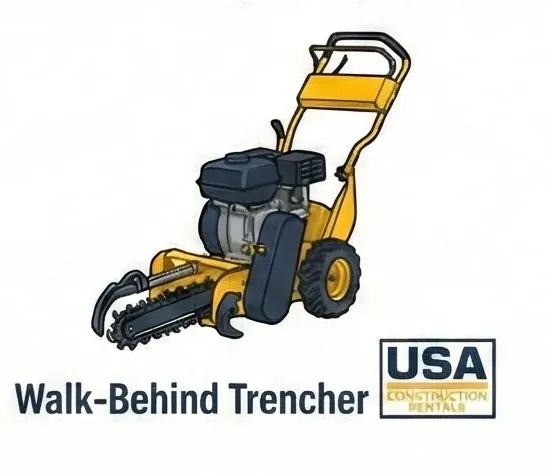
Walk-Behind Trenchers These are the standard rental units. They use tracks or wheels to pull a digging chain. They handle irrigation lines and cables easily, digging up to three feet deep.
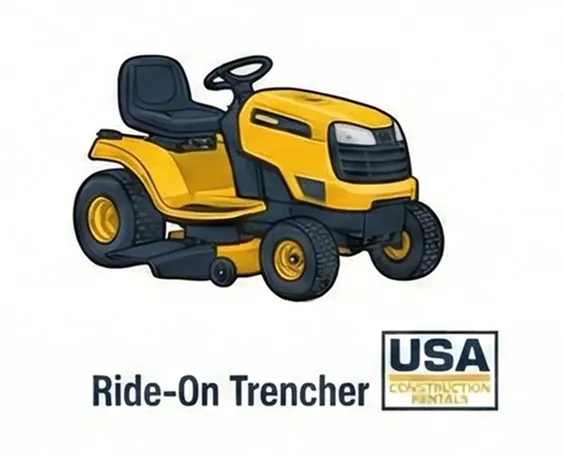
Ride-On Trenchers These machines offer comfort and power. The operator sits on the unit, reducing fatigue. They handle long utility runs and tough soil much faster than walk-behind models.
Chain Trenchers This mechanism works like a giant chainsaw. A belt of metal teeth rips into the earth. They create deep, narrow, and perfectly straight cuts for water or gas lines.
Wheel Trenchers A large, toothed metal wheel spins to cut the ground. These are heavy-duty machines. They slice through solid rock, concrete, and asphalt where chains would break.
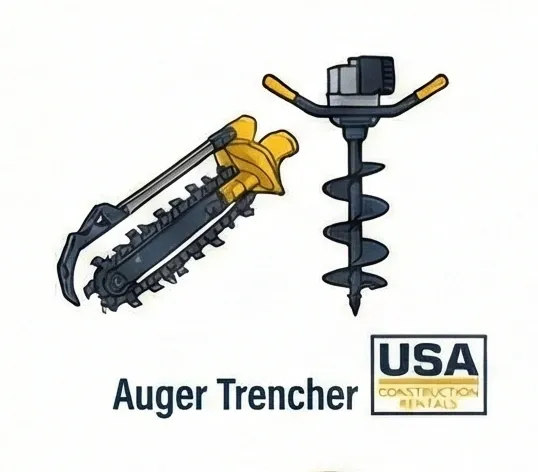
Auger Trenchers These use a wide, rotating screw. They grind the earth and push it to the sides. They are excellent for creating wider ditches needed for storm drains or large pipes.
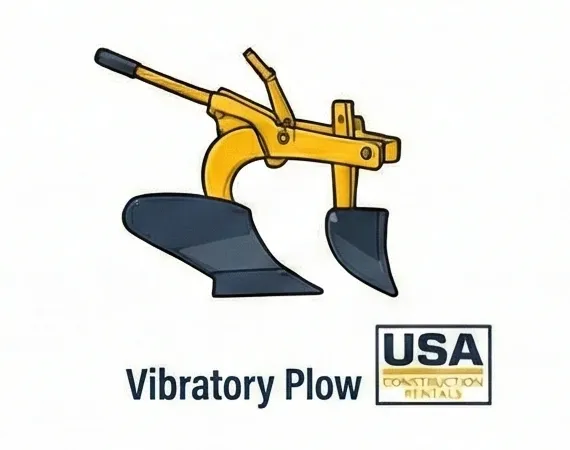
Vibratory Plows These do not dig an open trench. A blade slices the sod, and the machine pulls the pipe into the cut instantly. The grass heals over quickly, leaving almost no trace.
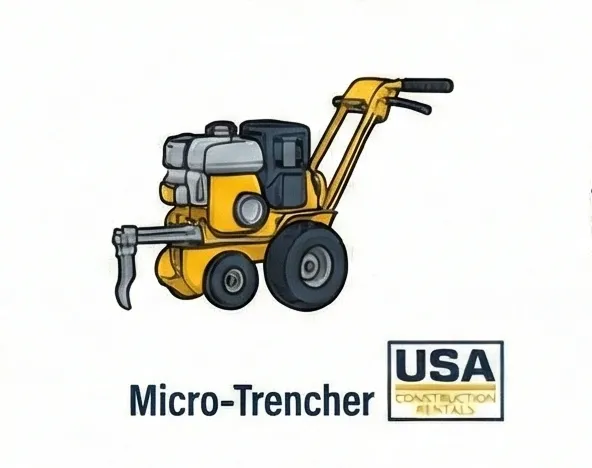
Micro-Trenchers These cut tiny slots in paved roads. They are used specifically for fiber optic cables. They allow cities to install internet lines without destroying the street surface.
Multi-Purpose Earthmoving Equipment
Sometimes a dedicated trencher is not enough. These machines offer versatility when digging is just one part of the job.
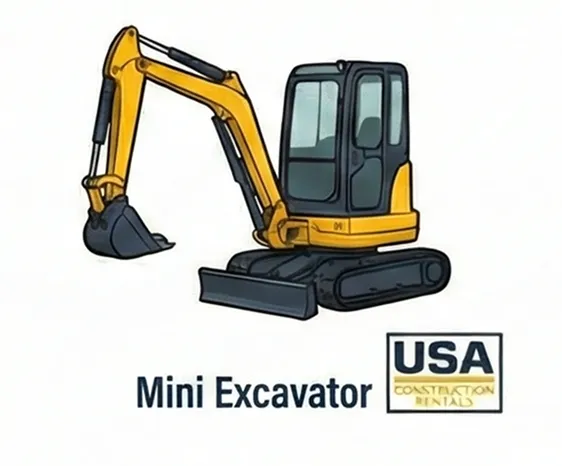
Mini Excavators These use a bucket on an arm. They are slower than trenchers but infinitely more versatile. They can dig wide holes, lift heavy rocks, and work around existing obstacles.
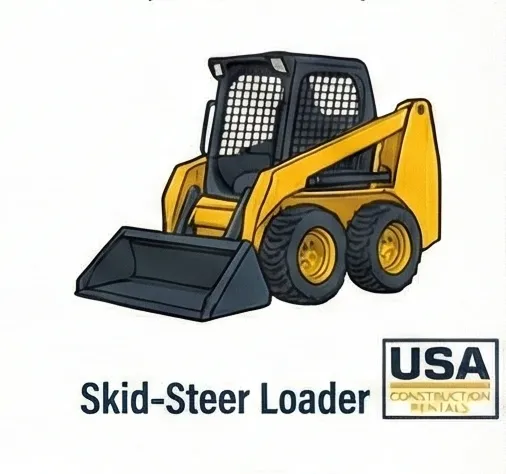
Skid-Steer Loaders This is a multi-tool base. You attach a trencher arm to the front. It allows one machine to dig the trench, move the dirt, and grade the finish.
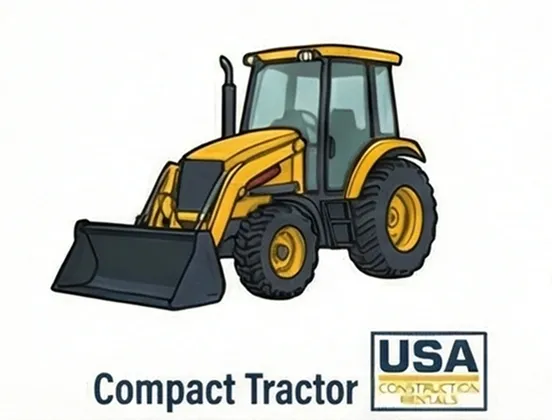
Compact Tractors These are common on farms. A rear attachment handles the trenching. They are powerful and stable on rough, rural terrain where speed is less critical.
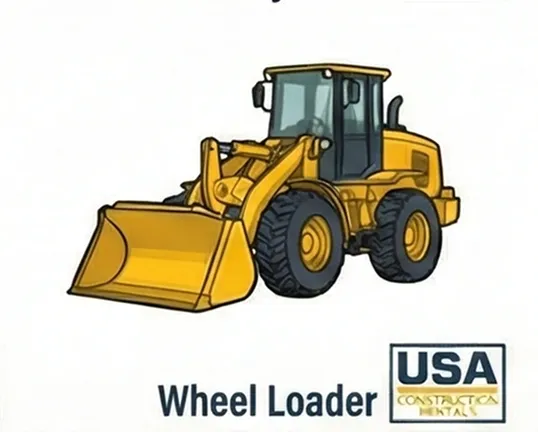
Wheel Loaders These do not dig trenches directly. They are support machines. They move massive piles of spoil and backfill the trench efficiently once the pipe is laid.
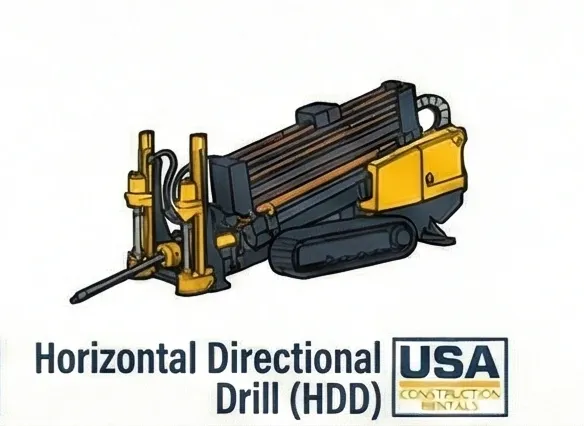
Horizontal Directional Drills (HDD) This is the trenchless solution. The machine drills a pilot hole underground and pulls the pipe back through. It goes under driveways and rivers without disturbing the surface.
Vital Safety and Grading Tools
Digging is only half the job. You need the right gear to keep the trench safe and the measurements true.
- Trench Boxes: Soil creates massive pressure. Trenches deeper than five feet require reinforcement by law. These steel cages hold back the walls to prevent fatal cave-ins.
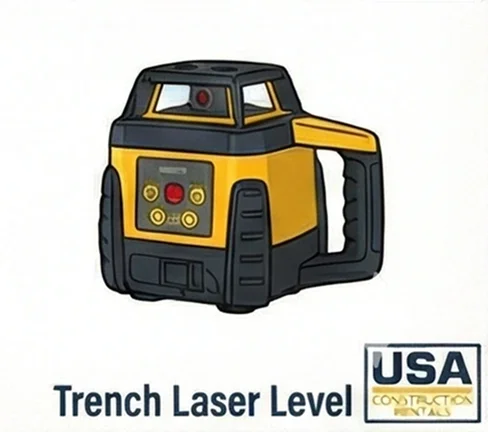
- Trench Lasers Level: Gravity-flow pipes demand exact slopes. A laser level sets a constant reference point. It guides the operator to cut the perfect grade so water flows correctly.
Trenchers vs Excavators: Which to Choose?
Select your machine based on the trench shape and the total distance. The wrong choice slows down production or forces you to rent extra equipment to finish the job.
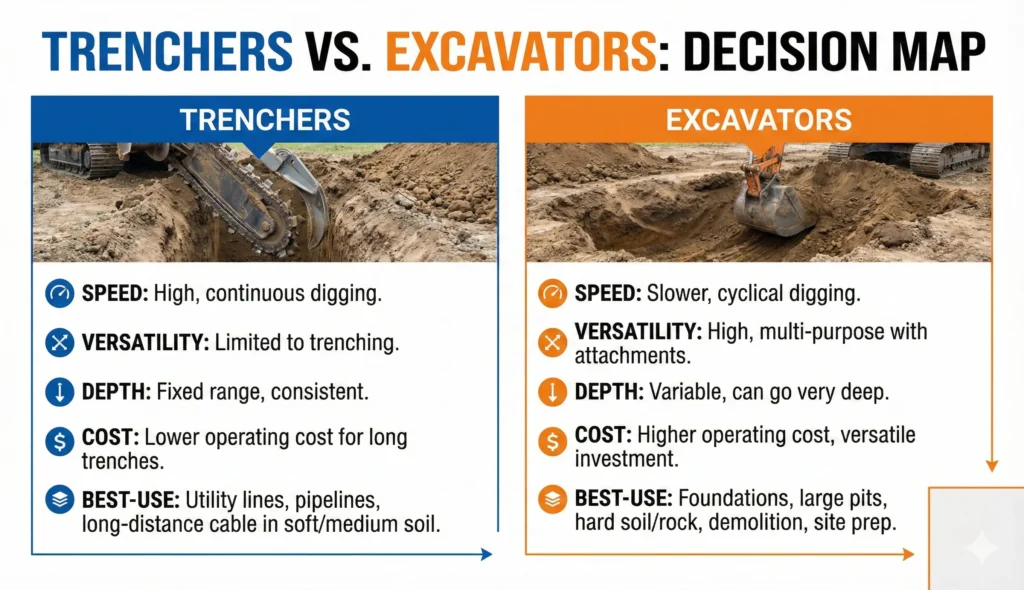
When to choose a trencher:
Trenchers are specialists. They do one thing perfectly: dig straight lines fast.
- Long Linear Runs: Trenchers operate continuously. They drive and cut at the same time. This constant motion is far faster than the scoop, turn, and dump cycle of an excavator.
- Consistent Profile: The machine cuts a fixed, clean shape. You get a perfect trench bottom and straight walls without manual grading.
- Minimal Disturbance: The digging teeth grind the earth into fine spoil. This piles neatly beside the cut, making backfilling easy and keeping the surrounding grass intact.
When to choose an excavator:
Excavators are problem solvers. Choose them when the job gets complicated or requires more than just digging.
- Wide Trenches: Excavators handle variety. A bucket can dig wide, deep, or irregular holes that a fixed-width trencher cannot manage.
- Lifting Tasks: The boom acts as a crane. You can dig the hole and immediately lift heavy concrete pipes or valve boxes into place without a separate forklift.
- Obstacles and Precision: Excavators allow for surgical digging. You can carefully unearth a live gas line or pry out a large boulder that would snap a trencher chain.
| Factor | Trencher | Excavator |
| Best for long, narrow runs | Yes | No |
| Wide trenches | No | Yes |
| Rock/asphalt | Wheel trenchers work | Rock buckets work |
| Skill needed | Moderate | Higher |
How to Choose for Your Project?
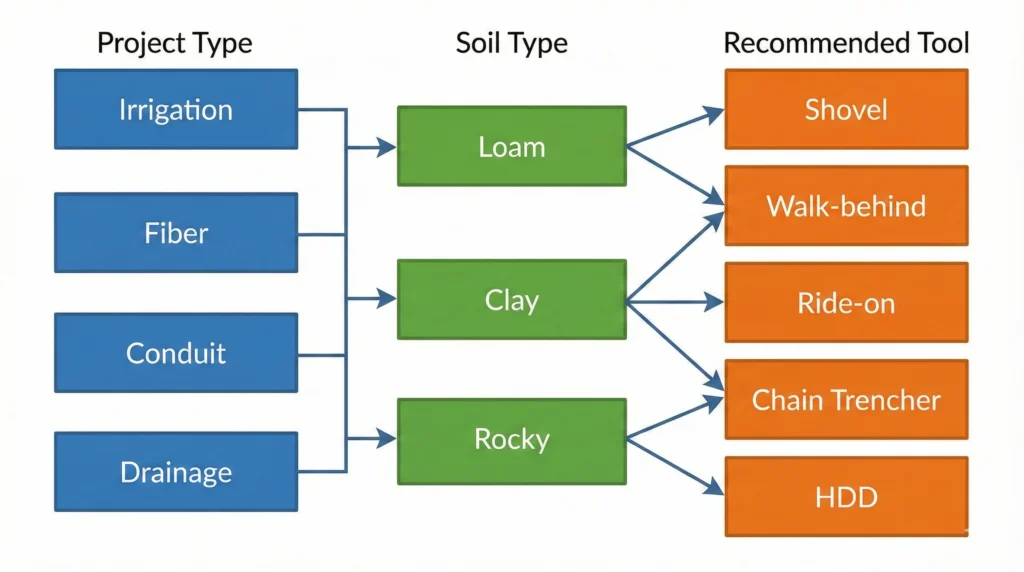
Quick DIY selector
- Define trench specs.
- Soft soil → walk-behind; rocky → saw/excavator.
- Under 50 ft → walk-behind or hand tools.
- Rent unless trenching often.
Contractor matrix
| Machine | Production | Best For |
| Walk-behind | 30–200 ft/hr | Irrigation |
| Ride-on | 200–800 ft/hr | Long runs |
| Chain trencher | 400–2000 ft/hr | Utility mains |
Safe Operation Protocols
Hitting a utility line costs thousands and risks lives. Dial 811 before you dig. Wait for the utility companies to mark the ground. Never guess. Once the ground is marked, run through this checklist before starting the engine.
Pre-operation checklist
- Verify Marks: Ensure all flags and paint lines are clear. If you must dig near these marks, use a hand shovel to expose the pipe safely.
- Inspect the Rig: Check cutting teeth for fractures and hoses for leaks. A broken chain stops production instantly. Only trained operators should handle the controls.
- Manage Spoil: Push excavated dirt at least two feet back from the lip. Heavy piles weaken the edge and can cause the wall to collapse onto workers.
- Secure the Trench: Install shoring boxes in any cut five feet or deeper. Soil weighs 3,000 pounds per cubic yard; a cave-in offers no second chance.
Trenching in Asphalt & Concrete
Hard surfaces demand specialized techniques. You must cut cleanly to prevent surface cracks and ensure the repair holds.
- Micro-Trenching: This method minimizes damage. A specialized wheel cuts a narrow slot, usually less than two inches wide. It is the standard for installing fiber optic cables across roads without blocking traffic.
- Wheel Trenchers: Standard chains fail on concrete. Use a rock wheel equipped with carbide teeth. It grinds through pavement and rebar, creating a straight channel with stable vertical walls.
- Saw Cutting: Always pre-cut the trench lines with a diamond blade saw. This creates a clean break point. It stops jagged cracks from spreading into the surrounding road surface during excavation.
- Restoration: Patching matters as much as cutting. Rebuild the road layer by layer. Compact the sub-base, pour the concrete, and seal the asphalt to prevent water from undermining the repair.
Cost of Trenching Equipment: Rent vs Buy
If you use a machine more than 60–65% of the year, buying usually wins. For anything less, renting preserves your capital. I made a calculator for you to make this decision easy.
Cost Projection (Cumulative)
Rental Market Rates (Dec 2025)
Rental rates fluctuate by region and availability, but these national averages provide a solid baseline for budgeting.
| Machine Type | Daily Rate | Weekly Rate | Monthly Rate |
| Walk-Behind Trencher | $120 – $280 | $400 – $980 | $1,200 – $2,400 |
| Ride-On Trencher | $320 – $650 | $900 – $1,800 | $3,000 – $5,500 |
| Mini Excavator (3-4 Ton) | $280 – $500 | $800 – $1,500 | $2,200 – $4,000 |
Note: Weekly rates typically equal three daily charges. Monthly rates are often equal to three weekly charges. Always ask for the “long-term” discount if renting for more than three weeks.
Purchase Costs (New vs. Used)
Buying offers equity but demands a large upfront exit of cash.
| Machine Type | New Purchase Price | Used Purchase Price (5yr+) |
| Walk-Behind Trencher | $11,000 – $16,000 | $4,000 – $8,000 |
| Ride-On Trencher (Mid-Size) | $25,000 – $65,000 | $15,000 – $30,000 |
| Chain Trencher (Heavy Duty) | $50,000 – $140,000+ | $35,000 – $80,000 |
The Hidden Costs of Ownership (TCO)
The purchase price is roughly 20–30% of the total cost over the machine’s life. You must budget for the “silent” costs that drain profit margins.
Maintenance Rule of Thumb
Budget 10–15% of the purchase price annually for maintenance and repairs.
- Example: A $50,000 ride-on trencher will cost roughly $5,000–$7,500 per year in parts, fluids, and labor.
- Preventive vs. Emergency: Reactive repairs (fixing it after it breaks) cost 3–4 times more than scheduled preventive maintenance.
Insurance Premiums
Construction equipment theft is common. Insurance typically costs 1–3% of the equipment value annually.
- Example: Insuring that same $50,000 unit costs about $500–$1,500 per year.
Fuel Consumption
Factor fuel into your hourly operating cost.
- Walk-Behind: Burns ~1.5 – 2.0 gallons/hour.
- Ride-On: Burns ~3.0 – 5.0 gallons/hour.
- Calculation: At $4.00/gallon, a ride-on trencher costs $20/hour just to idle and run.
Depreciation
New machinery loses value fastest in the first year.
- Year 1 Drop: Expect a 20–40% loss in resale value immediately after purchase.
- Tax Benefits: Utilizing Section 179 (in the US) may allow you to write off the entire purchase price in the first year, offsetting the depreciation hit significantly. Consult your CPA before signing the check.
Inspecting Equipment Before Renting or Buying
Walk around the machine with a critical eye. Focus on the wear parts first, then check the power systems.
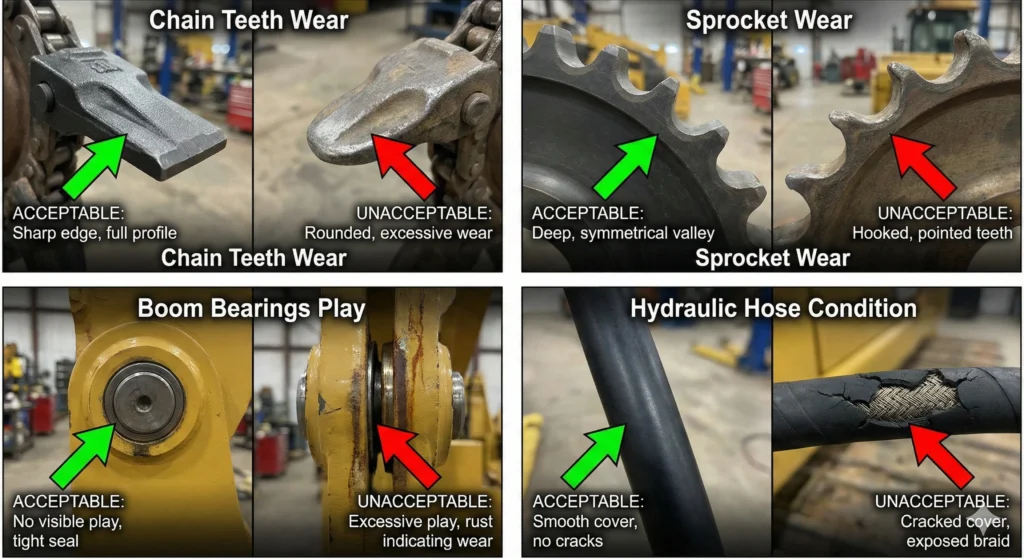
Digging Assembly (The Money Maker)
This is the highest wear area. If this system fails, the machine is useless.
- Teeth Condition: Look for rounded edges or missing carbide tips. Worn teeth reduce cutting speed by 50% and shake the machine violently.
- Chain Stretch: Check the tension. A sagging chain usually means the internal pins are worn out. If the tension adjustment bolt is extended to its limit, the chain is dead and needs replacement.
- Drive Sprockets: Inspect the teeth that pull the chain. They should have flat tops. If they look like sharp hooks or shark fins, they are ruined and will destroy a new chain quickly.
- Boom Straightness: Sight down the metal digging boom. Any twist or curve indicates previous impacts with large rocks.
- Wear Strips: Check the replaceable plastic or metal liners on the top and bottom of the boom. If these are worn through, the chain is grinding into the structural metal of the boom itself.
- Headshaft Bearings: Grab the main drive shaft at the top of the boom. Try to wiggle it up and down. Any play here indicates imminent bearing failure.
Hydraulics and Engine
Leaks and smoke are your warning signs.
- Cylinder Chrome: Inspect the shiny metal rods on every hydraulic cylinder. Pits, scratches, or rust will tear the internal seals and cause leaks.
- Hose Jackets: Look for cracked rubber or “sun rot” on the outer sheathing. A blown hose shuts down your job site instantly and sprays hot fluid.
- Valve Bank: Check the base of the control levers. Weeping oil here means the spool seals are failing.
- Cold Start: Insist on a cold engine start. If the engine is already warm when you arrive, the seller might be hiding starting issues. Blue smoke indicates burning oil; white smoke often signals fuel system problems.
Undercarriage and Drive
The machine must be able to push itself into the cut.
- Track Condition: On track units, look for deep cuts or exposed steel cables in the rubber. Check the idlers (the wheels inside the track) for play or leaks.
- Tire Sidewalls: On wheeled units, check for dry rot. Foam-filled tires are a massive bonus as they prevent flats; look for a plug in the valve stem to confirm.
- Planetary Gears: Check the inside of the wheel hubs for oil leaks. This indicates a seal failure in the final drive motors.
Safety and Controls
Never compromise on operator safety.
- Neutral Return: Push the travel levers forward and release them. They must snap back to neutral immediately. Sluggish levers are dangerous.
- Presence System: Test the safety switches. The digging chain should stop instantly if you let go of the controls or step off the platform.
- Master Guards: Ensure the heavy metal shield covering the head of the digging chain is bolted tight. Never operate a unit with exposed flywheels or belts.
Trench Boxes & Protective Systems
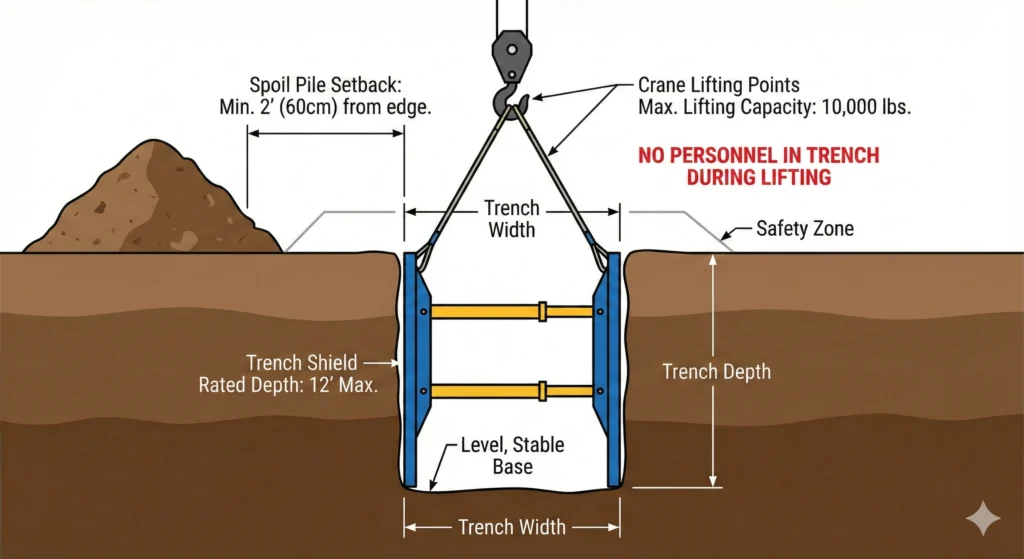
Required for trenches ≥ 5 ft deep.
Key facts
- Sizes: 6–8 ft long
- Material: steel or aluminum
- Requires lifting equipment
Safety checklist
- Confirm box capacity
- Keep box clean
- Use certified rigging
Common Trenching Projects & Recommended Tools
Every project has a standard depth and specific challenges. Match your job to this list to choose the right tool instantly.
| Project Type | Standard Depth | Best Tool for the Job | Why This Tool Wins |
| Irrigation | 6 – 18 inches | Walk-Behind Trencher | Speed is key. A walk-behind unit cuts fast in soft soil. For small yards, a vibratory plow is even better because it slices the sod without removing dirt, leaving the lawn looking untouched. |
| Landscape Lighting | 4 – 12 inches | Handheld Trencher / Spade | These lines are shallow. A gas-powered handheld trencher (like a “bed edger”) is lightweight and maneuvers easily around flower beds and tree roots where big machines cannot fit. |
| Electrical Conduit | 18 – 36 inches | Ride-On Trencher | Codes often require 24″ cover. A ride-on unit has the power to maintain this depth consistently over long distances, unlike a walk-behind which struggles to stay deep in hard ground. |
| Fiber Optic | 1 – 12 inches | Micro-Trencher | This tool cuts a tiny slot in the road or sidewalk. It prevents the need to rip up the street. It is fast, clean, and uses very little backfill material. |
| Water / Sewer Lateral | 2 – 5 feet | Mini Excavator | Gravity pipes need a specific slope (grade). An excavator allows you to dig, check the depth, and adjust the bottom bedding manually. It also provides the width needed for larger 4-inch sewer pipes. |
| Drainage (French Drains) | 12 – 24 inches | Mini Excavator | French drains require wide trenches (12″+) to hold gravel and pipe. A standard trencher cut is too narrow. An excavator bucket scoops the perfect width in one pass. |
| Gas Lines | 18 – 36 inches | Chain Trencher | Gas lines must be protected. A heavy chain trencher cuts a smooth, rock-free bottom that won’t puncture plastic gas pipes. It creates the clean bed that inspectors demand. |
FAQs – People Have Alot of Questions About Trenching Equipment
How deep can different trenchers dig?
The digging depth depends entirely on the class of the machine used:
- Micro-trenchers: Typically dig shallow cuts around 12 inches deep (ideal for fiber optics).
- Walk-behind Trenchers: Designed for utility lines, digging between 12 to 48 inches (up to 4 feet).
- Ride-on & Chain Trenchers: Heavy-duty machines capable of digging 2 to 6+ feet deep depending on the boom size.
- Excavators: Can dig significantly deeper, often exceeding 10–20 feet depending on the arm length.
What tool is best for rocky soil?
Standard chains will break in solid rock. You require specialized equipment:
- Wheel Trenchers (Rockwheels): These use a circular saw-like metal wheel with carbide teeth to cut through rock and concrete.
- Excavators with Attachments: Use a “rock bucket” for loose rock or a hydraulic “breaker hammer” for solid formations.
- Specialized Chains: Some trenchers can be fitted with “shark teeth” or carbide-tipped chains for soft rock and frost.
Should I rent or buy trenching equipment?
This decision is based on utilization frequency and ROI:
- Rent: Best for one-off projects, seasonal work, or if you lack storage/maintenance capabilities. It avoids depreciation costs.
- Buy: Best if you use the machine more than 60–70% of the time. Calculate the “rental cost x days needed” vs. “purchase price + maintenance.”
Tip: Always use a buy-vs-rent calculator before deciding.
What is the most important factor in choosing equipment?
While budget matters, the technical priority is the Project Scale and Soil Conditions.
You must determine:
- Depth & Width: How large is the pipe/conduit?
- Ground Type: Is it sand, clay, or rock? (This dictates horsepower and tooth type).
- Space: Is the job site tight (requires walk-behind) or open (allows ride-on)?
When are manual hand tools sufficient?
Manual labor is cost-effective and precise for specific scenarios:
- Short Runs: Trenches under 50 feet in length.
- Shallow Depths: Depths under 12 inches (e.g., edging or shallow cables).
- Delicate Areas: Working near known utility lines where machines pose a safety risk.
- Cleanup: Clearing loose spoil from the bottom of a machine-dug trench.
What is the difference between a trenching shovel and a drain spade?
Though they look similar, their blade shapes serve different purposes:
- Trenching Shovel: Features a narrow, often square-tipped blade with a high “lift” angle. It is best for removing loose soil and shaping flat trench bottoms.
- Drain Spade (Sharpshooter): Features a very narrow, curved, and rounded blade. It is designed to dig the initial narrow trench for utility lines and drain tiles.
Walk-behind trencher vs. Mini excavator?
Choose based on speed vs. versatility:
- Walk-behind Trencher: Faster for straight lines. Creates a cleaner, narrow trench (less backfill needed). Limited to digging.
- Mini Excavator: Slower for long straight lines but much more versatile. Can dig holes, lift heavy objects, and work in wider arcs. Creates more spoil to clean up.
What installs piping/wiring with minimal disturbance?
A Vibratory Plow.
Instead of excavating dirt, this machine uses a blade to slice through the ground and pull the pipe or wire immediately behind it. This leaves almost no open trench and preserves the turf, requiring little to no restoration work.
Can I trench with a skid steer attachment?
Yes. Trencher attachments are very popular for skid steers.
- Capability: They can typically dig up to 5 feet deep.
- Requirement: Ensure your skid steer has the necessary “High Flow” hydraulic hydraulics if the attachment requires it for efficient operation.
- Visibility: Since you drive backward while trenching, ensure the operator is comfortable with rear visibility.
What is a “competent person” and why are they required?
According to OSHA standards, a Competent Person is a designated individual who:
- Is capable of identifying existing and predictable hazards.
- Has the authorization to take prompt corrective measures (including stopping work).
Inspections by a competent person are required daily before work begins and after any rainstorms or hazard-increasing events.
At what depth are protective systems required?
OSHA requires protective systems (shoring, shielding, or sloping) for trenches that are 5 feet (1.5 meters) or deeper.
Note: If a competent person determines there is a potential for cave-in, protective systems may be required at depths less than 5 feet.
What is the difference between Trench Shoring and a Trench Box?
- Shoring (Hydraulic/Pneumatic): Active support. These pistons press against the trench walls to prevent a collapse from happening.
- Trench Box (Shielding): Passive protection. These are heavy steel boxes dropped into the trench. They do not prevent collapse; they shield the worker inside if a collapse occurs.
What are the safety rules for spoil piles and entry?
Strict distance rules apply to keep workers safe:
- Spoil Piles: Excavated soil and heavy equipment must be kept at least 2 feet back from the trench edge to prevent roll-in.
- Entry/Exit: Trenches 4 feet or deeper require a safe means of egress (ladder, ramp, or stairs).
- Travel Distance: A worker must not have to travel more than 25 feet laterally to reach a ladder.
What PPE is required for trenching?
Standard Personal Protective Equipment (PPE) includes:
- Hard Hat: Protection from falling debris.
- High-Visibility Vest: Visibility for equipment operators.
- Safety Glasses & Steel-Toe Boots.
- Hearing Protection: If working near loud machinery.
What is the absolute first step before digging?
Call 811 (in the USA) or your local utility locating service.
You must have underground utilities marked before breaking ground. Striking a gas or power line can be fatal and result in massive fines. This service is typically free for homeowners and contractors.
Dig Once, Dig Right
Trenching is more than just moving dirt. It is a strict calculation of power, time, and ground conditions. The right machine turns a week of back-breaking labor into a single afternoon of work. The wrong choice breaks teeth, burns fuel, and destroys your schedule.
Do not guess at the rental counter. Bring your gate measurements. Know your soil type. Calculate the exact footage. A cheaper, smaller machine becomes the most expensive option if it takes three days to do a one-day job.
Your profit margin lives in the planning. Match the specific tool to the specific geology. Protect your crew with shoring and protect your wallet by calling 811. Plan the cut, respect the equipment, and finish the project safely.

Usman Zahid runs this construction rental directory with over 5 years of experience in SEO, content, and web optimization. Every page is built using real research, hands-on expertise, and carefully reviewed information to meet strong EEAT standards.