Planning an excavation project requires more than renting heavy equipment—it also means ensuring worker safety and complying with OSHA regulations. One of the most important pieces of excavation safety equipment is the trench box, also known as a trench shield. Designed to protect workers from cave-ins and collapsing soil, trench boxes are commonly used for utility installations, sewer lines, pipeline work, foundation projects, and road construction.
If you’re budgeting for an upcoming excavation, understanding trench box rental costs can help you avoid unexpected expenses. Rental prices vary depending on the box size, material, rental duration, project location, and additional services such as delivery or installation.
This guide covers everything you need to know about trench box rental costs in 2026, including average prices, the factors that influence rental rates, rent-versus-buy comparisons, and practical ways to reduce your overall project costs.
What Is a Trench Box?
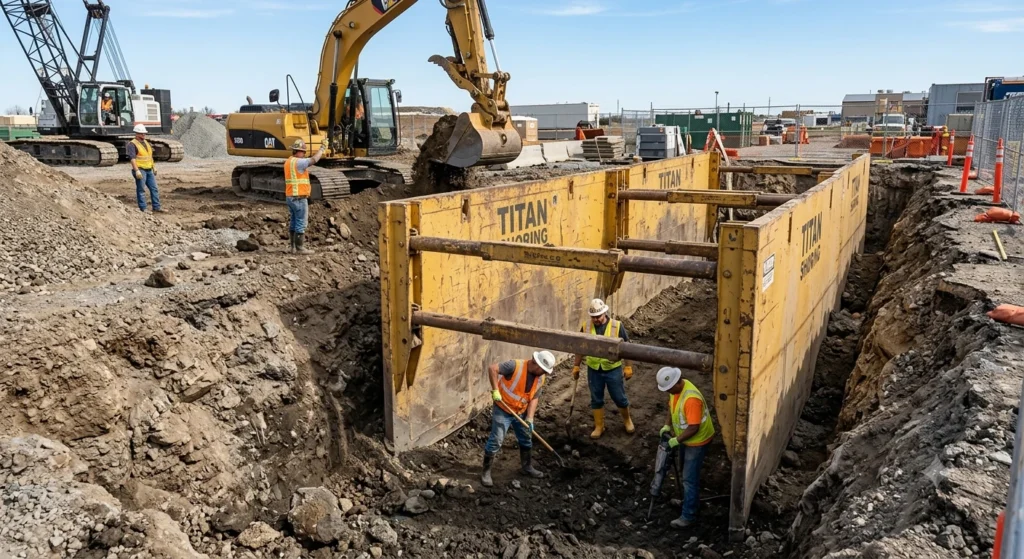
A trench box is a steel or aluminum protective structure placed inside an excavation to shield workers from soil collapse. Unlike trench shoring systems, a trench box does not prevent the trench walls from moving. Instead, it creates a protected working area that reduces the risk of injury if a cave-in occurs.
OSHA generally requires protective systems for excavations deeper than 5 feet, making trench boxes a critical safety investment for many construction and utility projects.
Average Trench Box Rental Costs in 2026
Rental prices vary across the United States, but contractors can generally expect the following price ranges.
| Rental Item | Average Cost |
|---|---|
| Daily Rental | $250–$350 |
| Weekly Rental | $550–$785 |
| Monthly Rental | $1,800–$3,500 |
| Delivery & Pickup | $40–$350 |
| Setup & Removal Labor | $120–$600 |
| Accessories | $40–$250 |
| Permits | $75–$300 |
Average total project cost: $500–$3,750
Typical Project Cost Examples
| Project Type | Duration | Estimated Cost |
|---|---|---|
| Small Residential Utility Repair | 2 Days | $500–$1,000 |
| Commercial Utility Installation | 3 Days | $1,000–$2,100 |
| Road Construction Project | 4–5 Days | $2,400–$3,750 |
These estimates include equipment rental, transportation, and basic labor but may vary depending on project complexity.
Factors That Affect Trench Box Rental Costs
1. Material Type
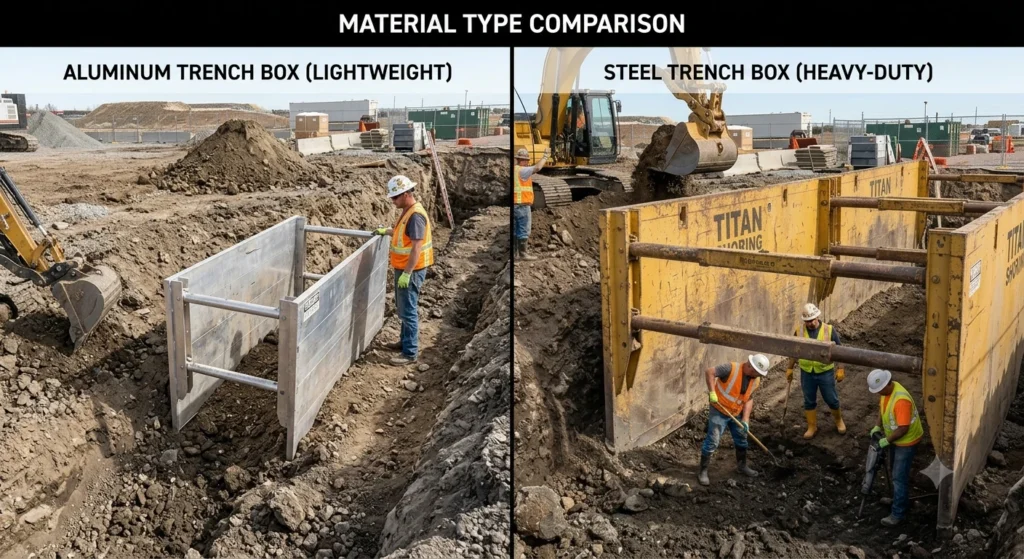
Steel Trench Boxes
Steel trench boxes are designed for demanding excavation projects and are commonly used in commercial construction and infrastructure work.
Advantages
- Extremely durable
- Suitable for deeper excavations
- Better for unstable soil
- Longer service life
Disadvantages
- Higher rental costs
- Increased transportation expenses
- Requires larger lifting equipment
Aluminum Trench Boxes
Aluminum trench boxes are lighter and easier to transport, making them ideal for residential utility work and smaller excavation projects.
Advantages
- Lower rental rates
- Easy installation
- Reduced transportation costs
- Compatible with compact equipment
2. Trench Box Size
Larger trench boxes naturally cost more because they require additional material, transportation, and handling equipment.
Common sizes include:
- 4 ft × 8 ft
- 6 ft × 16 ft
- 8 ft × 20 ft
- 10 ft × 24 ft
Projects involving deep excavations or wide utility trenches typically require larger, more expensive trench boxes.
3. Rental Duration
Rental companies generally provide discounted pricing for longer rental periods.
Daily Rental
Best for emergency repairs or short-term excavation work.
Weekly Rental
Ideal for projects lasting several days.
Weekly rentals often reduce the average daily cost by 15–30%.
Monthly Rental
The most economical option for long-term construction projects.
Monthly rentals usually offer the lowest daily rates.
4. Delivery and Pickup Fees
Transportation charges vary depending on:
- Distance from the supplier
- Fuel prices
- Equipment weight
- Site accessibility
- Same-day delivery requests
Choosing a local rental company can significantly reduce transportation costs.
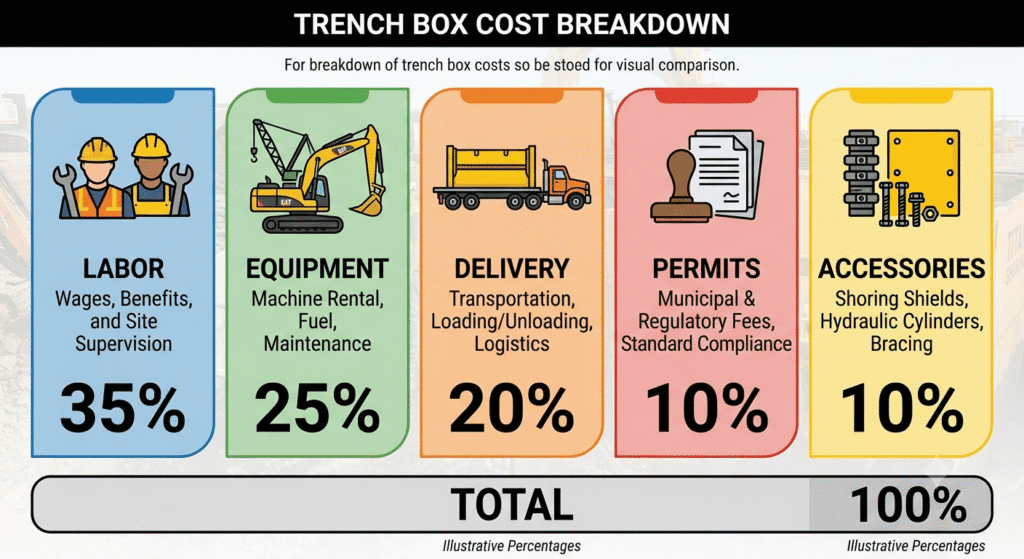
5. Labor Costs
While some contractors install trench boxes themselves, many hire experienced crews.
Typical labor costs range from $80–$150 per hour per worker.
Larger projects requiring cranes or multiple trench boxes naturally increase labor expenses.
6. Geographic Location
Rental prices differ across regions due to labor rates, transportation costs, and equipment availability.
For example:
- Northeast markets often have the highest rental rates.
- Southeast states generally offer lower equipment costs.
- Urban areas typically charge higher daily rates but lower delivery fees.
- Rural projects may pay less for equipment but more for transportation.
7. Seasonal Demand
Construction activity strongly affects rental pricing.
Spring and Summer
- Highest demand
- Limited availability
- Premium pricing
Fall and Winter
- Better equipment availability
- More competitive pricing
- Greater opportunity for long-term rental discounts
Booking equipment several weeks in advance often results in better pricing.
Additional Costs to Consider
Besides the rental itself, many projects require additional equipment and services.
Common extra costs include:
- Spreaders
- Walers
- Trench liners
- Slide rail systems
- Debris chutes
- Insurance
- Permit fees
- Engineering plans
These items can increase the total project budget but may be necessary for OSHA compliance.
Rent vs. Buy: Which Is Better?
Choosing between renting and buying depends on how frequently your business performs excavation work.
| Renting | Buying |
|---|---|
| Low upfront cost | Higher initial investment |
| Maintenance included | Owner responsible for maintenance |
| Flexible equipment selection | Long-term savings |
| No storage required | Requires storage space |
| Ideal for occasional projects | Best for frequent excavation work |
Buying Costs
Typical purchase prices include:
- Small steel trench boxes: $2,500–$6,000
- Large trench boxes: $7,000–$10,000+
For contractors using trench boxes more than three months each year, purchasing often provides a better return on investment.
How to Save Money on Trench Box Rentals?
Reducing excavation costs starts with careful planning.
Some of the most effective ways to save include:
- Compare quotes from multiple suppliers.
- Reserve equipment early during busy construction seasons.
- Choose standard box sizes whenever possible.
- Bundle trench boxes with accessories.
- Rent locally to reduce delivery charges.
- Select weekly or monthly rentals instead of daily rates.
- Build a 5–10% contingency into your project budget for unexpected delays.
OSHA Safety Requirements
Safety should never be sacrificed to reduce project costs.
OSHA generally requires protective systems for excavations deeper than 5 feet, unless the excavation is entirely in stable rock.
Additional requirements may include:
- Daily trench inspections
- Safe entry and exit points
- Proper installation by qualified personnel
- Engineered excavation plans
- Gas monitoring in confined spaces
- Appropriate protective equipment
Failure to comply with OSHA standards can lead to substantial fines, project delays, and increased liability.
Frequently Asked Questions
How much does it cost to rent a trench box?
Daily rental rates typically range from $250 to $350, although prices may vary from $60 to $700 depending on equipment size and location.
Is delivery included?
Usually not. Delivery and pickup generally cost between $40 and $350.
Are aluminum trench boxes cheaper?
Yes. Aluminum trench boxes are usually less expensive to rent because they are lighter and easier to transport.
Is it better to rent or buy?
Renting is ideal for occasional or short-term projects. Buying makes more financial sense for contractors who regularly perform excavation work.
What accessories might I need?
Common accessories include:
- Spreaders
- Braces
- Walers
- Slide rail systems
- Trench liners
- Debris chutes
Final Thoughts
Trench box rental costs in 2026 generally range from $250 to $350 per day, with complete project costs falling between $500 and $3,750 depending on equipment type, rental duration, labor, delivery, and project requirements.
For most homeowners and contractors handling occasional excavation work, renting remains the most affordable and flexible option. It eliminates maintenance responsibilities, provides access to OSHA-compliant equipment, and allows you to choose the right trench box for each project.
Before renting, compare prices from multiple suppliers, reserve equipment well in advance during peak construction seasons, and account for delivery, labor, permits, and accessories in your overall budget. Careful planning not only helps control costs but also ensures a safer and more efficient excavation project.

Ahmed Ijaz runs this construction rental directory with over 5 years of experience in SEO, content, and web optimization. Every page is built using real research, hands-on expertise, and carefully reviewed information to meet strong EEAT standards.