Whether you’re managing a construction site, planning a wedding, or organizing a large outdoor event, understanding porta-potty rental costs can help you budget accurately and avoid surprise fees.
In most cases, a standard portable toilet costs between $75 and $150 per month for long-term rentals with routine servicing. Premium options such as ADA-compliant units, flushing restrooms, and luxury restroom trailers can range from several hundred dollars to more than $2,000 per event. The final price depends on factors such as rental duration, service frequency, delivery distance, seasonal demand, and the type of unit you choose.
This guide breaks down every cost factor so you can compare quotes confidently and determine exactly how many units your project or event requires.
Average Cost to Rent a Porta-Potty (Quick Answer)
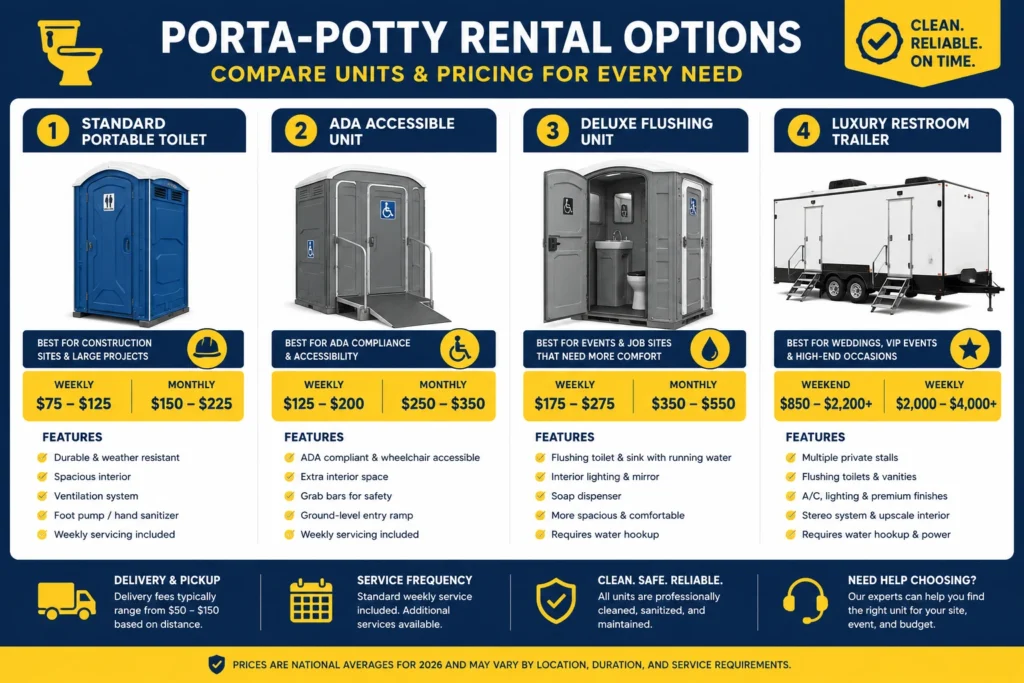
If you’re looking for a quick estimate, the average porta-potty rental cost falls into four primary pricing tiers.
| Portable Toilet Type | Average Rental Cost |
| Standard Portable Toilet | $75–$150 per month |
| ADA Accessible Unit | $125–$300 per month |
| Deluxe Flushing Unit | $175–$500 per rental period |
| Luxury Restroom Trailer | $750–$2,000+ per weekend |
Most construction projects use standard units with weekly servicing, while weddings and corporate events often require upgraded restrooms that offer a more comfortable guest experience.
The biggest pricing factors include:
- Rental duration
- Number of units needed
- Pumping and cleaning frequency
- Delivery distance
- Seasonal demand
- Site accessibility
Porta-Potty Rental Price Calculator
Estimated Rental Cost
Porta-Potty Rental Prices by Major U.S. Cities (2026)
Portable toilet rental costs vary significantly depending on labor rates, disposal fees, fuel costs, and local demand. Major metropolitan areas typically command higher prices than suburban markets, while rural locations often incur additional transportation charges.
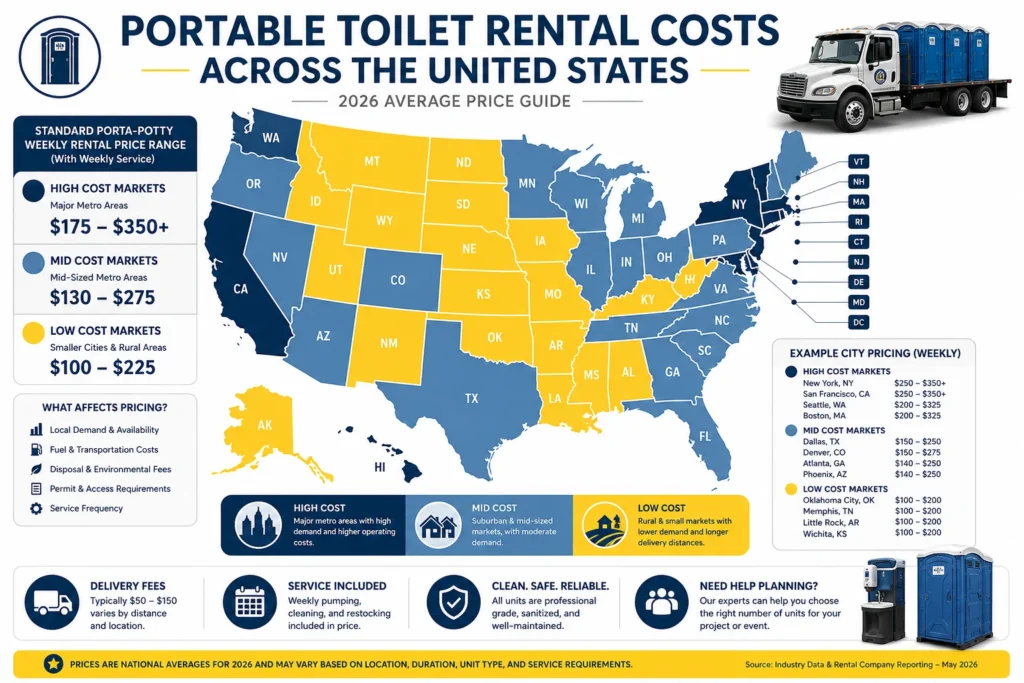
The table below reflects typical 2026 pricing for a standard portable toilet with weekly service included.
| City | Weekly Rental | Monthly Rental |
|---|---|---|
| New York, NY | $175-$325 | $180-$350 |
| Los Angeles, CA | $165-$300 | $170-$325 |
| San Francisco, CA | $190-$350 | $200-$375 |
| San Diego, CA | $150-$275 | $160-$300 |
| Chicago, IL | $150-$275 | $150-$290 |
| Houston, TX | $125-$225 | $90-$180 |
| Dallas, TX | $130-$250 | $95-$190 |
| Austin, TX | $140-$275 | $100-$200 |
| Miami, FL | $150-$275 | $100-$225 |
| Orlando, FL | $130-$250 | $90-$190 |
| Atlanta, GA | $140-$275 | $100-$225 |
| Charlotte, NC | $125-$240 | $90-$180 |
| Nashville, TN | $140-$260 | $95-$190 |
| Denver, CO | $150-$300 | $110-$225 |
| Phoenix, AZ | $135-$260 | $100-$200 |
| Las Vegas, NV | $150-$275 | $110-$220 |
| Seattle, WA | $175-$325 | $150-$275 |
| Portland, OR | $140-$260 | $100-$200 |
| Minneapolis, MN | $140-$260 | $100-$190 |
| Philadelphia, PA | $150-$275 | $125-$225 |
| Washington, DC | $175-$325 | $150-$275 |
National Average
Across the United States, a standard porta-potty rental typically costs:
- $125-$250 per week
- $90-$200 per month with weekly servicing
- $50-$150 delivery fee
- $50-$100 per additional pump-out service
Prices tend to be highest in major coastal metros such as New York, San Francisco, Seattle, and Washington, DC. Mid-sized cities in the South and Midwest generally offer the most competitive pricing, while remote rural locations may exceed urban pricing due to transportation and servicing costs.
Porta-Potty Rental Prices by Type of Unit
Not all portable toilets are created equal. The type of unit you select will have the greatest impact on your total rental cost.
Standard Non-Flushing Portable Toilet
Average Cost: $75–$150 Per Month
The standard portable toilet is the most affordable and widely used option. These units are commonly found on construction sites, roadwork projects, agricultural properties, and industrial job sites.
Typical features include:
- Toilet paper dispenser
- Ventilation system
- Waste holding tank
- Lockable door
Best for:
- Construction projects
- Long-term rentals
- Small outdoor work crews
ADA-Compliant Portable Toilet
Average Cost: $125–$300 Per Month
ADA-accessible portable restrooms provide additional interior space and wheelchair accessibility to meet public accommodation requirements.
Typical features include:
- Wider doorway
- Ground-level access
- Interior handrails
- Increased turning radius
Best for:
- Public events
- Government projects
- Corporate gatherings
- Compliance-sensitive locations
Flushing Portable Toilet
Average Cost: $175–$500 Per Rental
Flushing portable toilets offer a more traditional restroom experience and are commonly used at weddings, private parties, and upscale outdoor events.
Typical features include:
- Flushable toilet
- Freshwater tank
- Handwashing sink
- Interior mirror
Best for:
- Outdoor receptions
- Family events
- Corporate functions
Luxury Restroom Trailer
Average Cost: $750–$2,000+ Per Weekend
Luxury restroom trailers provide a premium restroom experience that closely resembles an indoor bathroom.
Typical features include:
- Running water
- Climate control
- Premium countertops
- Interior lighting
- Private stalls
- Upscale finishes
Best for:
- Weddings
- VIP events
- Film productions
- Executive gatherings
Critical Factors That Affect Porta-Potty Rental Cost
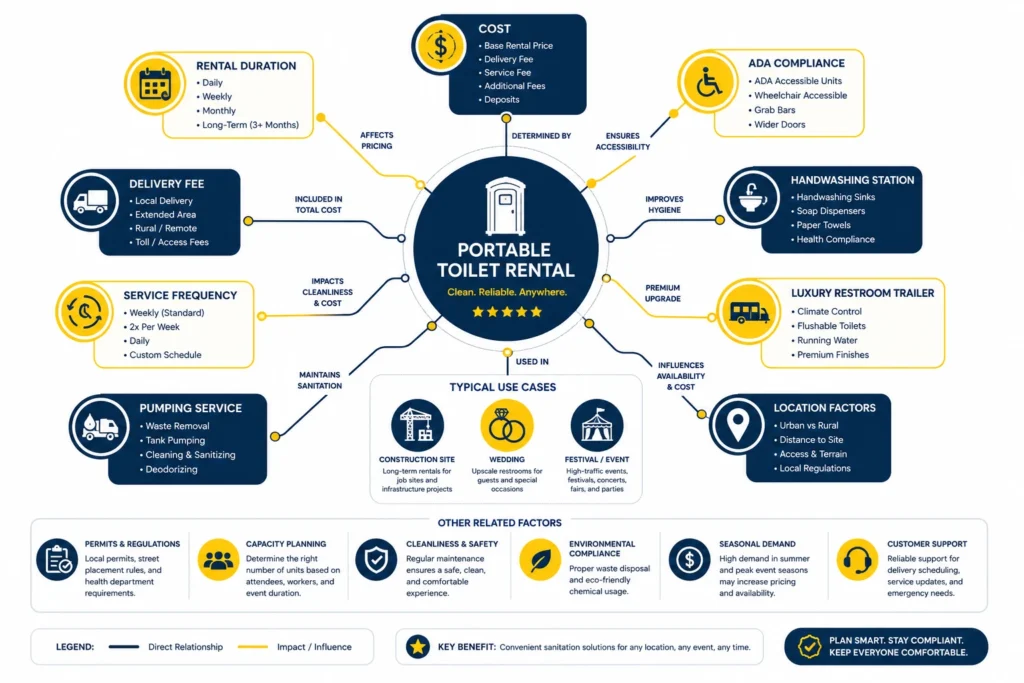
The base rental price only tells part of the story. Several variables can significantly influence the final quote.
1. Rental Duration (Daily vs. Weekly vs. Monthly)
One of the most overlooked pricing concepts is what rental companies call price inversion.
Daily rentals often appear expensive because transportation, setup, and pickup costs are spread across a very short rental period.
For example:
| Rental Term | Approximate Daily Cost |
| One Day | Highest |
| One Week | Lower |
| One Month | Lowest |
A monthly rental may cost only a fraction of the daily rate when calculated on a per-day basis.
For construction projects lasting several weeks or months, long-term contracts almost always provide the best value.
2. Service and Pumping Frequency
Every portable toilet requires regular waste removal and sanitation service.
A standard pump-and-clean service generally includes:
- Waste tank pumping
- Deep cleaning
- Disinfecting
- Restocking toilet paper
- Replenishing deodorizing chemicals
Usage volume directly impacts servicing costs.
For example:
Construction Site Usage
- Predictable daily traffic
- Weekly service is usually sufficient
Festival or Concert Usage
- Heavy traffic in a short timeframe
- Multiple service visits may be required
The more frequently a unit must be serviced, the higher the overall rental cost.
3. Delivery and Logistics (The Truck Roll Fee)
Transportation costs are often listed separately on rental quotes.
Most providers charge a delivery fee ranging from $50 to $150, though pricing varies based on distance and site conditions.
Typical examples include:
| Service Area | Average Delivery Cost |
| Local Delivery | Under $75 |
| Regional Delivery | $75–$150 |
| Rural or Remote Locations | $200+ |
Difficult access points, unpaved roads, or restricted job sites may increase delivery charges.
4. Seasonality and Availability
Like many event-related services, portable toilet rentals are subject to seasonal demand.
Peak Season
Demand typically spikes during:
- Spring weddings
- Summer festivals
- Outdoor concerts
- Sporting events
- Community fairs
Off-Season
Demand often decreases during:
- Late fall
- Winter months
- Slower event periods
In highly competitive markets, prices can increase by 50% to 100% during peak demand periods due to limited inventory.
Cost Breakdown: Construction Sites vs. Special Events
Portable toilet pricing varies significantly depending on how the units will be used.
Pricing for Construction Sites (Long-Term Rentals)
Construction rentals are generally the most cost-effective because they involve longer rental periods and predictable service schedules.
Factors affecting construction pricing include:
- Number of workers
- Project duration
- OSHA compliance requirements
- Weekly servicing needs
OSHA Worker-to-Restroom Guidelines
A common planning standard is:
One portable toilet for every 10 workers during a 40-hour workweek.
Larger crews may require additional units to maintain sanitary conditions and avoid productivity loss.
Pricing for Weddings and Private Events
Event rentals focus less on duration and more on guest experience.
Common upgrades include:
- White-glove delivery
- Decorative exterior finishes
- Hand sanitizer stations
- Air fresheners
- Enhanced cleaning schedules
Event rentals may also include refundable damage deposits, especially for luxury restroom trailers.
How Many Porta-Potties Do You Really Need?
Choosing the right number of units is one of the easiest ways to control rental costs while maintaining comfort and compliance.
Construction Site Formula
For long-term job sites:
Number of Workers ÷ 10 = Minimum Number of Units
Examples:
| Workers | Recommended Units |
| 10 | 1 |
| 20 | 2 |
| 50 | 5 |
| 100 | 10 |
Add one additional unit for every additional group of 10 workers.
Event Planning Formula
For a four-hour event:
Number of Guests ÷ 50 = Base Number of Units
Additional recommendation:
Add 2 units for every 100 guests to reduce wait times and improve guest satisfaction.
Examples:
| Guests | Recommended Units |
| 100 | 4 |
| 250 | 7 |
| 500 | 12 |
| 1,000 | 22 |
Hidden Costs and Fees in Porta-Potty Rentals
Many rental quotes exclude secondary charges that can affect your final invoice.
Common fees include:
Environmental Disposal Fees
Charges associated with transporting and processing wastewater.
Fuel Surcharges
Additional transportation fees tied to fuel prices and service distance.
Cleaning or Damage Deposits
Often required for weddings, festivals, and private events.
Handwashing Station Rentals
Portable handwashing stations typically add:
$30–$60 per rental period
Optional upgrades may also include:
- Interior lighting
- Solar-powered lighting
- Freshwater sinks
- Sanitizer dispensers
- Climate-controlled trailers
Porta-Potty Rental Process: Step-by-Step
Understanding the rental process can help avoid delays and unexpected charges.
Step 1: Site Assessment
The provider evaluates:
- Access routes
- Delivery requirements
- Ground stability
- Service vehicle access
Step 2: Customized Quote
Pricing is based on:
- Unit type
- Quantity
- Duration
- Service schedule
Step 3: Delivery and Placement
Portable toilets must be placed on level, stable ground that can be safely accessed by service trucks.
Step 4: Scheduled Servicing
Depending on usage, units may be serviced weekly, bi-weekly, or multiple times during an event.
Step 5: Pickup and Final Inspection
Once the rental period ends, the provider removes the units and performs a final condition assessment.
Porta Potty Requirements
Porta-potties must meet specific safety, sanitation, and accessibility requirements to ensure a clean and compliant restroom experience for workers, guests, and the general public. While regulations vary by location and use case, most portable restroom rentals are subject to health department guidelines, workplace sanitation standards, and accessibility requirements.
Sanitation Requirements
All portable toilets should be regularly serviced to maintain hygiene and prevent odors. Standard maintenance typically includes:
- Waste tank pumping and disposal
- Interior cleaning and disinfection
- Restocking toilet paper and supplies
- Replenishing deodorizing chemicals
- Inspecting ventilation and door locks
For construction sites, weekly servicing is generally recommended, although high-traffic locations may require more frequent cleaning.
OSHA Requirements for Construction Sites
Construction employers must provide adequate restroom facilities for workers. As a general guideline, one portable toilet should be available for every 10 employees working a standard 40-hour week. Larger crews may require additional units to prevent overcrowding and maintain sanitary conditions.
Providing sufficient restroom access not only supports compliance but also improves worker productivity and job site morale.
ADA Accessibility Requirements
Public events and job sites may be required to provide accessible restroom facilities. ADA-compliant porta-potties are designed with features such as:
- Ground-level entry
- Wider door openings
- Interior grab bars
- Additional maneuvering space for wheelchairs
A common recommendation is to provide at least one ADA-accessible unit whenever multiple portable restrooms are installed, particularly at public events.
Placement and Site Requirements
Portable toilets should be installed on stable, level ground that allows safe access for both users and service vehicles. Before delivery, consider:
- Truck access for servicing and pickup
- Distance from work or event areas
- Adequate lighting for nighttime use
- Drainage and weather conditions
- Local permit requirements
Improper placement can increase servicing costs and create safety hazards.
Handwashing and Hygiene Requirements
Many municipalities, construction projects, and event organizers now require handwashing facilities alongside portable toilets. Depending on the site, this may include:
- Portable handwashing stations
- Hand sanitizer dispensers
- Freshwater sink units
- Soap and paper towel dispensers
Adding hand hygiene stations helps improve sanitation and can support compliance with local health regulations.
Local Permits and Regulations
If a porta-potty will be placed on public property, sidewalks, streets, or rights-of-way, a permit may be required. Local municipalities often regulate:
- Placement locations
- Rental duration
- Waste disposal practices
- Accessibility compliance
Before scheduling delivery, check with local authorities or your rental provider to determine whether permits are needed.
Frequently Asked Questions
What is the cheapest month to rent a porta potty?
November through February typically offers the lowest rental rates because demand from weddings, festivals, and outdoor events is significantly lower.
Do I need a permit to place a porta potty on the street?
In many jurisdictions, yes. Portable toilets placed on public streets, sidewalks, or rights-of-way often require a temporary permit. Check local regulations before scheduling delivery.
How much does it cost to empty a porta potty?
Most pump-out services cost between $50 and $150 per visit, depending on waste volume, location, and service frequency.
How often should a porta potty be serviced?
For most long-term rentals, weekly service is standard. High-traffic events may require daily or even multiple cleanings throughout the day.
Are luxury restroom trailers worth the cost?
For weddings, VIP events, and corporate functions, luxury restroom trailers provide a significantly better guest experience and often justify the additional expense.
Verdict: Get an Accurate Porta-Potty Rental Quote
Porta-potty rental costs depend on five primary factors: unit type, rental duration, service frequency, delivery logistics, and seasonal demand. While a basic construction-site unit may cost as little as $75 per month, premium restroom trailers can exceed $2,000 for a single weekend event.
The best way to avoid unexpected charges is to request a detailed, binding quote that includes delivery, servicing, pickup, environmental fees, and any optional upgrades. By understanding the pricing variables outlined above, you’ll be better equipped to compare providers, control costs, and ensure your project or event has the right sanitation solution in place.

Ahmed Ijaz runs this construction rental directory with over 5 years of experience in SEO, content, and web optimization. Every page is built using real research, hands-on expertise, and carefully reviewed information to meet strong EEAT standards.