If you’re planning to install underground utilities, irrigation systems, drainage pipes, or large pipelines, one of the first questions you’ll ask is: How deep can a trencher dig?
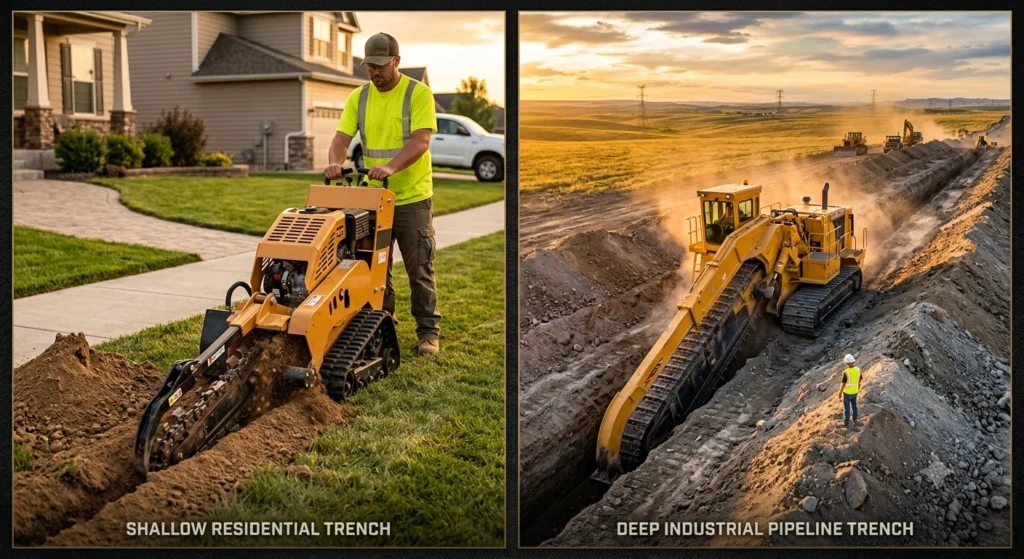
The answer depends on the type of trencher, its boom length, horsepower, and the ground conditions. While a small residential trencher may only dig 12 inches, heavy-duty ride-on trenchers can excavate trenches up to 24 feet (7.3 meters) deep. For specialized foundation construction, trench cutters can even reach depths of 120 meters.
Understanding these depth capabilities helps you choose the right equipment, reduce project costs, and complete excavation safely.
Maximum Trencher Digging Depth by Machine Type
Different trenchers are designed for different jobs. Here’s a quick comparison of their typical digging capabilities.
| Trencher Type | Maximum Depth | Typical Width | Common Applications |
|---|---|---|---|
| Portable/Handheld | Up to 27 inches | Up to 2 inches | Landscaping, edging |
| Walk-Behind Trencher | Up to 4 feet (48 in) | Up to 8 inches | Irrigation, residential utilities |
| Microtrencher | Up to 26 inches | 0.5–3 inches | Fiber optic installation |
| Ride-On Utility Trencher | Up to 6 feet | 12–16 inches | Electrical lines, solar farms |
| Large Ride-On Trencher | Up to 24 feet | Up to 72 inches | Pipelines, sewer, transmission lines |
| Trench Cutter | Up to 120 meters | Varies | Deep foundations, diaphragm walls |
Walk-Behind Trenchers
Walk-behind trenchers are the most popular choice for residential projects. They typically dig 12 to 48 inches (1–4 feet) deep with trench widths up to 8 inches.
These machines are ideal for:
- Irrigation systems
- Landscape lighting
- Drainage pipes
- Residential electrical cables
- Small utility installations
They are affordable to rent, easy to transport, and work well on small properties. However, they require more operator effort than larger machines.
Microtrenchers
Microtrenchers are designed for urban utility work where minimizing surface damage is essential.
Typical specifications include:
- Maximum depth: 26 inches (660 mm)
- Trench width: 0.5–3 inches
They are commonly used for installing fiber optic cables beneath asphalt or concrete while reducing restoration costs and traffic disruption.
Ride-On Utility Trenchers
Ride-on trenchers are larger, faster, and more powerful than pedestrian models.
Most utility trenchers dig up to 6 feet (1.8 meters) deep and produce trenches between 12 and 16 inches wide.
They are commonly used for:
- Underground electrical distribution
- Fiber optic networks
- Solar farm infrastructure
- Agricultural drainage
- Long utility runs
Because they require less manual labor, they significantly improve productivity on medium and large projects.
Large Ride-On Trenchers
Heavy-duty trenchers are built for major infrastructure work.
Large models can dig 15 to 24 feet (4.6–7.3 meters) deep while creating trenches up to 72 inches wide.
These machines are commonly used for:
- Oil and gas pipelines
- Municipal water mains
- Sewer systems
- Electrical transmission lines
Some advanced machines, such as high-powered pipeline trenchers, combine massive engines with long digging booms to maintain consistent excavation even in difficult soil conditions.
Specialized Trench Cutters
Trench cutters differ from traditional chain trenchers because they use rotating milling wheels instead of digging chains.
These machines can excavate up to 120 meters deep, making them suitable for:
- Diaphragm wall construction
- High-rise foundations
- Underground retaining walls
- Deep civil engineering projects
They are rarely used for utility trenching and are reserved for specialized construction.
What Determines Maximum Digging Depth?
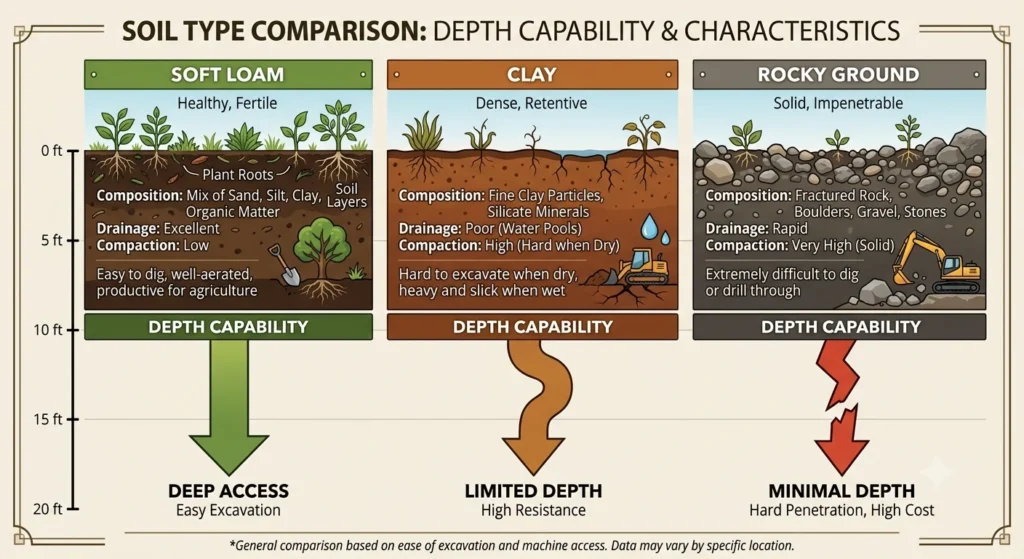
A trencher’s specifications are only part of the equation. Several factors influence how deep it can actually dig.
Soil Conditions
Loose soil, clay, and loam allow trenchers to reach their rated depths more easily.
Rocky terrain or hard clay increases resistance, which may reduce effective digging depth or require specialized rock-wheel attachments.
Boom Length
The digging boom is the primary factor that determines maximum trench depth.
Longer booms allow deeper excavation, while adjustable boom angles help operators maintain the desired trench profile.
Horsepower and Torque
Deep trenching requires more engine power and higher torque.
Larger trenchers can maintain chain speed under heavy loads, allowing them to dig efficiently through compacted or rocky ground.
Project Requirements
The size of the pipe, conduit, or cable being installed also affects trench dimensions. Larger utilities require wider trenches, which often demand larger machines.
Typical Trench Depth by Application
Choosing the correct trencher starts with understanding your project’s depth requirements.
- Landscaping and sprinkler systems: 6–18 inches
- Agricultural drainage: 18–42 inches
- Residential utilities: 2–4 feet
- Electrical transmission and fiber infrastructure: Up to 6–8 feet
- Municipal water and sewer pipelines: Up to 24 feet
- Deep foundation construction: Up to 120 meters using trench cutters
Always verify local building codes and utility regulations before digging.
Modern Depth Control Technology
Today’s trenchers offer advanced technology that improves both accuracy and productivity.
Common features include:
- Laser guidance systems for maintaining consistent trench depth
- Automatic hydraulic depth control
- Adjustable boom positioning
- Trailing shoe systems that follow the trench bottom for precise excavation
These technologies help reduce rework while improving installation quality.
Choosing the Right Trencher
The best trencher depends on your project size, soil type, and budget.
For projects under 250 feet, a walk-behind trencher is often sufficient and economical.
Longer utility installations generally benefit from ride-on trenchers because they complete work much faster.
Urban fiber optic projects usually require microtrenchers to minimize pavement damage, while pipeline contractors rely on large ride-on trenchers for maximum depth and productivity.
Selecting a machine that’s appropriately sized helps reduce fuel consumption, rental costs, and unnecessary ground disturbance.
Frequently Asked Questions
How deep can a walk-behind trencher dig?
Most walk-behind trenchers dig between 12 and 48 inches (1–4 feet).
What is the deepest trencher available?
Large ride-on trenchers can excavate trenches up to 24 feet, while specialized trench cutters can reach 120 meters.
Does soil type affect digging depth?
Yes. Soft soil allows machines to reach their rated depth more easily, while rocky or compacted ground may reduce effective performance.
Can a trencher dig deeper than its rated capacity?
No. Maximum digging depth is limited by the machine’s boom length and overall design. Operating beyond the manufacturer’s specifications can damage the equipment and create safety hazards.
Conclusion
The maximum depth a trencher can dig varies widely depending on the machine. Walk-behind trenchers typically reach 4 feet, utility ride-on models dig up to 6 feet, and large ride-on trenchers can excavate as deep as 24 feet for major infrastructure projects. For specialized construction, trench cutters extend that capability to 120 meters.
By considering soil conditions, project requirements, boom configuration, and machine size, you can select the right trencher for efficient, safe, and cost-effective excavation.

Ahmed Ijaz runs this construction rental directory with over 5 years of experience in SEO, content, and web optimization. Every page is built using real research, hands-on expertise, and carefully reviewed information to meet strong EEAT standards.