If you’re looking for the easiest fence to install yourself, a no-dig aluminum or composite fence is one of the best options. These systems use ground spikes or anchors instead of concrete, making installation faster and easier for DIY homeowners.
In this guide, you’ll learn which fence materials are easiest to install, how they compare in difficulty, and how to install a no-dig fence step by step.
Why Choose a DIY Fence?
Professional fence installation can increase the total project cost. DIY fencing can reduce labor costs, especially when you choose a system designed for simple installation.
Traditional fence installation may require:
- Digging post holes
- Mixing and pouring concrete
- Waiting for concrete to cure
- Heavy lifting and specialized tools
No-dig systems eliminate most of these steps, making them suitable for many first-time DIYers.rn no-dig fence systems eliminate most of these challenges, making them ideal for first-time DIYers.
What Is a No-Dig Fence?
A no-dig fence uses steel spikes or ground anchors instead of concrete-set posts. Instead of excavating holes, you simply drive the anchor into the ground and attach the fence post.
This installation method dramatically reduces labor while producing a stable fence for light-duty residential applications.
Why No-Dig Fencing Is the Easiest Option?
Faster Installation
No-dig fencing eliminates post-hole digging and concrete curing, which can significantly reduce installation time.
Less Physical Labor
Instead of digging multiple post holes and handling concrete, you drive ground anchors into the soil and attach the posts.
Fewer Tools Required
Most no-dig fence kits require only basic tools:
- Tape measure
- String line
- Rubber mallet or sledgehammer
- Level
- Drill or screwdriver
Less Yard Damage
Because no-dig fencing requires minimal excavation, it can cause less disruption to lawns and existing landscaping.
When Is No-Dig Fencing Not the Best Choice?
No-dig fencing is easiest to install, but it isn’t suitable for every property.
It works best for:
- Fences around 4 feet tall
- Decorative or light-duty applications
- Flat or gently sloping terrain
- Firm, stable soil
It may be less suitable for loose sand, very soft soil, tall privacy fences, or high-security applications.
For heavier or taller fencing, concrete-set posts generally provide greater stability.on.
Easiest Fence Materials to Install Yourself
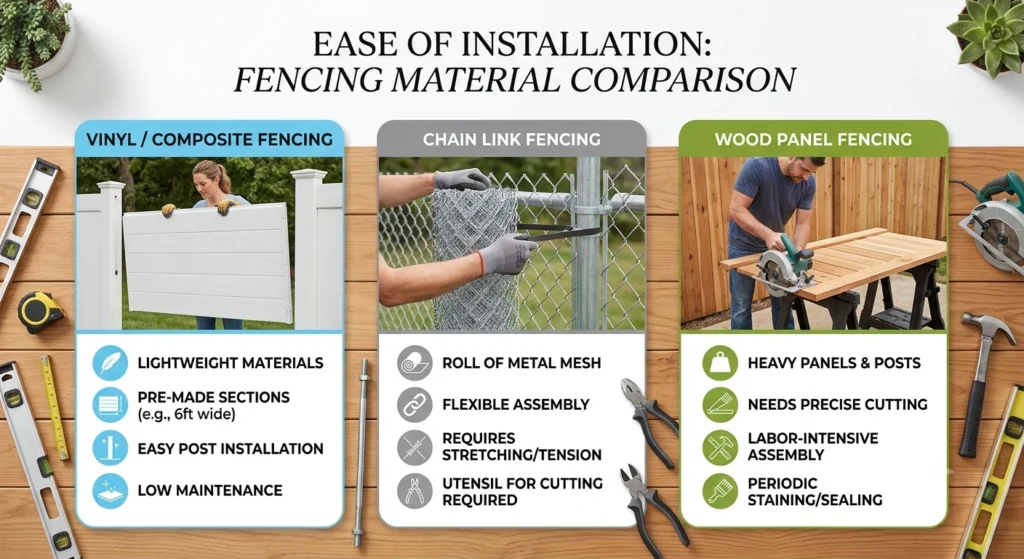
Not every fencing material is equally beginner-friendly. Here’s how the most popular options compare.
1. Aluminum or Composite Fence Kits — Best Overall
Aluminum and composite fence kits are among the easiest fences to install yourself, especially when they use a no-dig system.
Many kits include:
- Pre-cut panels
- Interlocking rails
- Lightweight components
- Factory-finished surfaces
Once the posts are secured, the panels can typically be attached using brackets, screws, or an interlocking system.
Advantages:
- Very low maintenance
- Rust-resistant
- Rot-resistant
- No painting or staining
- Long-lasting
Difficulty: Very Easy
2. Vinyl Fence — Easy for Beginners
Vinyl fencing is another excellent DIY option because many systems use interlocking components.
Benefits
- Attractive appearance
- Doesn’t rot
- Never needs painting
- Easy to clean
The Challenge
Vinyl requires extremely accurate post spacing. Even small measurement errors can prevent the panels from fitting correctly.
Many manufacturers now offer no-dig vinyl systems that use steel ground anchors instead of concrete.
Difficulty: ★★★★☆
3. Ornamental Aluminum — Moderate
Decorative metal fencing usually comes in preassembled panels.
Installation involves:
- Installing posts
- Attaching brackets
- Bolting panels into place
Although straightforward, the metal panels are often heavier than composite options.
Difficulty: ★★★☆☆
4. Chain Link — More Technical
Chain link fencing is affordable and uses standardized components.
However, beginners often struggle with:
- Stretching the mesh correctly
- Maintaining proper tension
- Installing tension bars
- Using specialized fencing tools
While the materials themselves are inexpensive, installation is more technical than many people expect.
Difficulty: ★★☆☆☆
5. Wood Privacy Fence — Most Difficult
Wood remains one of the most popular fencing materials but is also the hardest for beginners.
Challenges include:
- Digging deep post holes
- Setting concrete
- Cutting lumber
- Measuring precisely
- Painting or staining
- Ongoing maintenance
Wood fences are heavy and require more time than virtually every other fencing system.
Difficulty: ★☆☆☆☆
Fence Installation Difficulty Comparison
| Fence Type | DIY Difficulty | Maintenance | Concrete Required |
|---|---|---|---|
| Aluminum No-Dig | Very Easy | Very Low | No |
| Composite No-Dig | Very Easy | Very Low | No |
| Vinyl | Easy | Low | Optional |
| Ornamental Aluminum | Moderate | Low | Sometimes |
| Chain Link | Moderate | Low | Usually Yes |
| Wood Privacy Fence | Difficult | High | Yes |
How to Install a No-Dig Fence?
Most no-dig fence kits follow a similar installation process.
Step 1: Plan the Fence Layout
Before beginning:
- Verify property boundaries
- Review local building regulations
- Check HOA requirements if applicable
- Contact utility locating services before driving stakes
Mark the fence line using stakes and string.
Step 2: Measure Post Locations
Measure each panel carefully and mark every post location.
Accurate spacing is especially important for vinyl fence systems.
Step 3: Drive the Ground Spike
Position the steel spike vertically.
Using a sledgehammer and a wood block, drive the spike into the ground until secure.
Check with a level frequently to keep it perfectly straight.
Step 4: Install the Fence Post
Slide the fence post over the ground anchor.
Many kits include leveling collars or adjustment rings to simplify alignment.
Step 5: Attach Fence Panels
Once two posts are installed:
- Slide panels into place
- Secure with brackets or screws
- Confirm everything remains level
Repeat the process until the fence is complete.
When Do You Need a Traditional Fence?
For taller privacy or security fences, traditional installation is still recommended.
The process includes:
- Dig approximately 24-inch-deep post holes.
- Position each post using temporary braces.
- Pour post concrete around the post.
- Allow the concrete to cure.
- Attach fence panels after the posts are fully secure.
Although this method takes longer, it provides maximum strength for heavy fencing.
Tips for an Easier DIY Fence Project
To ensure a successful installation:
- Measure carefully
- Use a level
- Follow manufacturer spacing
- Work systematically
- Have a helper
- Avoid unsuitable ground/weather conditions
Frequently Asked Questions
What is the easiest fence to install yourself?
No-dig aluminum or composite fence kits are the easiest because they eliminate digging and concrete while using preassembled panels.
Can I install a fence without concrete?
Yes. Many modern fencing systems use steel ground spikes or anchors instead of concrete.
How long does it take to install a no-dig fence?
Most homeowners can install a small residential no-dig fence within one day, depending on the project’s size.
Is no-dig fencing durable?
Yes, for decorative and light-duty residential applications. However, it isn’t designed for heavy security fencing or extremely harsh soil conditions.
Which fence requires the least maintenance?
Aluminum and composite fencing require very little maintenance. They resist rust, insects, moisture, and rot without painting or staining.
Is vinyl fencing easy for beginners?
Yes. Vinyl is beginner-friendly, but careful measurements are essential because the panels require precise post spacing.
Final Verdict
The easiest fence to install yourself is generally a no-dig aluminum or composite fence. These systems require less digging, fewer tools, and less labor than traditional concrete-set fencing.
For decorative and light-duty residential projects, they are a practical DIY choice. For tall privacy or high-security fencing, traditional concrete-set posts are usually more suitable.

Ahmed Ijaz runs this construction rental directory with over 5 years of experience in SEO, content, and web optimization. Every page is built using real research, hands-on expertise, and carefully reviewed information to meet strong EEAT standards.