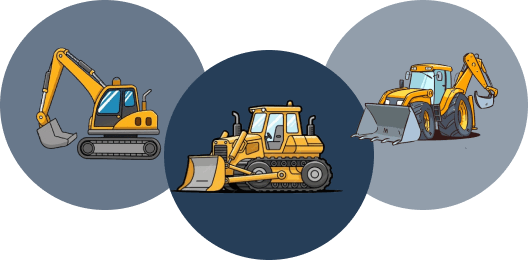
Yes, rock can make excavation significantly more expensive than soil. The increase comes mainly from slower excavation, specialized equipment, difficult material handling, and—in some cases—blasting or rock-breaking methods. The actual cost depends on the type and hardness of the rock, excavation method, site access, project volume, and disposal requirements.
Why Does Rock Make Excavation More Expensive?
Rock excavation costs more because contractors cannot remove hard material as quickly as ordinary soil. A standard excavator may handle soil efficiently, while rock can require a ripper, hydraulic breaker, drilling equipment, blasting, or other specialized methods.
The main cost drivers are:
- Rock hardness and weathering
- Excavation method
- Equipment requirements
- Production rate
- Labor and operator time
- Site access and confinement
- Rock disposal or processing
- Permits and safety requirements for blasting
In other words, the biggest difference is often how long it takes to break and remove the material, rather than simply the amount of material being excavated.
Not All Rock Costs the Same to Excavate
The term “rock” covers a wide range of materials. Weathered shale may be excavated with conventional equipment or a ripper, while massive granite may require drilling, blasting, or heavy hydraulic breaking.
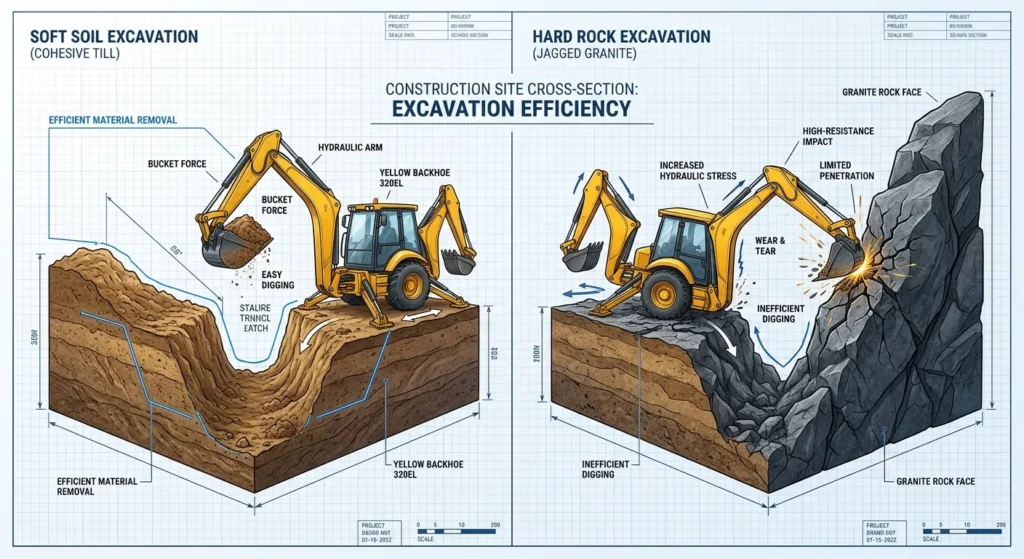
Soil and Soft Material
Ordinary soil generally represents the baseline excavation condition. Excavators can dig, load, and move it relatively quickly.
Loose or easily excavated material typically requires less specialized equipment and produces higher excavation rates.
Weathered or Rippable Rock
Some rock is sufficiently fractured or weathered that heavy equipment can break it using ripping.
A bulldozer equipped with a ripper or a suitable excavator attachment may be able to loosen the material without blasting.
This is generally less complicated than blasting, although production can still be considerably slower than ordinary soil excavation.
Hard Rock
Massive, competent rock is the most challenging category.
Depending on the site and regulations, contractors may need:
- Hydraulic breakers
- Rock drills
- Specialized excavators
- Excavator-mounted hammers
- Chemical splitting
- Hydraulic splitting
- Controlled blasting
The more difficult the material is to break, the more equipment time and labor are required.
Excavation Method Has a Major Effect on Cost
The excavation method is one of the most important variables in the final price.
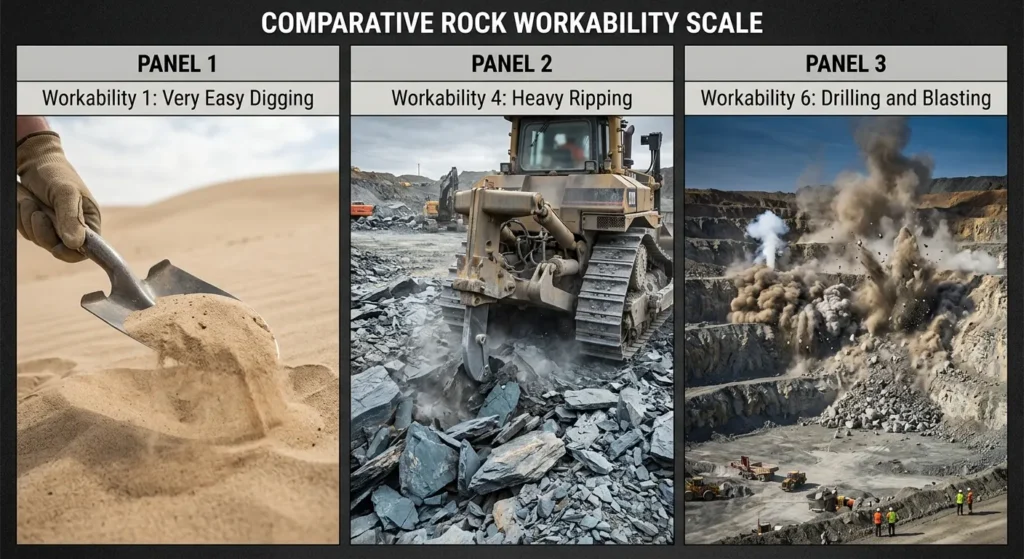
Ripping
Ripping uses a large machine, commonly a bulldozer, to fracture and loosen rock.
It can be practical when the rock is sufficiently weathered, fractured, or weak. Ripping avoids many of the regulatory and safety requirements associated with explosives.
However, production depends heavily on rock strength, jointing, depth, and machine power.
Hydraulic Breaking
A hydraulic breaker attached to an excavator can fracture rock into removable pieces.
This method is useful where blasting is impractical, including some residential or urban projects. Its disadvantage is that breaking hard rock can be slow, increasing both equipment and operator costs.
Drilling and Blasting
For very hard rock, drilling and controlled blasting may be the most practical excavation method.
Blasting can efficiently fragment large quantities of rock, but it can also introduce additional costs for:
- Engineering and blast design
- Permits
- Licensed blasting personnel
- Monitoring
- Safety measures
- Vibration and air-blast control
- Insurance and site protection
Blasting is also subject to local regulations and may be restricted near buildings, utilities, roads, and other sensitive structures.
Rock Excavation Takes Longer
Production rate is a major reason rock excavation becomes expensive.
An excavator may remove ordinary soil rapidly, whereas hard rock may need to be fractured before it can be loaded.
That creates multiple operations:
Drill or break → fragment → excavate → load → haul → dispose or process
For soil, the process may be closer to:
Excavate → load → haul → dispose
The additional breaking operation can significantly increase equipment hours and labor.
Rock Can Increase Hauling and Disposal Costs
Breaking rock changes its physical condition.
When material is excavated and fragmented, it can occupy more volume than it did in its compacted in-place condition. This is commonly referred to as swell or bulkage.
For example, a contractor estimating disposal based only on the in-place volume can underestimate the amount of material that must eventually be transported.
Rock disposal may also cost more when:
- Disposal facilities charge higher rates for rock
- Large rocks require processing
- Haul distances are long
- Trucks have weight restrictions
- The material needs crushing before reuse or disposal
Therefore, the excavation price should not be considered separately from loading, hauling, processing, and disposal costs.
Why Geological Investigation Matters?
One of the biggest risks is discovering unexpected rock after excavation has already started.
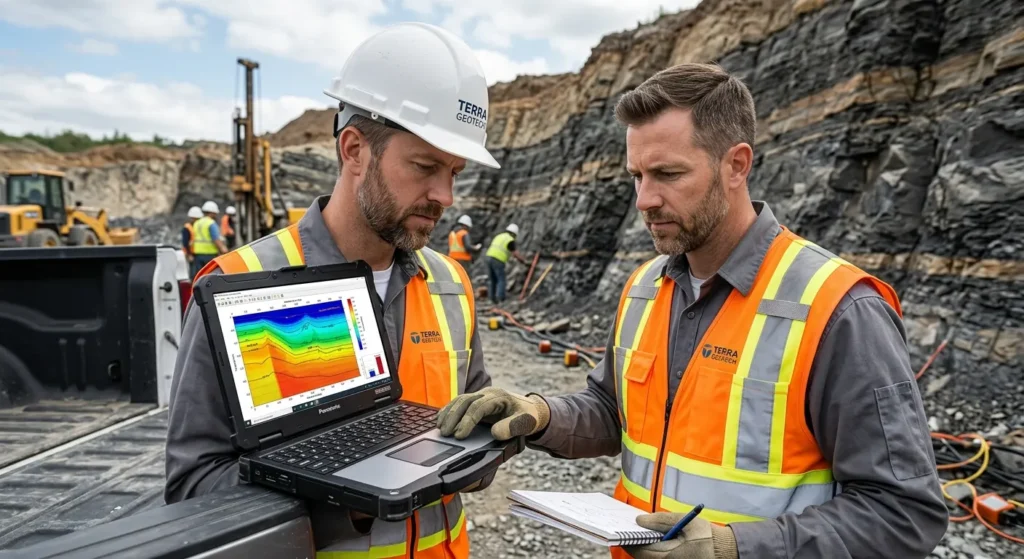
A preliminary site investigation can help identify subsurface conditions before contractors submit a final excavation price.
Depending on the project, investigation may include:
- Geotechnical borings
- Standard Penetration Tests (SPT)
- Test pits
- Seismic refraction
- Electrical resistivity surveys
- Rock core sampling
These investigations help determine the depth and characteristics of the rock layer.
Without adequate subsurface information, a project estimated as ordinary soil excavation may encounter rock that requires significantly different equipment and methods.
Confined Excavation Can Make Rock More Difficult
The same rock can have different excavation costs depending on where it is located.
For example, removing rock from a large open site gives contractors more room to position equipment. Excavating rock inside a narrow utility trench is more restrictive.
Confined areas can limit:
- Equipment size
- Truck access
- Drilling locations
- Material handling
- Blasting options
- Worker access
A method that works efficiently on an open site may not be practical in a narrow trench or close to an existing structure.
Can Rock Excavation Costs Be Reduced?
Yes. Planning can reduce some of the additional costs associated with rock excavation.
Investigate the Site Before Excavation
A geotechnical investigation can provide better information about the depth, thickness, and characteristics of rock.
This allows contractors to develop more realistic excavation quantities and equipment requirements.
Compare Excavation Methods
For rippable rock, compare ripping against hydraulic breaking or other suitable methods.
For hard rock, evaluate whether drilling and blasting, mechanical breaking, or another technique is appropriate for the site’s location and restrictions.
The cheapest method is not necessarily the one with the lowest hourly equipment rate. Production rate matters just as much.
Reuse Rock on Site
Excavated rock does not always have to become waste.
Depending on its quality and the project’s specifications, processed rock may potentially be used as:
- Aggregate
- Structural fill
- Road base
- Drainage material
- Landscaping stone
A mobile rock crusher can sometimes process suitable material on site, reducing the need to haul it away and purchase replacement aggregate.
However, reuse depends on material quality, project specifications, environmental requirements, and available processing equipment.
How Much More Does Rock Excavation Cost?
There is no universal rock excavation price because costs vary considerably between projects.
A useful estimate must account for:
| Cost Factor | Effect on Excavation |
|---|---|
| Soil | Usually the baseline |
| Weathered rock | May require specialized equipment |
| Rippable rock | Higher equipment time |
| Hard rock | May require breakers, drilling, or blasting |
| Confined excavation | Can reduce production |
| Blasting restrictions | May require alternative methods |
| Long haul distance | Increases transportation costs |
| Rock disposal | Can add substantial project costs |
| Rock reuse | May reduce disposal and material costs |
Published unit rates can provide budgeting benchmarks, but they should not be treated as universal prices. Local labor rates, equipment costs, geology, quantities, access, and disposal fees can change the final excavation price substantially.
How to Estimate Rock Excavation Cost?
A basic estimate can be structured as:
Rock excavation cost = Volume × Production-based excavation rate + breaking/drilling costs + loading + hauling + disposal
For a more detailed estimate, separate the work into:
- Rock volume
- Rock classification
- Excavation method
- Equipment hours
- Labor
- Loading and hauling
- Disposal or processing
- Site-specific permits and safety requirements
This approach is more reliable than applying one flat “rock excavation” price to the entire project.
Final Takeaway
Yes, rock generally makes excavation more expensive than ordinary soil, but the increase is not a fixed multiplier.
The biggest cost drivers are rock hardness, excavation method, production rate, equipment requirements, site access, and disposal. Weathered or fractured rock may be removable with ripping or conventional heavy equipment, while hard rock can require hydraulic breaking, drilling, or controlled blasting.
For accurate budgeting, the most important step is to identify the subsurface conditions before excavation begins. Knowing where the rock is, how hard it is, and how it can be excavated allows contractors to estimate equipment time, labor, hauling, and disposal much more accurately.

Ahmed Ijaz runs this construction rental directory with over 5 years of experience in SEO, content, and web optimization. Every page is built using real research, hands-on expertise, and carefully reviewed information to meet strong EEAT standards.