
If you’re wondering “Do you need post caps for fences?”, the answer is yes for most wood fences. Fence post caps protect the exposed end grain from rain and moisture, helping reduce rot, cracking, and weather damage.
Post caps also give a fence a finished appearance and can help protect hollow metal or vinyl posts from water and debris. They are inexpensive and easy to install, making them a practical addition to many fence types.
Why the Top of a Fence Post Needs Protection?
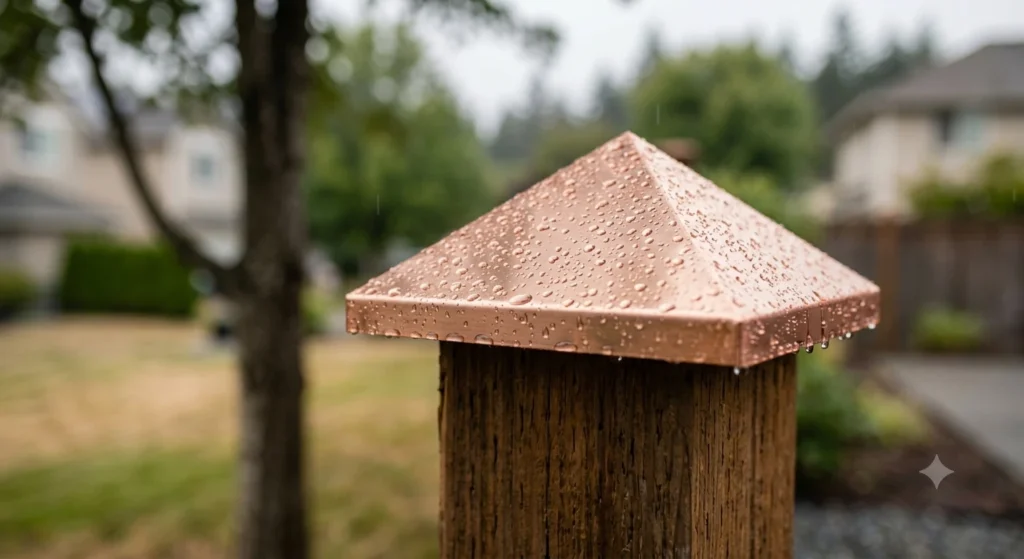
The top of a wooden fence post is particularly vulnerable because the exposed end grain can absorb water. Rain, snow, and humidity can enter the wood, increasing the risk of swelling, cracking, and decay.
Pressure-treated wood is more resistant to rot than untreated lumber, but it is not completely waterproof. Cut or exposed ends can still absorb moisture, which is why protecting the top of the post can help extend its service life.
Benefits of Installing Fence Post Caps
Protect Against Moisture
The primary purpose of a fence post cap is preventing water from entering exposed end grain.
Benefits include:
- Stops rain and snow penetration
- Reduces moisture absorption
- Prevents wood splitting
- Minimizes freeze-thaw damage
- Reduces UV weathering
Extend Fence Lifespan
Extend Fence Post Life
By limiting direct exposure to rain and moisture, post caps can help reduce deterioration at the top of wooden fence posts. This can lower the risk of premature damage and reduce the need for repairs.
Improve Appearance
Fence post caps provide a finished, high-end look that enhances:
- Curb appeal
- Property value
- Fence symmetry
- Overall landscaping aesthetics
Decorative options are available to complement virtually any fence style.
Improve Safety
Post caps cover rough or sharp post edges.
Solar post caps add nighttime lighting, improving visibility along pathways, driveways, and gardens.
Types of Fence Post Caps
Fence post caps are available in several materials. Choose one based on your fence material, appearance, durability requirements, and budget.
| Type | Best for | Main advantages |
|---|---|---|
| Wood | Wood fences | Traditional appearance; can be painted or stained |
| Metal | Wood and metal fences | Durable, weather resistant, and low maintenance |
| PVC/Vinyl | Vinyl fences | Lightweight, UV resistant, and easy to maintain |
| Plastic/Polypropylene | Budget projects | Affordable, lightweight, and widely available |
| Solar | Decorative fences | Adds integrated lighting while protecting the post |
Metal caps are commonly made from aluminum, stainless steel, galvanized steel, or copper. Copper develops a natural patina over time.
Fence Post Caps by Fence Type
Wood Fence Posts
Wood fence posts commonly use caps sized for nominal 3×3, 4×4, 5×5, or 6×6 posts. Always measure the actual post dimensions before buying a cap.
A cap with a slight overhang helps direct water away from the post.
Chain-Link Fence Posts
Chain-link fences use specialized caps such as dome, loop, acorn, bullet, and barb-wire caps. Some designs also support or connect the top rail.
Ornamental Metal Fence Posts
Ornamental metal fences commonly use decorative ball, dome, flat-top, or spear-style caps. Choose a design that matches the fence and fits the post dimensions.
How to Install Fence Post Caps
Installing fence post caps is usually a simple DIY project.
Step 1: Clean and Dry the Post
Remove dirt, loose wood fibers, old adhesive, and debris. Let the post dry completely before installation.
Step 2: Measure the Post
Measure the actual dimensions of the post rather than relying on the nominal lumber size.
For example, a nominal 4×4 wood post typically measures about 3½ to 3⅝ inches square, depending on the lumber.
Choose a cap that fits securely and provides enough coverage to direct water away from the post.
Step 3: Test Fit the Cap
Place the cap over the post before applying adhesive or fasteners. It should fit securely without excessive force.
Step 4: Secure the Cap
Depending on the design, install the cap using exterior construction adhesive, corrosion-resistant screws or nails, or the manufacturer’s recommended fastening method.
Step 5: Check the Installation
Make sure the cap is level, centered, secure, and free of gaps. If adhesive is used, allow it to cure according to the manufacturer’s instructions.
When Should You Replace Fence Post Caps?
Inspect caps annually, especially after winter.
Replace caps if you notice:
- Cracks
- Warping
- Loose fittings
- Missing caps
- Water trapped beneath the cap
- Soft wood underneath
Replacing all caps at the same time also maintains a consistent appearance.
Common Fence Post Cap Mistakes
Buying the Wrong Size
Measure the actual post dimensions instead of relying only on nominal lumber sizes. A cap that is too loose may not provide adequate protection.
Assuming Pressure-Treated Wood Needs No Protection
Pressure-treated lumber resists decay, but exposed end grain can still absorb moisture. A post cap can provide an additional layer of protection.
Installing the Cap Incorrectly
A loose or poorly secured cap can move or blow off during severe weather. Use the recommended adhesive or corrosion-resistant fasteners.
Covering a Rotted Post
Do not install a new cap over severely damaged wood. Repair or replace the post first.
Allowing Water to Collect
Choose a cap with proper drainage or overhang so water runs away from the post instead of collecting underneath.
Frequently Asked Questions
Do I really need fence post caps, or are they just decorative?
No. While they improve appearance, their primary purpose is protecting the exposed top of fence posts from water, rot, splitting, and insect damage.
Can I add fence post caps to an existing fence?
Yes. As long as the post tops remain solid and free of severe rot, you can retrofit post caps using press-fit, adhesive, or screw-on installation methods.
What size fence post caps should I buy?
Measure the actual dimensions of your posts rather than relying on nominal lumber sizes. Select caps with a slight overhang to improve water runoff.
How do you attach fence post caps?
Depending on the design, fence post caps can be:
- Press-fit
- Glued with exterior construction adhesive
- Screwed or nailed in place
- Installed using recessed fittings
Always follow the manufacturer’s installation recommendations for the most secure fit.
Conclusion
So, do you need post caps for fences? For most wood fences, yes. A properly fitted post cap helps protect the exposed top of the post from moisture and weather damage while giving the fence a finished appearance.
Measure your posts carefully, choose a cap that fits properly, and install it according to the manufacturer’s recommendations. Inspect the caps periodically and replace damaged ones to keep your fence protected.

Ahmed Ijaz runs this construction rental directory with over 5 years of experience in SEO, content, and web optimization. Every page is built using real research, hands-on expertise, and carefully reviewed information to meet strong EEAT standards.