
Some dogs can jump a 5- or even 6-foot fence, but most cannot. A dog’s ability to clear a fence depends on its size, athleticism, age, physical condition, training, and motivation.
A 6-foot fence is usually enough to contain most household dogs, but highly athletic or determined dogs may still escape. This guide explains how high dogs can jump, which dogs are more likely to clear 5- or 6-foot fences, and how to choose a fence that keeps your dog safely contained.
How High Can Dogs Really Jump?
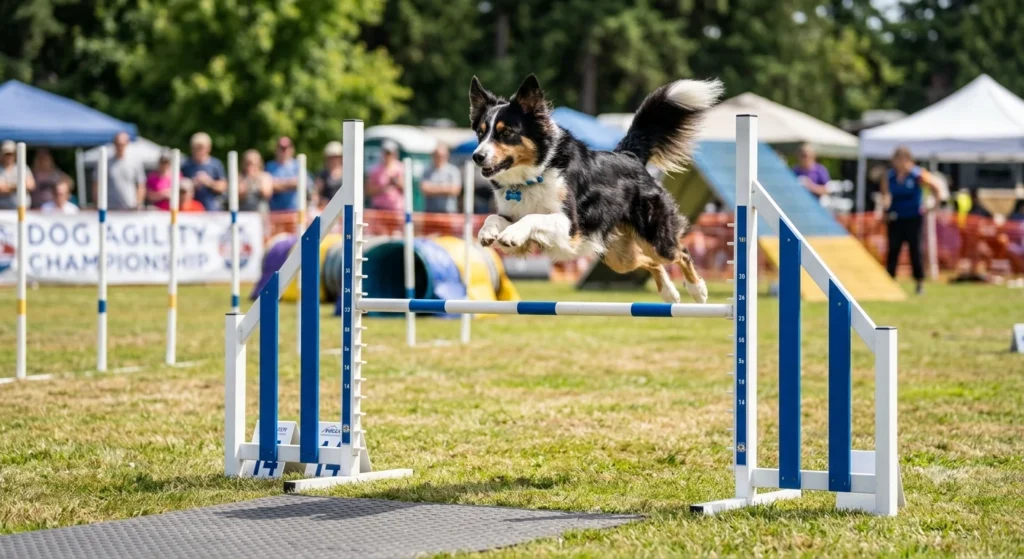
Dogs aren’t all built the same. Some companion breeds struggle to jump onto furniture, while athletic working dogs can clear impressive heights.
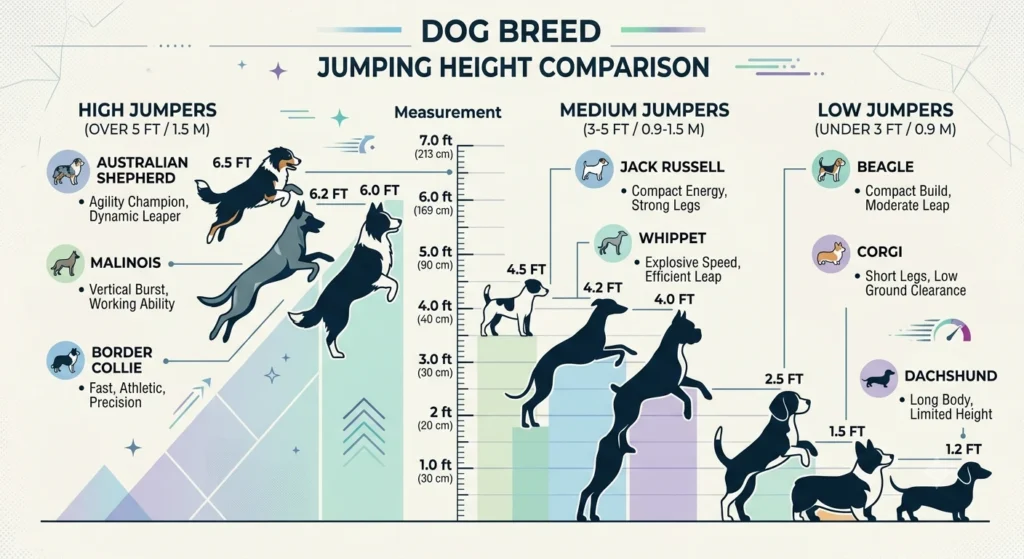
Dogs have very different jumping abilities. Small companion breeds may struggle to clear even a short fence, while athletic working and sporting breeds can jump several feet when motivated.
There is no single maximum jumping height that applies to all dogs. Size, leg length, muscle strength, body structure, age, fitness, training, and motivation all affect how high a dog can jump.
| Factor | How It Affects Jumping |
|---|---|
| Body structure | Leg length, muscle strength, and body proportions affect jumping |
| Breed traits | Athletic and working breeds may have greater jumping ability |
| Age & fitness | Young, healthy, fit dogs generally have greater physical ability |
| Training | Agility and conditioning can improve jumping skills |
| Motivation | Fear, prey drive, excitement, or anxiety can encourage escape attempts |
Highest Dog Jump on Record
The highest recorded dog jump is 75.5 inches (about 6 feet 3.5 inches), achieved by Feather, a Greyhound. This is an exceptional athletic achievement and should not be used as a typical measurement for household dogs.
“If a dog can jump 6’3″, I need an 8-foot fence.”
Can a Dog Jump a 6-Foot Fence?
A 6-foot fence is usually sufficient for many household dogs, but it is not escape-proof.
Highly athletic or determined dogs may be able to clear a 6-foot fence, particularly if they have a running start, nearby footholds, or a strong reason to escape.
Dogs That Can Jump 6-Foot Fences
| Breed | Typical Maximum Jump |
|---|---|
| Border Collie | Up to 6 ft |
| German Shepherd | Up to 6 ft |
| Australian Kelpie | Up to 6 ft |
| Greyhound | 5–6 ft |
| Doberman Pinscher | Up to 6 ft |
| Golden Retriever | Up to 6 ft |
| German Shorthaired Pointer | Over 6 ft |
| Pit Bull | Up to 6 ft |
| American Staffordshire Terrier | Around 6 ft |
Athletic breeds such as Border Collies, Australian Kelpies, Greyhounds, German Shepherds, and German Shorthaired Pointers may present a higher escape risk, but individual dogs vary significantly.
Fence Type Matters
A fence’s height alone doesn’t determine how secure it is. A dog may climb chain-link fencing, use objects near the fence as launch points, or exploit gaps underneath.
Can a Dog Jump a 5-Foot Fence?
A 5-foot fence is considerably easier to jump than a 6-foot fence.
Some medium and large dogs can clear a 5-foot fence, particularly athletic dogs or dogs that are highly motivated to escape.
Dogs Likely to Jump a 5-Foot Fence
| Breed | Ability |
|---|---|
| Boxer | Easily clears 5 ft |
| Labrador Retriever | 4–5 ft |
| Pit Bull | 4–5 ft |
| Most medium-large breeds | Can clear if motivated |
5 Ft vs 6 Ft Fence
| 5-Foot Fence | 6-Foot Fence |
|---|---|
| Moderate barrier | Strong barrier |
| More dogs can jump it | Only athletic breeds usually can |
| More escape attempts | Much fewer escape attempts |
| Suitable for smaller breeds | Recommended for most dogs |
Why Do Dogs Jump Fences?
Dogs rarely escape simply because they enjoy jumping fences.
Instead, they’re responding to something more important.
1. Boredom
Dogs without enough exercise often look for excitement elsewhere.
2. Prey Drive
This is the most common reason.
Squirrels, rabbits, birds, cats, or other animals instantly trigger chasing behavior.
A dog doesn’t think:
“I’ll jump this fence.”
Instead, it thinks:
“I need to catch that squirrel.”
A squirrel, rabbit, cat, or another animal can trigger a strong chase response, making a fence appear less intimidating to a motivated dog.
3. Separation Anxiety
Some dogs try to follow their owners after they leave.
4. Fear
Fireworks, thunderstorms, construction noise, and loud sounds may cause panic escapes.
5. Mating Instinct
Dogs that haven’t been spayed or neutered may roam in search of mates.
6. Territorial Behavior
Some dogs respond aggressively toward unfamiliar animals or people passing the yard.
Ask Yourself
- Does my dog get enough exercise?
- Is my dog mentally stimulated?
- Does my dog spend too much time alone?
- Does my dog enjoy being in the yard?
- Has my dog been spayed or neutered?
Dog Jumping Ability by Size and Athleticism
| Dog Type | Typical Escape Risk | Suggested Fence |
|---|---|---|
| Toy/small dogs | Low | 4–5 ft |
| Short-legged dogs | Low to moderate | 4–5 ft |
| Medium dogs | Moderate | 5–6 ft |
| Large dogs | Moderate to high | 6 ft |
| Athletic large dogs | High | 6–7 ft or additional deterrents |
| Exceptional jumpers | Very high | Consider professional containment solutions |
Best Fence Heights for Dogs
Choosing the right fence depends on your dog’s size and athletic ability.
| Dog Type | Starting Fence Height | Recommended Height |
|---|---|---|
| Small dogs | 4 ft | 4–5 ft |
| Medium dogs | 5 ft | 6 ft |
| Large athletic dogs | 6 ft | 6–7 ft |
| Elite jumpers | 6+ ft | 7 ft or higher |
These are general recommendations, not universal requirements. Your dog’s individual behavior matters more than breed alone.
Best Fence Materials
Recommended
- Solid wood privacy fences
- Vinyl privacy fences
- Composite fencing
Less Effective
- Chain-link fencing
- Split rail fencing
- Decorative aluminum fencing
Fence Modifications That Prevent Escapes
If replacing your fence isn’t practical, several modifications can improve security.
Raise the Fence
Install:
- Wooden lattice
- Bamboo screening
- Fence extension kits
These additions often increase height by 1–2 feet.
Install Coyote Rollers
Coyote rollers are rotating PVC tubes mounted along the fence top.
When a dog tries to grab the top, the roller spins, preventing it from gaining leverage.
Add an Interior Fence
A secondary fence placed a few feet inside the main fence prevents dogs from getting enough running distance for a powerful jump.
Use Angled Extensions
Extensions that lean inward make it difficult for dogs to climb over.
Prevent Digging
Bury chicken wire or hardware cloth along the fence base to stop digging escapes.
Don’t Put Objects Near the Fence
Keep Launch Points Away From the Fence
Dogs can use objects near a fence to gain extra height.
Keep these away from the fence:
- Tables
- Chairs
- Dog houses
- Wood piles
- Large rocks
- Garden equipment
- Trash bins
- Planters
Fence Maintenance Checklist
Inspect your fence regularly.
- Repair holes immediately
- Close gaps beneath the fence
- Remove loose boards
- Keep picnic tables away from fences
- Move wood piles and rocks
- Trim nearby trees that help dogs climb
Even the best fence won’t work if it has weak points.
Behavioral Training to Prevent Fence Jumping
A secure fence works best when combined with proper training.
Daily Exercise
Tired dogs are far less likely to escape.
Provide:
- Daily walks
- Fetch sessions
- Running
- Hiking
- Interactive games
Mental Enrichment
Keep dogs busy with:
- Puzzle feeders
- Snuffle mats
- Hidden treats
- Chew toys
- Rotating toys
Obedience Training
Teach reliable commands including:
- Come
- Stay
- Leave it
Always reward calm behavior with positive reinforcement.
Redirect Fence Running
If your dog charges the fence whenever someone passes, interrupt the behavior and redirect attention toward a toy or training exercise.
Avoid Shock-Based Systems
Consider positive-reinforcement training rather than relying on punishment-based methods. If your dog repeatedly escapes because of anxiety or fear, consult a qualified veterinarian or behavior professional.
Helpful Technology
A GPS tracker can alert you if your dog leaves a designated area, while a pet camera can help identify whether your dog is jumping, climbing, digging, or exploiting a gap.
How to Choose the Right Fence Height for Your Dog?
Animal behavior experts generally agree on several key points.
- Identify why your dog wants to escape.
- Meet physical and mental exercise needs.
- Build a fence appropriate for your dog’s breed.
- Address anxiety with veterinary guidance if necessary.
- Use positive reinforcement instead of punishment.
For most households:
- 5-foot fences work well for many small dogs.
- 6-foot fences are recommended for most medium and large breeds.
- 7-foot fences may be necessary for exceptional jumpers.
Frequently Asked Questions
Can a small dog jump a 6-foot fence?
Most small dogs cannot clear a 6-foot fence, but unusual athletic ability, climbing behavior, or nearby objects can create escape opportunities.
What’s the highest a dog has ever jumped?
The official world record is 75.5 inches (6 feet 3.5 inches) by Feather the Greyhound.
Will my dog jump a fence if it can?
Not necessarily. Most dogs only attempt difficult jumps when motivated by prey, fear, anxiety, or other strong triggers.
Is a 5-foot fence enough for a Labrador?
A 6-foot fence is generally a safer choice for a Labrador because some individuals can clear or climb shorter fences.
Can a Pit Bull jump a 6-foot fence?
Some athletic Pit Bulls can clear a 6-foot fence, particularly when motivated. Individual ability varies significantly.
What fence type is best for preventing jumping?
A solid wood or vinyl privacy fence is generally the best option because it limits visibility and cannot be climbed as easily as chain-link fencing.
Conclusion
Most dogs cannot clear a 6-foot fence, but athletic or highly motivated dogs may be able to jump, climb, or otherwise escape. A dog’s individual size, athletic ability, behavior, and motivation are more important than breed alone when choosing a fence.
For many dogs, a 6-foot solid privacy fence provides a good balance of security and practicality. Dogs with a history of escaping may need additional protection, such as inward-angled extensions, coyote rollers, or a second interior barrier.
The best approach is to combine an appropriately sized fence with regular exercise, mental stimulation, training, and routine fence maintenance. A secure yard should prevent both jumping and other escape methods, including climbing and digging.

Ahmed Ijaz runs this construction rental directory with over 5 years of experience in SEO, content, and web optimization. Every page is built using real research, hands-on expertise, and carefully reviewed information to meet strong EEAT standards.