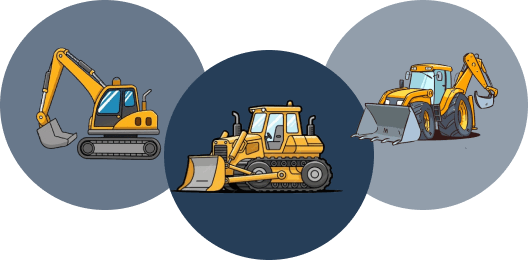
Yes. Soil type is a major factor in excavation cost because it affects excavation speed, equipment requirements, labor, safety measures, and disposal. Loose soil can usually be excavated with standard equipment, while dense clay, compacted gravel, hardpan, and rock may require more powerful machinery or specialized attachments.
Two excavations with the same dimensions can therefore have very different prices because of the material being removed.
How Soil Type Affects Excavation Cost?
A basic excavation estimate can be expressed as:
Total excavation cost = excavation volume × unit rate + hauling + disposal + shoring/dewatering
Volume is commonly calculated as:
Cubic yards = (Length × Width × Depth) ÷ 27
However, volume alone does not determine the price. Soil difficulty changes the unit excavation rate.
Common Soil Types
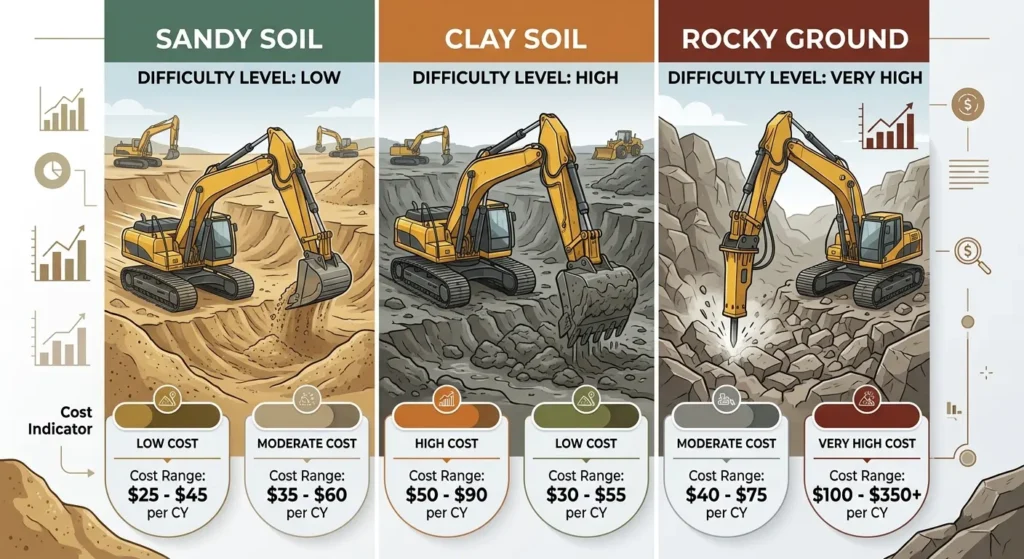
- Sand: Easy to dig but can be unstable, increasing shoring requirements.
- Clay: Dense and difficult when dry; sticky and slower to handle when wet.
- Silt: Can become unstable when saturated.
- Loam/topsoil: Generally easy to excavate but may need separate handling.
- Gravel: Usually manageable, but compacted gravel or large cobbles reduce productivity.
- Hardpan/rock: May require rippers, hydraulic breakers, rock saws, or drilling.
Soil Workability Matters
Soil name alone does not fully describe excavation difficulty. Density, moisture, cementation, weathering, and rock strength also affect how easily material can be removed.
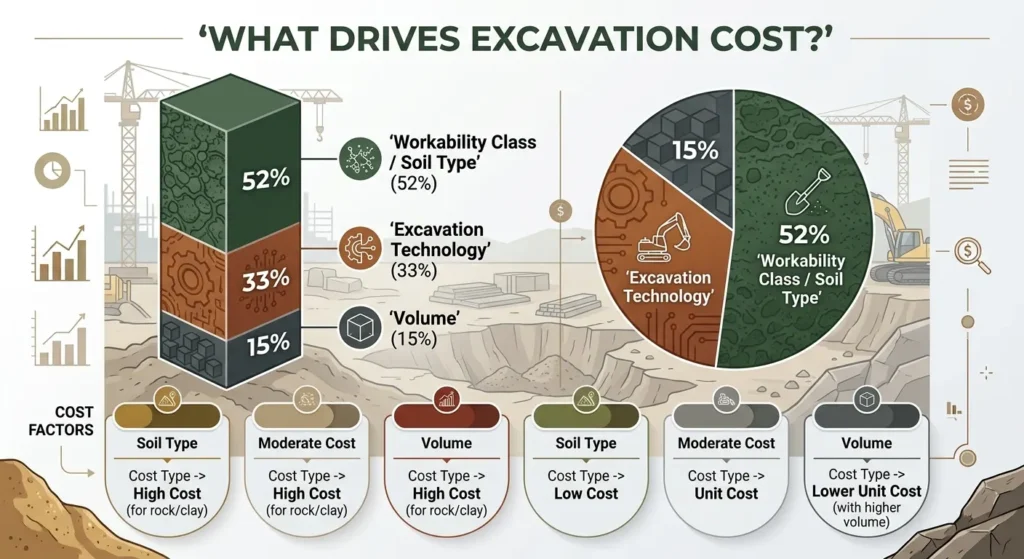
The Czech ČSN 73 3050 standard, for example, uses seven workability classes, ranging from easier materials to very difficult excavation. Workability classification can help contractors select equipment and estimate earthwork costs.
Why Difficult Soil Costs More?
Equipment
Soft soil may require only a conventional excavator bucket. Hard ground can require larger machines, heavy-duty buckets, rippers, hydraulic breakers, or rock excavation equipment.
Excavation Speed
Harder materials generally take longer to excavate. One published dataset reported excavation times of about 0.046 hours/m³ for scattered soil versus 0.366 hours/m³ for rock, showing how dramatically productivity can change with ground conditions.
Safety
Loose or saturated soil may require sloping, benching, shoring, or trench boxes. Groundwater can also require pumping or other dewatering measures.
Hauling and Disposal
Excavated soil expands after removal, so the loose volume can be greater than the volume measured in the ground. Disposal costs also vary depending on whether the material can be reused, stockpiled, recycled, or must be hauled away.
How Much Can Soil Change the Price?
There is no universal percentage increase for each soil type because excavation rates vary by location, equipment, depth, access, and disposal requirements.
As a general estimating framework:
| Ground condition | Relative difficulty |
|---|---|
| Loose soil | Low |
| Dense clay | Moderate |
| Compacted gravel/hardpan | High |
| Solid rock | Very high |
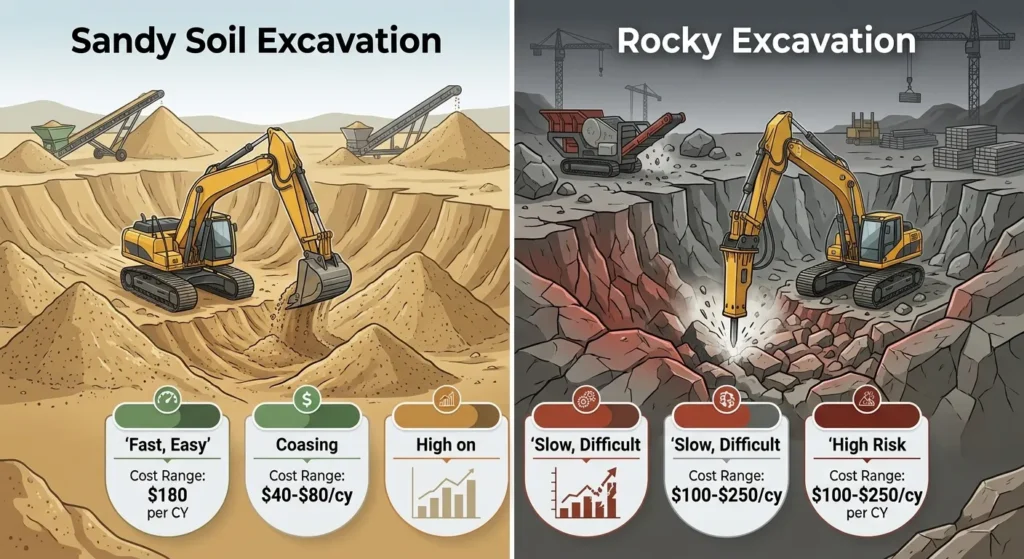
A published construction-cost dataset illustrates the potential difference: scattered soil was priced at €2.52/m³, while rock was €23.63/m³. These are study-specific figures, not universal contractor rates, but they demonstrate the cost effect of excavation difficulty.
Other Factors That Affect Soil-Related Costs
Soil type should always be considered alongside:
- Site access: Tight or restricted sites reduce equipment productivity.
- Depth: Deeper excavations can require more support and increase groundwater risk.
- Groundwater: Pumping and water-control systems can add substantial costs.
- Weather: Wet clay becomes harder to excavate and handle; frozen ground can also increase difficulty.
- Disposal distance: Longer hauling distances increase trucking costs.
How to Estimate Excavation Cost More Accurately?
Before requesting or preparing a quote:
- Calculate the excavation volume.
- Identify the expected soil and rock layers.
- Determine the material’s workability or excavatability.
- Select equipment based on the ground conditions.
- Account for shoring, sloping, or trench protection.
- Check for groundwater and dewatering requirements.
- Include loose-volume changes, hauling, and disposal.
For larger or deeper projects, a geotechnical investigation can identify soil layers, groundwater, rock, and other subsurface conditions before excavation begins.
Frequently Asked Questions
Does soil type affect excavation cost?
Yes. It affects equipment, productivity, labor, safety requirements, and disposal, making it one of the key variables in excavation pricing.
Is rock more expensive to excavate than soil?
Generally, yes. Rock may require breaking, ripping, drilling, or other specialized methods, which significantly reduces excavation productivity.
Is clay expensive to excavate?
Dense or dry clay can cost more than easily excavated soil because it takes longer to remove. Wet clay can create additional handling and stability problems.
Can soil conditions change an excavation quote?
Yes. Unexpected rock, groundwater, dense soil, or unstable material can require additional equipment, labor, excavation time, or safety measures.
Conclusion
Soil type directly affects excavation cost through equipment requirements, excavation speed, safety, and material handling. Loose soil is generally easier to excavate, while dense clay, compacted ground, hardpan, and rock can substantially increase the work required.
For accurate pricing, contractors should evaluate soil workability, depth, groundwater, site access, excavation method, hauling, and disposal—not just excavation volume. Identifying ground conditions before work begins can reduce unexpected costs and make excavation estimates more reliable.

Ahmed Ijaz runs this construction rental directory with over 5 years of experience in SEO, content, and web optimization. Every page is built using real research, hands-on expertise, and carefully reviewed information to meet strong EEAT standards.