Driveway excavation is one of the most important steps in building or replacing a driveway. Before asphalt, concrete, or gravel is installed, the existing soil may need to be removed, the ground leveled, and the subgrade prepared for a stable driveway base.
So, how much does driveway excavation cost? Most residential projects cost about $1,081 to $6,708, with many standard driveway excavation jobs falling between $2,020 and $3,972. Small, straightforward projects can cost around $438, while difficult sites may exceed $9,900.
The final price depends on driveway size, excavation depth, soil conditions, accessibility, equipment, grading, hauling, and whether you are preparing a new driveway or replacing an existing one.
How Much Does Driveway Excavation Cost?
The cost of driveway excavation typically ranges from $1 to $5 per square foot for excavation alone. When excavation is combined with driveway installation, the total can increase to $3 to $12 per square foot.
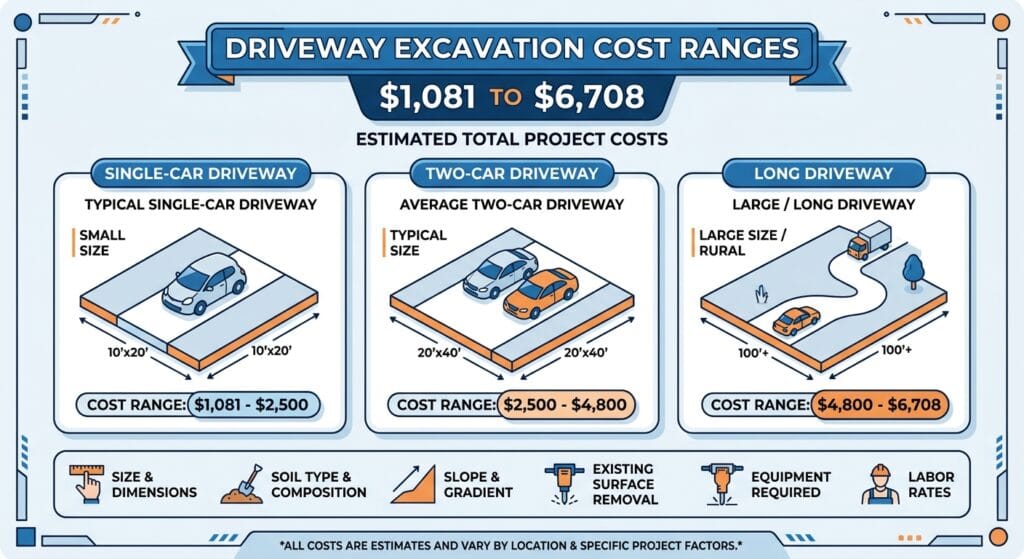
Driveway replacement generally costs more because the contractor must remove the existing surface before excavating and preparing the subgrade.
| Project | Typical Cost |
|---|---|
| Basic driveway excavation | $1–$5 per sq. ft. |
| Complete excavation work | $3.94–$7.68 per sq. ft. |
| Excavation + new driveway installation | $3–$12 per sq. ft. |
| Driveway replacement | $4–$15 per sq. ft. |
| Excavated material hauling | $8–$25 per cubic yard |
| Excavation by volume | $50–$200 per cubic yard |
For example, excavating a 500-square-foot driveway at $1 to $5 per square foot could cost approximately $500 to $2,500, before additional grading, disposal, permits, or driveway materials.
Driveway Excavation Cost by Size
The larger the driveway, the more soil must be removed and the more time and equipment the project requires.
| Driveway Size | Typical Excavation Cost |
|---|---|
| 150–250 sq. ft. | $360–$850 |
| 400–600 sq. ft. | $1,200–$2,800 |
| 800+ sq. ft. | $3,000–$5,500+ |
These are general ranges. Difficult soil, limited equipment access, deep excavation, and long haul distances can push the price higher.
What Affects Driveway Excavation Cost?
Several factors determine the final excavation price. The most important are the size and depth of the excavation, soil conditions, site accessibility, and how much material must be removed.
1. Driveway Size and Excavation Depth
A larger driveway requires more excavation, grading, equipment time, and material disposal. Excavation depth also matters because removing an additional few inches across hundreds of square feet can significantly increase the amount of soil being moved.
Contractors may calculate the excavation based on:
Excavation volume = Length × Width × Excavation depth
Working room and the required driveway base can increase the actual excavation area.
2. Soil Conditions
Soil is another major cost factor.
Loose, relatively clean soil is generally easier to excavate than compacted clay, rocky ground, or soil containing large roots and buried debris.
Typical conditions include:
- Sandy or loose soil: Usually easier to excavate
- Clay soil: Can slow excavation and may require drainage improvements
- Rocky soil: Requires additional labor and potentially specialized equipment
- Rock ledge: Can substantially increase excavation time and equipment costs
Difficult soil conditions can add roughly $200 to $1,200 or more to a project.
3. Site Accessibility
Equipment needs room to reach the driveway. An open property may allow a skid steer, backhoe, or excavator to work efficiently.
Narrow entrances, fences, landscaping, buildings, and steep slopes can restrict equipment access. Contractors may need smaller machinery or additional labor, increasing the total cost.
A compact skid steer or backhoe with an operator may cost around $100 per hour, while larger excavators can cost approximately 50% more per hour but may complete larger jobs faster.
Combined labor and equipment rates commonly fall around $120 to $150 per hour, depending on the machine, location, and contractor.
4. Grading and Site Preparation
Excavation creates the rough shape of the driveway, but additional grading may be needed to establish the correct slope and drainage.
Professional grading can add approximately $400 to $6,500, depending on the size and complexity of the property.
Proper grading helps direct water away from the driveway and reduces the risk of standing water, erosion, and premature surface damage.
5. Dirt Removal and Hauling
Excavating a driveway produces a significant amount of soil. If the material cannot remain elsewhere on the property, it must be loaded, transported, and disposed of.
Dirt hauling typically costs around $8 to $25 per cubic yard. The distance to the disposal site is an important factor.
Moving soil only a short distance on the property is generally less expensive than loading it onto dump trucks and transporting it several miles.
6. Existing Asphalt or Concrete
Replacing an old driveway requires demolition before excavation.
Asphalt removal can cost approximately $1 to $7 per square foot, while complete demolition, hauling, excavation, and installation can reach $4 to $15 per square foot.
An average asphalt driveway removal may cost around $2,300, although driveway size, thickness, access, and disposal requirements can change the price considerably.
7. Trees, Roots, and Vegetation
If the driveway is being built on undeveloped ground, clearing may be necessary before excavation.
Removing trees, shrubs, roots, and other vegetation can add approximately $1,400 to $5,800 depending on the amount of clearing required.
Large tree roots can also complicate excavation and may require additional removal or grading.
8. Weather and Ground Conditions
Frozen soil, heavy rain, and saturated ground can slow excavation. Winter excavation may require specialized attachments or additional equipment time.
Contractors may also delay excavation when wet conditions could damage the site or make it difficult to achieve a stable subgrade.
9. Permits and Engineering
Some driveway projects require permits, particularly when construction affects a public road, drainage, curb, sidewalk, or right-of-way.
Permit costs commonly range from $100 to $300, although local requirements vary.
Projects involving complicated drainage or other structural considerations may also require engineered plans.
Driveway Excavation Cost by Project Type
The excavation process changes depending on whether you are installing a new driveway, replacing an existing one, or widening the current driveway.
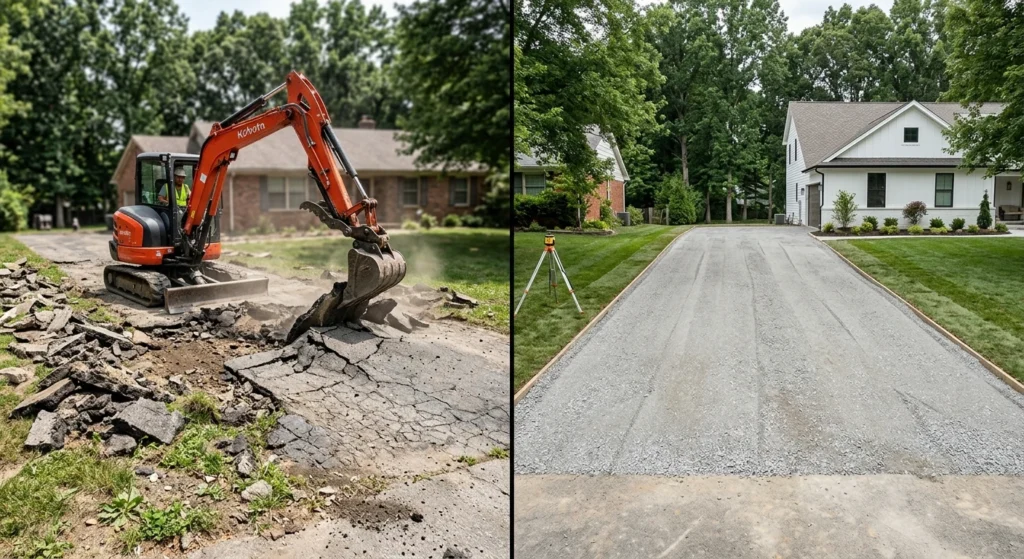
New Driveway Excavation
New driveway excavation can cost approximately $5 to $15 per square foot when clearing, excavation, rough grading, and base preparation are included.
A typical residential project may fall within $1,500 to $5,000, although extensive clearing or difficult terrain can increase the cost.
The process generally includes:
- Marking the driveway layout
- Clearing vegetation and debris
- Excavating the existing soil
- Establishing the required slope
- Correcting weak areas in the subgrade
- Grading the surface
- Preparing the driveway base
The final surface—such as asphalt, concrete, or gravel—is usually priced separately unless included in a complete driveway installation quote.
Driveway Replacement Excavation
Driveway replacement involves more work than excavating an undeveloped site because the existing driveway must first be demolished and removed.
Complete replacement, including tear-out, excavation, and a new surface, can cost around $4 to $15 per square foot.
Asphalt removal alone may cost approximately $1 to $7 per square foot.
For a small driveway, renting equipment for DIY demolition may cost around $200 to $500, but disposal, safety requirements, and additional excavation still need to be considered.
Driveway Widening
Widening an existing driveway can cost approximately $3,000 to $8,000.
The project may require excavation of the additional area, removal of vegetation or soil, grading, drainage adjustments, and preparation of a new base.
The final price depends heavily on how much additional driveway area is being added and whether the existing driveway must be modified to connect with the new section.
Driveway Tear-Out and Disposal
Removing an old driveway requires demolition, loading, transportation, and disposal.
Professional demolition and hauling can cost approximately $3 to $7 per square foot, depending on the driveway material and site conditions.
A basic debris disposal allowance may be around $175 to $199, but larger projects can cost substantially more.
Additional Driveway Excavation Costs
Excavation is only one part of preparing a driveway site. Your contractor may include several additional charges in the estimate.
Equipment and Labor
Equipment and operator costs may range from $100 to $250 per hour, depending on the machine and project.
Typical equipment includes:
- Mini excavators
- Skid steers
- Backhoes
- Full-size excavators
- Compact loaders
- Dump trucks
A basic equipment allowance may be around $257 to $385 per job, while supplies can add approximately $81 to $234.
Cleanup and Disposal
After excavation, the contractor may need to load excess soil, remove debris, clean the site, and transport material to a disposal facility.
Dirt removal generally costs $8 to $25 per cubic yard, while demolition debris has separate disposal costs.
General Contractor Overhead
If a general contractor manages the entire driveway project, overhead and supervision can add approximately 13% to 22% to the project cost.
This may cover project coordination, subcontractor management, scheduling, and administration.
How to Get an Accurate Driveway Excavation Estimate?
Online cost ranges are useful for budgeting, but a contractor’s site-specific estimate will be more accurate.
Measure the Driveway
Start by measuring:
- Length
- Width
- Existing surface area
- Proposed excavation depth
Multiply length by width to calculate the approximate square footage.
Check Site Conditions
Before requesting quotes, identify obvious factors that could affect excavation:
- Steep slopes
- Trees and roots
- Rocky soil
- Clay
- Drainage problems
- Existing pavement
- Limited equipment access
- Nearby structures
Call 811 Before Digging
Underground utility lines can create serious safety hazards. Contact 811 or your local utility-locate service before excavation so underground utilities can be identified.
Never assume that a driveway excavation area is free of buried utilities.
Get at Least Three Quotes
Request estimates from at least three qualified contractors. Ask each contractor to provide an itemized quote showing:
- Site clearing
- Excavation
- Equipment
- Labor
- Grading
- Base preparation
- Dirt hauling
- Debris disposal
- Permits
- Additional work
Comparing itemized estimates makes it easier to identify why one contractor’s price is higher or lower than another’s.
How to Reduce Driveway Excavation Costs?
You can often reduce project costs without compromising the quality of site preparation.
Schedule During the Contractor’s Slow Season
Some contractors offer better pricing when demand is lower. Ask whether scheduling during the off-season can reduce labor or equipment costs.
Combine Related Work
If the property also needs grading, drainage work, or clearing, combining services may reduce mobilization and equipment costs.
Keep Usable Soil On-Site
If suitable excavated soil can be reused elsewhere on the property, you may reduce hauling and disposal expenses.
Consider Overlay When Appropriate
If the existing asphalt driveway is structurally sound, an overlay may be less expensive than complete removal and replacement.
An asphalt overlay can cost roughly $3 to $7 per square foot, compared with approximately $8 to $15 per square foot for more extensive removal and replacement work.
However, overlay is not suitable when the existing driveway has serious base or drainage problems.
Choose Equipment Based on the Site
The largest excavator is not always the most economical option. On a tight residential property, compact equipment may reduce site damage and improve access.
What Is Included in Driveway Excavation?
Driveway excavation generally involves removing soil or an existing driveway surface to reach the required subgrade elevation.
Depending on the contractor, excavation may include:
- Site clearing
- Removal of existing pavement
- Soil excavation
- Rough grading
- Subgrade preparation
- Removal of unsuitable soil
- Loading and hauling excavated material
Gravel, asphalt, concrete, or other driveway surface materials are not automatically included. Always check the estimate to determine whether base installation and final paving are part of the quoted price.
FAQ’S
How Long Does Driveway Excavation Take?
A straightforward residential driveway may be excavated in one to two days, while larger or more complicated projects can take several days.
Can You Excavate a Driveway Yourself?
DIY driveway excavation is possible for small, accessible projects when the soil is easy to dig and the homeowner has suitable equipment experience.
Equipment rental is only one part of the expense. You also need to consider transportation, fuel, operator experience, disposal, and potential damage to the property.
What Happens If an Excavator Hits a Utility Line?
Hitting an underground gas, electrical, water, or communications line can cause serious injury, service interruptions, property damage, or other hazards.
Does Driveway Excavation Include Gravel or Base Installation?
Not always.
Excavation prepares the ground, while base preparation involves installing and compacting the appropriate aggregate layer above the subgrade.
Final Thoughts on Driveway Excavation Cost
So, how much does driveway excavation cost? A typical residential excavation project can cost anywhere from about $1,081 to $6,708, with the final price determined by driveway size, excavation depth, soil conditions, equipment access, grading, demolition, and material disposal.
Basic excavation may cost $1 to $5 per square foot, while projects involving driveway replacement and complete preparation can reach $4 to $15 per square foot or more.
The best way to control costs is to get multiple itemized estimates and make sure each quote clearly identifies excavation, grading, base preparation, hauling, disposal, permits, and any additional work.
Proper excavation and site preparation create the stable foundation your new driveway needs for long-term performance.

Ahmed Ijaz runs this construction rental directory with over 5 years of experience in SEO, content, and web optimization. Every page is built using real research, hands-on expertise, and carefully reviewed information to meet strong EEAT standards.