
Yes, coyotes can jump fences. Most coyotes can clear fences around 4 to 6 feet high, while some may overcome taller barriers by combining jumping, climbing, and digging.
A 6-foot fence with anti-climbing features and an underground barrier provides better protection than a standard backyard fence. For properties with frequent coyote activity, fence design is just as important as height.
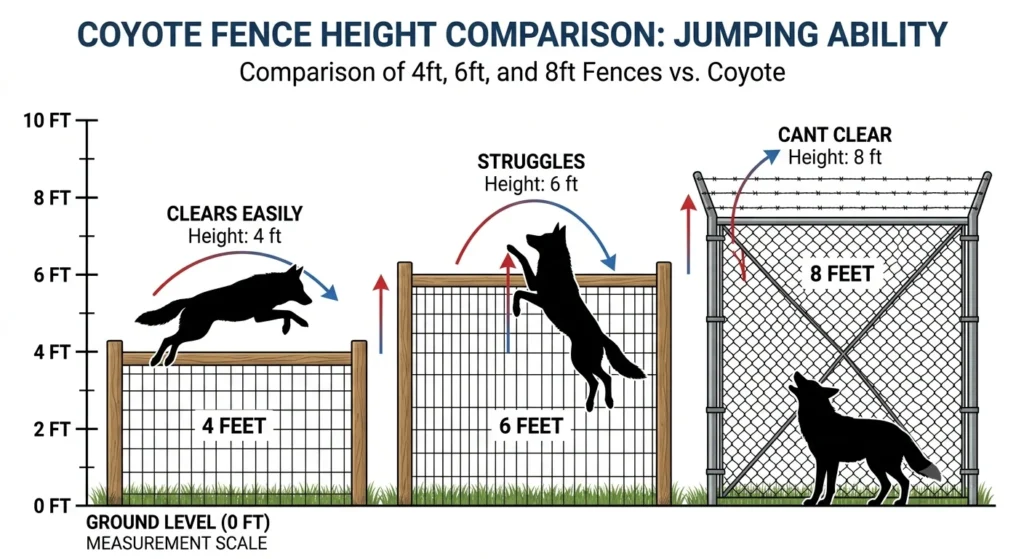
This guide explains how high coyotes can jump, which fences are most effective, and how to prevent coyotes from jumping, climbing, or digging under your fence.
How Coyotes Get Over Fences?
Coyotes are agile, athletic animals that can use several methods to overcome barriers. Depending on the fence, a coyote may:
- Jump over the fence
- Climb fence openings
- Dig underneath the barrier
- Use nearby objects as launching points
Because coyotes can use multiple methods of entry, fence height alone does not always prevent access.se abilities for hunting, escaping predators, and surviving in changing habitats.
How High Can a Coyote Jump?
Most coyotes can jump approximately 4 to 6 feet vertically, although jumping ability varies with the animal’s age, health, motivation, and the fence design.
A standard 4-foot fence is generally not enough to keep coyotes out. Taller fences provide more protection, but coyotes may still climb or dig around poorly designed barriers.
Coyotes may be able to overcome:
- Taller barriers when jumping is combined with climbing or other access pointsdesigned fencing is recommended.
- 4-foot fences relatively easily
- 5- to 6-foot fences depending on the situation
Factors That Affect Coyote Jumping Ability
Several factors influence whether a coyote can clear a fence:
Age and Health
Young, healthy coyotes are usually more agile and physically capable than older or injured animals.
Motivation Level
A coyote may attempt a higher jump when motivated by:
- Food sources
- Small pets
- Livestock
- Territorial behavior
- Mating season activity
Fence Design
The structure of a fence matters as much as its height.
A fence that is easy to grip or climb may be less effective than a smooth, solid barrier.
How Tall Should a Fence Be to Keep Coyotes Out?
A 6-foot fence provides a stronger barrier against coyotes than a standard 4-foot residential fence. In areas with frequent coyote activity, an 8-foot fence with anti-climbing features can provide additional protection.
However, height alone is not enough. A coyote-resistant fence should also address climbing and digging.
Recommended Coyote Fence Features
- Minimal gaps underneath gates and fence sectionsn.
- 6-foot minimum height for basic protection
- 8-foot height for higher-risk situations
- Smooth surfaces that are difficult to climb
- Anti-climbing features such as coyote rollers
- Underground mesh or another digging barrier
Best Fence Designs to Keep Coyotes Out
Solid Privacy Fencing
Solid wood or composite fencing is often more effective because:
- Coyotes cannot easily see attractive targets
- Smooth surfaces reduce climbing ability
- It creates a stronger physical barrier
Chain-Link Fence Considerations
Chain-link fencing can be problematic because coyotes may use the openings to climb.
If using chain-link fencing:
- Choose strong, heavy-gauge material
- Add rollers or angled extensions at the top
- Prevent gaps at the bottom
Buried Fence Barriers
Coyotes are excellent diggers. A fence should extend underground:
- 12 to 18 inches below ground
- With additional wire mesh or concrete reinforcement
This prevents coyotes from digging underneath the fence.
Anti-Coyote Fence Features
Coyote Rollers
Coyote rollers are spinning devices installed along the top of fences.
When a coyote attempts to climb over, the roller spins, preventing the animal from gaining a foothold.
Angled or Curved Fence Tops
Fence extensions that angle outward or curve inward make jumping and climbing much more difficult.
Smooth Fence Surfaces
Materials without footholds reduce climbing opportunities.
Avoid designs with:
- Large openings
- Horizontal rails
- Easily gripped surfaces
Can Coyotes Climb or Dig Under Fences?
Jumping is only one way coyotes overcome fences.
Digging Under Fences
Coyotes can squeeze through surprisingly small openings.
They may exploit:
- Gaps as small as 4 inches
- Loose soil areas
- Damaged fence sections
Solutions include:
- Underground wire mesh
- Concrete footings
- Buried fencing extensions
Climbing and Scaling Fences
Some fences are easier for coyotes to climb than others.
Chain-link fences and wire fencing provide natural grips for paws.
To reduce climbing:
- Use smooth materials
- Install coyote rollers
- Remove nearby objects that provide launching points
Gates and Weak Points
Even a tall fence can fail if gates are poorly maintained.
Common vulnerabilities include:
- Loose gate hinges
- Open spaces underneath gates
- Broken fence sections
- Unsecured latches
Regular inspections help prevent unexpected entry points.
How to Deter Coyotes From Your Yard?
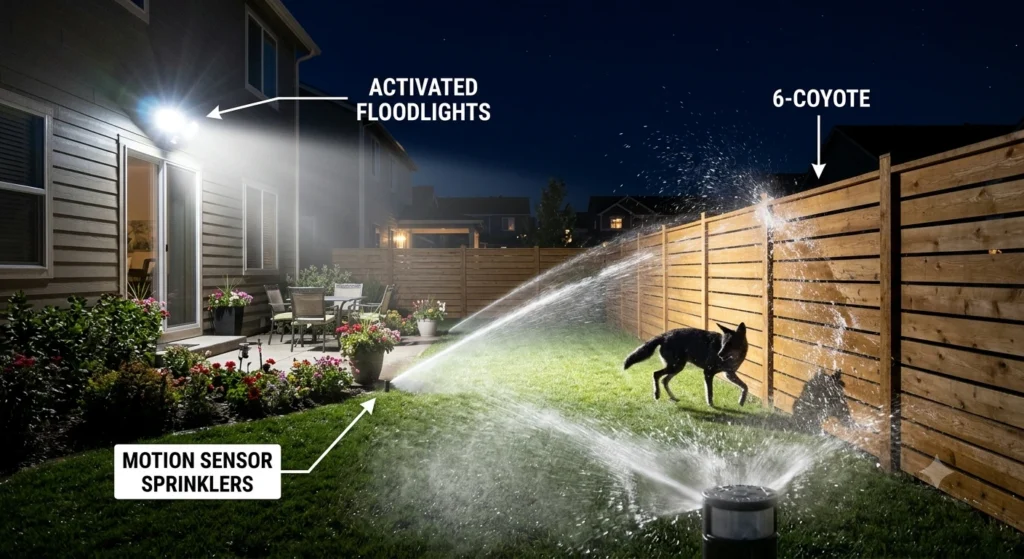
A fence alone may not completely solve a coyote problem. The most effective approach combines multiple prevention methods.
Remove Food Sources
Coyotes are attracted to easy food.
Homeowners should:
- Secure garbage containers
- Remove fallen fruit
- Keep pet food indoors
- Avoid leaving animal food outside overnight
Landscape Management
Reduce hiding areas by:
- Cutting tall grass
- Removing brush piles
- Keeping areas around fences clear
Open spaces make properties less attractive to coyotes.
Motion-Based Deterrents
Useful deterrents include:
- Motion-activated sprinklers
- Bright outdoor lights
- Alarm systems
- Sound devices
These create unexpected disturbances that discourage repeat visits.
Protecting Pets From Coyotes
Pet safety is one of the biggest reasons homeowners look for coyote prevention solutions.
Supervise Outdoor Pets
Never leave small pets unattended in yards, especially:
- Small dogs
- Cats
- Rabbits
- Backyard animals
Know Peak Activity Times
Coyotes are often most active during:
- Dawn
- Dusk
- Nighttime hours
Extra caution is recommended during these periods.
Use Leashes Outdoors
When walking in areas with coyote activity:
- Keep dogs on short leashes
- Avoid allowing pets to chase wildlife
- Carry deterrents if needed
What to Do if You Encounter a Coyote?
- Keep pets close.
- Do not run.
- Stand tall and make yourself appear larger.
- Maintain eye contact.
- Make loud noises.
- Slowly move away.
When to Contact Wildlife Authorities?
Contact local animal control or wildlife agencies if a coyote:
- Shows unusual aggression
- Appears sick or injured
- Attacks pets or livestock
- Frequently approaches people during daylight
FAQ’s
Can a coyote jump a 4-foot fence?
Yes. A 4-foot fence may be easy for a coyote to clear, so it is generally not sufficient for reliable coyote prevention.
Can a coyote jump a 6-foot fence?
A 6-foot fence is a much stronger barrier, but coyotes may still get over it if they can climb, use nearby objects, or exploit weaknesses in the fence.
Can coyotes climb fences?
Yes. Chain-link and other fences with footholds can be easier for coyotes to climb than smooth, solid fencing.
How high should a fence be to keep coyotes out?
A 6-foot fence provides basic protection, while an 8-foot fence with anti-climbing features can provide additional protection in higher-risk situations.
Can coyotes dig under fences?
Yes. Coyotes can dig beneath fences, so an underground mesh barrier or similar extension can help prevent them from getting underneath.
What is the best fence to keep coyotes out?
A tall, sturdy fence with a difficult-to-climb surface, secure gates, and an underground digging barrier provides better protection than a standard residential fence.
Can Coyotes Jump Fences? Final Answer
Yes, coyotes can jump fences, and a standard 4-foot fence may not be enough to keep them out. A 6-foot fence provides better protection, while taller fencing combined with anti-climbing features and an underground barrier can provide stronger coyote prevention.
For the best protection, focus on the entire fence system—not just its height. Use a difficult-to-climb surface, prevent digging underneath, secure gates and gaps, and remove food sources that attract coyotes.

Ahmed Ijaz runs this construction rental directory with over 5 years of experience in SEO, content, and web optimization. Every page is built using real research, hands-on expertise, and carefully reviewed information to meet strong EEAT standards.