Whether you’re installing utility lines, drainage systems, irrigation pipes, fiber optic cables, or electrical conduits, understanding the trenching cost per foot is essential for accurate budgeting.
Many homeowners and contractors search for a single price, but trenching costs aren’t fixed. Instead, pricing depends on several factors, including trench depth, soil conditions, surface material, accessibility, equipment requirements, labor costs, and geographic location.
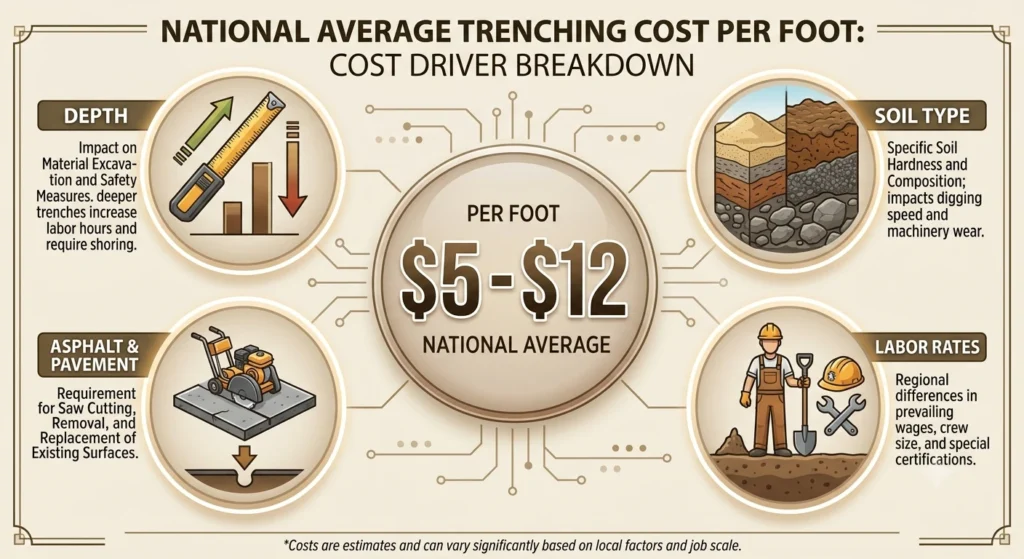
On average, professional trenching costs between $5 and $24 per linear foot, although challenging projects involving rock excavation, concrete cutting, or deep utility trenches can exceed $40 per linear foot.
This comprehensive guide explains every factor that influences trenching prices so you can estimate your project more accurately and avoid unexpected expenses.
Average Trenching Cost Per Foot
The national average trenching cost varies depending on project complexity.
| Project Type | Average Cost Per Linear Foot |
|---|---|
| Basic trenching (soft soil) | $5–$12 |
| Moderate complexity | $8–$18 |
| Difficult excavation | $13–$24 |
| Rocky terrain or concrete | $20–$40+ |
Typical Project Costs
| Trench Length | Estimated Cost |
|---|---|
| 25 feet | $125–$600 |
| 50 feet | $250–$1,200 |
| 100 feet | $500–$2,400 |
| 200 feet | $1,000–$4,800 |
These estimates assume professional excavation and standard utility trenching.
Trench Depth: The Biggest Cost Factor
One of the most important variables affecting trenching cost per foot is depth.
The deeper a trench becomes, the more soil must be removed. Deeper excavation also requires additional labor, stronger equipment, safety shoring, and compliance with excavation safety regulations.
Shallow Trenches (12–18 Inches)
These trenches are commonly used for:
- Irrigation systems
- Landscape lighting
- Low-voltage wiring
- Drainage pipes
Average Cost: $2–$5.50 per foot
Since excavation is minimal, these projects remain among the least expensive.
Standard Utility Trenches (24–36 Inches)
Most residential utility installations fall into this category, including:
- Electrical conduit
- Water lines
- Gas piping
- Internet cables
Average Cost: $3.50–$9.50 per foot
This represents the pricing most homeowners receive.
Deep Utility Trenches (36–72 Inches)
Larger infrastructure projects require deeper excavation.
Examples include:
- Sewer lines
- Large drainage systems
- Commercial utilities
- Municipal infrastructure
Average pricing ranges between $14 and $20+ per foot, depending on soil stability and safety requirements.
Deep trenches often require:
- Ride-on trenchers
- Backhoes
- Excavators
- Protective trench boxes
- Additional crew members
How Surface Type Affects Trenching Cost?
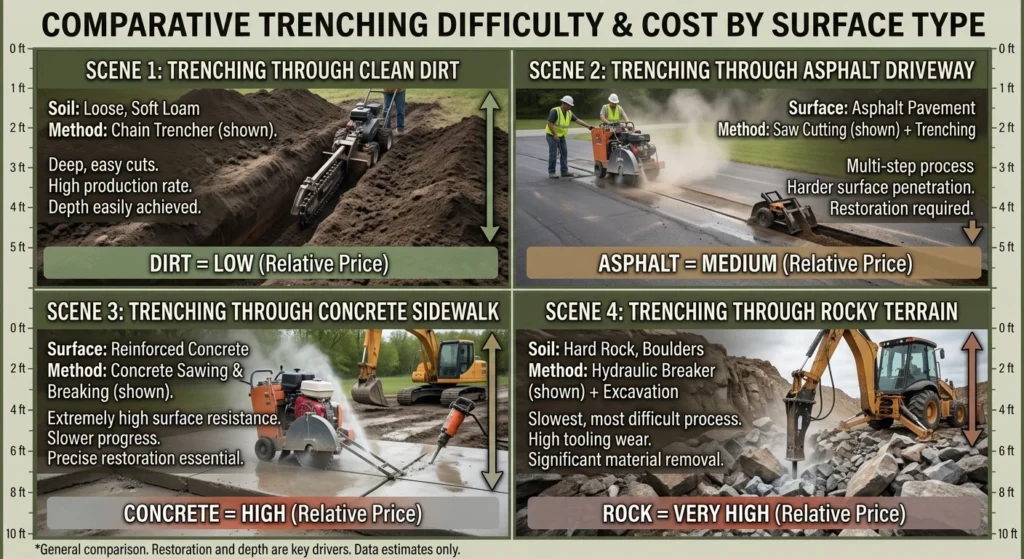
The surface being excavated has a major impact on pricing.
Breaking through hard materials requires specialized equipment, more labor, and additional restoration after excavation.
Dirt
Excavating natural soil is the least expensive option.
Average Cost: $5–$12 per foot
Asphalt
Asphalt requires saw-cutting before excavation begins.
Average trenching costs increase to:
$12–$24 per foot
Concrete
Concrete is significantly more difficult to remove than asphalt.
Typical pricing ranges from:
$15–$30 per foot
Additional demolition equipment is usually required.
Mixed Surfaces
Many residential properties contain multiple surface types.
For example:
- Dirt
- Asphalt driveway
- Concrete sidewalk
These combination projects generally cost:
$18–$36 per foot
Surface Restoration Costs
Many estimates exclude restoration.
Typical restoration costs include:
- Asphalt repair: $4–$8 per foot
- Concrete replacement: $6–$12+ per foot
Always ask whether restoration is included in your contractor’s estimate.
Soil Type and Ground Conditions
Not all soil is equally easy to excavate.
Ground conditions often determine how quickly a contractor can complete the project.
Soft Soil (Sand or Loam)
Soft soils allow trenchers to work efficiently.
Average Cost:
$8–$12 per foot
Clay or Hardpan
Dense clay increases excavation time and equipment wear.
Average Cost:
$12–$18 per foot
Rocky Soil
Rock is one of the most expensive excavation conditions.
Additional equipment may include:
- Rock saws
- Hydraulic breakers
- Heavy excavators
Costs commonly reach:
$20–$25+ per foot
Some projects involving solid rock may exceed $40 per foot.
Site Accessibility Matters
Even simple trenching projects become expensive when equipment cannot easily access the work area.
Easy Access
Open yards and level lots allow equipment to operate efficiently.
Pricing generally stays near the national average.
Restricted Access
Narrow side yards
Steep slopes
Fenced properties
Limited entry points
Landscaped backyards
These conditions often require:
- Smaller trenchers
- Hand digging
- Extra labor hours
Average costs increase to:
$9–$14+ per foot
What’s Included in Trenching Costs?
Many homeowners assume the trench itself is the only expense.
In reality, trenching estimates usually include several cost components.
Labor
Labor is often the largest expense.
Average labor cost:
$1.50–$5.00 per foot
Equipment
Equipment costs vary depending on machine size.
Typical equipment cost:
$0.50–$2.50 per foot
Common machinery includes:
- Walk-behind trenchers
- Ride-on trenchers
- Mini excavators
- Backhoes
Pipe or Conduit Materials
Material costs depend entirely on what is being installed.
Examples include:
- PVC pipe: approximately $0.25 per foot
- HDPE pipe: varies by diameter
- Copper pipe: $10–$20 per foot
Material selection can dramatically increase total project cost.
Permits
Many municipalities require excavation permits.
Permit fees commonly range from:
$50 to $2,000
Permit requirements vary by city, county, and project type.
Soil Removal
Excess excavated soil (known as spoil) may require hauling.
Typical disposal costs:
$0.50–$2.50 per foot
Regional Price Differences
Labor rates differ across the United States.
Generally:
- Northeast — Highest labor costs
- West Coast — Premium pricing
- Midwest — Moderate pricing
- Southeast — Often the most affordable
Urban areas typically cost more than rural locations because of higher labor expenses, permitting requirements, and contractor demand.
Does Project Length Affect Price?
Yes.
Longer trenching projects usually receive better pricing.
Short Runs (Under 50 Feet)
Contractors still incur:
- Equipment transportation
- Crew setup
- Mobilization costs
As a result, the per-foot cost is often higher.
Long Runs (100+ Feet)
Larger projects allow contractors to work more efficiently.
Many companies offer reduced per-foot pricing for long trench runs.
Always ask whether bulk pricing is available.
How to Reduce Trenching Costs?
You can often save hundreds—or even thousands—of dollars by planning ahead.
1. Get Multiple Quotes
Request estimates from at least three or four licensed contractors.
Comparing bids helps ensure competitive pricing and highlights differences in scope.
2. Call 811 Before Digging
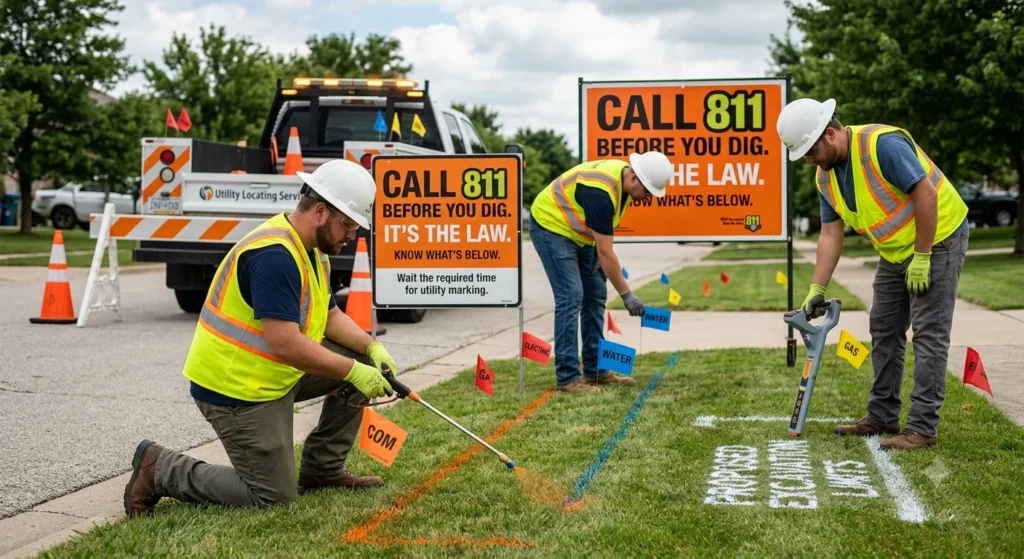
Before any excavation begins, contact 811 to have underground utilities located.
This free service helps prevent costly damage to:
- Gas lines
- Water mains
- Sewer pipes
- Electrical cables
- Fiber optic lines
Accidentally striking a utility line can result in expensive repairs, project delays, and serious safety risks.
3. Confirm Permit Costs
Ask whether permit fees are included in the estimate.
Hidden permitting costs can significantly increase your final bill.
4. Improve Site Access
If possible:
- Remove obstacles
- Open gates
- Clear landscaping
- Mark work areas
Better accessibility often reduces labor hours.
Frequently Asked Questions
What is the average trenching cost per foot?
Most professional trenching projects cost between $5 and $24 per linear foot, while difficult excavation involving rock or concrete may exceed $40 per foot.
Why is trench depth so important?
Deeper trenches require more excavation, additional safety measures, specialized equipment, and more labor, all of which increase costs.
Does concrete increase trenching costs?
Yes. Cutting through concrete is one of the most expensive excavation scenarios, with total costs commonly ranging from $15 to $30 per foot before restoration.
Are permits included in trenching estimates?
Not always. Always ask your contractor whether permit fees are included in the quoted price.
Final Thoughts
Understanding trenching cost per foot involves much more than looking at a national average. While most residential projects fall between $5 and $24 per linear foot, the final cost depends on several key variables—including trench depth, soil type, surface material, accessibility, labor, equipment, permits, and regional pricing.
The most accurate way to estimate your project is to evaluate these factors together and request multiple detailed quotes from qualified contractors. By comparing bids, confirming what’s included, and planning ahead, you can keep your excavation project on budget while avoiding costly surprises.

Ahmed Ijaz runs this construction rental directory with over 5 years of experience in SEO, content, and web optimization. Every page is built using real research, hands-on expertise, and carefully reviewed information to meet strong EEAT standards.