Choosing the right trenching equipment can determine whether your project finishes on schedule or runs into costly delays. Whether you’re installing irrigation lines, laying underground utilities, or preparing a commercial construction site, selecting between a walk-behind trencher and a ride-on trencher is one of the most important decisions you’ll make.
The wrong machine can lead to slower production, higher fuel costs, excessive operator fatigue, and unnecessary maintenance expenses. On the other hand, choosing the right trencher improves productivity, reduces labor costs, and delivers cleaner, more accurate trenches.
This comprehensive comparison explains the differences between walk-behind and ride-on trenchers, including their capabilities, advantages, limitations, costs, maintenance requirements, and ideal applications, helping you select the best machine for your project.
What Is a Walk-Behind Trencher?
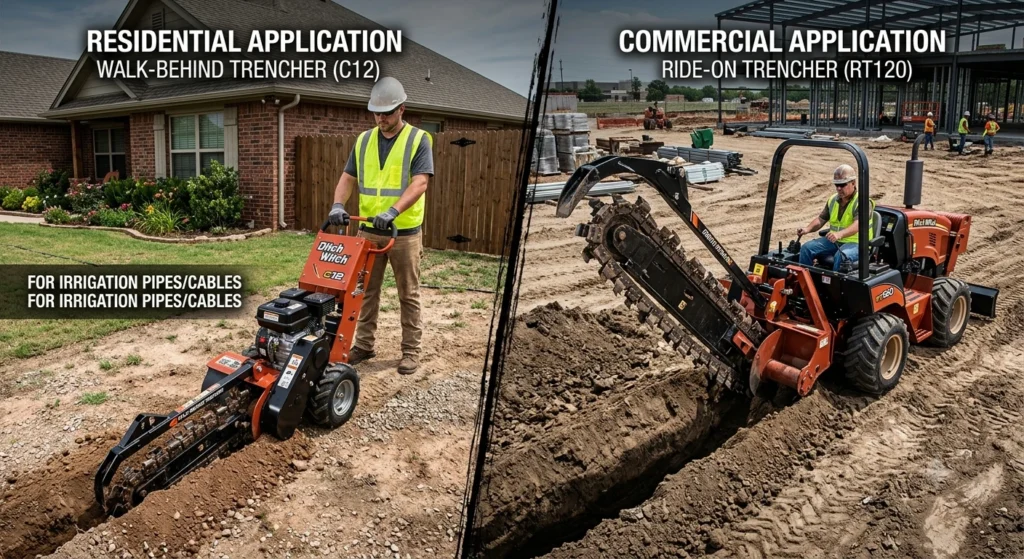
Walk-behind trencher is a compact trenching machine operated by a person walking behind it. Often referred to as a landscape trencher or manual trencher. These machines are designed for smaller residential and light commercial projects where maneuverability is more important than maximum power.
Available with either wheels or tracks, walk-behind trenchers are easy to transport, simple to operate, and capable of creating precise trenches in confined spaces.
Key Specifications
Typical specifications include:
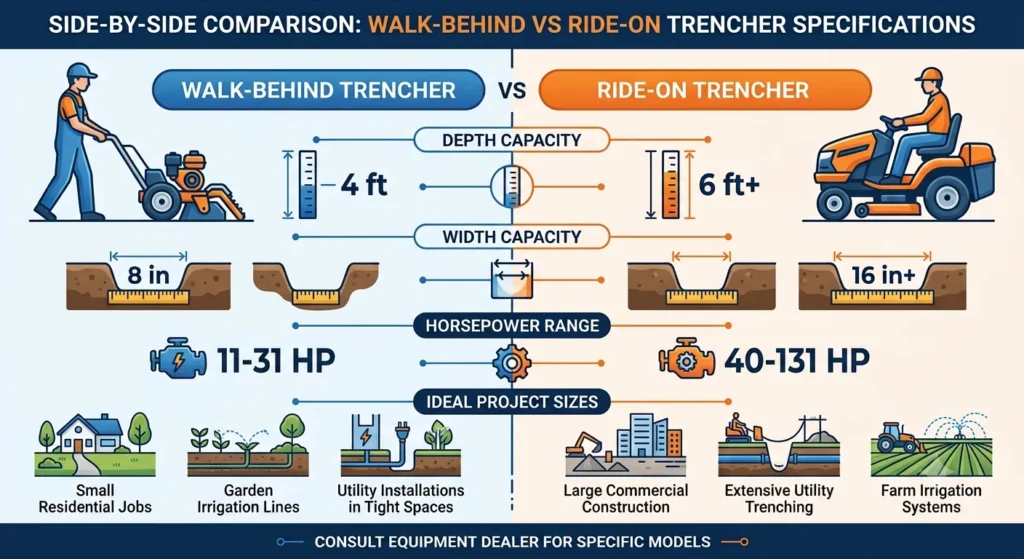
- Engine power ranging from 11–31 HP
- Maximum trench depth of up to 4 feet (48 inches)
- Trench widths between 8–16 inches
- Best suited for trenches shorter than 100–200 feet
Although smaller than ride-on machines, walk-behind trenchers provide excellent performance for landscaping and utility work without damaging surrounding property.
Ideal Applications
Walk-behind trenchers are commonly used for:
- Residential landscaping
- Irrigation system installation
- Underground electrical lines
- Internet and communication cable installation
- Gas line installation
- Fence post projects
- Backyard drainage systems
- Lawn renovation
- Tight spaces with gates, trees, or landscaping obstacles
Because of their compact footprint, they’re especially useful in areas inaccessible to larger equipment.
What Is a Ride-On Trencher?
A ride-on trencher is a larger, self-propelled trenching machine that allows the operator to sit comfortably while controlling the equipment. Sometimes called a utility trencher or tractor trencher, these machines are designed for demanding construction and utility projects requiring deeper, wider, and longer trenches.
Ride-on trenchers are available in wheeled and tracked versions, providing excellent traction across difficult terrain.
Key Specifications
Most ride-on trenchers offer:
- Engine power between 40–131+ HP
- Trenching depths from 6–18 feet
- Trench widths ranging from 16–48 inches
- Ideal performance on projects exceeding 250–1,000 feet
Their greater horsepower and hydraulic capacity allow them to tackle difficult soil conditions that would overwhelm smaller machines.
Ideal Applications
Ride-on trenchers excel at:
- Water pipeline installation
- Sewer construction
- Fiber optic infrastructure
- Natural gas transmission lines
- Municipal utility work
- Commercial construction
- Highway projects
- Rocky terrain excavation
- Long-distance trenching
For contractors managing large-scale infrastructure projects, ride-on trenchers significantly improve productivity.
Head-to-Head Comparison: Walk-Behind vs Ride-On Trenchers
1. Project Size and Scale
The biggest difference between these machines is the size of projects they can efficiently complete.
Walk-Behind Trencher
Best for:
- Small residential projects
- Landscaping
- Irrigation systems
- Utility trenches under 250 feet
- Maximum depth around 4 feet
Ride-On Trencher
Ideal for:
- Large commercial projects
- Utility corridors
- Pipeline installation
- Trench lengths exceeding 250–1,000 feet
- Excavations deeper than 6 feet
If your work involves miles of trenching, a ride-on machine delivers significantly higher productivity.
2. Maneuverability and Space Requirements
Walk-Behind Advantage
Compact trenchers easily navigate:
- Backyard gates
- Narrow sidewalks
- Garden beds
- Landscaped areas
- Existing structures
- Trees and fences
Their lighter weight also minimizes turf damage.
Ride-On Limitations
Ride-on trenchers require:
- Wide operating areas
- Adequate turning radius
- Stable terrain
- Room for transporting attachments
While extremely powerful, they are less suited for confined residential environments.
3. Operator Comfort and Physical Demands
Comfort directly affects productivity during long workdays.
Walk-Behind Operators
Using a walk-behind trencher requires:
- Constant walking
- Steering by hand
- Physical effort to guide the machine
- Greater operator fatigue
Long projects can become physically demanding.
Ride-On Operators
Ride-on trenchers provide:
- Comfortable seating
- Ergonomic controls
- Adjustable high-back seats
- Reduced vibration
- Less physical strain
- Climate-controlled cabs on larger models
The result is greater efficiency during extended operating hours.
4. Power and Performance Capabilities
Walk-Behind Performance
Walk-behind trenchers perform well in:
- Soft soil
- Clay
- Moderate ground conditions
- Small tree roots
Their lower horsepower limits performance in rocky terrain.
Ride-On Performance
Ride-on trenchers deliver:
- Higher horsepower
- Greater hydraulic torque
- Improved digging speed
- Better traction
- Ability to trench through:
- Rock
- Frost
- Hard-packed soil
- Pavement (with specialized attachments)
Many ride-on machines also support:
- Backfill blades
- Backhoes
- Vibratory plows
- Reel carriers
- Microtrenching attachments
This versatility allows contractors to perform multiple jobs with one machine.
5. Cost Considerations
Budget plays a major role in equipment selection.
Walk-Behind Costs
Advantages include:
- Lower purchase price
- Lower rental rates
- Reduced maintenance costs
- Lower fuel consumption
- Less expensive repairs
These machines are ideal for homeowners and small contractors.
Ride-On Costs
Ride-on trenchers involve:
- Higher purchase prices
- Larger maintenance budgets
- Increased fuel usage
- More complex repairs
However, their dramatically higher productivity often produces a better return on investment for large commercial projects.
6. Ease of Use and Operator Skill Level
Walk-Behind Simplicity
Most walk-behind trenchers feature:
- Straightforward controls
- Easy steering handles
- Simple throttle adjustments
- Quick learning curve
They’re well suited for newer operators.
Ride-On Operation
Ride-on trenchers require:
- Operator training
- Familiarity with hydraulic controls
- Steering lever coordination
- Knowledge of machine attachments
Fortunately, modern ride-on trenchers include intuitive controls that make operation easier than older models.
How to Choose the Right Trencher?
Before purchasing or renting a machine, ask yourself the following questions.
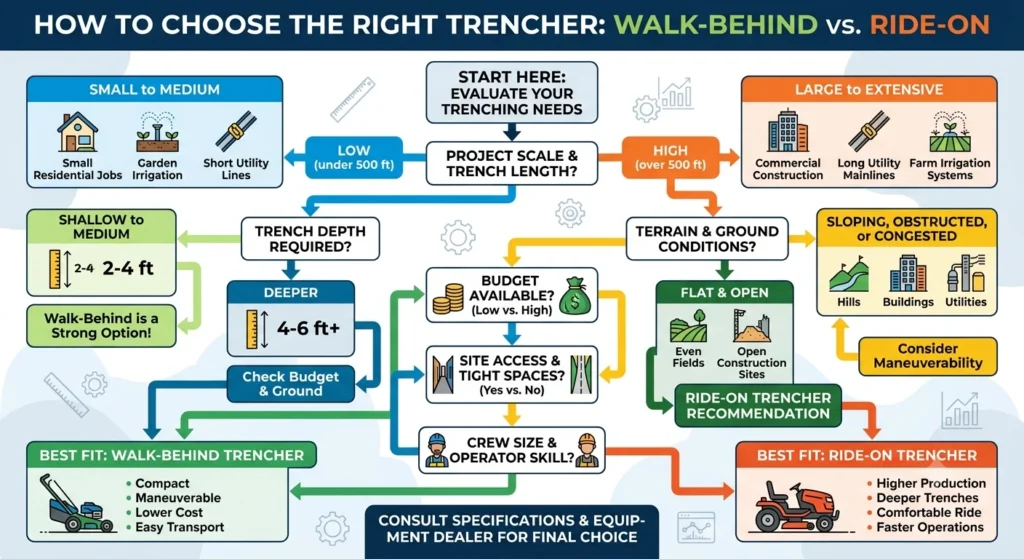
What Trench Depth Do You Need?
- Under 4 feet → Walk-behind
- Over 4 feet → Ride-on
How Long Is the Trench?
- Under 250 feet → Walk-behind
- Over 250 feet → Ride-on
What Is the Ground Condition?
Soft soil favors walk-behind trenchers.
Rocky, frozen, or heavily compacted ground requires the power of a ride-on machine.
Is Space Limited?
Tight residential spaces strongly favor walk-behind trenchers.
Large commercial sites provide enough room for ride-on equipment.
What’s Your Budget?
If minimizing upfront costs is your priority, walk-behind trenchers offer excellent value.
For contractors handling frequent utility work, investing in a ride-on machine often pays off through increased productivity.
Will You Need Attachments?
If your projects involve multiple tasks beyond trenching, ride-on trenchers provide far greater versatility.
How to Choose Between Walk-Behind vs Ride-On Trencher?
| Factor | Walk-Behind Trencher | Ride-On Trencher |
|---|---|---|
| Trench Depth | Under 4 ft | Over 4 ft |
| Trench Length | Under 250 ft | Over 250 ft |
| Space Available | Tight areas | Open job sites |
| Terrain | Soft, level ground | Rocky, rough terrain |
| Budget | Lower investment | Higher investment with better ROI |
| Operator Experience | Beginner-friendly | Requires training |
| Best Applications | Residential landscaping | Commercial utility installation |
Modern Trencher Innovations
Today’s trenchers are more efficient, comfortable, and easier to maintain than ever before.
Improvements Across Both Categories
Modern machines feature:
- Reduced daily maintenance
- Elimination of many grease points
- Automatic wheel-drive propulsion
- Cruise-control-like speed adjustment
- Improved engine cooling
- Better operator visibility
- More intuitive controls
These innovations reduce downtime while improving productivity.
Ride-On Trencher Advancements
Recent developments include:
- Anti-stall technology
- Coordinated steering
- Crab steering modes
- Interchangeable wheels and tracks
- Fully enclosed climate-controlled operator cabs
- Advanced hydraulic systems
These upgrades make modern ride-on trenchers more efficient across challenging job sites.
Safety and Pre-Dig Requirements
Regardless of machine size, safety should always come first.
Essential Pre-Dig Steps
Before trenching:
- Contact 811 for underground utility locating
- Verify local permit requirements
- Inspect the work area
- Identify rocks, roots, and underground obstacles
- Review manufacturer operating instructions
Skipping these steps can result in dangerous utility strikes and expensive repairs.
Safe Operating Practices
Always:
- Wear proper personal protective equipment
- Receive adequate operator training
- Maintain safe distances from marked utilities
- Perform daily equipment inspections
- Follow manufacturer maintenance schedules
Proper safety practices protect both operators and nearby workers.
Maintenance Considerations
Routine maintenance extends equipment life and reduces costly downtime.
Walk-Behind Trencher Maintenance
Maintenance is generally simpler because these machines have:
- Fewer hydraulic components
- Easier engine access
- Lower parts costs
- Simpler repairs
- Low-maintenance designs
They’re an excellent choice for contractors seeking affordable ownership.
Ride-On Trencher Maintenance
Ride-on trenchers require more comprehensive servicing, including:
- Hydraulic system inspections
- Engine maintenance
- Transmission servicing
- Track or tire maintenance
- Regular lubrication
- Higher labor and replacement part costs
Having quick access to replacement parts helps minimize downtime on large projects.

Ahmed Ijaz runs this construction rental directory with over 5 years of experience in SEO, content, and web optimization. Every page is built using real research, hands-on expertise, and carefully reviewed information to meet strong EEAT standards.