Backhoes remain one of the most versatile pieces of heavy equipment used across construction, landscaping, agriculture, utility work, and residential excavation projects. Whether you’re digging trenches, loading materials, grading land, or demolishing concrete, renting a backhoe often provides the flexibility and affordability that purchasing one simply can’t match.
However, one of the first questions contractors and homeowners ask is:
How much does it cost to rent a backhoe?
The answer isn’t as straightforward as a single daily rate. While rental companies advertise attractive prices, your final bill depends on several factors including machine size, horsepower, rental duration, transportation fees, insurance, fuel, attachments, and even the time of year.
Understanding these variables before requesting quotes can help you avoid unexpected expenses and choose the right machine for your project.
This comprehensive 2026 pricing guide covers everything you need to know about backhoe rental costs, including average rental rates, factors affecting pricing, hidden fees, real-world cost examples, and expert tips to save money.
What Is the Average Backhoe Rental Cost in 2026?
On average, renting a backhoe in the United States costs:
| Rental Period | Average Cost |
|---|---|
| Daily | $350–$700 |
| Weekly | $900–$1,750 |
| Monthly | $2,000–$5,000 |
Industry-wide rental quote data shows national averages around:
- Average Daily Rate: $582
- Average Weekly Rate: $1,434
- Average Monthly Rate: $3,103
The longer you rent, the lower your cost per day becomes.
For example:
- Renting for one day may cost $550.
- Renting for seven days could cost only $1,450.
- Renting for one month often costs less than six separate daily rentals.
Monthly rentals frequently reduce daily operating costs by nearly 60%, making them the best value for extended projects.
Backhoe Rental Rates by Machine Size
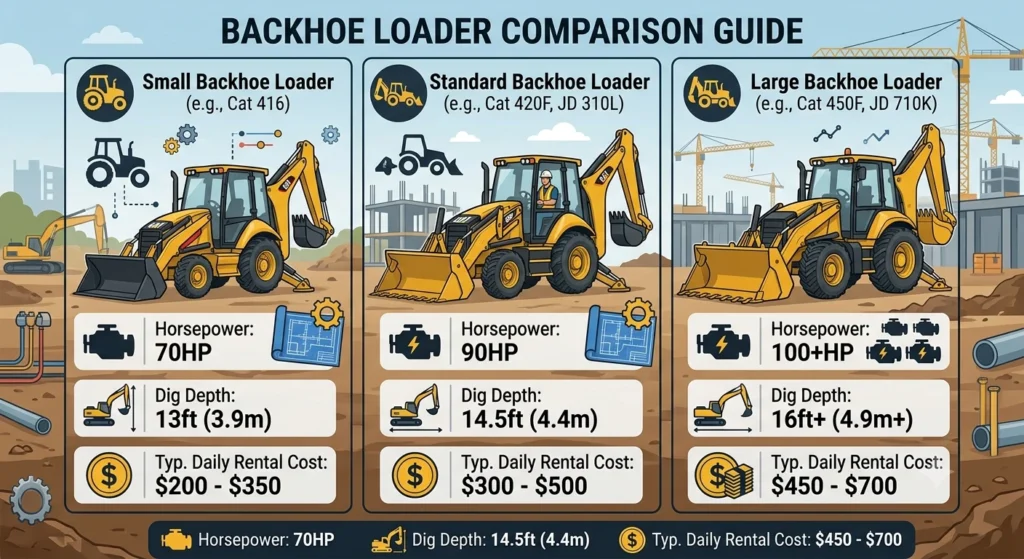
Machine size is the biggest factor affecting rental price.
Larger backhoes offer greater digging depth, lift capacity, and horsepower but also cost significantly more.
| Size Class | Horsepower | Daily | Weekly | Monthly | Common Applications |
|---|---|---|---|---|---|
| Small | 70–90 HP | $350–$500 | $900–$1,250 | $2,000–$2,800 | Landscaping, residential digging |
| Standard | 90–100 HP | $500–$700 | $1,250–$1,750 | $2,800–$3,500 | General construction |
| Large | 100+ HP | $700–$1,000+ | $1,750–$2,500+ | $3,500–$5,000+ | Commercial excavation |
Small Backhoe Rental Cost (70–90 HP)
Small backhoes are ideal for homeowners, landscapers, utility contractors, and light excavation work.
Typical jobs include:
- Digging drainage trenches
- Fence installation
- Septic systems
- Tree planting
- Small foundation work
- Residential utility installation
Average rental prices include:
- Daily: $350–$500
- Weekly: $900–$1,250
- Monthly: $2,000–$2,800
These compact machines are easier to transport and consume less fuel, reducing overall project costs.
Standard Backhoe Rental Cost (90–100 HP)
The standard backhoe is the most commonly rented size.
It offers an excellent balance between power, lifting capacity, and maneuverability.
Common applications include:
- Commercial construction
- Road maintenance
- Utility trenching
- Material loading
- Demolition preparation
- Concrete removal
Typical rental rates:
- Daily: $500–$700
- Weekly: $1,250–$1,750
- Monthly: $2,800–$3,500
Large Backhoe Rental Cost (100+ HP)
Large backhoes are designed for heavy-duty applications requiring increased breakout force and deeper digging capabilities.
Typical projects include:
- Municipal infrastructure
- Large commercial developments
- Utility pipeline installation
- Heavy demolition
- Industrial site preparation
Rental prices generally range between:
- Daily: $700–$1,000+
- Weekly: $1,750–$2,500+
- Monthly: $3,500–$5,000+
Although more expensive, these machines can dramatically improve productivity on demanding projects.
7 Factors That Affect Backhoe Rental Cost
The advertised rental rate rarely reflects your final invoice.
Several additional factors determine the total cost of renting a backhoe.
1. Machine Size and Horsepower
Horsepower is the largest pricing factor.
Larger engines provide:
- More digging force
- Greater lift capacity
- Higher hydraulic power
- Faster cycle times
However, paying for excess power you don’t need increases your project costs.
Choose the smallest machine capable of completing your work safely and efficiently.
2. Rental Duration
Rental companies reward longer commitments with lower daily rates.
For example:
| Rental Period | Approximate Cost Per Day |
|---|---|
| 1 Day | $550 |
| 1 Week | $205/day |
| 1 Month | $100/day |
If your project is expected to last four or five days, asking for a weekly rate often saves hundreds of dollars.
Likewise, monthly pricing offers substantial discounts compared to extending daily rentals.
3. Delivery and Pickup Fees
Transport costs are often overlooked during budgeting.
Depending on distance, expect round-trip delivery charges between:
$150–$500+
Factors influencing transportation costs include:
- Distance from rental yard
- Machine size
- Permit requirements
- Fuel prices
- Trailer availability
One advantage of many backhoes is their ability to travel on local roads at speeds approaching 25 mph, potentially eliminating delivery fees for nearby job sites.
4. Attachments and Specialty Buckets
Most rentals include a standard digging bucket.
However, specialized attachments increase rental costs.
Average daily attachment prices include:
| Attachment | Daily Cost |
|---|---|
| Hydraulic Breaker | $150–$300 |
| Auger | $100–$200 |
| Compactor Plate | $75–$175 |
| Grapple Bucket | $100–$250 |
| 4-in-1 Bucket | $75–$200 |
Although these add-ons increase rental expenses, they often eliminate the need to rent additional equipment.
5. Location, Seasonality, and Brand
Rental prices vary considerably across the country.
Typical regional trends include:
- Northeast: Highest prices
- West Coast: Premium pricing
- Midwest: Moderate rates
- Southeast: Often the lowest costs
Peak construction season between March and October can increase equipment rental prices by 15–25%.
Machine brand also affects pricing.
Premium manufacturers such as Caterpillar, John Deere, Case, and JCB generally command higher rental rates due to reliability and performance.
6. Insurance and Damage Waivers
Most rental companies require equipment protection.
Options typically include:
- Proof of contractor insurance
- Equipment rental insurance
- Loss Damage Waiver (LDW)
Insurance usually adds:
10–15% of the rental cost
Although optional in some cases, declining coverage may require a substantial refundable security deposit.
7. Operator Costs, Fuel, and Hidden Fees
If you don’t have a qualified operator, many rental companies offer one.
Average operator rates range between:
$35–$95 per hour
Additional expenses may include:
- Diesel fuel
- Cleaning charges
- Late return penalties
- Environmental fees
- Administrative fees
- Security deposits
- Excess hour charges
Reading the rental agreement carefully helps avoid surprise costs.
Real-World Examples: Calculating Your Total Backhoe Rental Cost
Example 1: Residential Utility Trenching
A homeowner needs to dig a 100-foot trench.
Equipment:
- Small 75 HP backhoe
Costs:
| Expense | Cost |
|---|---|
| Daily Rental | $400 |
| Delivery & Pickup | $300 |
| Insurance | $48 |
| Fuel | $50 |
| Estimated Total | $798 |
Example 2: Commercial Site Preparation
Equipment:
- Standard 95 HP backhoe
- Hydraulic breaker attachment
Expenses:
| Expense | Cost |
|---|---|
| Weekly Rental | $1,500 |
| Breaker Rental | $1,000 |
| Delivery | $500 |
| Insurance | $300 |
| Fuel | $400 |
| Estimated Total | $3,700 |
Example 3: Municipal Utility Project
Equipment:
- Large 110 HP backhoe
- Extendable dipper
Expenses:
| Expense | Cost |
|---|---|
| Monthly Rental | $4,500 |
| Extendable Dipper | $675 |
| Insurance | $621 |
| Delivery | $350 |
| Estimated Total | $6,146 |
Renting vs. Buying a Backhoe
Purchasing a backhoe represents a major capital investment.
New machines typically cost:
$60,000–$120,000+
High-end models equipped with advanced hydraulics, extendable dippers, and premium attachments can exceed $150,000.
When Renting Makes Sense
Renting is usually the better option if:
- You only need the machine for short-term projects.
- You want to avoid maintenance and repair costs.
- You don’t have secure equipment storage.
- You prefer access to newer models.
- Your workload varies throughout the year.
When Buying Is the Better Choice
Buying may be worthwhile if:
- Your business uses a backhoe more than 65–70% of the time.
- You have the cash flow or financing available.
- You want to build equity in equipment.
- You have an in-house maintenance team.
- You frequently perform excavation work.
Pro Tips to Save Money on Your Backhoe Rental
Choose the Right Machine Size
Bigger isn’t always better. Renting the correct horsepower for your project prevents unnecessary rental and fuel costs.
Ask About Weekly or Monthly Pricing
Even if your project lasts only four or five days, a weekly rental often costs less than paying the daily rate.
Rent During the Off-Season
Demand is typically lower during late fall and winter, allowing you to secure better pricing.
Avoid Delivery Fees
If local regulations permit and the job site is nearby, driving the backhoe yourself can eliminate transportation charges.
Bundle Attachments
Ordering all required attachments at the beginning of your rental helps avoid additional delivery charges and scheduling delays.
Compare Multiple Quotes
Request estimates from several rental providers. Comparing pricing, included attachments, delivery costs, and insurance options often reveals significant savings.
Negotiate Long-Term Rentals
Rental companies are often willing to discount extended rentals or projects requiring multiple machines. Don’t hesitate to negotiate, especially if you’re a repeat customer.
Frequently Asked Questions
How much does it cost to rent a backhoe for one day?
Most daily rentals range from $350 to $700, depending on machine size, location, and included equipment.
What is included in a standard backhoe rental?
A standard rental generally includes the backhoe, a digging bucket, and basic operating instructions. Delivery, insurance, fuel, and specialty attachments are usually billed separately.
Can I rent a backhoe without hiring an operator?
Yes. Most rental companies allow qualified customers to operate the equipment themselves. If needed, you can also rent a backhoe with a professional operator for an additional hourly fee.
Do I need insurance to rent a backhoe?
Most rental companies require proof of insurance or offer a loss damage waiver, typically adding 10–15% to the rental cost.
Is renting cheaper than buying?
For short-term or occasional use, renting is almost always more cost-effective because it eliminates the high purchase price, maintenance, depreciation, storage, and repair expenses associated with ownership.
Conclusion
Backhoe rental costs in 2026 depend on far more than the advertised daily rate. Factors such as machine size, rental duration, delivery fees, attachments, insurance, fuel, and seasonal demand all contribute to your final project budget.
For most homeowners, landscapers, and contractors working on short-term projects, renting a backhoe remains the most economical choice. It provides access to modern, well-maintained equipment without the long-term financial commitment of ownership.
To get the best value, compare quotes from multiple rental companies, choose the right machine size for your project, consider weekly or monthly pricing for longer jobs, and review the rental agreement carefully to avoid unexpected fees.
With proper planning and a clear understanding of all associated costs, you can control your budget and ensure your excavation, construction, or landscaping project stays on schedule and within budget.

Ahmed Ijaz runs this construction rental directory with over 5 years of experience in SEO, content, and web optimization. Every page is built using real research, hands-on expertise, and carefully reviewed information to meet strong EEAT standards.