Choosing the right trencher size is one of the most important decisions for any trenching project. Whether you’re installing irrigation lines, laying underground utilities, burying electrical cables, or constructing large pipelines, the size of the trencher directly impacts productivity, project costs, and jobsite efficiency.
A trencher is specialized construction equipment designed to excavate narrow trenches quickly and accurately. Selecting the wrong machine can lead to slow progress, excessive operating costs, equipment wear, and even project failure. The ideal trencher size depends on several factors, including trench depth, trench width, soil conditions, project length, and the type of material being installed.
Today’s market offers three primary categories of trenchers: walk-behind trenchers, ride-on trenchers, and large heavy-duty trenchers. Specialty equipment such as microtrenchers, rock wheels, vibratory plows, and quad trenchers further expand the available options.
This guide explains how to choose the correct trencher size by balancing trench dimensions, horsepower requirements, ground conditions, and application-specific needs.
Understanding Trencher Size Categories
Walk-Behind (Pedestrian) Trenchers
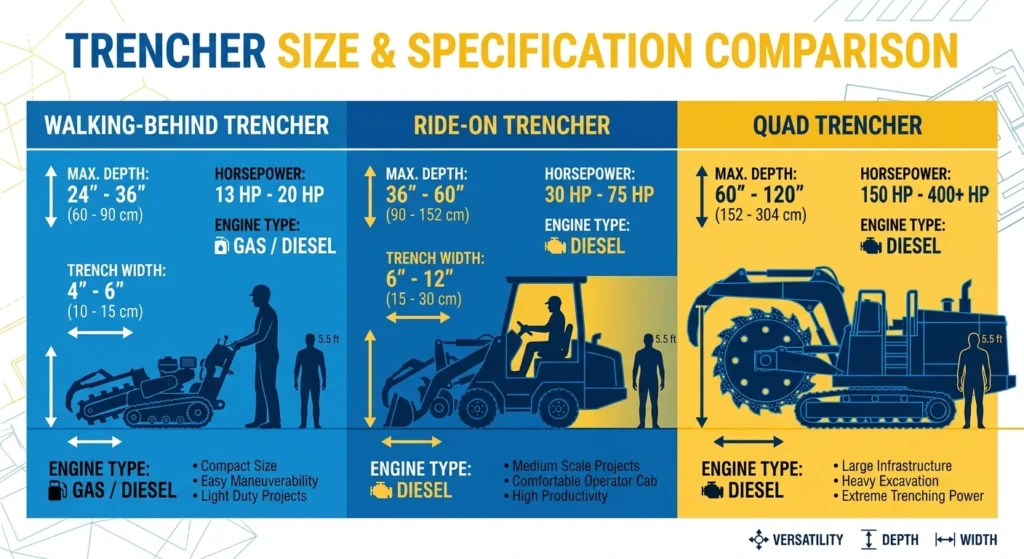
Walk-behind trenchers are compact machines designed for residential and light commercial projects. These units typically feature engines starting around 13 horsepower and can dig trenches up to 4 feet deep and approximately 8 inches wide.
Common applications include:
- Irrigation systems
- Landscape drainage
- Fiber optic installation
- Residential electrical lines
- Small utility projects
One of the biggest advantages of a walk-behind trencher is its small footprint. Less ground disturbance makes it ideal for finished landscapes, tight spaces, and residential properties.
Microtrenchers
Microtrenchers are specialty trenching machines engineered for ultra-narrow trench installation. They typically cut trenches between ¾ inch and 2 inches wide and 8 to 17 inches deep.
These machines are widely used in:
- Fiber optic installation
- Telecommunications infrastructure
- Urban utility projects
- City streets and sidewalks
Because they create minimal surface disruption, microtrenchers have become the preferred solution for urban fiber deployment projects.
Ride-On Trenchers
Ride-on trenchers provide significantly more power and productivity than walk-behind models. Most units can excavate trenches up to 6 feet deep and 16 inches wide while delivering between 49 and 127+ horsepower.
Popular applications include:
- Underground utilities
- Electrical distribution systems
- Water lines
- Commercial construction
- Long-distance installations
The additional horsepower allows ride-on trenchers to work faster and handle tougher soil conditions such as clay and compacted ground.
Quad Trenchers (Heavy-Duty)
Quad trenchers represent the largest trenching equipment category. These machines can dig trenches up to 18 feet deep and 48 inches wide.
They are commonly used for:
- Oil and gas pipelines
- Municipal water systems
- Sewer infrastructure
- Industrial construction
- Large-diameter pipe installation
The enormous horsepower and torque available in quad trenchers make them suitable for projects that would otherwise require multiple excavators.
However, transportation becomes a major consideration. Some large trenchers can weigh more than 260,000 pounds and require specialized hauling equipment.
Key Factors That Determine the Right Trencher Size
Trench Depth Requirements
Trench depth is often the most important sizing factor.
Typical depth capabilities include:
| Trencher Type | Maximum Depth |
|---|---|
| Microtrencher | 8–17 inches |
| Walk-Behind | 12–48 inches |
| Ride-On | Up to 72 inches |
| Quad Trencher | Up to 216 inches (18 feet) |
As depth requirements increase, larger booms, stronger drivetrains, and more horsepower become necessary.
Examples include:
- Irrigation systems: 12–24 inches
- Residential electrical lines: 24–48 inches
- Utility installations: 4–6 feet
- Pipelines: 6–18 feet depending on regulations
Rule: Always size your trencher based on the deepest trench required on the project.
Trench Width Requirements
Trench width directly affects the amount of material removed and the horsepower required.
Typical trench widths include:
| Trencher Type | Width Range |
|---|---|
| Microtrencher | ¾–2 inches |
| Walk-Behind | Up to 8 inches |
| Ride-On | 12–18 inches |
| Quad Trencher | Up to 48 inches |
Wider trenches require:
- More horsepower
- Greater torque
- Heavier equipment
- Larger cutting systems
In most cases, contractors should dig the narrowest trench possible while meeting installation requirements.
Ground Conditions and Soil Type
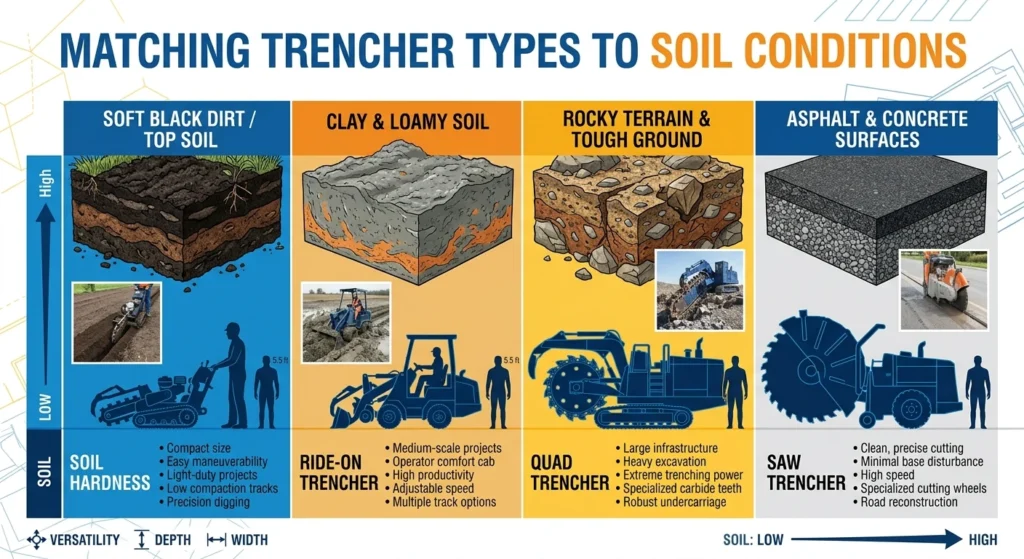
Ground conditions dramatically influence trencher performance.
Soft Soil and Loam
Soft soils require relatively little horsepower and are ideal for walk-behind or smaller ride-on trenchers.
Clay Soil
Clay increases resistance and often requires mid-range ride-on trenchers with greater torque.
Rocky Terrain
Rocky conditions significantly increase cutting demands. Contractors frequently use carbide teeth and rock wheel attachments to maintain productivity.
Asphalt and Concrete
Projects involving paved surfaces often require specialized rock wheel systems or microtrenchers capable of cutting narrow channels through hard materials.
Regional conditions also matter:
- Midwest regions often contain soft black dirt.
- South and Southwest Texas frequently contain solid rock.
- Western states commonly feature rocky soil conditions.
Installation Length and Project Scale
The longer the installation, the more important productivity becomes.
General recommendations:
- Under 250 feet: Walk-behind trencher
- 250–1,000 feet: Ride-on trencher
- Multiple miles: High-horsepower ride-on or large trenchers
Larger machines may cost more to rent, but they often complete projects much faster.
Attachment Types and Compatibility
Choosing the right attachment is just as important as selecting the correct machine size.
Chain Trenchers
Best for:
- Soft soils
- Mixed soils
- General utility installation
Microtrencher Attachments
Best for:
- Fiber optics
- Telecommunications
- Urban environments
Vibratory Plows
Best for:
- Long utility runs
- Residential service drops
- Minimal soil disturbance
Rock Wheels
Best for:
- Rock
- Cobble
- Asphalt
- Concrete
The attachment selected often determines the minimum horsepower and machine size required.
Trencher Sizing Guide by Application
Residential Projects
Recommended Equipment: Walk-Behind Trencher
Specifications:
- Depth: 12–24 inches
- Width: 4–8 inches
- Horsepower: 13–25 hp
Common uses:
- Irrigation systems
- Landscape lighting
- Residential electrical work
For one-time projects, renting is usually more economical than purchasing.
Utility Installations
Recommended Equipment: Ride-On Trencher
Specifications:
- Depth: 24–48 inches
- Width: 8–16 inches
- Horsepower: 49–74 hp
Applications:
- Fiber optic installation
- Electrical distribution
- Water service lines
In soft soil conditions, smaller ride-on trenchers may be sufficient. Rocky conditions often justify larger machines with specialized attachments.
Commercial Utility Projects
Recommended Equipment: High-Horsepower Ride-On Trencher
Specifications:
- Depth: 6–8 feet
- Horsepower: 74–127+ hp
Applications:
- Electrical transmission
- Solar farm infrastructure
- Wind energy projects
- Utility corridors
Steel-track models often provide improved traction and productivity.
Pipeline Installation
Recommended Equipment: Large Trencher or Quad Trencher
Specifications:
- Depth: Determined by pipe size and required cover
- Width: Sized for pipe diameter
- Horsepower: 200–600+ hp
Applications:
- Oil pipelines
- Gas pipelines
- Water transmission systems
- Sewer infrastructure
These machines deliver the torque necessary to excavate deep, wide trenches efficiently.
Agricultural and Landscaping Projects
Recommended Equipment: Walk-Behind or Tractor-Mounted Trencher
Applications include:
- Irrigation systems
- Drainage tile installation
- Farm utility lines
- Landscape drainage
Versatility is often more important than maximum digging capability.
Trencher Sizing Quick Reference Table
| Project Type | Trencher Category | Max Depth | Max Width | Horsepower Range |
|---|---|---|---|---|
| Residential Irrigation | Walk-Behind | 4 ft | 8 in | 13–25 hp |
| Urban Fiber | Microtrencher | 17 in | 2 in | 49–74 hp |
| Utility Installation | Ride-On RTX450 | 5 ft | 12 in | 49 hp |
| Utility Installation | Ride-On RTX550/750 | 6 ft | 16 in | 55–74 hp |
| Long-Run Utility | Ride-On RTX1250 | 6 ft | 18 in | 127 hp |
| Heavy Pipeline | Quad Trencher | 18 ft | 48 in | 200–600+ hp |
Trencher Selection Decision Workflow
Follow this process to determine the correct trencher size:
Step 1: Determine Trench Dimensions
Identify the required depth and width based on the utility, pipe, or cable being installed.
Step 2: Evaluate Soil Conditions
Assess whether the project involves soft soil, clay, rock, asphalt, or mixed ground.
Step 3: Measure Installation Length
Longer installations generally justify larger, more productive machines.
Step 4: Match Horsepower Requirements
Ensure the machine provides sufficient power for the trench dimensions and ground conditions.
Step 5: Verify Attachment Compatibility
Confirm that the trencher supports the chain, rock wheel, plow, or specialty attachment required.
Step 6: Consider Transportation and Access
Evaluate trailer capacity, site access limitations, and machine footprint.
Safety and Preparation Before Digging
Call Before You Dig
Before starting any excavation project, contact 811 to have underground utilities marked.
This helps prevent:
- Gas line strikes
- Electrical hazards
- Utility outages
- Costly repairs
Check Local Permits
Many municipalities require permits for trenching and utility installation projects.
Verify:
- Utility regulations
- Right-of-way requirements
- Inspection requirements
- Local excavation codes
Operator Training
Improper trencher operation can result in serious injury or equipment damage.
Ensure operators:
- Receive proper training
- Wear required PPE
- Understand machine controls
- Follow manufacturer guidelines
If you lack experience, hiring a professional excavation contractor may be the safest option.
Final Recommendations
Choosing the right trencher size comes down to balancing trench depth, trench width, soil conditions, project length, and productivity goals.
For most residential projects, a walk-behind trencher offers the ideal combination of affordability and capability. Utility contractors typically benefit from ride-on trenchers that provide greater depth, horsepower, and efficiency. Large pipeline and infrastructure projects require heavy-duty trenchers capable of handling extreme depths and widths.
Rent or Buy?
Rent if:
- The project is one-time or occasional.
- You are a homeowner or DIY user.
- Storage and maintenance are concerns.
Buy if:
- Trenching is a regular part of your business.
- Equipment utilization remains high year-round.
- Fleet efficiency is a priority.
With the right combination of trench dimensions, horsepower, attachments, and soil analysis, you can confidently choose the ideal trencher size for any project.

Ahmed Ijaz runs this construction rental directory with over 5 years of experience in SEO, content, and web optimization. Every page is built using real research, hands-on expertise, and carefully reviewed information to meet strong EEAT standards.