When contractors ask, “How much does a backhoe weigh?”, the answer depends on the machine’s size, attachments, tire configuration, and manufacturer. Modern backhoes range from compact units weighing under 4,000 pounds to heavy-duty machines exceeding 28,000 pounds.
Understanding a backhoe’s operating weight is essential because weight directly affects:
- Stability while digging
- Breakout force
- Lifting capacity
- Ground pressure
- Trailer requirements
- Towing legality
- CDL requirements
- Fuel consumption
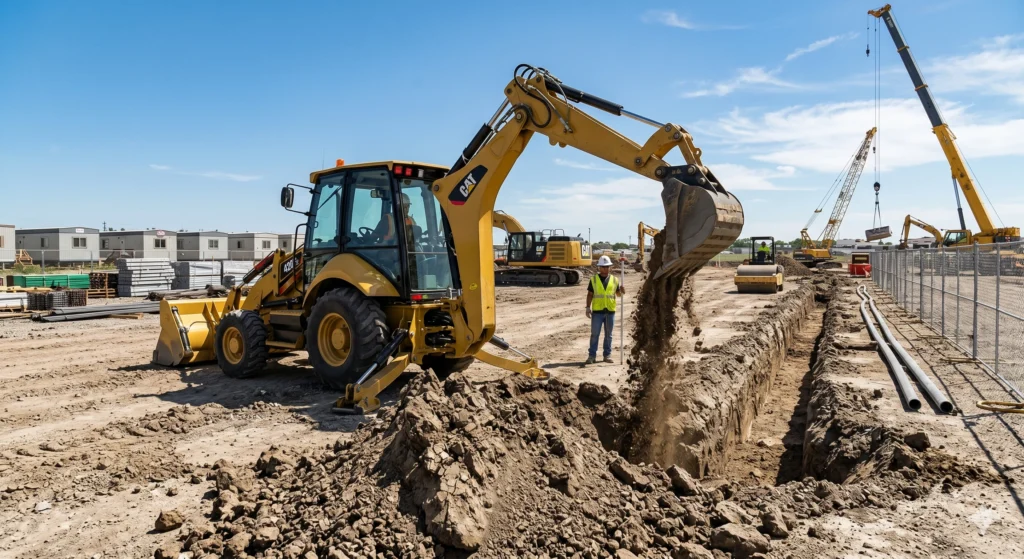
Whether you’re buying, renting, hauling, or operating a backhoe loader, knowing the exact weight helps avoid transportation issues and ensures compliance with highway regulations.
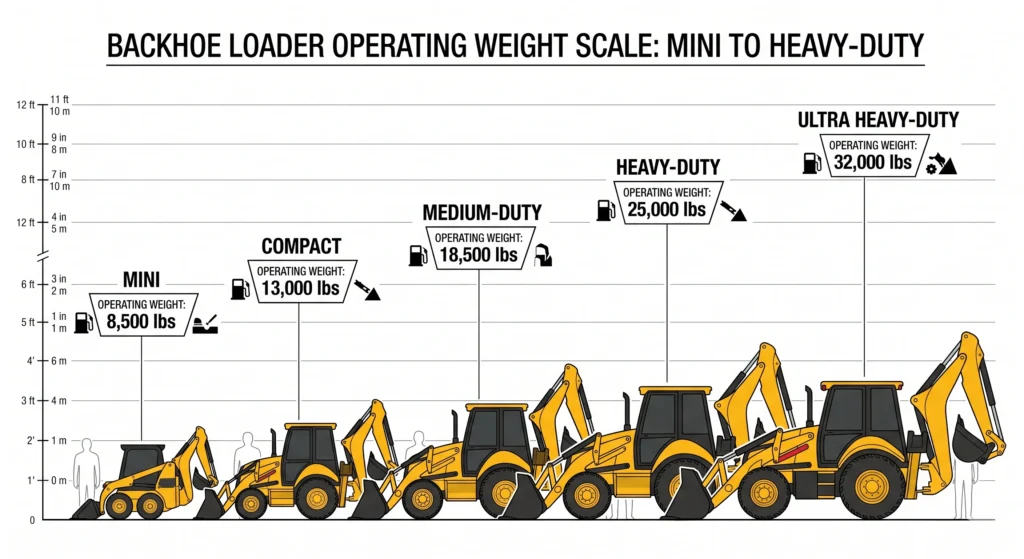
Backhoe Weight Comparison Chart
| Backhoe Class | Operating Weight (lbs) | Operating Weight (kg) | Typical Applications | Example Models |
|---|---|---|---|---|
| Mini / Compact | 3,000–8,000 | 1,360–3,630 | Landscaping, utility work | JCB 1CX, Kubota BX |
| Small Backhoe Loader | 12,000–14,000 | 5,440–6,350 | Residential construction | Case 580N, Deere 310L |
| Medium Backhoe Loader | 15,000–18,000 | 6,800–8,160 | Commercial construction | CAT 420F2, JCB 3CX |
| Large Backhoe Loader | 19,000–22,000 | 8,620–9,980 | Heavy excavation | CAT 450F, Deere 710L |
| Heavy-Duty Backhoe | 23,000–28,000+ | 10,430–12,700+ | Utility, infrastructure | JCB 4CX, Case 590SN |
Weight Categories Explained
Compact Backhoes
Used for:
- Landscaping
- Small trenching projects
- Residential drainage work
Small Backhoe Loaders
Used for:
- Utility installations
- Light construction
- Municipal maintenance
Medium Backhoe Loaders
Used for:
- Commercial excavation
- Roadwork
- Sewer installation
Large Backhoe Loaders
Used for:
- Deep trenching
- Utility construction
- Infrastructure projects
Heavy-Duty Backhoes
Used for:
- Large-scale excavation
- Industrial construction
- Pipeline projects
Detailed Weight Analysis by Brand & Model
Case Backhoe Weights
| Model | Horsepower | Operating Weight |
|---|---|---|
| Case 580N | 74 hp | ~13,500 lbs |
| Case 580 Super N | 95 hp | ~15,800 lbs |
| Case 590SN | 110 hp | ~20,500 lbs |
Key Entity Relationship
Case → Model → Horsepower → Weight → Digging Capacity
Caterpillar (CAT) Backhoe Weights
| Model | Horsepower | Operating Weight |
|---|---|---|
| CAT 416F2 | 74 hp | ~14,000 lbs |
| CAT 420F2 | 93 hp | ~16,500 lbs |
| CAT 450F | 131 hp | ~21,000 lbs |
The CAT 420F2 is one of the most common rental backhoes in North America due to its balance of power, transportability, and operating weight.
John Deere Backhoe Weights
| Model | Horsepower | Operating Weight |
|---|---|---|
| Deere 310L | 92 hp | ~14,200 lbs |
| Deere 410L | 116 hp | ~17,000 lbs |
| Deere 710L | 148 hp | ~22,000 lbs |
JCB Backhoe Weights
| Model | Horsepower | Operating Weight |
|---|---|---|
| JCB 1CX | 49 hp | ~6,600 lbs |
| JCB 3CX | 109 hp | ~16,500 lbs |
| JCB 4CX | 109 hp | ~24,000 lbs |
JCB remains one of the world’s largest backhoe manufacturers and pioneered many modern backhoe-loader designs.
New Holland, Kubota & Terex Backhoe Weights
| Brand | Model | Operating Weight |
|---|---|---|
| New Holland | B95D | ~17,800 lbs |
| Kubota | M62 TLB | ~8,500 lbs |
| Terex | TLB890 | ~18,000 lbs |
Operating Weight vs. Shipping Weight
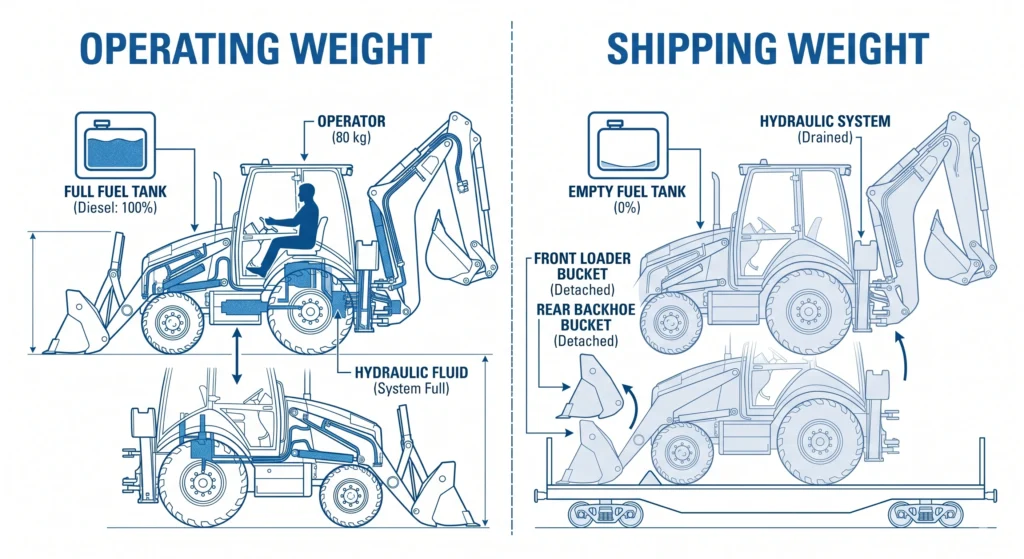
One of the most misunderstood specifications is the difference between operating weight and shipping weight.
Operating Weight
Operating weight includes:
- Full fuel tank
- Hydraulic fluid
- Coolant
- Engine oil
- Standard loader bucket
- Standard backhoe bucket
- 175 lb operator
This is the specification most rental yards use.
Formula
Operating Weight =
Machine Weight +
Fuel +
Fluids +
Operator +
Standard Attachments
Shipping Weight
Shipping weight generally excludes:
- Fuel
- Hydraulic fluids
- Coolant
- Some attachments
As a result, shipping weight is usually 8–12% lighter than operating weight.
Which Weight Should You Trust?
For transportation planning and jobsite performance calculations, always use operating weight.
How Attachments & Configurations Change Backhoe Weight?
Attachments significantly affect overall machine weight.
Front Loader Bucket Weight
| Bucket Type | Added Weight |
|---|---|
| General Purpose Bucket | +500–800 lbs |
| Rock Bucket | +1,000–1,500 lbs |
| High Volume Bucket | +600–900 lbs |
Rear Backhoe Bucket Weight
| Bucket Size | Added Weight |
|---|---|
| 12-Inch Trenching Bucket | +300 lbs |
| 24-Inch Digging Bucket | +450 lbs |
| 36-Inch Ditching Bucket | +600 lbs |
Tire & Ballast Weight
Standard Industrial Tires
Base manufacturer weight.
Foam-Filled Tires
Add approximately 600–1,000 lbs.
Cast Counterweights
Add approximately 1,000–3,000 lbs.
Wheel Weights
Add approximately 200–500 lbs per wheel.
Optional Equipment
| Attachment | Added Weight |
|---|---|
| Hydraulic Thumb | +300–500 lbs |
| Quick Coupler | +200–400 lbs |
| Cab Package | +300–500 lbs |
| Extendahoe Dipper | +400–600 lbs |
Weight Distribution: Front vs. Rear Axle
Weight distribution affects safety and transportation.
Typical Weight Distribution
Empty machine:
- Front axle: ~45%
- Rear axle: ~55%
Digging operation:
- Rear axle weight increases substantially
- Stabilizers transfer load to the ground
Why Weight Distribution Matters?
Improper weight distribution can cause:
- Trailer instability
- Increased tire wear
- Reduced braking performance
- Highway safety issues
Towing & Legal Transport Limits for Backhoes
Do You Need a CDL to Tow a Backhoe?
The federal CDL threshold is:
26,001 pounds Gross Combination Weight Rating (GCWR)
Example
- Backhoe: 16,000 lbs
- Trailer: 6,000 lbs
- Truck: 8,000 lbs
Total GCWR:
30,000 lbs
Result:
CDL Required
Trailer Requirements
Small Backhoes (12,000–16,000 lbs)
Recommended trailer:
- 18,000+ lb GVWR
- Tandem axle equipment trailer
Medium Backhoes (16,000–20,000 lbs)
Recommended trailer:
- 20,000–24,000 lb GVWR
- Heavy-duty tandem trailer
Large Backhoes (20,000+ lbs)
Recommended trailer:
- Tri-axle lowboy trailer
- 24,000+ lb capacity
Overweight & Overwidth Rules
Potential permit triggers:
- Gross combination weight over 80,000 lbs
- Width over 8.5 feet
- Extended stabilizers
Always verify state regulations before transport.
How to Find the Exact Weight of Your Backhoe?
Check the Serial Plate
Most manufacturers place the plate:
- Near the cab
- On the frame rail
- Near the front axle
Review Manufacturer Specifications
Always verify:
- Model year
- Bucket size
- Tire configuration
- Counterweights
- Cab options
Use a Truck Scale
The most accurate method:
- CAT Scale
- Public truck scale
- Portable axle scale
Contact the Dealer
Provide:
- VIN
- Product Identification Number (PIN)
- Serial Number
Dealers can provide exact factory specifications.
Frequently Asked Questions
How Much Does a Standard Backhoe Weigh in Tons?
Most backhoe loaders weigh between 6 and 11 tons (12,000–22,000 lbs).
How Much Does a CAT 420 Backhoe Weigh?
A CAT 420F2 weighs approximately 16,500 pounds in standard operating configuration.
How Heavy Is a JCB 3CX?
The JCB 3CX weighs approximately 16,500 pounds depending on options and bucket configuration.
Can a Pickup Truck Tow a Backhoe?
Generally no. Most backhoes exceed the towing capacity of standard pickup trucks once the trailer weight is included.
Does a Backhoe Weigh More Than a Skid Steer?
Yes. Most backhoes weigh two to four times more than the average skid steer loader.
Match Backhoe Weight to Job, Transport & Towing Capacity
Backhoe weight influences every aspect of machine performance, from digging power and stability to transportation costs and legal compliance.
Before purchasing or renting a machine:
- Determine the required digging capacity.
- Verify operating weight.
- Check trailer capacity.
- Confirm CDL requirements.
- Review axle weights.
- Consider future attachment additions.
The best backhoe is not necessarily the largest—it is the machine that provides the right balance of productivity, stability, and transportability for your specific application.

Ahmed Ijaz runs this construction rental directory with over 5 years of experience in SEO, content, and web optimization. Every page is built using real research, hands-on expertise, and carefully reviewed information to meet strong EEAT standards.