USA Construction Rentals

Put your construction website in front of more people. Get Listed Today

Telehandler for Rent in Fort Collins

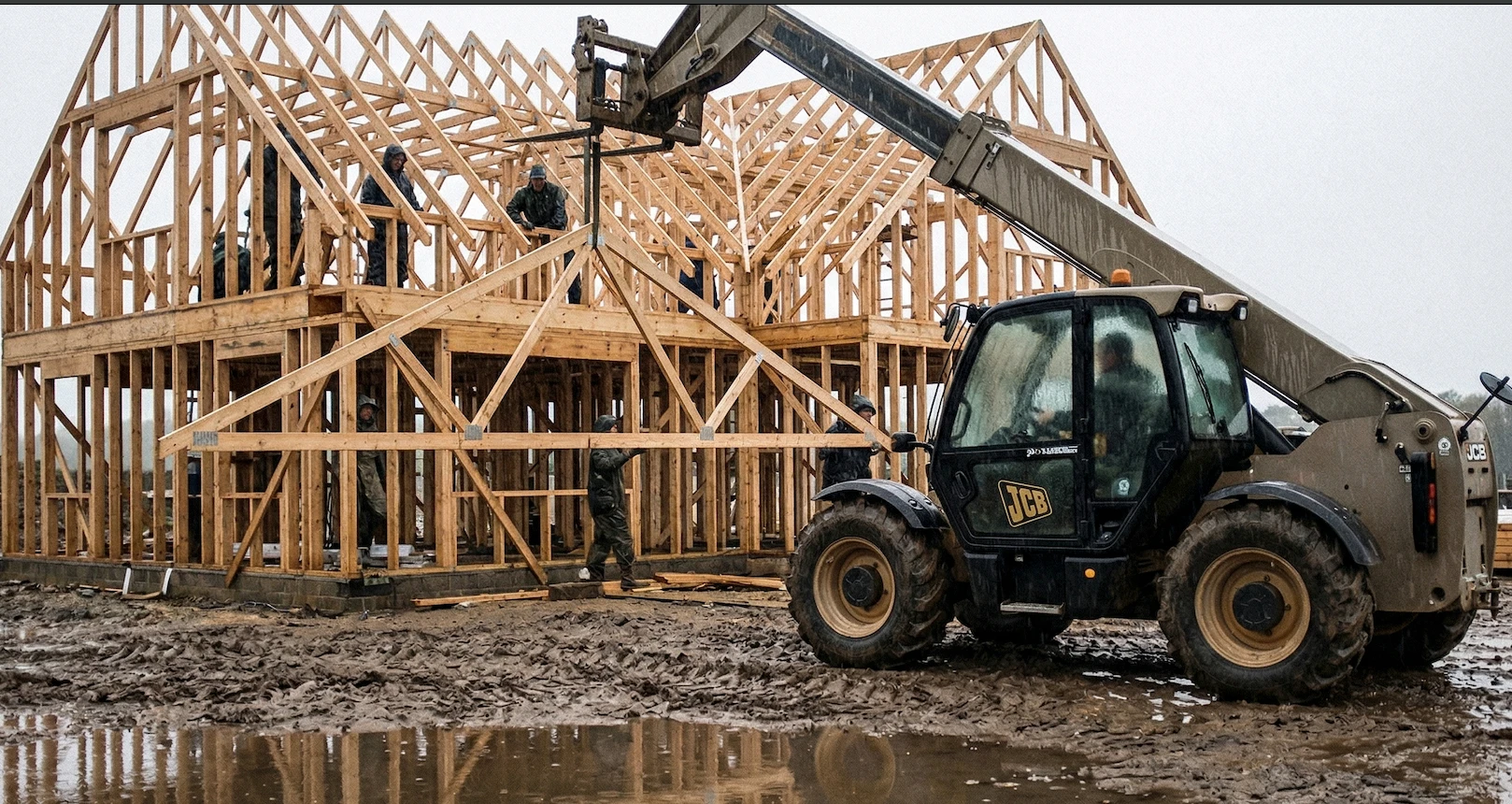
Need to move heavy materials up, over, or across rough terrain in Northern Colorado? A telehandler rental gives you the reach and versatility that standard forklifts simply can’t match. Whether you’re framing a house in Old Town, stacking hay bales on a Larimer County farm, or setting trusses on a commercial build along I-25, the right telehandler saves time, reduces manual labor, and keeps your project on schedule.

Why Rent a Telehandler?


A telehandler (also called a telescopic handler or “lull”) combines the lifting power of a forklift with a telescoping boom that extends forward and upward. This crane-like reach lets you place loads at heights and distances that would otherwise require a dedicated crane. On Fort Collins job sites—where you might be dealing with gravel lots, muddy spring conditions, or uneven ranch land—telehandlers offer distinct advantages:


  • Long reach and high lift. Telehandlers can place materials up to 55+ feet vertically and extend forward to reach over obstacles like foundations, trenches, or existing structures.


  • Rough-terrain capability. With large pneumatic tires, four-wheel drive, and high ground clearance, telehandlers handle gravel, mud, and uneven ground that would stop a standard warehouse forklift.


  • Attachment versatility. A single telehandler can swap between forks, buckets, truss jibs, and work platforms—essentially replacing multiple machines on site.


  • Precise placement. The telescoping boom lets operators position loads exactly where needed, whether it’s a pallet of bricks on scaffolding or a beam through a second-story window opening.


Telehandler vs. Forklift: Which One Do You Need?


Choosing between a telehandler and a traditional forklift comes down to where you’re working and what you’re lifting.

 
FeatureTelehandlerForklift
Best TerrainRough, uneven outdoor surfacesSmooth, flat floors (warehouses, docks)
Lift Height19 ft to 55+ ftTypically 10–20 ft
Forward ReachExcellent—extends beyond the machine’s footprintLimited to vertical mast
ManeuverabilityLarger turning radius, better outdoorsTight turning for warehouse aisles
AttachmentsWide variety: forks, buckets, jibs, platformsPrimarily pallet-focused
Typical CostHigher daily/weekly rentalLower cost for similar capacity


Telehandler Rental Costs: What to Expect in 2026


Telehandler rental pricing varies based on lift capacity, maximum reach height, and rental duration. Based on recent rental market data, here’s what Fort Collins renters can expect to budget.


Average National Rental Rates


Rental PeriodAverage CostEffective Daily Cost
Daily$665$665
Weekly$1,644~$235
Monthly$3,592~$120


Weekly rates offer about 65% savings over daily pricing, while monthly rates cut your effective daily cost by more than half. For projects lasting longer than two weeks, the monthly rate typically makes the most financial sense even if you return the machine early.


Pricing by Capacity Class


Capacity ClassLift CapacityTypical ReachDaily RateWeekly RateMonthly Rate
Compact5,000–6,000 lbs19–32 ft$350–$550$900–$1,400$2,000–$3,200
Standard6,000–8,000 lbs32–42 ft$500–$750$1,200–$1,800$2,800–$3,800
Heavy10,000–12,000 lbs42–55 ft$700–$1,000$1,700–$2,500$3,500–$5,000
Extra Heavy15,000–20,000 lbs50–55 ft$1,000–$1,500$2,500–$3,500$5,000–$7,500


Capacity × Reach Daily Rate Matrix


 19 ft32 ft40 ft50 ft
5,000 lbs$350–$450$400–$500
6,000 lbs$400–$500$450–$550$500–$600
6,500 lbs$475–$575$525–$650
8,000 lbs$550–$700$600–$750$650–$800
10,000 lbs$700–$900$800–$1,000
12,000 lbs$850–$1,000$900–$1,100


Local Note: Fort Collins pricing may vary slightly from national averages based on seasonal demand (spring and summer construction peak) and specific equipment availability. Contact us for exact quotes on your project dates.


How to Choose the Right Telehandler Size?


Selecting the right telehandler isn’t a one-size-fits-all decision. The two most important specifications are:


1. Lift capacity: How much weight do you need to pick up? Remember that capacity decreases as the boom extends outward—a machine rated for 10,000 lbs may only handle 3,000 lbs at full horizontal reach.


2. Maximum reach height: How high do you need to place the load? Consider both vertical height and horizontal distance from the machine.


Size Recommendations by Project Type


Project TypeRecommended CapacityTypical ReachCommon Models
Residential framing, roofing supply5,000–6,000 lbs19–32 ftJLG 3013, Bobcat TL519, Genie GTH-5519
General construction, light commercial6,000–8,000 lbs32–42 ftJCB 507-42, SkyTrak 6036, JLG 642
Commercial framing, steel erection10,000–12,000 lbs42–55 ftLull 1044C-54, SkyTrak 10042, JLG 1055
Agriculture, hay bale handling6,000–8,000 lbs32–42 ftJCB Agri models, Bobcat TL723
Precast concrete, industrial15,000–20,000 lbs50–55 ftJLG 1644, SkyTrak 15054


Need help sizing? Local rental experts can review your project requirements including load weights, lift heights, and site conditions to recommend the ideal machine for your specific job.


Where to Rent a Telehandler in Fort Collins?


Several established equipment rental providers serve the Fort Collins area with telehandler fleets.


Telehandler Safety & OSHA Requirements


Operating a telehandler requires proper training and certification. OSHA mandates that all telehandler operators complete:


  • Formal instruction (classroom or online training)
  • Practical hands-on training with the specific machine type
  • Employer-led operator evaluation


Certification must be refreshed every three years under OSHA standard 1910.178(l)(3).


Key Safety Practices


Read the operator’s manual. Every telehandler model has unique controls and load charts. Familiarize yourself before operation.


Understand load charts. Capacity changes based on boom extension, angle, and attachment type. Never exceed the rated load for your configuration.


Check ground conditions. Telehandlers can tip on unstable ground, slopes, or near excavations. Always assess site conditions before positioning the machine.


Use outriggers when equipped. Some models feature stabilizers for added safety during high lifts or extended reaches.


Maintain awareness of surroundings. Watch for overhead power lines, bystanders, and obstacles in the swing path.


Most rental providers can direct you to OSHA-compliant training resources or may offer operator certification through their dealer networks.


Common Telehandler Applications in Northern Colorado


Telehandlers serve a wide range of industries and project types across the Fort Collins area:


Construction


  1. Residential framing: Lifting lumber packages and roof trusses to second and third stories
  2. Commercial construction: Placing steel beams, precast panels, and masonry materials

  3. Roofing supply: Loading shingles, underlayment, and equipment onto rooftops

  4. Site cleanup: Moving debris, pallets, and waste containers


Agriculture & Ranching


  • Hay and silage handling: Moving large square bales, feeding cattle, defacing bunkers

  • Barn and outbuilding maintenance: Lifting materials for roof repairs, fan installation, and window replacement

  • Loading and unloading: Filling feed mixers, loading grain drills, moving bagged feed

  • General farm utility: Clearing brush, pushing trees, carrying tires and equipment across pastures


Landscaping & Hardscaping


  • Tree and shrub planting: Moving large root balls and specimen trees

  • Hardscape installation: Placing pavers, retaining wall blocks, and boulders

  • Material transport: Hauling soil, mulch, and gravel across job sites


Industrial & Warehousing

  • Truck loading and unloading: Handling palletized goods at loading docks

  • Equipment installation: Positioning machinery, HVAC units, and industrial components

  • Maintenance access: Using work platforms for elevated repairs and inspections.

  •  

Frequently Asked Questions


Q: How much does it cost to rent a telehandler in Fort Collins?
A: Expect to pay $350–$750 per day for standard-capacity telehandlers (5,000–8,000 lbs), $700–$1,000 per day for heavy-capacity units (10,000–12,000 lbs), and $1,000–$1,500 per day for extra-heavy models (15,000–20,000 lbs). Weekly and monthly rates offer significant savings—weekly rates average $1,200–$2,500, while monthly rates range from $2,000–$7,500 depending on capacity.


Q: Do I need a special license to operate a telehandler?
A: You don’t need a state-issued driver’s license endorsement, but OSHA requires telehandler operators to complete formal training, hands-on practice, and an employer-led evaluation. Certification must be renewed every three years.


Q: Can a telehandler be used as a personnel lift?
A: Only with an approved work platform attachment and proper safety protocols. Standard forks should never be used to lift personnel.


Q: What’s the difference between a telehandler and a boom lift?
A: Telehandlers are designed primarily for material handling—lifting and placing loads. Boom lifts (aerial work platforms) are designed specifically for elevating personnel to work at height. While telehandlers can use work platform attachments for occasional personnel lifting, dedicated boom lifts are the safer, more appropriate choice for extended work at elevation.


Q: What attachments are available for telehandler rentals?
A: Common attachments include standard pallet forks, truss jibs for lifting beams and trusses, material buckets for loose materials, and work platforms for personnel access. Most rental providers offer attachment packages—ask about availability when requesting your quote.


Q: How far in advance should I reserve a telehandler?
A: During peak construction season (May–October), reserve at least 1–2 weeks ahead. For large projects or specialized equipment, 3–4 weeks is recommended. Winter months typically have greater availability.


Q: Does the rental company deliver to my job site?
A: Yes, most Fort Collins rental providers offer delivery service. Delivery fees vary based on distance and equipment size—ask for a delivery quote when booking.

Ready to Rent? Get Started Today

The right telehandler rental can transform your project’s efficiency, whether you’re framing a custom home in Fort Collins, managing a commercial build, or running a Larimer County farming operation. By understanding your capacity and reach requirements, comparing local providers, and following proper safety protocols, you’ll get the equipment you need to get the job done right.

Next Steps:

  1. Determine your specs: Note your maximum load weight and required lift height.

  2. Contact local providers: Call or visit the rental locations listed above for current availability and quotes.

  3. Book early: Reserve your telehandler in advance, especially during peak season.

  4. Verify certification: Ensure your operator’s OSHA certification is current.