
Starting a cleaning business is one of the most accessible and profitable ways to become your own boss. The barriers to entry are low, the demand is consistent, and with the right strategy, you can scale from a solo operation to a full-fledged company.
However, the difference between success and struggle often comes down to preparation. Walk into any big-box store, and you will be overwhelmed by aisles of bottles, mops, gadgets, and “miracle” cleaners. Without a plan, you will waste hundreds of dollars on products you do not need—or worse, products that could actually damage your clients’ property.
After years in the industry, transitioning from hiring employees to operating solo, and finally exiting the business, one thing is clear: Your supply list is your foundation. This guide compiles the real-world tools, chemicals, and gear used by successful cleaners. It cuts through the marketing noise and tells you exactly what to buy, what to skip, and the one chemical you should never bring into a client’s home.
The Golden Rule: Never Use Bleach
Before we dive into the list, we need to establish the most important rule of the cleaning industry: Avoid bleach at all costs.
Accidents happen. Bottles leak. Sprayers malfunction. An employee might set a bottle down on a hardwood floor or a colored carpet, and within minutes, the damage is permanent. Bleach is unforgiving. It strips color, damages surfaces, and creates liability issues that are simply not worth the risk.
Moreover, many clients are sensitive to strong chemical smells. In a confined space like a bathroom or small apartment, aerosolized bleach can be overwhelming. The good news? Modern cleaning chemistry has evolved. You can achieve sparkling, sanitized results with products that are safer for you, your clients, and their belongings. Every product on this list is bleach-free.
Core Equipment: The Tools That Do the Heavy Lifting
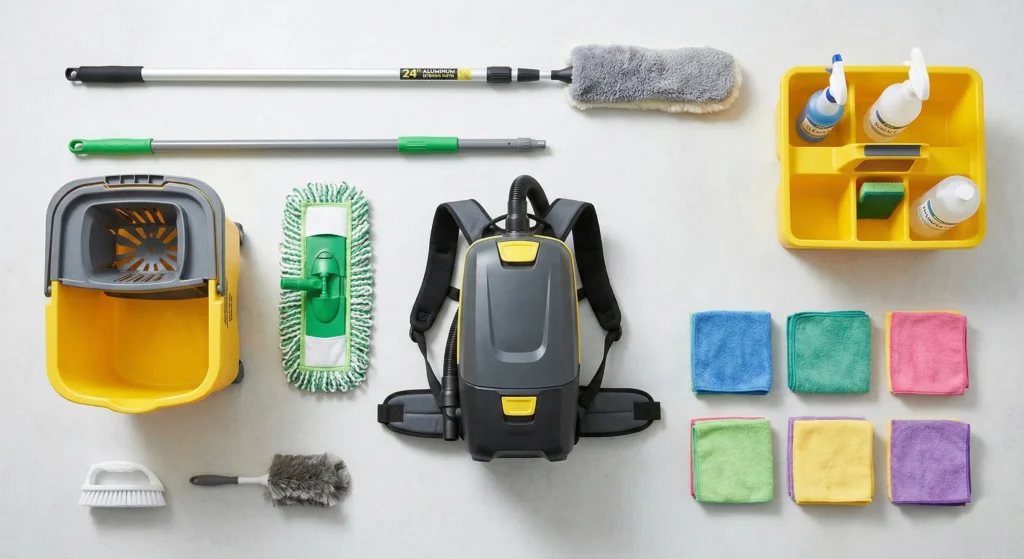
1. The Vacuum: Backpack vs. Canister
Your vacuum is your most-used tool. For professional cleaners, a backpack vacuum is a game-changer. Models like the Proteam 6-quart backpack vacuum excel on hard floors, allowing you to cover ground quickly without constantly bending over or swinging a canister around furniture. The ergonomic design reduces fatigue during long workdays.
However, be aware that backpack vacuums are often “just okay” on deep carpets. You may need a brush-roll attachment, or consider keeping a high-quality Shark or similar upright vacuum in your vehicle for homes with significant carpeted areas.
2. The 24-Foot Extending Duster
Dusting is about efficiency. A 24-foot extending duster allows you to reach ceiling corners, ceiling fans, high shelves, and light fixtures without dragging a ladder around. The key here is washable heads. Disposable dusters create ongoing costs and waste. Invest in a quality pole (available on Amazon) and replaceable microfiber heads. For the best bendable heads that actually hold their shape, specialized suppliers often outperform the generic heads found on big-box store poles.
3. The Mop and Bucket System
Do not skimp on your mopping setup. The ideal bucket features two compartments: one for clean, soapy water and a separate “dry” side for wringing out the dirty water. This system ensures you are always applying clean solution to the floor rather than redistributing dirty water.
Pair this with a 13-inch microfiber mop with washable heads. Microfiber is superior to cotton because it traps dirt and bacteria effectively and dries quickly. Being able to wash and reuse the heads makes this both economical and ecological.
4. The Cleaning Caddy
You cannot carry your entire inventory into every house. You need a portable station. While “Husky” brand caddies are popular among professionals, a simple, inexpensive caddy from a local store works just as well. The goal is to have a handle and enough compartments to carry your daily essentials: sprays, scrubbers, cloths, and gloves.
Consumables and Chemicals: What Goes in the Caddy
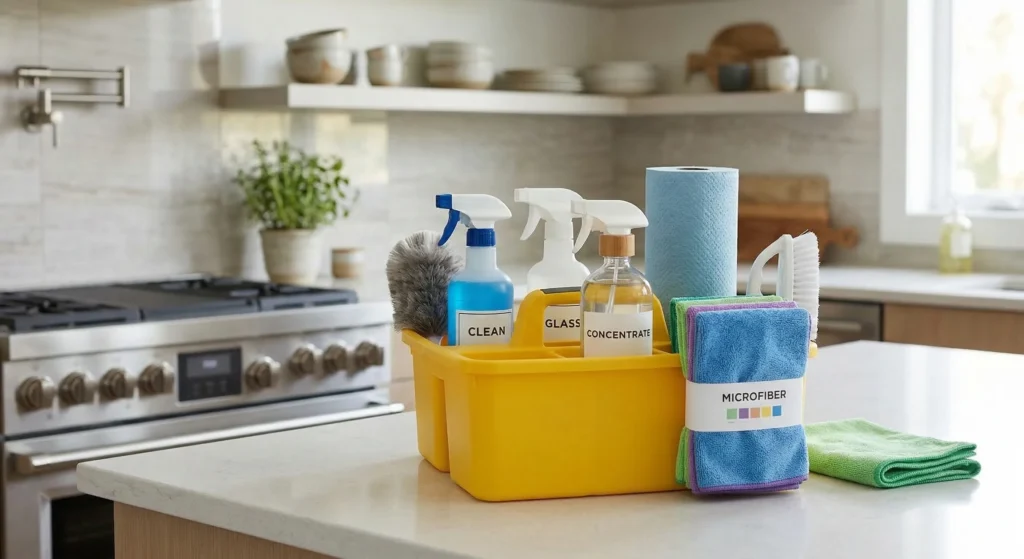
5. Microfiber Cloths: The Color Code System
Organization prevents cross-contamination. Implement a strict color-coding system for your cloths:
- Yellow: Bathrooms (sinks, counters, tubs)
- Green: Kitchens
- Blue: General living areas, dusting, electronics
- Red (Optional): Dedicated exclusively for toilet cleaning
This system is easy for employees to remember and signals to clients that you take hygiene seriously.
6. All-Purpose Disinfectant: Odoban
Odoban is a powerhouse in the cleaning industry. As a concentrate, it is incredibly cost-effective. A single bottle can be diluted to create gallons of ready-to-use cleaner. It disinfects, deodorizes, and is safe for most surfaces. The familiar scent is also associated with “clean” for many clients.
7. Floor Cleaner: Zep
For hard floors, Zep floor cleaner is a reliable choice. You only need a small splash in the bucket, diluted with water. It cleans effectively without leaving residue. Avoid products like Bona, which professional cleaners often find leaves streaks on certain flooring types.
8. The Heavy-Duty Scrubber: Bar Keepers Friend
Bar Keepers Friend (or any bleach-free equivalent) is a mild abrasive that works wonders. It is excellent for tackling stubborn stains on sinks, chrome fixtures, and even glass shower doors. It is also surprisingly effective for toilet bowls. When paired with a blue scrubbing pad, it can remove buildup that liquid cleaners leave behind.
9. Bathroom Cleaner: Scrubbing Bubbles (or Generic)
Citrus-based foaming cleaners are ideal for bathrooms. Avoid aerosol cans. Non-aerosol pump sprays allow you to use every last drop of the product and prevent you from inhaling propellants in a confined shower stall.
10. Glass Cleaner: Windex (with Ammonia)
While ammonia-free glass cleaners are popular, many professionals find they lack the power to cut through grease and heavy grime on the first pass. Stick with a classic formula. A pro tip: Do not use the default spray bottle that comes with the cleaner. They often leak. Transfer the liquid to a high-quality, durable spray bottle.
11. Magic Erasers (Off-Brand)
Melamine sponges are essential for scuff marks, crayon on walls, and stubborn sticky spots. You can buy generic versions on eBay for a fraction of the cost of the name brand. They may crumble slightly faster, but the cost-to-utility ratio is unbeatable.
12. The “Penny” Trick
For faucets with heavy mineral buildup, a penny is your secret weapon. Use it to gently scrape off the bulk of the deposit. The copper is soft enough that it is unlikely to scratch the chrome or porcelain, unlike a metal scraper.
Specialty Tools for Deep Cleaning
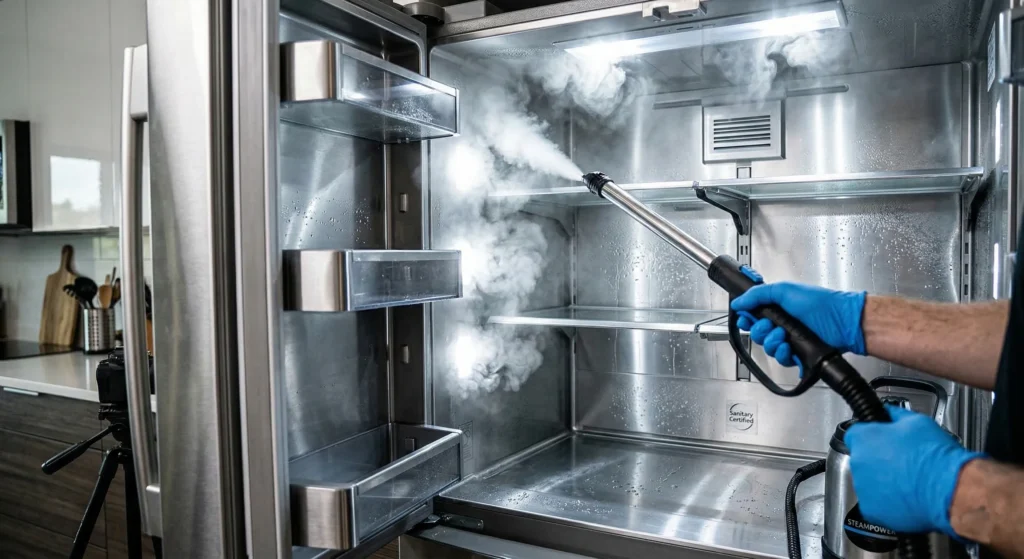
13. Steam Cleaner
A steam cleaner is a significant investment, but for specific tasks, it is irreplaceable. It is amazing for refrigerator and freezer cleanouts. The heat and pressure melt frozen spills and stuck-on food without harsh chemicals. While you might not use it every day, it is a valuable upsell tool for deep cleaning packages.
14. The Clorox Toilet Wand
When a client does not have a toilet brush (or their brush is unsanitary), the Clorox toilet wand is a great backup. The disposable heads ensure you are not carrying bacteria from house to house. However, it is primarily a backup tool; most homes will have their own brush.
15. 0000 Steel Wool
For oven cleaning, 0000 steel wool is the gold standard. It is fine enough to cut through baked-on grease without scratching the interior surfaces. Buy the name brand here—knock-off versions are often too abrasive or fall apart during use.
16. Blue Oven Cleaner
If you offer oven cleaning, use a “blue” formula cleaner. These are generally considered safe for self-cleaning ovens. A business tip: If a client has a self-cleaning oven, ask them to run the cycle the night before your appointment. You will arrive to find the interior reduced to ash, which you can simply wipe away. It turns a difficult job into easy money.
17. Stainless Steel Cleaner
Dedicated stainless steel cleaner is essential for kitchens. It cleans grease and restores the protective finish on appliances.
Business Logistics and “Nice to Haves”
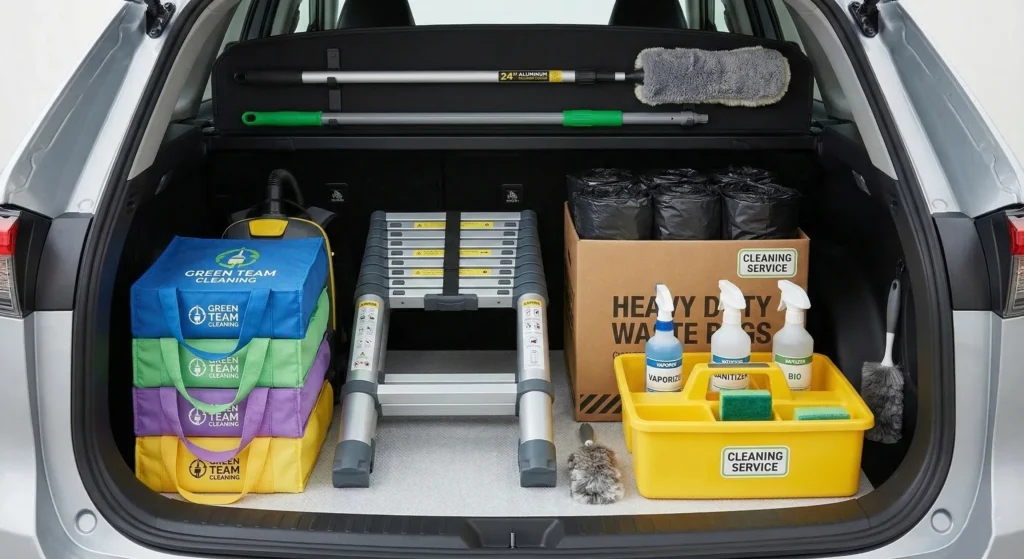
18. Reusable Shoe Covers
Many clients, especially those with light-colored carpets, will request or appreciate shoe covers. Buying reusable fabric shoe covers is more economical and ecological than disposable plastic ones. Just throw them in the wash at the end of the week.
19. Garbage Bags
You need a range of sizes in your vehicle:
- 4 Gallon (small bathroom bins)
- 8 Gallon (standard kitchen trash)
- 13 Gallon (large kitchen trash)
- 33 Gallon (keep one in the car for emergencies or unexpectedly large bins)
20. Step Ladder
Most insurance policies have strict rules about working at heights. Typically, they will only cover you up to a foot or two off the ground. A simple 2-step step ladder is usually the maximum allowed. Do not bring extension ladders unless you have specific coverage.
21. The Water Bottle (For You and For Cleaning)
Hydration is key to getting through a long shift. But also, keep a spray bottle of plain water in your caddy. It is perfect for dusting (a damp cloth attracts dust better than a dry one) and for diluting concentrated cleaners on the fly.
22. Putty Knife
You will rarely use it, but when you need it, you need it. For deep cleans or move-outs, you may encounter melted candy, gum, or stickers stuck to surfaces. A putty knife solves this safely.
23. Nitrile Gloves
Protect your hands. Nitrile gloves are durable, resistant to chemicals, and hypoallergenic.
24. Reusable Cloth Bags
Have two designated bags. One for clean cloths as you move through the house, and one for soiled cloths to be taken back to the car for washing. This prevents cross-contamination in your vehicle.
The Business Behind the Supplies
Having the right gear is step one. Step two is running the business like a professional.
Insurance and Bonding:
You will need both general liability insurance and a surety bond. A bond protects the client in case of theft or damage. It also signals that you are a legitimate, vetted business. For a solo operator, a bond can cost roughly $120 to $150 per year.
Legal Structure:
While not always strictly required, forming an LLC is highly recommended. It separates your personal assets from your business liabilities. It is an affordable layer of protection.
Pricing Strategy:
When you start, you may be tempted to offer low prices to get in the door. However, experience shows that being priced too low attracts properties that are in poor condition and require significantly more time. As you gain confidence, aim to be one of the more expensive cleaners in your area. Clients willing to pay premium prices often have cleaner homes, making the work more predictable and profitable.
Finding Clients:
For those focusing on move-out cleans, real estate agents are your golden ticket. If you can impress one agent with a fast, thorough clean, they will refer you to their entire office. The challenge with move-outs is the timeline; they often need service “today or tomorrow.” You must have the availability to capitalize on these opportunities.
Software and Tools:
As a solo operator, you do not need complex software. For credit card processing and bookkeeping, tools like Wave are free and easy to use. If you plan to grow and hire employees, platforms like Zenmaid or Launch27 are designed specifically for cleaning businesses to manage scheduling, client communication, and cleaner routing.
Summary: Your First Shopping List
If you are starting from zero, here is your priority checklist:
- Safety: Nitrile gloves, reusable shoe covers.
- Cleaning Agents: Odoban (concentrate), Zep floor cleaner, Bar Keepers Friend, Scrubbing Bubbles (non-aerosol), Windex.
- Tools: Backpack vacuum, 2-compartment mop bucket, microfiber mops, 24ft extending duster, color-coded microfiber cloths, cleaning caddy.
- The Extras: Blue scrubbing pads, Magic Erasers, a penny, a spray bottle of water, garbage bags.
- The Business: LLC filing, insurance policy, surety bond.
Frequently Asked Questions
Q: Why do you recommend against bleach so strongly?
A: Liability. A leaky bottle or a spilled drop can permanently ruin a client’s flooring, clothing, or countertops. There are effective alternatives that sanitize without the risk.
Q: Do I need different supplies for commercial cleaning?
A: Yes, partially. While many tools overlap, commercial janitorial work often involves different mops, larger chemical jugs, and a janitorial cart for moving through office buildings efficiently.
Q: How do I price my services without seeing the house in person?
A: Many successful cleaners move to flat-rate pricing based on square footage and number of bedrooms/bathrooms. Over the phone, you can ask about the home’s condition and build rapport. If you price at the higher end of the market, the homes tend to be cleaner and more predictable.
Q: Is a surety bond the same as insurance?
A: No. Insurance covers you (for liability, injury, etc.). A bond protects the client (against theft or failure to perform). Most clients expect both.
Q: What is the hardest part of running a cleaning business?
A: For many owners, hiring and retaining reliable staff is the biggest challenge. This is why starting solo and building a slow, steady client base is often recommended before trying to scale with employees.

Usman Zahid runs this construction rental directory with over 5 years of experience in SEO, content, and web optimization. Every page is built using real research, hands-on expertise, and carefully reviewed information to meet strong EEAT standards.