So, you have a project on the horizon that requires some serious digging power. Whether you’re a seasoned contractor, a landscaper tackling a backyard transformation, or a DIY enthusiast ready to build your dream pond, one of the first questions you’ll ask is: How much does it cost to rent an excavator?
Excavator rental costs can range from as little as $150 a day for a compact mini excavator to over $1,800 a day for a massive machine built for heavy demolition. The price depends on a variety of factors, from the type of machine you need to where you live and how long you need it.
This ultimate guide will break down excavator rental costs by machine type, explain the key factors influencing the price, and share insider tips to help you make the most informed and cost-effective decision for your next project.
Excavator Types & Their Average Rental Rates
Need a fast answer? Here’s a high-level snapshot of the most common excavator types and their average daily rental costs to give you a ballpark figure.
| Excavator Type | Best For… | Avg. Daily Rental Cost |
|---|---|---|
| Mini Excavator | Landscaping, small demolitions, working in tight spaces | $150 – $350 |
| Crawler Excavator | Heavy digging, large-scale earthmoving, demolition | $750 – $1,200 |
| Wheeled Excavator | Urban jobs, road work, utility projects requiring mobility | $800 – $1,300 |
| Long Reach Excavator | Projects over water, deep pits, precise demolition | $1,000 – $1,600 |
| Skid Steer Excavator | Demolition, debris removal, material handling in tight spots | $200 – $400 |
Note: These are national averages. For the most accurate and up-to-date pricing, contact local equipment rental companies.
Excavator Rental Costs by Type
To help you budget accurately, let’s dive deeper into the specific types of excavators available for rent. Each type is designed for a unique set of tasks, and their rental rates reflect their size, capability, and specialization.
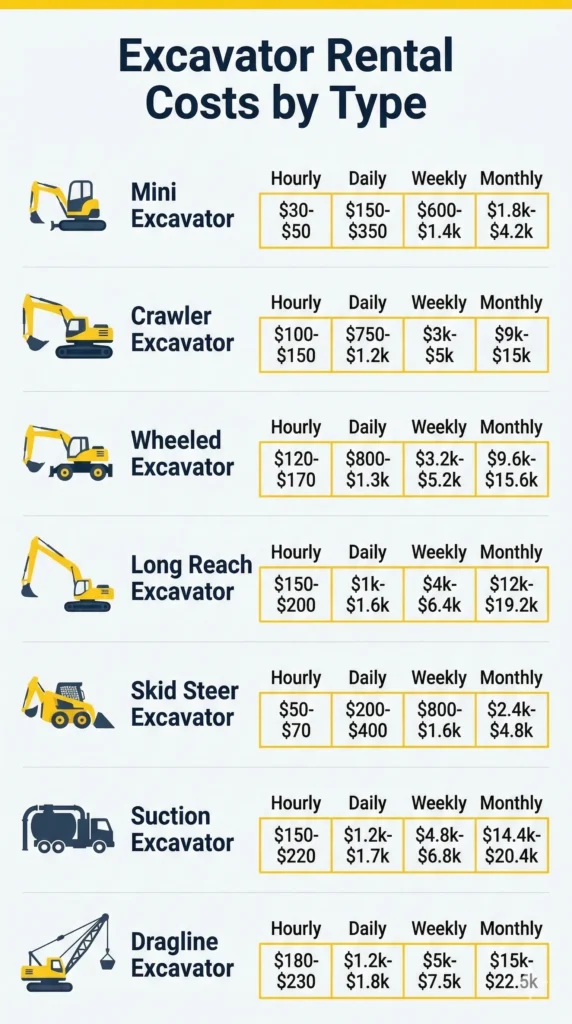
1. Mini (Compact) Excavator Rental Cost
Mini excavators are the workhorses of the landscaping and small-construction world. Weighing between 1 to 10 tons, their compact size and maneuverability make them perfect for indoor operations, residential work, and digging in tight spaces where a larger machine simply can’t fit. They are also easy to transport with a standard trailer.
- Hourly: $30 – $50
- Daily: $150 – $350
- Weekly: $600 – $1,400
- Monthly (Estimate): $1,800 – $4,200
2. Crawler (Tracked) Excavator Rental Cost
When you need serious power for large-scale projects, you need a crawler excavator. These heavy-duty machines run on tracks, providing excellent stability and weight distribution on soft or uneven terrain. They are the go-to choice for major earthmoving, digging foundations, grading, and demolition tasks.
- Hourly: $100 – $150
- Daily: $750 – $1,200
- Weekly: $3,000 – $5,000
- Monthly (Estimate): $9,000 – $15,000
3. Wheeled Excavator Rental Cost
Wheeled excavators combine digging power with road mobility. Unlike their tracked cousins, they are mounted on tires, allowing them to drive between job sites or move around a busy urban environment without the need for a low-boy trailer. This makes them ideal for municipal projects, road maintenance, and utility work where frequent repositioning is required.
- Hourly: $120 – $170
- Daily: $800 – $1,300
- Weekly: $3,200 – $5,200
- Monthly (Estimate): $9,600 – $15,600
4. Long Reach Excavator Rental Cost
As the name suggests, long reach excavators are specially designed with extended arms and booms. This gives them the ability to tackle projects that are out of range for standard excavators, such as dredging rivers, cleaning up over waterways, reaching into deep pits, or performing high-reach demolition on buildings.
- Hourly: $150 – $200
- Daily: $1,000 – $1,600
- Weekly: $4,000 – $6,400
- Monthly (Estimate): $12,000 – $19,200
5. Skid Steer Excavator Rental Cost
Often confused with a standard skid steer loader, a “skid steer excavator” usually refers to a compact track loader (CTL) or skid steer loader equipped with a backhoe attachment. These machines are incredibly agile, versatile, and powerful for their size. They are excellent for demolition, debris removal, grading, and material handling on residential and commercial sites.
- Hourly: $50 – $70
- Daily: $200 – $400
- Weekly: $800 – $1,600
- Monthly (Estimate): $2,400 – $4,800
6. Suction (Vacuum) Excavator Rental Cost
Suction excavators, also known as vacuum excavators, use high-powered suction to safely remove soil and debris. This non-destructive digging method is a game-changer for utility work. It allows crews to safely expose buried gas lines, fiber optic cables, and water pipes without the risk of damage that comes with traditional mechanical digging.
- Hourly: $150 – $220
- Daily: $1,200 – $1,700
- Weekly: $4,800 – $6,800
- Monthly (Estimate): $14,400 – $20,400
7. Dragline Excavator Rental Cost
Dragline excavators are massive, heavy-duty machines typically found in large-scale civil engineering and surface mining operations. They feature a large bucket suspended from a boom by cables, which is “thrown” and then dragged back to excavate material. They are particularly effective for underwater excavation, port construction, and large-scale landscaping.
- Hourly: $180 – $230
- Daily: $1,200 – $1,800
- Weekly: $5,000 – $7,500
- Monthly (Estimate): $15,000 – $22,500
7 Key Factors That Influence Excavator Rental Prices
While the type of machine is the biggest driver of cost, several other variables can impact your final bill. Understanding these factors will help you avoid surprises and budget like a pro.
- Machine Size & Type: As you can see from the breakdown above, size matters. A massive, specialized long-reach excavator will always command a higher rate than a small, common mini excavator due to its higher capital cost and more niche applications.
- Rental Duration: Rental companies want to keep their equipment working. Therefore, the length of your rental period has a huge impact on the per-day cost. Daily rates are the highest, while weekly and monthly rates offer significant discounts.
- Machine Age & Technology: Are you renting a brand-new model with the latest technology, like GPS grading, advanced telematics, and superior fuel efficiency? Or a tried-and-true older model? Newer equipment with more features will generally cost more to rent.
- Your Geographic Location: Rental costs vary by region. A bustling city with high demand and higher operating costs will often have different prices than a rural area. Similarly, prices in the Northeast may fluctuate based on the local economy and construction activity.
- Seasonality & Demand: Construction is seasonal. In many parts of the country, including Pennsylvania and New York, demand for excavators spikes in the spring and summer. During this peak season, you can expect higher rental rates and potentially limited availability. Planning your rental for the fall or winter could save you money.
- Attachment Needs: The base rental rate is usually for the machine and its standard bucket. If your project requires special attachments like a hydraulic thumb for grabbing rocks, an auger for drilling post holes, or a breaker for demolition, these will add to the total cost.
- The Rental Company’s Pricing Structure: Not all rental companies are the same. Some may have lower base rates but higher delivery fees. Others might offer loyalty programs or discounts for government agencies or non-profits. It always pays to shop around and ask detailed questions.
The Hidden Costs of Renting an Excavator (What to Ask Before You Sign)
Getting a quote is just the first step. To avoid “sticker shock” when you get the final bill, you need to ask about the potential hidden costs that aren’t always included in the advertised daily rate.
- Delivery and Pickup: This can be a significant expense, especially for larger machines that require a special low-boy trailer. Always confirm the delivery fee upfront and ask if the cost is a flat rate or based on mileage from the rental yard.
- Insurance & Liability: Most rental companies will require you to have insurance that covers damage to the equipment and third-party liability. If you don’t have your own policy, they can often provide one for an additional fee. Clarify this before you book.
- Damage Waivers: Often offered at the counter, a damage waiver is an optional fee that limits your financial responsibility if the machine is damaged. It works similarly to insurance on a rental car. Weigh the cost of the waiver against your own risk tolerance and insurance coverage.
- Fuel Policy: The standard policy is almost always “full-to-full.” You rent the machine with a full tank of fuel and are expected to return it with a full tank. Factor the cost of diesel into your project budget.
- Cleaning Fees: If you return the excavator caked in mud and debris, the rental company will have to clean it before the next customer can use it. This can result in a hefty cleaning fee. A quick pressure wash before you return it can save you a lot of money.
Renting vs. Buying an Excavator: Which is Right for You?
For many, the decision comes down to a simple question: rent or buy? Both options have merit, but for the majority of projects, renting is the more strategic and financially sound choice. Here’s a quick comparison to help you decide.
| Factor | Renting | Buying |
|---|---|---|
| Upfront Cost | Low (just a security deposit) | Very High (tens of thousands of dollars) |
| Maintenance & Repairs | $0 (handled entirely by the rental company) | Your full responsibility (parts & labor) |
| Storage | $0 | Your responsibility (secure space required) |
| Flexibility | High (use different machines for different jobs) | Low (stuck with what you own) |
| Best For… | Short-term projects, one-off jobs, trying new equipment | Long-term, continuous use (e.g., daily, year-round) |
Three Key Benefits of Renting:
- Lower Initial Investment: Renting preserves your capital. You don’t have to tie up a large amount of cash in a piece of equipment that might sit idle for months. This frees up your budget for labor, materials, and other critical project needs.
- Flexibility for Project-Specific Needs: Every job is different. One project might require a nimble mini excavator for landscaping, while the next calls for a powerful crawler excavator to dig a foundation. Renting allows you to select the perfect machine for each unique task, ensuring efficiency and the best results.
- No Long-Term Storage or Maintenance Costs: When you own equipment, the costs never stop. You need secure storage, you have to perform regular maintenance, and you’re on the hook for expensive repairs when things break down. Renting passes all those responsibilities and costs back to the rental company, allowing you to focus solely on your project.
5 Essential Tips for Getting the Best Deal on Your Excavator Rental
Ready to rent? Follow these five tips to ensure you get the right machine at the best possible price.
- Plan Ahead and Book Early: Especially if you’re planning a project during the busy spring or summer months, book your equipment as far in advance as possible. This ensures availability and can sometimes lock in a better rate.
- Accurately Assess Your Project Needs: Don’t over-rent or under-rent. Take a hard look at your project’s scope. Renting a machine that’s too big will cost you more per day and could be difficult to maneuver. Renting one that’s too small could bog down your progress or even fail to complete the job.
- Ask About Discounts: You don’t get what you don’t ask for. Always inquire about lower rates for weekly or monthly rentals, special pricing for off-peak seasons, or any discounts for repeat customers or members of industry associations.
- Inspect the Machine Before You Leave: Before you sign the final paperwork and take possession, walk around the machine with the rental agent. Point out and document any existing dents, scratches, or issues. Ask for a quick walk-through of the controls so you’re comfortable operating it on-site.
- Consider the Whole Package: Don’t choose a rental company based solely on the lowest advertised price. Factor in their reputation, the cleanliness and maintenance of their fleet, the availability of support if something goes wrong, and the reliability of their delivery service. A slightly higher rate from a top-notch company can save you time, money, and headaches in the long run.
Frequently Asked Questions (FAQ)
How much does it cost to rent a mini excavator for a day?
On average, you can expect to pay between $150 and $350 per day to rent a mini excavator, depending on its size, age, and your location.
Do I need a special license to rent an excavator?
Generally, no special license is required, but you must be 18 or older with a valid driver’s license. However, the rental company will want to ensure you are comfortable and capable of operating the machinery safely. They may offer a quick orientation.
Can I rent an excavator with an operator?
Yes, many rental companies offer “wet rental” options, which include a qualified operator. This is a great option if you don’t have someone on your team trained to run heavy machinery. Be prepared for a higher hourly or daily rate to cover the operator’s wages.
What size excavator do I need to dig a foundation for a house?
For a standard residential basement, you’ll likely need a crawler excavator in the 20,000 to 50,000-pound range. However, the exact size depends on the scope of the project. It’s best to consult with an expert to determine the right machine.
Is delivery included in the rental price?
Delivery is rarely included in the base rental price. It is typically an additional fee based on the distance from the rental yard to your job site. Always ask for a delivery quote upfront.

Ahmed Ijaz runs this construction rental directory with over 5 years of experience in SEO, content, and web optimization. Every page is built using real research, hands-on expertise, and carefully reviewed information to meet strong EEAT standards.